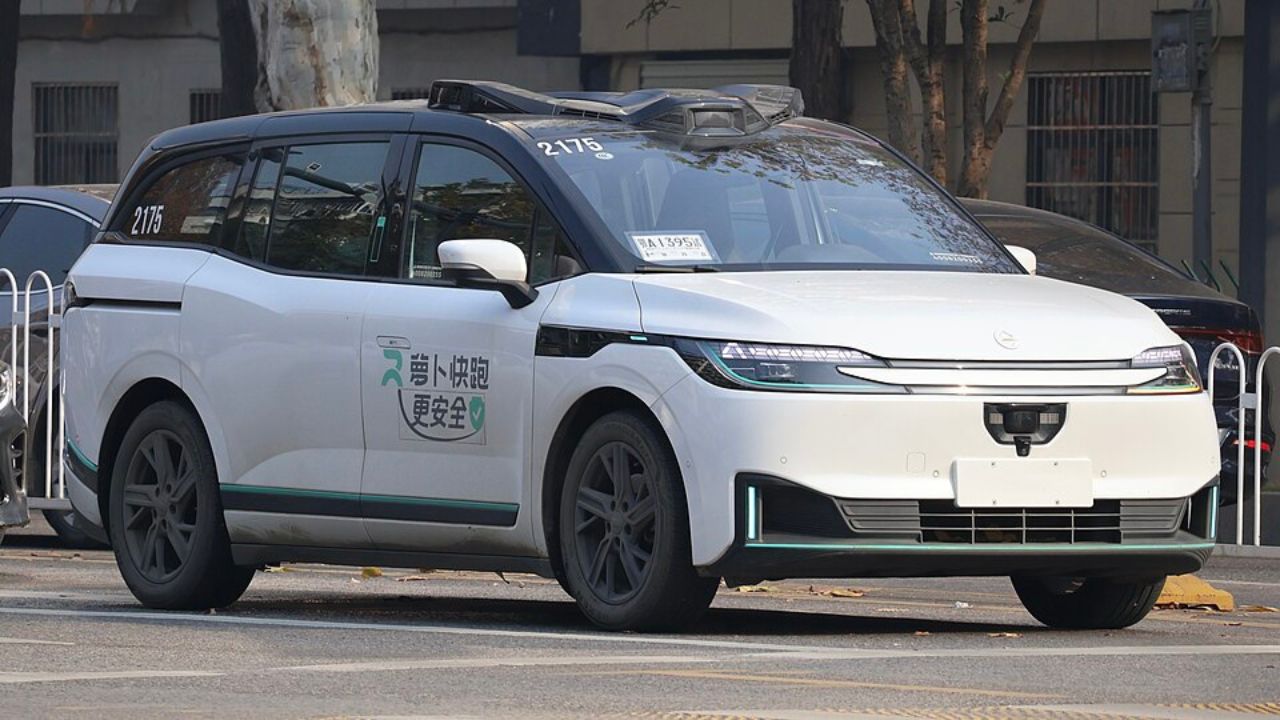
China has ordered a halt to new approvals for self-driving services after a high-profile system failure triggered fresh questions about how safe the technology really is on public roads. The pause lands just as global carmakers and tech giants were counting on the country’s megacities as a proving ground for robotaxis and advanced driver-assistance systems.
The decision signals that regulators are no longer content to quietly tolerate glitches in the name of innovation, and it raises immediate stakes for companies that have poured billions into autonomous fleets, mapping data, and artificial intelligence chips.
What happened
Regulators in Beijing moved to suspend new licenses for commercial autonomous driving services after a malfunction in a self-driving system led to a serious on-road incident in a major Chinese city, according to official accounts. The vehicle involved was operating in a pilot program that allowed limited driverless rides in geo-fenced urban zones, part of a broader national push to make China a leader in intelligent connected vehicles.
Early findings from transport authorities described the problem as a system failure rather than a conventional human error. Investigators said the car’s software stack misread its surroundings and failed to respond correctly to a complex traffic scenario, even though redundant sensors were online. Human supervisors were either slow to intervene or unable to prevent the outcome once the control logic went wrong, a pattern that has surfaced in other advanced driver-assistance incidents globally.
In response, the central government instructed local officials to stop issuing fresh permits for fully driverless operations and to review existing pilot projects. The order affects large-scale robotaxi trials in cities that had become showcases for Chinese autonomous driving, where companies such as Baidu, Pony.ai, and other domestic players have been running driverless fleets under special licenses. The freeze does not revoke all current operations overnight, but it blocks expansion and new entrants while safety reviews proceed.
The market reaction was immediate. Shares of Baidu Inc., which has invested heavily in its Apollo Go robotaxi service, dropped sharply after investors learned that China had paused key autonomous vehicle pilot programs, a setback that raised questions about payback timelines for its AI and mapping bets, as highlighted in coverage of Baidu’s. Other listed suppliers in lidar, high-definition maps, and in-vehicle computing also faced pressure as traders reassessed regulatory risk.
The pause comes on top of existing scrutiny of foreign brands. Tesla has already faced tighter rules for its advanced driver-assistance features in China, where officials have kept a close eye on how its Autopilot and Full Self-Driving options are marketed and used. Earlier reports described how Tesla decided to suspend its Full Self-Driving rollout in the country amid regulatory concerns, as documented in an analysis of Tesla’s software retreat. The latest move on domestic robotaxis suggests that regulators are applying the same caution to homegrown champions.
Why it matters
China has spent years positioning itself as a global hub for autonomous vehicles, combining state-backed infrastructure with aggressive commercial pilots in cities like Beijing, Shanghai, and Shenzhen. The country’s leaders framed self-driving technology as a strategic industry that could reshape urban mobility, cut congestion, and give domestic tech firms an edge in artificial intelligence. Pausing new approvals, even temporarily, signals that safety and social stability now outweigh the urge to move fast.
For companies, the timing is painful. Robotaxi operators have been shifting from pure research to commercial deployment, with paid rides, advertising partnerships, and plans for driverless logistics. Many of those models depend on scaling fleets and expanding service zones. A regulatory freeze limits that growth, which can delay revenue and stretch already heavy capital expenditures on sensors, chips, and cloud infrastructure. Investors who once treated autonomous driving as a near-term profit story must now price in the possibility of slower rollouts and stricter oversight.
The policy move also matters because of China’s role as a bellwether. When one of the world’s largest car markets tightens the rules, policymakers elsewhere pay attention. Analysts who track global self-driving regulation have long argued that safety frameworks must catch up with technical progress. A detailed review of self-driving safety challenges points to recurring issues with sensor reliability, human supervision, and accountability when algorithms make life-or-death decisions. China’s pause fits that pattern, treating a system failure as a trigger for broad policy recalibration rather than an isolated mishap.
Consumers are another factor. Surveys in China have shown strong curiosity about autonomous rides but mixed trust in fully driverless systems, especially after high-profile crashes involving advanced driver-assistance in both Chinese and foreign vehicles. The recent incident reinforces fears that even heavily tested systems can misjudge rare but dangerous scenarios. By visibly tightening controls, regulators appear to be betting that public confidence in the long run depends on a reputation for toughness today.
The decision also feeds into a larger debate over how much autonomy should be allowed on public roads before legal and ethical frameworks are fully in place. Questions remain about who bears responsibility when a self-driving car harms someone, how data from onboard cameras and sensors is stored and used, and how to prevent algorithmic bias from shaping traffic decisions. China’s legal system has begun to address some of these issues, but the system failure exposed gaps that policymakers now feel pressure to close.
Internationally, the move complicates strategies for global automakers and chip suppliers that saw China as both a market and a development lab. Companies that supply lidar units, high-performance computing platforms, and high-definition maps to Chinese robotaxi fleets must now navigate a more cautious regulatory climate. That could slow learning cycles that come from real-world mileage, which many engineers see as essential to improving autonomous systems.
What to watch next
The key question now is how long the pause on new approvals will last and what conditions companies will need to meet before regulators restart the pipeline. Officials have signaled that they plan to update technical standards for autonomous driving, with a focus on redundancy, fail-safe behavior, and clearer rules for remote monitoring. Any new guidelines will likely spell out stricter testing requirements before vehicles can operate without a safety driver, along with more detailed reporting of incidents and near misses.
Industry executives are watching for whether authorities differentiate between levels of automation. Highly automated robotaxis that run without a human behind the wheel could face the toughest scrutiny, while lower-level driver-assistance systems that still require active human control might see more modest changes. Given the recent system failure, however, even partially automated systems may be asked to meet higher transparency and performance benchmarks.
Local governments will also have to adjust. Some cities have built their innovation branding around being early adopters of intelligent transport, with dedicated lanes, roadside sensors, and subsidies for pilot fleets. A nationwide pause forces those municipalities to balance their growth ambitions with central directives. Reports on how China is putting the brakes on its self-driving push describe local officials revisiting plans for new test zones and robotaxi corridors as they await updated guidance from Beijing, a trend captured in coverage of China’s shifting stance.
On the corporate side, investors will track earnings calls for signs that major players are reordering priorities. Some firms may shift spending toward driver-assistance for private cars, which can be sold feature by feature, while slowing capital-intensive robotaxi fleets. Others may double down on software and simulation, arguing that they can keep improving algorithms even if real-world deployment is capped for a period.
Global competitors will not stand still. Companies testing driverless services in the United States, Europe, and the Middle East may see China’s pause as an opening to pitch their own safety records and regulatory relationships. Yet they face similar questions at home, where regulators and researchers continue to highlight unresolved safety and policy issues around autonomous vehicles. China’s move could strengthen arguments for more conservative rollouts elsewhere, especially in dense urban centers.
More From Fast Lane Only: