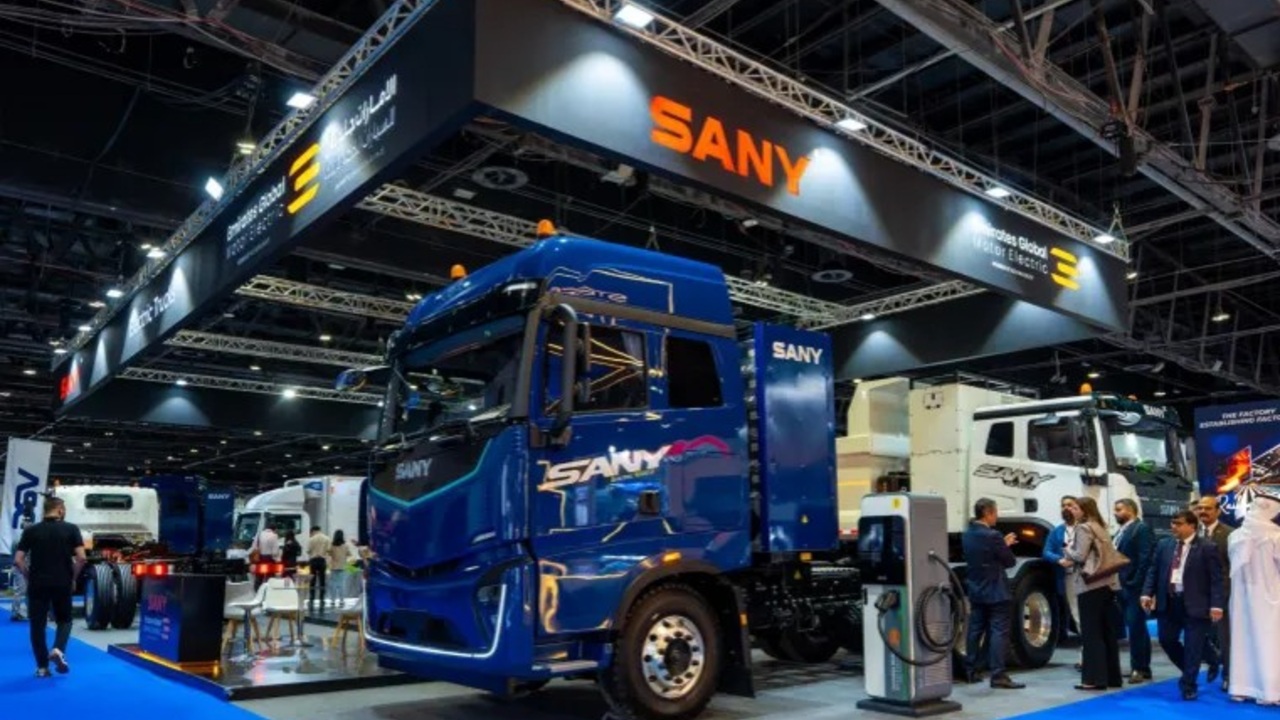
China’s heavy trucking sector has crossed a symbolic threshold, with hybrid and electric semi truck sales reaching 231,000 units in 2025. That figure signals that the country’s transition to cleaner freight is no longer experimental but has entered a phase of rapid commercial deployment. It also underscores how policy, industrial capacity, and market demand are converging to reshape one of the hardest segments of transport to decarbonize.
Behind the headline number lies a broader transformation of China’s “new energy” heavy truck market, where battery electric and hybrid drivetrains are beginning to displace diesel in core logistics corridors. The pace of change is now fast enough to influence global manufacturers’ strategies, commodity markets, and climate planning far beyond China’s borders.
China’s new energy truck boom reaches a tipping point
The sale of 231,000 units of hybrid and electric semi trucks in 2025 in China alone marks a decisive break from the niche status these vehicles held only a few years ago. Rather than a handful of demonstration fleets, the market is now large enough to support full production lines, dedicated component supply chains, and specialized financing products. The scale of adoption suggests that operators are finding real-world value in lower fuel costs, preferential access to urban areas, and alignment with corporate emissions targets, not simply responding to short term incentives.
Momentum has been building throughout the heavy truck segment. From January through May 2025, sales of new energy heavy trucks rose 195% year on year to 61,231 units, a surge that indicates how quickly fleets are pivoting once the economics and infrastructure begin to line up. Earlier data on monthly performance show that May sales alone exceeded 10,000 units, reinforcing the sense that the market is not only growing but accelerating as more models reach commercial maturity and operators gain confidence in their performance and resale value.
Policy, subsidies, and the architecture of demand
China’s policy framework has been central to the rise of hybrid and electric semis, shaping both supply and demand. National and local subsidies have reduced upfront purchase prices, while preferential license plate policies and access to low emission zones have made diesel trucks less attractive in key logistics hubs. Reports on the 231,000 units sold in 2025 emphasize that manufacturers and fleet operators moved quickly to take advantage of available support, suggesting that policy windows are carefully monitored and can trigger concentrated waves of orders when deadlines or phase downs approach.
Regulation has also worked indirectly by tightening emissions standards for conventional trucks and by setting ambitious targets for “new energy vehicles,” or NEV, penetration. In the broader NEV market, the top six players already control roughly 59 percent of sales, a level of concentration that gives policymakers a relatively small group of counterparties to engage when designing pilot programs or infrastructure rollouts. That same concentration, however, leaves limited room for second tier brands, which may struggle to secure the capital and scale needed to compete in advanced powertrains without continued policy support or niche specializations.
Industrial strategy and the rise of Chinese truck makers
The rapid expansion of new energy heavy trucks is not only a story of subsidies but also of industrial strategy. Chinese manufacturers have spent years building capacity in batteries, electric drivetrains, and power electronics, and they are now leveraging that base to move aggressively into heavy duty applications. Descriptions of Chinese new energy heavy trucks as being “on a rampage” in the market capture how quickly domestic brands have rolled out multiple models, from short haul urban delivery tractors to long haul semis with battery swap capability, often iterating faster than foreign rivals.
That industrial push is reinforced by the structure of the NEV market itself. With 59 percent of NEV sales concentrated among the top six players, leading truck makers can spread research and development costs across large volumes of passenger cars, light commercial vehicles, and heavy trucks. This cross segment scale helps explain why they have been able to bring hybrid and electric semi platforms to market at a pace that supports 231,000 units of annual sales, while many international competitors remain in earlier pilot phases. It also positions these firms to export both vehicles and underlying technologies as other countries begin to tighten emissions rules for freight.
Market dynamics: from pilot projects to mainstream freight
What distinguishes the current phase of China’s truck transition is that new energy models are no longer confined to demonstration routes or heavily subsidized showcase fleets. Reporting on the broader heavy duty market notes that electric trucks have, for the first time, outsold diesel in China during a year end surge, even as the overall heavy duty segment grew by 21 percent year on year. That combination of total market expansion and a shift in drivetrain mix suggests that operators are not simply replacing old diesel units one for one but are expanding capacity with electric and hybrid trucks at the margin.
Within that context, the 231,000 units of hybrid and electric semis sold in 2025 look less like an outlier and more like the new baseline for a market that is normalizing zero emission freight. The disproportionate growth in demand for new energy vehicles compared with the overall heavy truck market indicates that cost curves, charging infrastructure, and operational familiarity have reached a point where the technology is competitive in a widening range of use cases. As more logistics companies standardize on electric or hybrid platforms for regional and urban routes, the network effects of shared charging depots, maintenance expertise, and secondary markets for used vehicles are likely to reinforce this shift.
Global implications and the next phase of competition
China’s surge in hybrid and electric semi truck sales is already shaping expectations in other major markets, even where adoption remains modest. The fact that one country can absorb 231,000 units in a single year demonstrates that supply constraints are no longer the primary bottleneck for heavy duty electrification. Instead, the limiting factors in many regions are policy clarity, grid readiness, and the willingness of shippers to sign long term contracts that justify investment in charging or battery swap infrastructure. As Chinese manufacturers refine their products at scale, they are likely to seek export opportunities, putting pressure on incumbents in Europe and North America that have moved more cautiously.
The competitive landscape is also evolving within China. While some companies are still making long term promises about future electric or hydrogen trucks, others are already building and selling hybrid and battery electric semis at volume, capturing early market share and operational data. Commentary around the 231,000 units milestone highlights that distinction, noting that fleets are increasingly favoring partners with proven vehicles on the road rather than speculative roadmaps. As more detailed performance and total cost of ownership data emerge from these large deployments, they will inform procurement decisions worldwide and could accelerate the global shift away from diesel in heavy freight.
More from Fast Lane Only