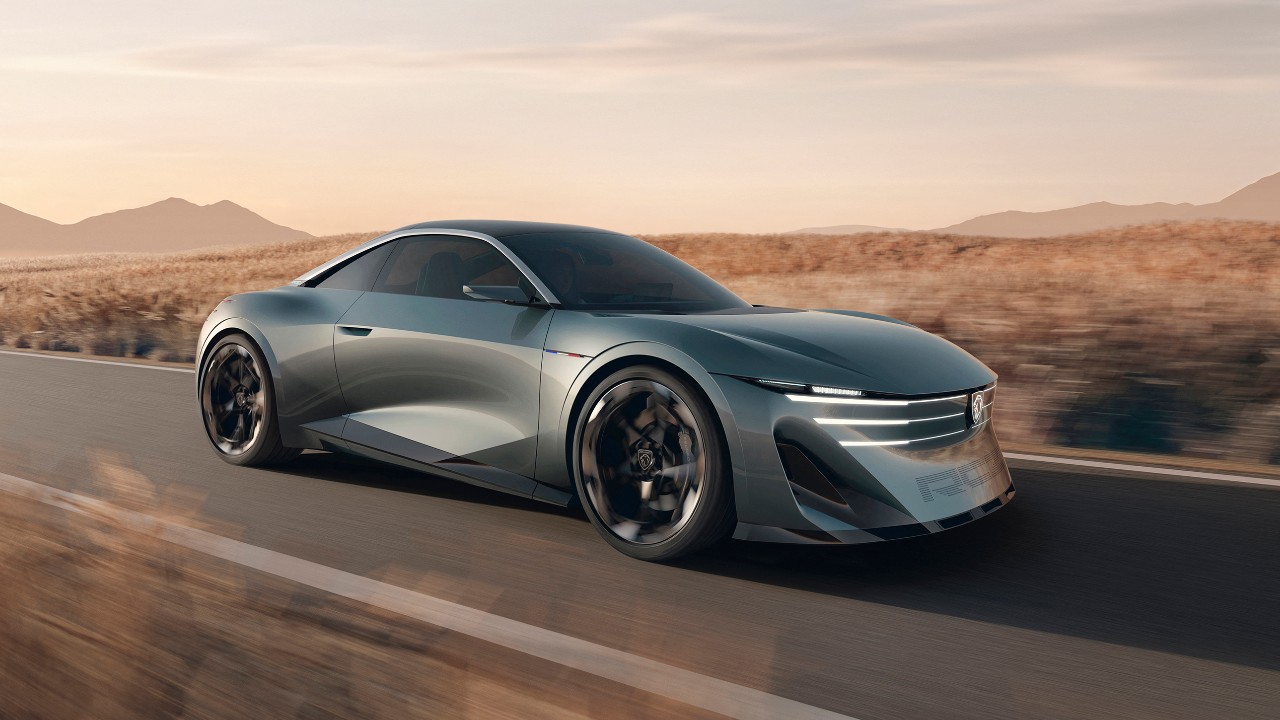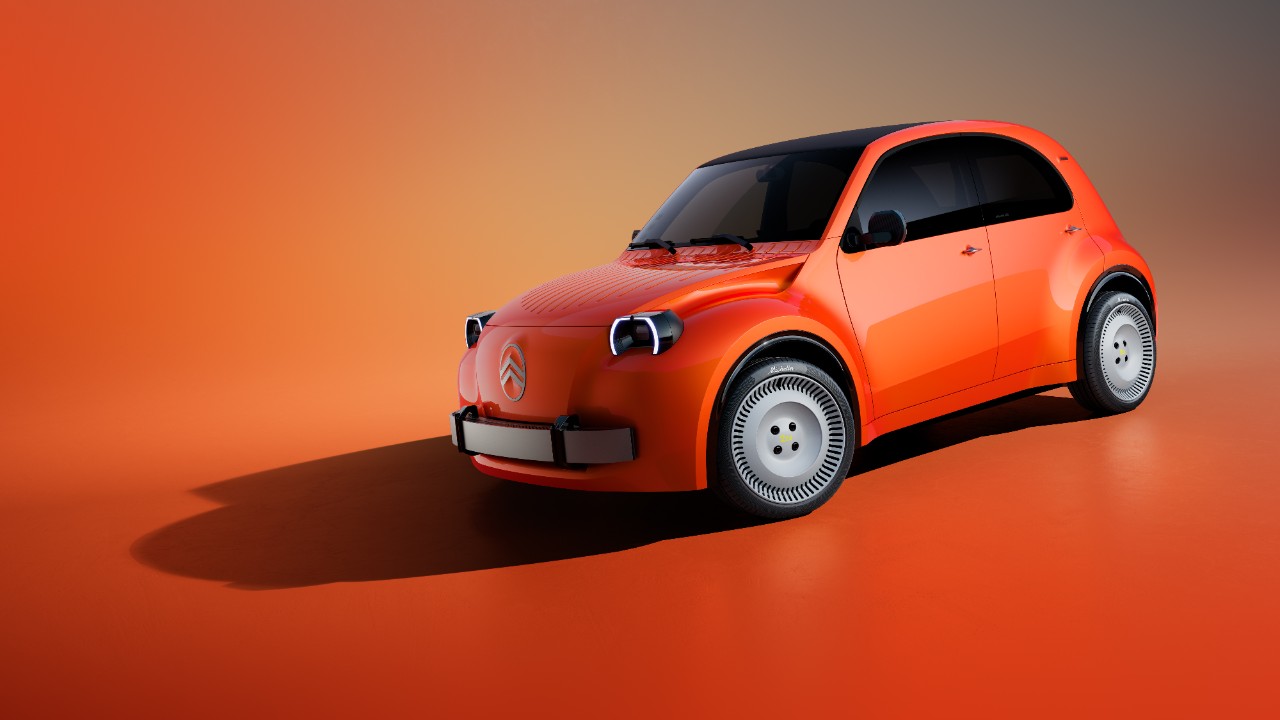
The Citroën 2 CV concept made its public debut at the 2026 Paris Motor Show, 78 years after the original 2 CV was first shown to the public at the same show. It is a small, four-door electric car, and Citroën says a production version will arrive by 2028.
At the May announcement, Citroën’s CEO said the 1948 car “gave millions of people freedom of mobility.” So the bar for this one is high. The new car has to be cheap, light and simple, and Citroën has set targets for all three. Some of those targets are firm, while others are still reports. Here is what is known, and what isn’t.
Still, the car is not a surprise. Citroën first said in May 2026 that the 2 CV name would return, and it promised to show the car in Paris in October.
From a May promise to the Citroën 2 CV concept
Citroën announced the project on May 22, 2026, as part of the Stellantis FaSTLAne plan. In the Citroën release, CEO Xavier Chardon called the job “a huge challenge and responsibility.” He also said the car would be about “reinventing its simplicity and accessibility for today’s world,” not about nostalgia.
The Paris show’s own website filled in the industrial plan. According to Mondial de l’Auto, production is due in 2028 at Pomigliano d’Arco in Italy, the plant that builds the gas-powered Fiat Panda. The car will also be the first European model on Stellantis’s new “E-Car” platform. In addition, it will use an LFP (lithium iron phosphate) battery, a chemistry the show site describes as cheaper than the usual NMC cells.
Size, weight and the reported price
First, the concept is 3,760 mm long, or about 12.3 feet, according to TimesLIVE. That makes it shorter than the original 2 CV. Citroën is also aiming for a weight of about one tonne. Lower weight, TimesLIVE explains, cuts energy use and allows a smaller, cheaper battery.
Price is the soft spot. Several outlets, including TimesLIVE and Autocar India, report a target of about €15,000. However, Citroën had not confirmed a price when it announced the project, and the Paris show site called that figure unconfirmed. Battery size, power and range have not been released either. For now, the €15,000 number is a goal, not a sticker.
Details that nod to 1948
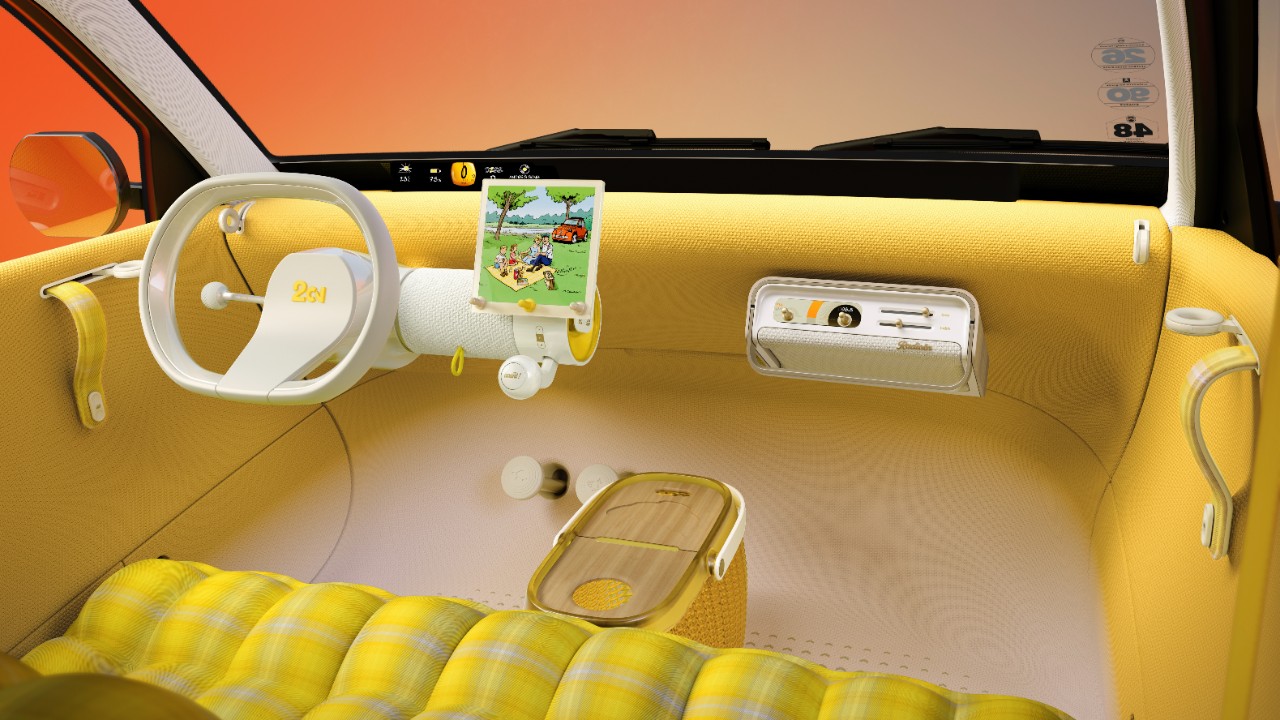
The styling keeps the round headlamps, the curved roof, the rounded wheel arches and the upright windscreen. Meanwhile, the windscreen carries three small numbers: 48, 90 and 26. According to TimesLIVE, they mark the 1948 launch, the 1990 end of production and the 2026 unveiling.
Below, the wheels are 18-inch steel units in light grey with yellow inserts, wearing Michelin tires with heritage branding. At the rear, three horizontal stripes reference the original car. The bumpers are separate pieces, too, so they can be replaced without touching the bodywork. Citroën’s aim is to make repairs simpler.
The cabin follows the same thinking. There is no conventional dashboard. Instead, a single cylinder holds the one-spoke steering wheel, a control lever and an 8-inch touchscreen. The door pockets are even shaped to hold eggs, which TimesLIVE calls a nod to the original. A removable basket replaces the center console. Finally, a detachable radio called the Radioën doubles as a portable speaker.
Four doors, two benches and a fabric roof
Like the original, the concept has four doors. According to Gear Patrol, it uses a pair of brightly trimmed bench seats, and Citroën has confirmed the car for production. Above them, TimesLIVE notes, sits a fabric sunroof that lets more light into the cabin.
Autocar India adds a few smaller touches. For example, the pedals carry a rabbit and a tortoise. The rear plate shows the 2 CV’s nicknames from around the world. According to TimesLIVE, Citroën also says the new car will sit between the tiny Ami and the C3 in its range.
What the original 2 CV did
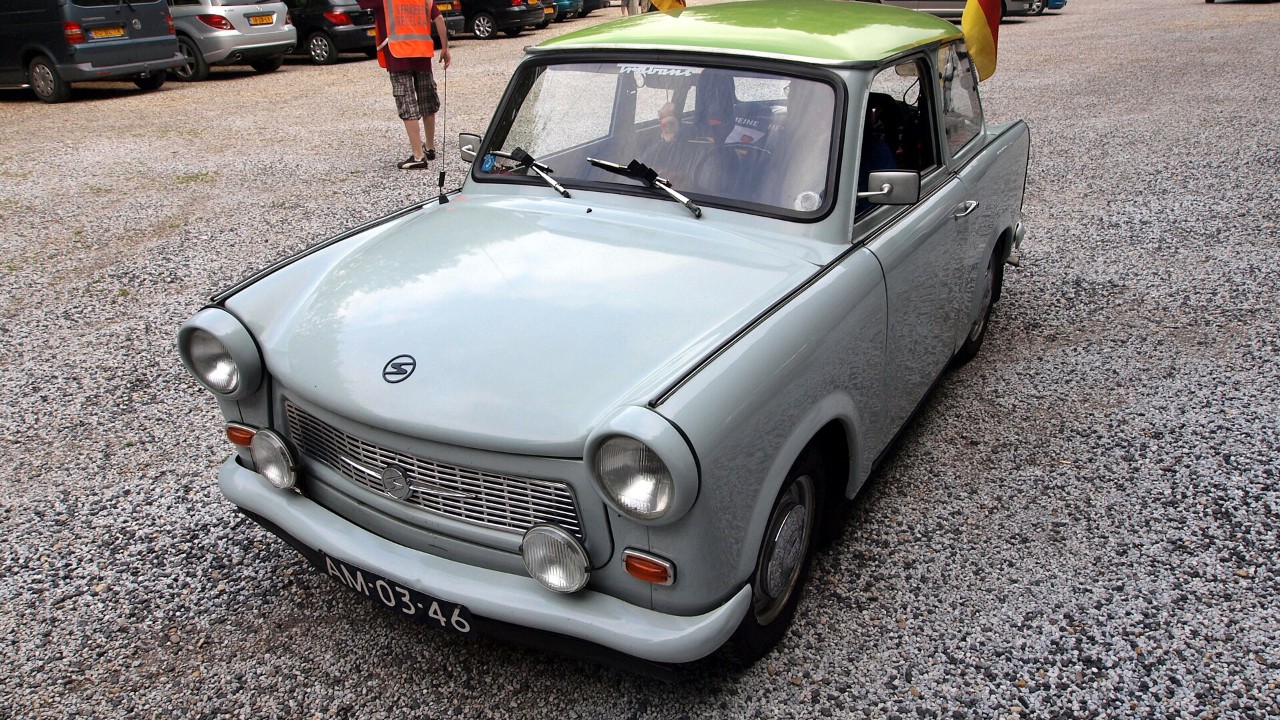
The first 2 CV went on public display at the Paris show on October 7, 1948, according to the Mondial de l’Auto. It grew out of the TPV, short for “très petite voiture,” or “very small car.” Production then ran for more than four decades.
In the end, Citroën built more than 3.8 million of them. The last one left the line at Mangualde, Portugal, on July 27, 1990, the show site says. The new car is due on sale by 2028, 80 years after that first Paris debut.
More from Fast Lane Only