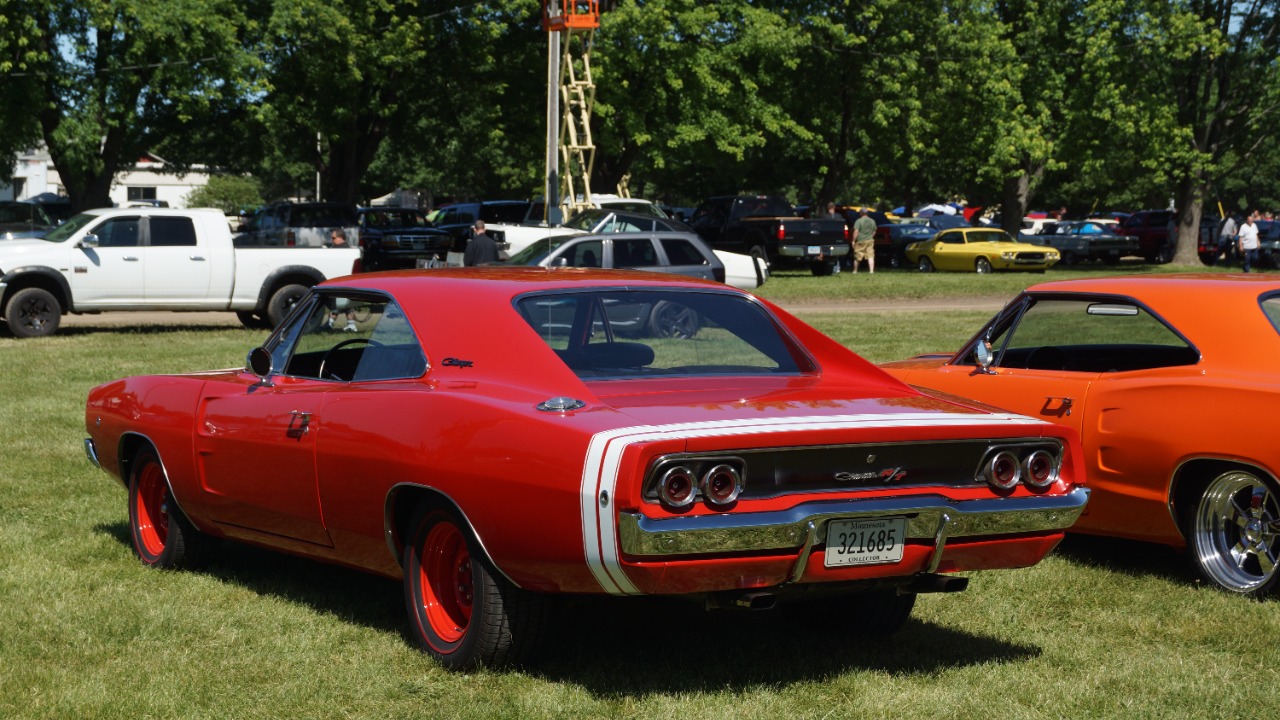
Some restorations are all grease, grit, and shopping lists for parts that haven’t existed since Nixon was in office. And then, every once in a while, a project car decides to tell you a story. That’s exactly what happened when a classic car restorer started peeling back the tired carpet in a 1968 Dodge Charger and stumbled onto a small paper time capsule stuffed under the seats.
The car was in the usual “survivor” condition—dust in the seams, old adhesive clinging like it had personal feelings, and enough mystery smells to keep the shop doors open. The plan was simple: strip the interior, clean up the floor pans, and start building it back the right way. But the Charger had other ideas.
A Routine Interior Tear-Down Turns Into a Treasure Hunt
Pulling carpet isn’t glamorous. It’s mostly tugging at brittle edges, scraping off ancient jute padding, and finding pocket change that predates smartphones. Still, it’s one of those steps that can tell you a lot about a car, because the floor doesn’t lie the way shiny paint sometimes can.
As the restorer worked along the passenger side and loosened the lower seat bolts, something caught the light—thin, yellowed slips of paper wedged near the seat tracks. Not receipts, not wiring diagrams. These were drag strip time slips, the kind handed out by track timing booths after a pass, usually folded and shoved into a pocket without a second thought.
It’s hard not to pause when you find something like that. The Charger suddenly isn’t just a project with a parts budget; it’s proof it had a life, a schedule, and probably a driver who didn’t baby it. The kind of discovery that makes you grin even if your hands are filthy.
What Time Slips Actually Say About a Car
If you’ve never held a time slip, it’s basically a performance report card. It usually lists reaction time, 60-foot time, eighth-mile, quarter-mile elapsed time, and trap speed. Even when the paper is faded and wrinkled, those numbers still hit with the same punch: this car went down a strip at full throttle, and somebody cared enough to keep the proof.
Under the Charger’s seats, there wasn’t just one slip. There were several, stacked and folded like they’d been tucked away quickly—maybe after a late-night run or a weekend of bracket racing. Some were smudged, some were surprisingly readable, and all of them felt like a direct line to the car’s past.
Even without naming a specific track, the layout and printing style screamed old-school drag racing. The slips looked like they’d lived through heat cycles, spilled soda, and decades of vibration. In a weird way, it’s fitting: the car saved the evidence in the one place most people don’t clean for years.
The Little Details That Make It Feel Real
What makes finds like this special isn’t just that they’re rare. It’s that they’re ordinary. Time slips aren’t trophies you mount; they’re the scraps you toss on the dash, then scoop up later and jam somewhere “safe,” which often means under a seat.
There’s also something charming about the idea that the Charger carried these around quietly while changing hands over the years. Owners came and went, the carpet got replaced, maybe the seats got reupholstered, and the slips stayed hidden like they were waiting. It’s the automotive version of finding a handwritten note in an old jacket pocket.
The restorer reportedly stopped the tear-down long enough to flatten the papers out carefully. Paper that old can crumble if you treat it like a modern receipt. And besides, once you’ve found a story, you don’t rush past it.
Why This Matters for Restoration (Beyond the Cool Factor)
Restorers talk a lot about “history,” but usually it’s limited to VIN tags, broadcast sheets, and build codes. Time slips are different because they show how the car was actually used. A Charger that spent time at the strip might have lived a harder life than one that only went to car shows, and that can change how you inspect what’s underneath.
Finds like these can also guide decisions. If the slips suggest consistent runs, it raises questions: Was it running a stock drivetrain? Did it have period-correct modifications? Are there old bolt holes, welded brackets, or signs of removed safety gear like a roll bar? Suddenly, you’re not just restoring a model year—you’re restoring a personality.
And then there’s the debate every restorer knows too well: return it to factory-original, or preserve the era-correct racing vibe. Time slips don’t make that decision for you, but they sure make the argument more interesting. It’s hard to ignore evidence that the car once lined up, staged, and went for it.
A Charger With a Past—And Probably a Few Secrets Left
What’s fun about an under-seat discovery is that it hints there may be more. Old tech cards, matchbook covers, insurance papers, even track maps sometimes end up tucked into seat springs or behind door panels. Once you find one artifact, you start looking at every crevice like it might be hiding the next chapter.
The Charger itself is already the kind of car people stop and stare at. A 1968 body line has that long-hood confidence, and the name alone carries a certain menace—in the good way. But the time slips add another layer, because they’re not about styling or nostalgia; they’re about action.
Some projects get attention because they’re pristine, rare, or expensive. This one grabbed people because it felt human. A driver went to the track, made some passes, kept the slips, and—without meaning to—left a breadcrumb trail for someone decades later.
Preserving the Paper Trail
Old racing paperwork doesn’t survive forever, especially when it’s been pressed into carpet padding for decades. If the restorer wants to keep them intact, the smart move is to store them flat, away from moisture and sunlight, ideally in archival sleeves. It’s a small step that keeps the story from disappearing.
There’s also the option of scanning them at high resolution. That way, the numbers and headers stay readable even if the originals keep fading. And if the Charger ends up at shows, a simple display of the slips—copies, not the fragile originals—can turn a casual walk-by into a full-on conversation.
Because honestly, people love this stuff. Not everyone can decode casting numbers, but everybody understands the thrill of a timestamped record that says, “This car ran.” Under a seat, under some carpet, the Charger was still bragging a little—and it earned it.
More from Fast Lane Only
- Unboxing the WWII Jeep in a Crate
- 15 rare Chevys collectors are quietly buying
- 10 underrated V8s still worth hunting down
- Police notice this before you even roll window down
*Research for this article included AI assistance, with all final content reviewed by human editors.