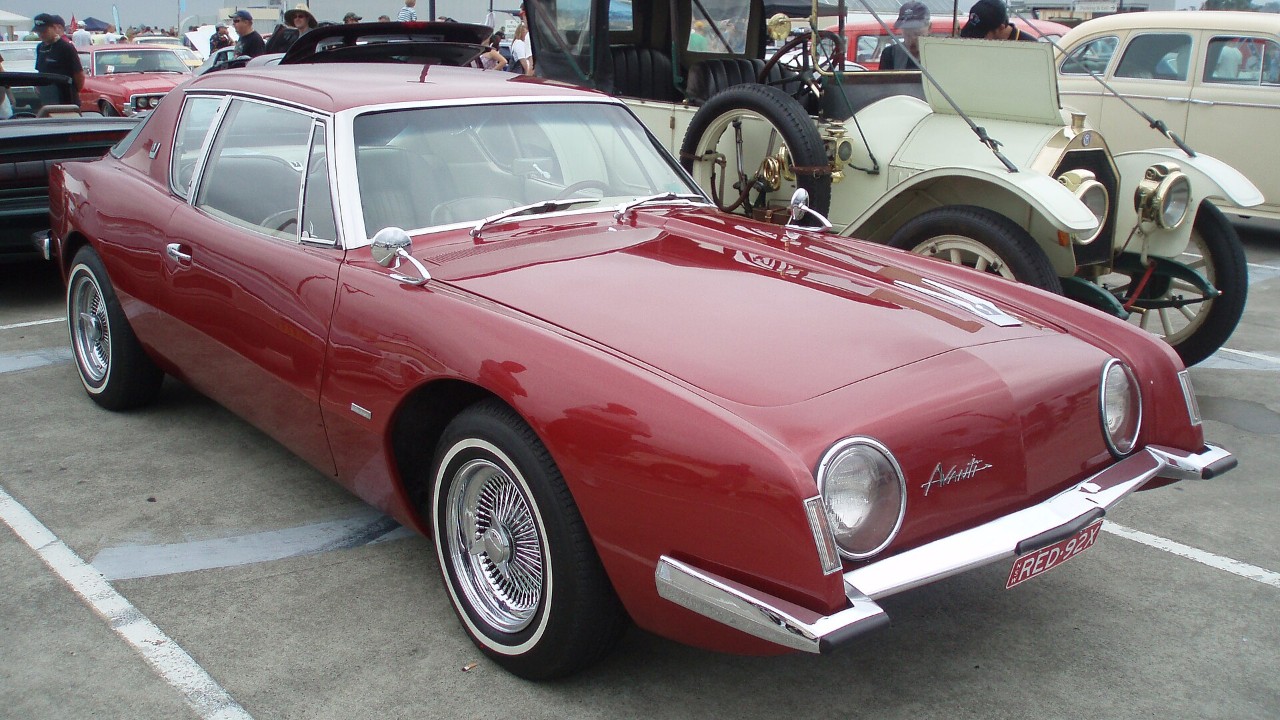
A supercharged Studebaker Avanti R2 makes an odd first pick for a keeper list, because Studebaker closed its South Bend plant only months after the car went on sale. Even so, the Avanti R2 is exactly the kind of car we would hang onto. It was brave, it was quick, and nothing else on the road looked like it.
American carmakers built plenty of handsome machines between the mid-1950s and the end of the 1960s. However, only some of them leave you grinning every time the garage door goes up. Those are the ones nobody ever lists for sale.
These are our picks, twelve classic cars we’d refuse to part with if one landed in our driveway. The verdicts are our opinion. Every year, engine and figure behind them, however, comes from a source we checked for this story.
1. 1963 Studebaker Avanti R2 coupe
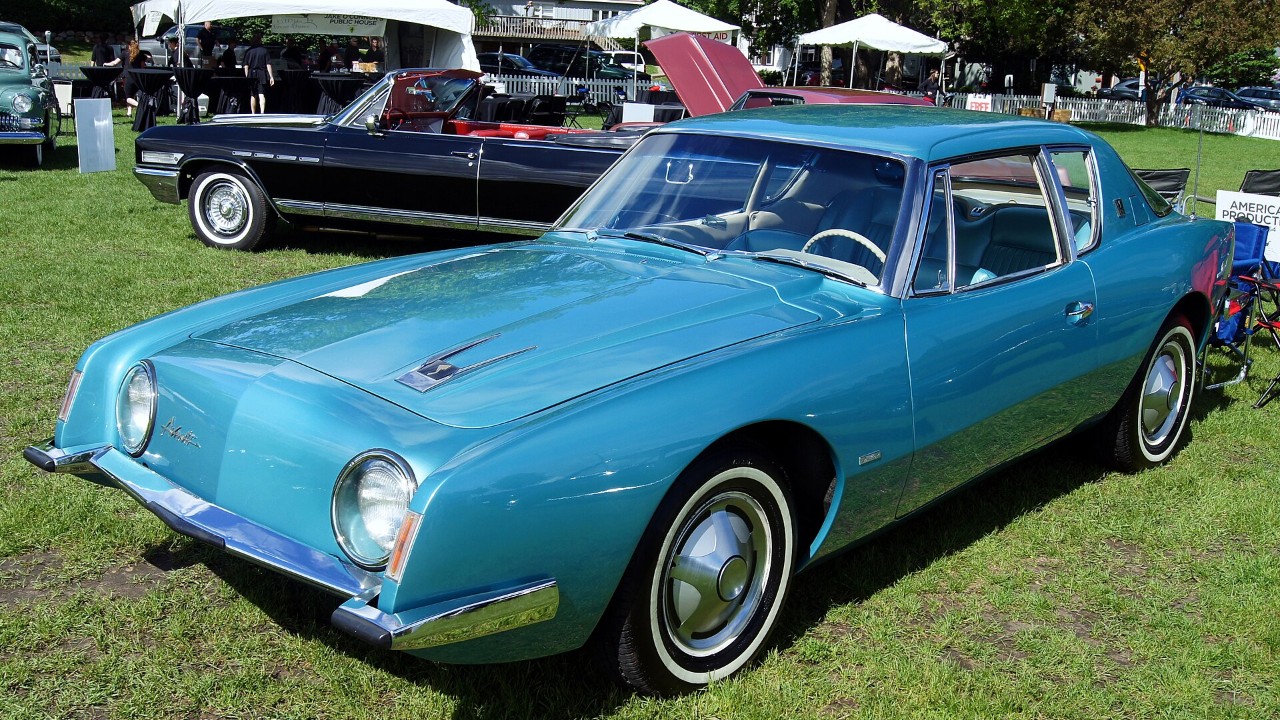
Raymond Loewy’s design team drew the Avanti in a rented house in Palm Springs, California. According to The Drive’s look at the 1963–64 Avanti, Studebaker used a fiberglass body because there was no time to make metal stampings. That rush job produced one of the cleanest shapes of its decade.
The base R1 engine was a tuned 4.7-liter V8 rated at 240 hp. By comparison, the supercharged Studebaker Avanti R2 in our pick made 290 hp. The Avanti also got front disc brakes, a built-in roll bar and a padded dash, which made it one of the first American cars with discs up front. James Bond author Ian Fleming bought one, too. For more on its strange reputation, see our earlier piece on the Avanti as muscle’s ugly duckling.
Our take: you would never get bored in a Studebaker Avanti R2, and you would never park next to a twin. We’d keep it for both reasons.
2. 1967 Chevrolet Camaro SS 350 Sport Coupe
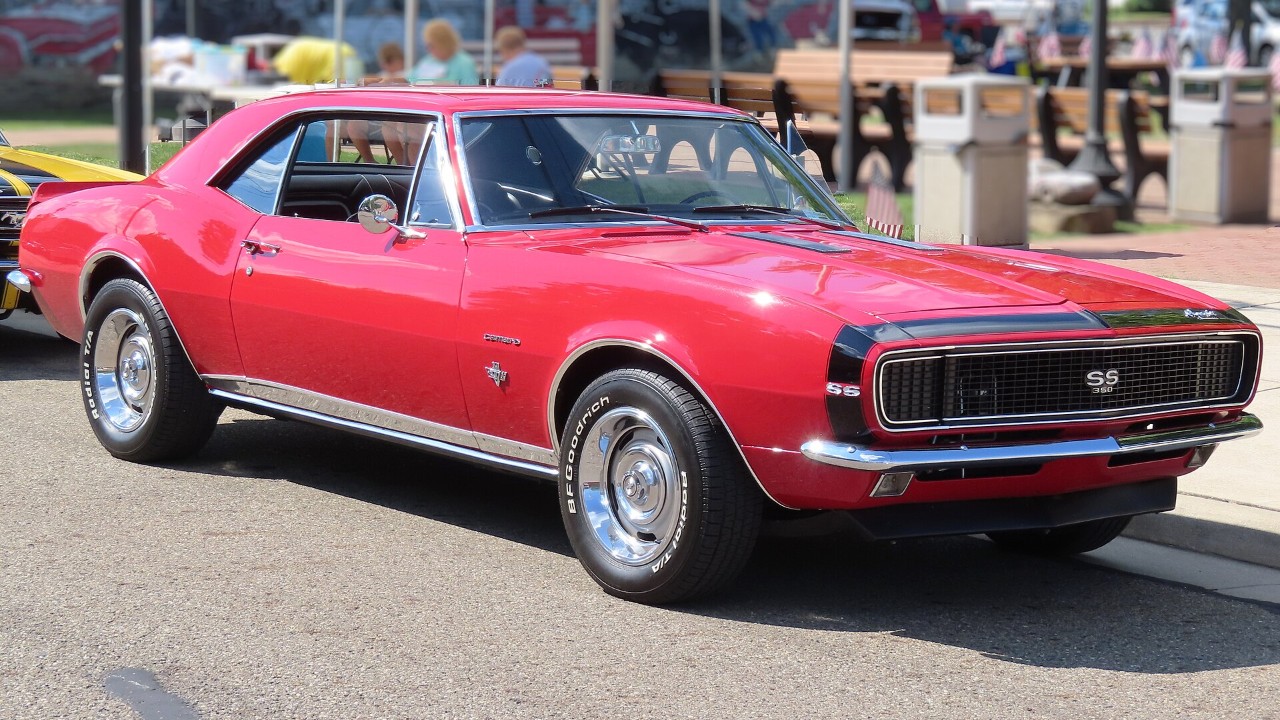
Chevrolet started building the first Camaro on September 29, 1966, and sold it as a 1967 model. The SS 350 was the sweet spot of the early range. Its L48 V8 made 295 hp at 4,800 rpm and 380 lb-ft of torque.
The SS package also brought chassis upgrades for sharper handling. In addition, it added non-functional hood inlets, special striping, and SS badges on the grille, fenders, gas cap and horn button. Chevy clearly wanted you to notice the letters from every angle.
In our view, the small-block SS is the first Camaro to own if you want to drive it, not just polish it. It has plenty of punch for every on-ramp, and it feels balanced rather than nose-heavy on a back road. We wouldn’t sell one for that reason alone.
3. 1964 Ford Falcon Sprint convertible
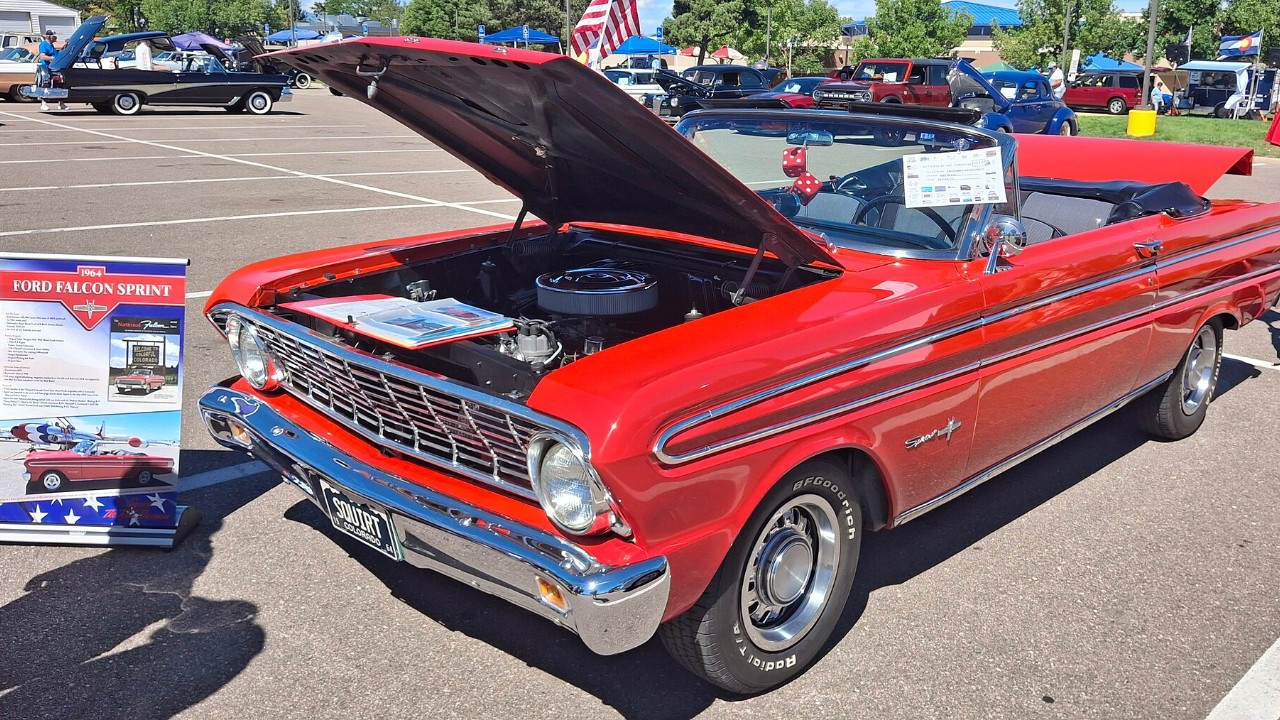
Ford’s Falcon began as a plain economy compact, and more than half a million sold in its first year. For 1964, it gained crisper, squared-off styling. Then came the Sprint package, which turned the sensible Falcon into something with real character.
First, the package added the 260-cubic-inch V8, rated at 164 hp in Challenger form. It also brought a stiffer suspension and a louder exhaust. Better still, the convertible version got bucket seats, so it felt more like a small sports car than a commuter. Ford stopped building Falcon convertibles on June 26, 1965.
Our take: a V8 Falcon Sprint convertible feels like a Mustang before the Mustang, at a fraction of the fuss. Top down, small V8 burbling, it’s the car we’d grab for an evening drive. That’s why it stays.
4. 1964 Chevrolet Chevelle Malibu SS Sport Coupe
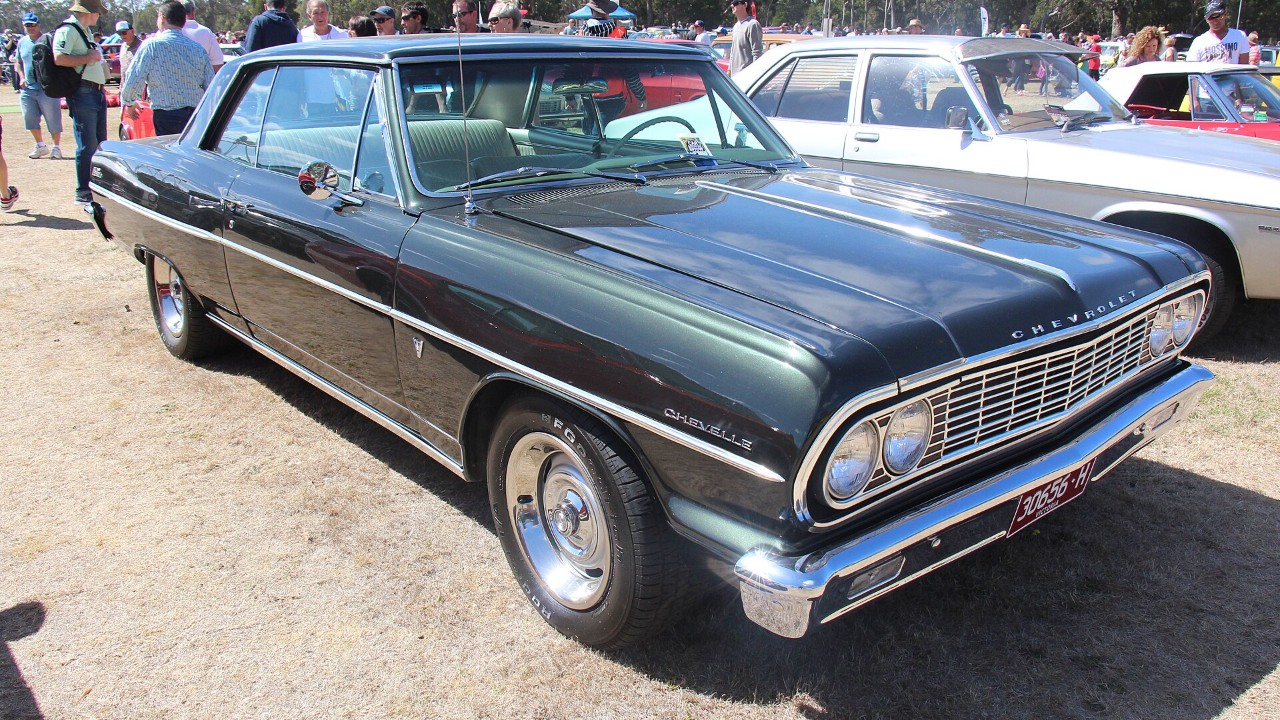
Chevrolet chief “Bunkie” Knudsen introduced the Chevelle in August 1963 for the 1964 model year. It rode on GM’s new A-body platform, sized between the compact Chevy II and the full-size Impala. In the end, that middle size turned out to be exactly right.
The Malibu SS package cost $162 on the two-door hardtop and convertible. For that money, buyers got SS badges, Impala SS wheel covers, vinyl bucket seats and a four-gauge cluster. Cars with the four-speed or Powerglide also got a floor console. Chevrolet built 294,160 Chevelles that year, including 76,860 SS models.
From mid-1964, the 327 V8 joined the list in 250 hp and 300 hp versions. We’d keep a first-year SS because it shows where the Chevelle legend started, before the big-block cars stole the spotlight.
5. 1956 Ford Fairlane Crown Victoria
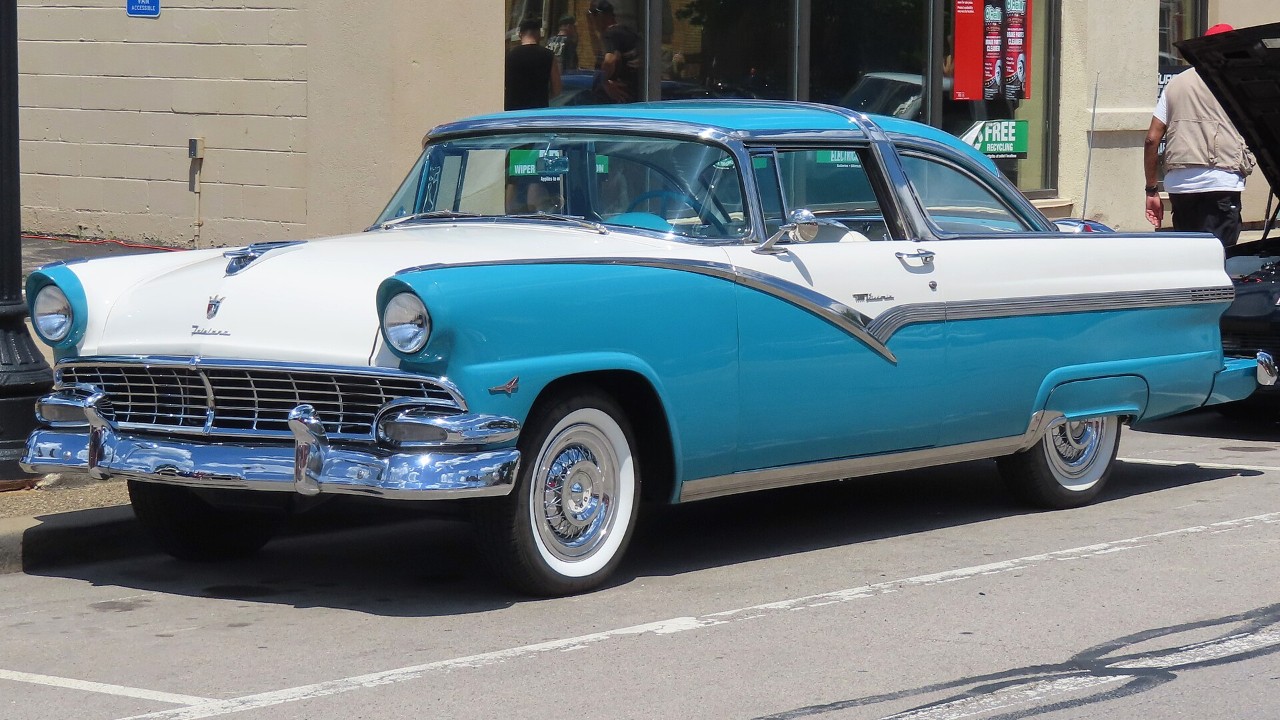
For 1956, Ford introduced its Lifeguard safety package. The same year, the Fairlane line got two new V8 engines, a 292 and a 312. Of the two, the 312 made up to 225 bhp in its hottest form.
The Crown Victoria wrapped those changes in Ford’s most stylish hardtop body. Above all, its signature is the bright band arching over the roof, which makes it easy to spot in any car-show row. Ford even offered a version with a tinted, see-through plastic roof panel in 1955, called the Skyliner.
In our view, the 1956 car is the better buy for a keeper. It has the same look, more engine choices and the first hints of modern safety. We’d drive it to every summer cruise night and never think about selling it.
6. 1958 Edsel Pacer
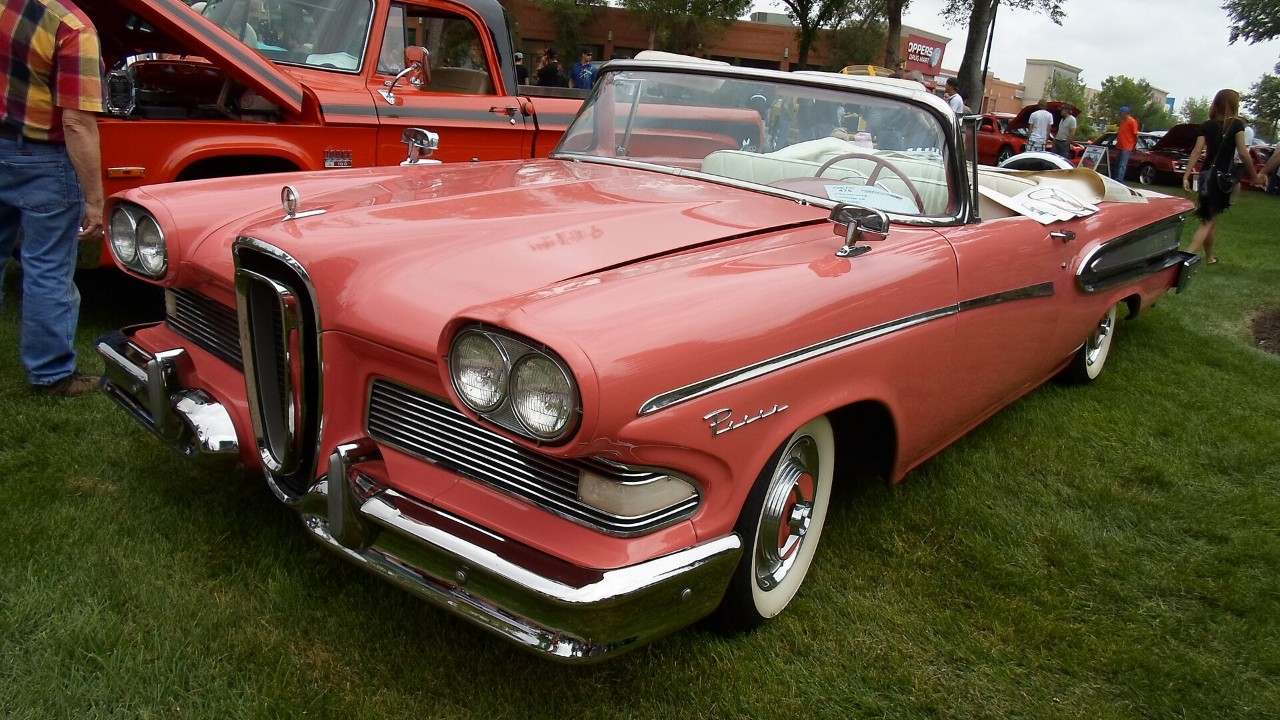
The Pacer lasted exactly one model year. Even so, it was among the best-selling 1958 Edsels, and Ford built 20,988 of them. Only 1,876 of those were convertibles, and all of them came from U.S. plants.
At the same time, every Pacer carried a 361-cubic-inch FE V8 rated at 303 hp as standard. Prices ran from $2,700 to $2,993. The real conversation piece, though, was Teletouch, a $231 automatic with its gear buttons in the steering wheel hub. It earned a reputation as trouble-prone, so an owner today has to accept a little drama.
Our take: the Edsel’s reputation as a flop makes a well-kept Pacer more fun, not less. People walk over to ask about it. We’d keep ours for the conversations alone, and we’d learn to love the buttons.
7. 1964 Mercury Marauder sedan
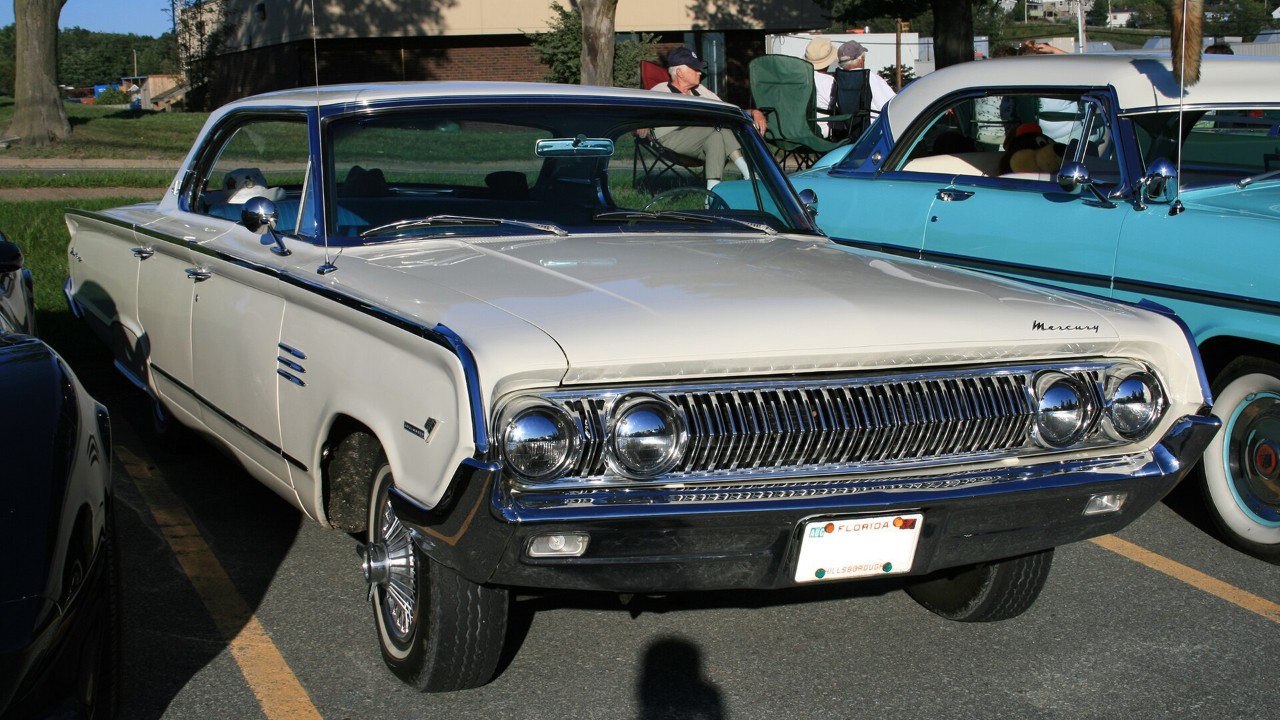
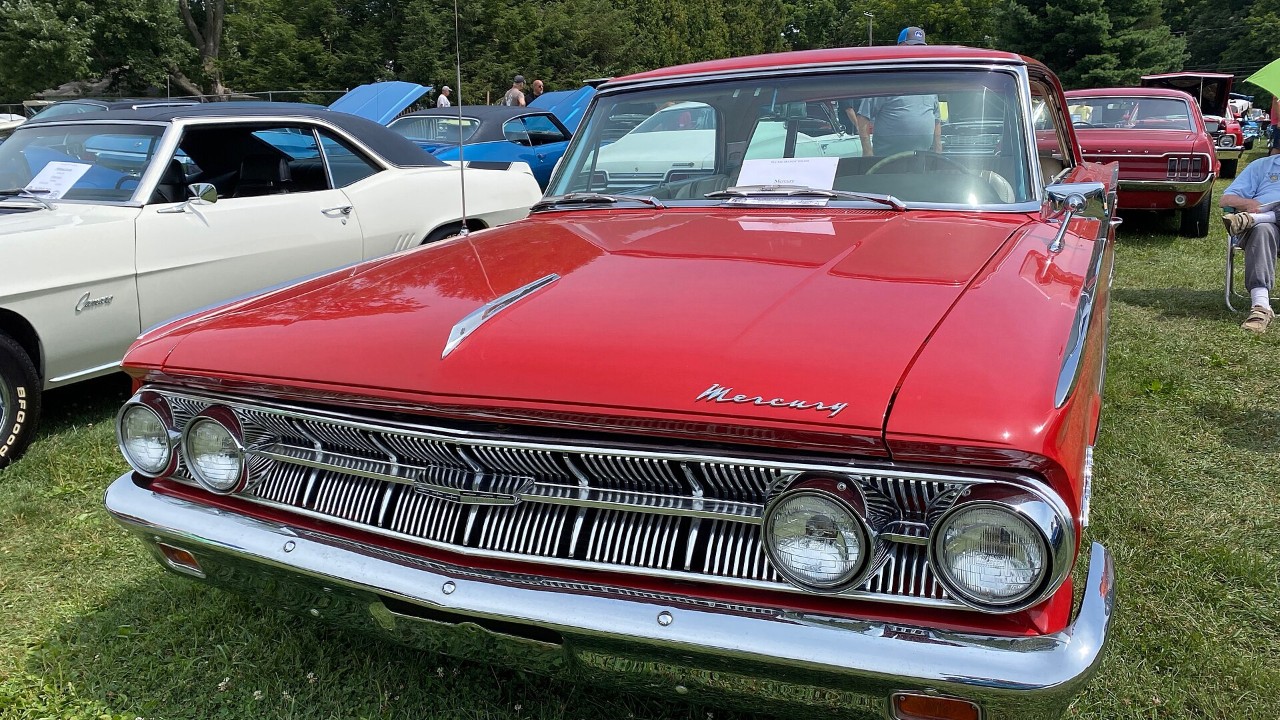
Mercury launched the Marauder as a “1963½” model, and it came only as a two-door hardtop at first. That first run totaled 3,863 cars at $3,650 each. For 1964, Mercury spread the name across the Monterey, Montclair and Park Lane lines and added four-door models like the one pictured.
The Marauder used a conventional sloping notchback roof instead of the reverse-slant Breezeway roof on other big Mercurys. Mercury shaped it to make the big car more competitive in stock car racing. A 390-cubic-inch FE V8 was standard, while the 427 came with a four-barrel carburetor or as the twin-carb Super Marauder.
However, buyers who chose the 427 had to take the four-speed manual. In our view, a four-door Marauder makes a perfect family sleeper. It looks like a church car and drives like a racer, and we’d never let one go.
8. 1965 Buick Riviera Gran Sport
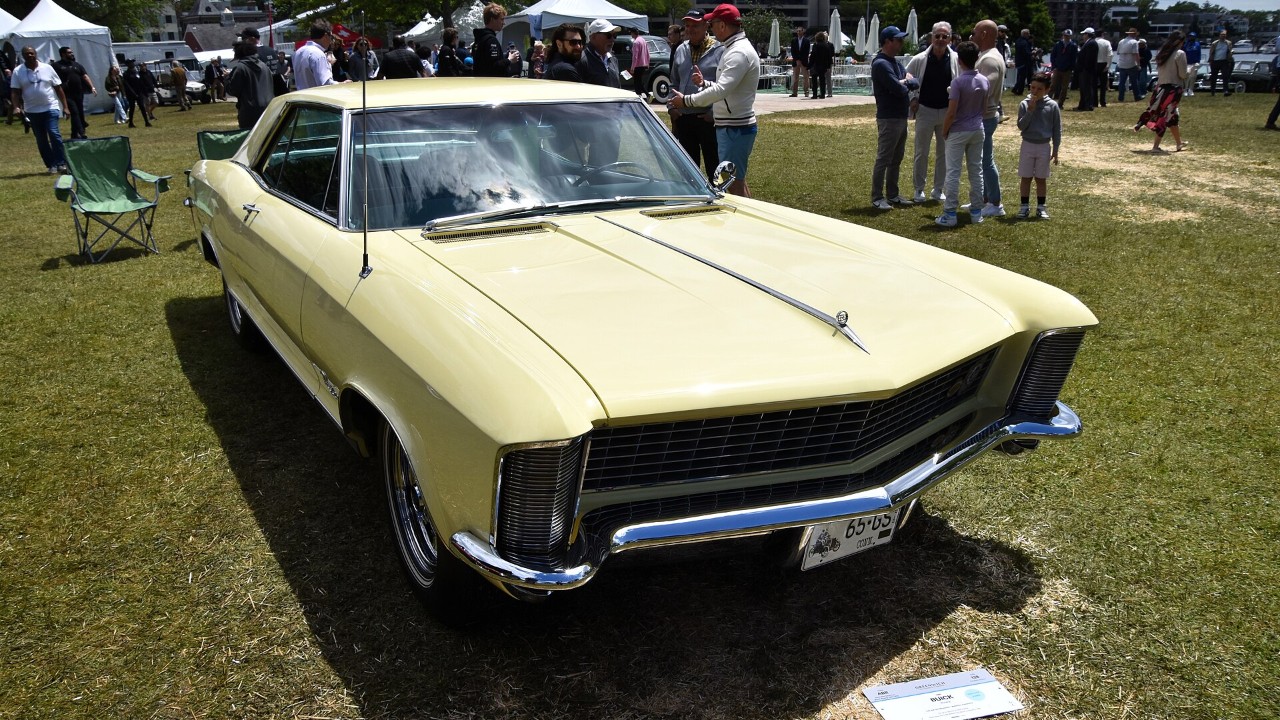
Buick made several careful changes for 1965 that turned the Riviera into a better grand tourer. The headlamps moved behind clamshell doors in the leading edges of the fenders. At the back, the taillights moved down into the bumper, while the fake side scoops disappeared.
The Gran Sport got the Super Wildcat V8, rated at 360 hp and fed by two Carter carburetors. Buick also enlarged the dual exhaust pipes from 2.0 to 2.25 inches inside diameter. Power reached a 3.42 rear axle through a Super Turbine 400 automatic with a variable-pitch torque converter.
Buick built 34,586 Rivieras for 1965, though not all were Gran Sports. Our take: this is the most complete version of a great design, quiet when you want it and brutal when you don’t. That’s a car you keep.
9. 1959 Cadillac Eldorado Biarritz convertible
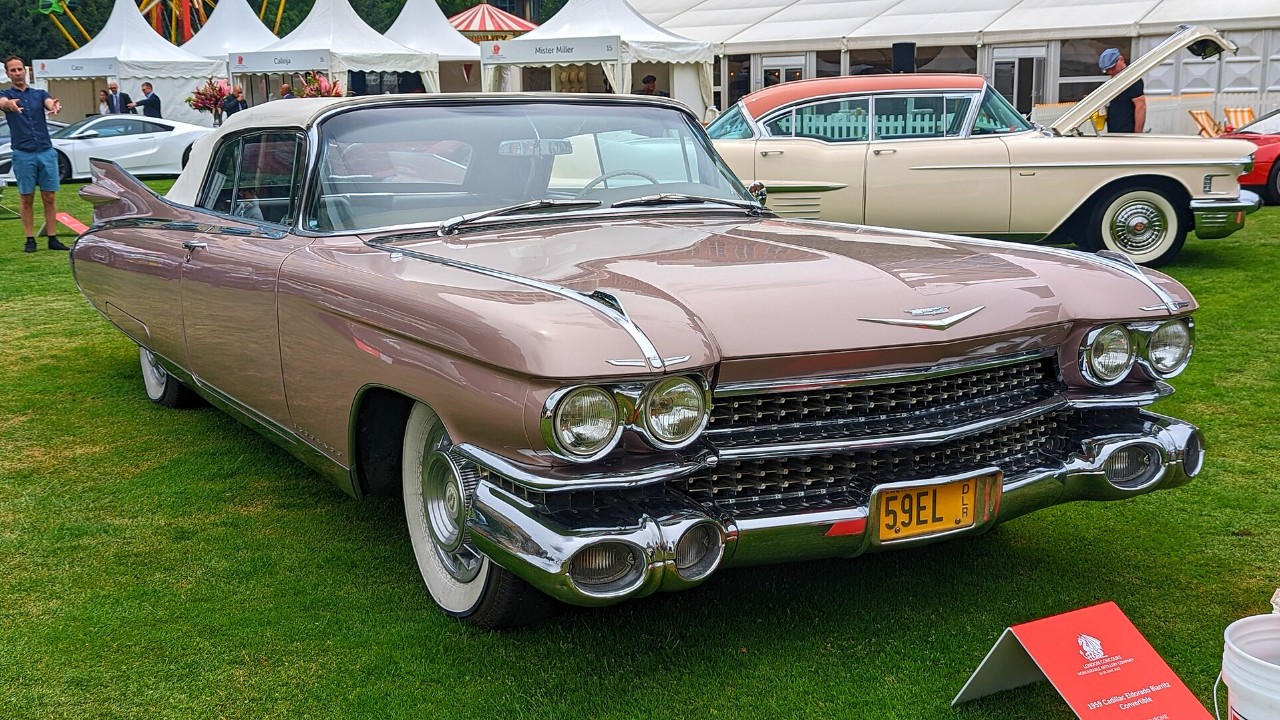
People remember the 1959 Cadillac for its huge, sharp tailfins and the twin bullet taillights set into them. The Eldorado Biarritz is that design at full volume, with the top folded away. Meanwhile, under the long hood sat a 390-cubic-inch V8 rated at an even 345 hp.
For 1959, Cadillac moved the two-door Eldorados, the Seville hardtop and the Biarritz convertible, into the Series 6400. Meanwhile, the four-door Eldorado Brougham moved to the Series 6900 and listed at $13,075. The Biarritz gave buyers the drama without the Brougham’s sky-high price.
In our view, no car sums up late-1950s America better. It is huge, chrome-heavy and completely unapologetic. If we owned one, it would never leave the family, and the grandkids would fight over it.
10. 1966 Oldsmobile Toronado Deluxe
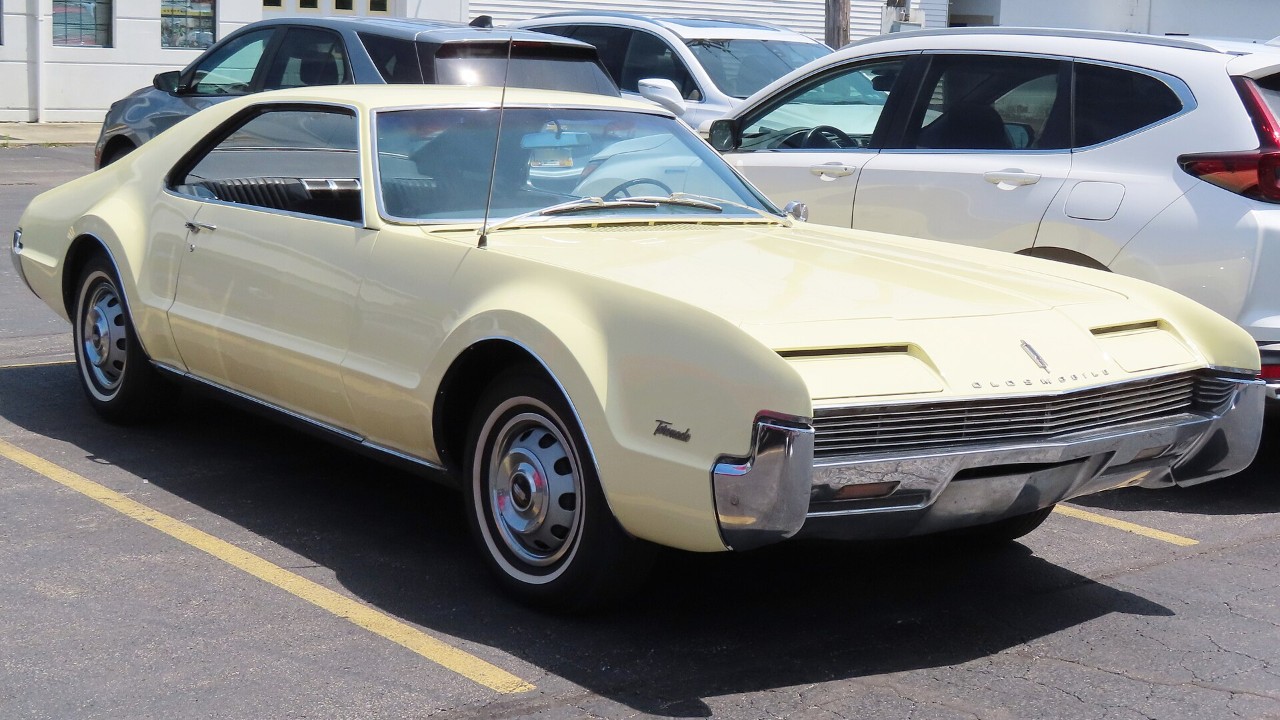
The 1966 Toronado was the first front-wheel-drive car built in the U.S. since the Cord 810/812. According to Hagerty’s Toronado feature, its 425-cubic-inch V8 made 385 hp and 475 lb-ft of torque. A chain carried that power from the torque converter to a Turbo-Hydramatic turned 180 degrees.
About 60 percent of the car’s 4,500 pounds sat over the front wheels, and Car and Driver ran it from zero to 60 mph in 8.6 seconds. Meanwhile, Olds sold about 41,000 in 1966 at a price of $4,997. Motor Trend named it Car of the Year, and it placed third for European Car of the Year. We covered more of its story in 10 facts about the 1966 Toronado.
Hagerty puts a #3 (Good) car at $14,000 to $22,000. Our take: that’s a bargain for a piece of engineering history, so we’d buy one and never sell.
11. 1957 Chrysler 300C convertible
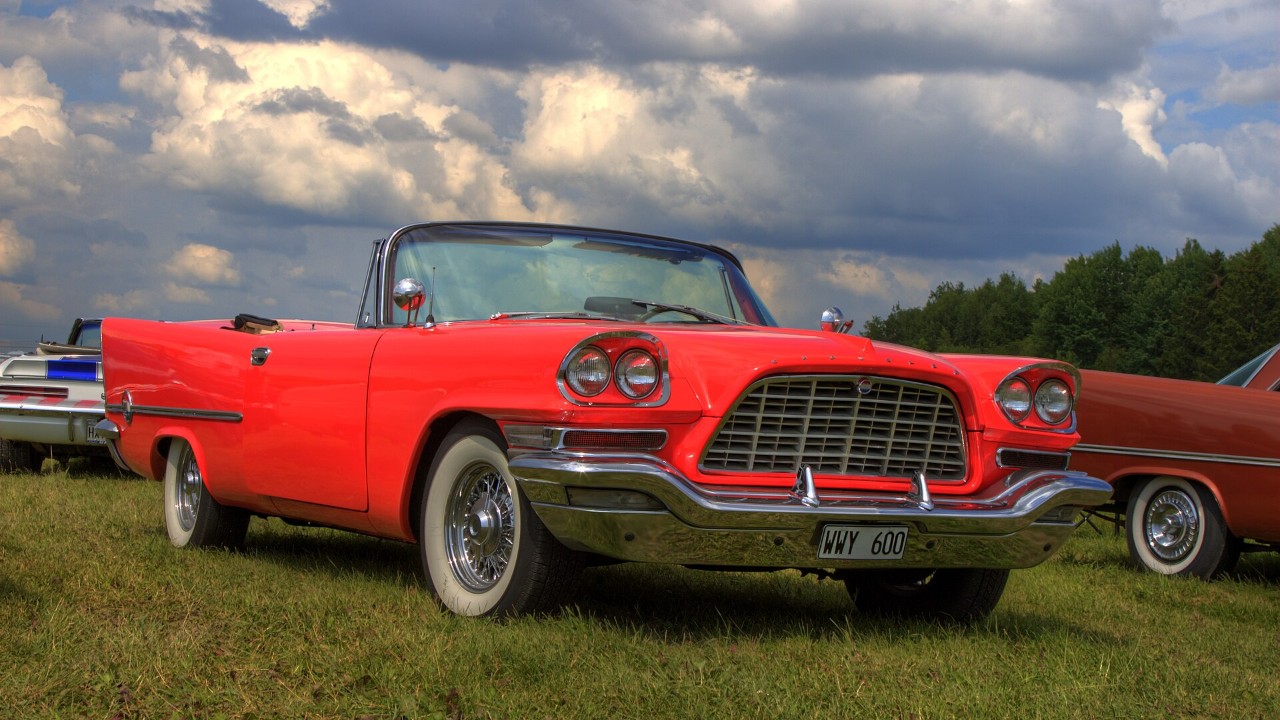
The 1957 300C was the first year Chrysler offered its letter-series car as a convertible. Chrysler built 2,402 300Cs that year, but only 484 were convertibles. The rest were hardtop coupes.
As a result, the convertible is by far the scarcer body. Power came from a 392-cubic-inch Hemi V8 rated at 375 hp. In addition, a limited run of 18 cars got a 390 hp version. The convertible listed at $5,359, and air conditioning cost another $495. That same year, Chrysler’s new Torsion-Aire torsion-bar front suspension replaced coil springs across its cars.
In our view, this is the most exclusive car on our list and one of the best looking. A Hemi under the hood and the top down make an unbeatable combination. We’d guard it closely.
12. 1969 Dodge Charger R/T
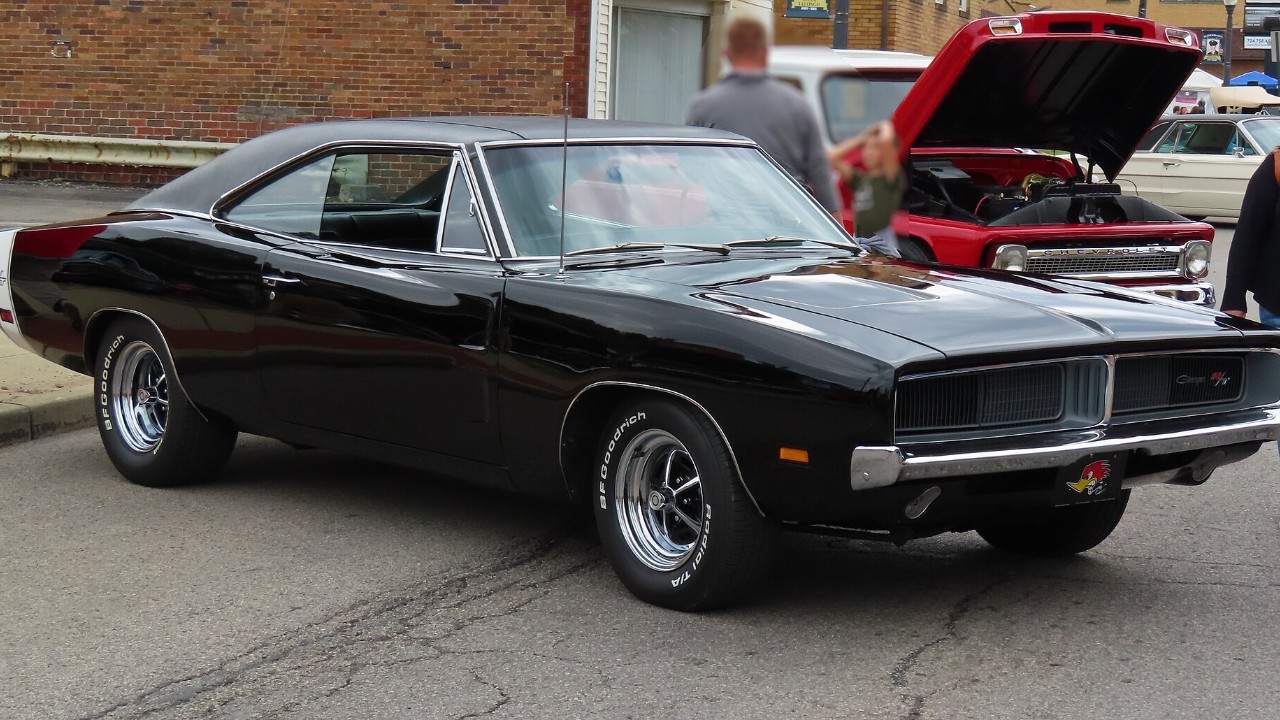
Dodge gave the 1969 Charger a center divider in its grille and new long taillights designed by Harvey J. Winn. As a result, those small changes made the R/T instantly recognizable. Under the hood, the 440 Magnum was standard, while the 426 Hemi was the option, rated at 425 hp.
Dodge built about 89,199 Chargers for 1969. That same year, it also launched the winged Charger Daytona on April 13, 1969, and built 503 for the U.S. market. Later, TV made the ’69 famous all over again, because the General Lee in The Dukes of Hazzard was an orange 1969 Charger.
Our take: the Charger R/T is the car we’d hand down rather than sell. Its shape has not aged a day. The record shows its pull, too: Dodge built just 503 U.S. examples of the winged Daytona that grew from it.
More from Fast Lane Only