Earl “Madman” Muntz sold just 198 copies of his Muntz Jet, and he lost money on every one. That small number tells you a lot about the chrome era. Many of the most interesting American cars of the 1950s came in tiny batches, from small makers or as top-trim specials that few buyers could afford.
Decades later, though, those low numbers matter even more. Rust, crashes and parts cars have thinned the herd every year since. As a result, some of these models now show up at a big show only once in a long while.
These are our picks, eight rare vehicles from the chrome era that we think are getting harder to find. Each one is the exact car in its photo. The production figures come from our sources, and the verdicts are our opinion.
1. Muntz Jet
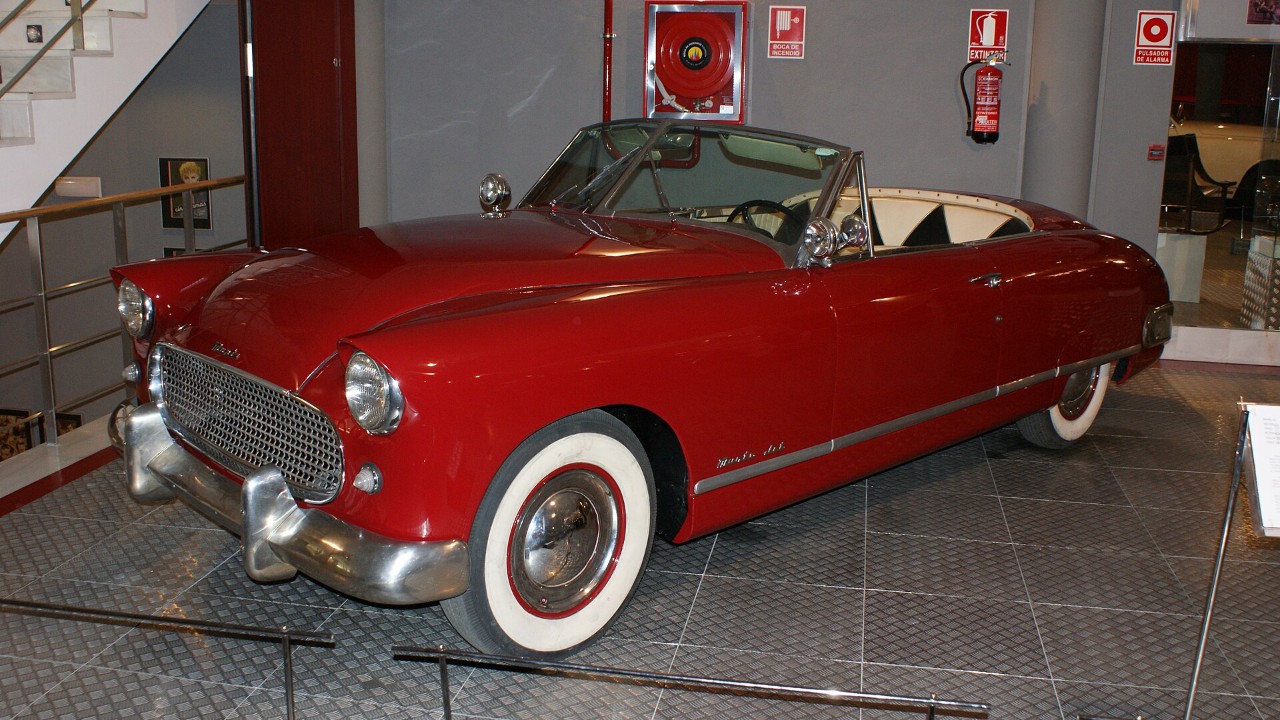
Muntz did not start from a blank sheet. Instead, he bought the rights, parts and tooling of the Kurtis Sport Car from Frank Kurtis for $200,000. Then he stretched the wheelbase 13 inches to make room for a rear seat. The first Jets came out of Glendale, California, with aluminum bodies and Cadillac V8s. Later, production moved to Evanston, Illinois, where the cars got steel bodies and Lincoln engines.
The Muntz Jet also had seat belts and a padded dash, and a drink cabinet sat in the rear armrest. According to Hagerty’s profile of Earl Muntz, the car sold for $5,500 in 1953 but cost $6,500 to build. Muntz lost nearly half a million dollars before he shut the operation down.
In our view, the Muntz Jet is the definition of a chrome-era rarity. With only 198 sold, there were never many to begin with. Because each one is a hand-built mix of Kurtis, Cadillac and Lincoln parts, a tired example is a hard project to finish.
2. 1958 Continental Mark III convertible
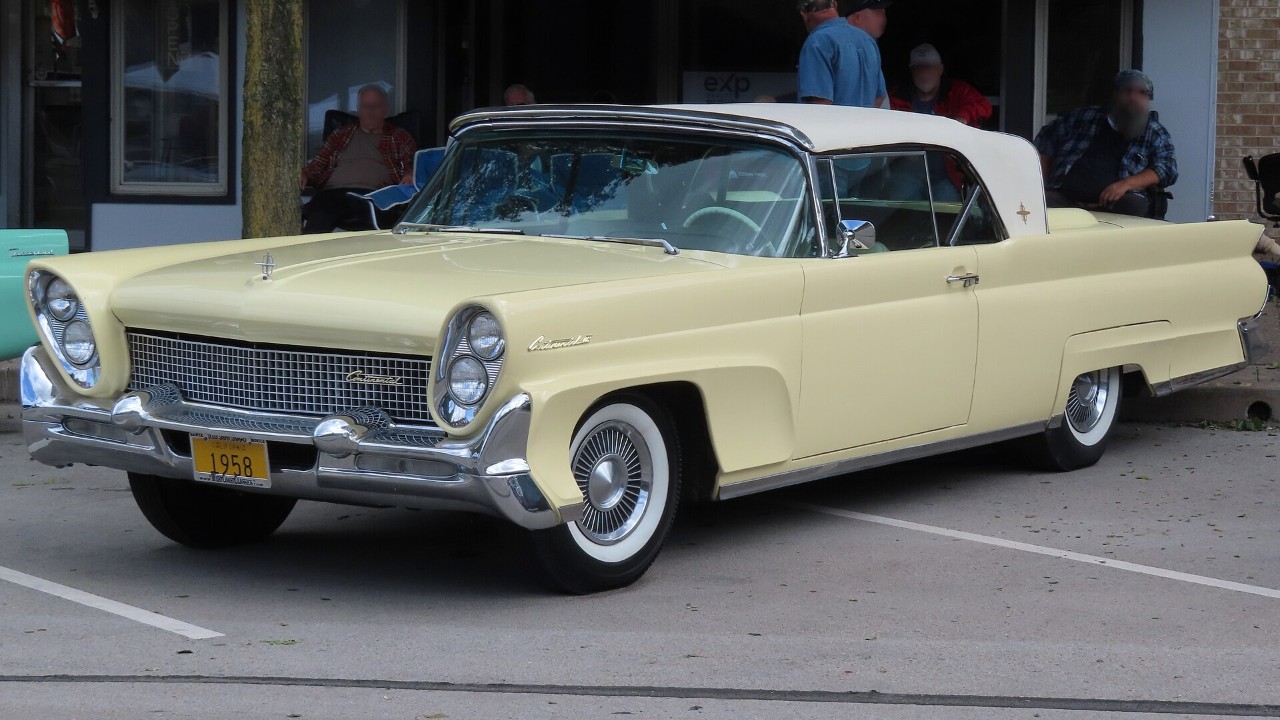
By 1958, the separate Continental Division was no longer active, so the Mark III was sold as a Lincoln. It was also a huge car, since it measured 229 inches long, used a new unibody structure and came from the new Wixom plant. Under the hood sat a 430-cubic-inch MEL V8 rated at 375 horsepower.
The Mark III sold better than most people expect. Lincoln built 12,550 of them in 1958, which was 62 percent of the brand’s output that year, according to The Truth About Cars’ history of the Mark series. However, only 3,048 were convertibles. The base price was $6,283 before options. Ford even engineered the reverse-slant “Breezeway” power rear window into the convertible.
Our take: the open Mark III is the one to watch. A unibody convertible of this size needs a solid structure, and every rusty one that goes to the crusher shrinks a pool that started at about 3,000 cars. Clean ones draw a crowd for a reason.
3. 1958 Ford Fairlane Skyliner Retractable
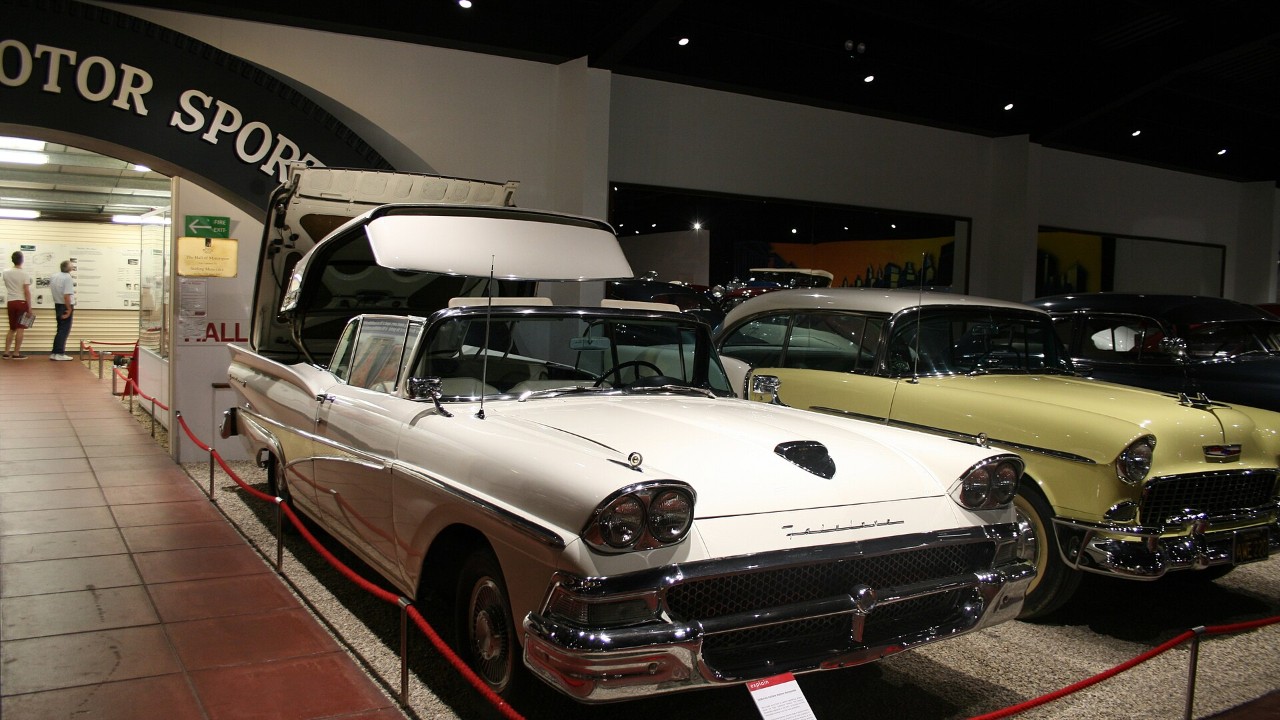
The Skyliner had a steel roof that folded itself into the trunk at the push of a button. The mechanism was a small factory on wheels. It used seven reversible electric motors, four lift jacks, ten limit switches, ten solenoids and 610 feet of wiring. Ford listed it at $2,942 retail for 1958.
Sales slipped quickly, though. Ford built 20,766 Skyliners in 1957 but only 14,713 in 1958. One reason was simple: with the roof down, the top filled almost all of the trunk. Buyers could still order serious power, since the 1958 engine list topped out with a 352 V8 rated at 300 horsepower. We covered more of the year’s Fords in our chrome-era Fords that still stop traffic.
In our view, the Skyliner gets scarcer for a mechanical reason. A car with that many motors, switches and solenoids needs patient, skilled work to keep it running. So a Skyliner with a fully working roof is the one we would hunt for, and we think those get harder to find each year.
4. 1958 Edsel Citation convertible
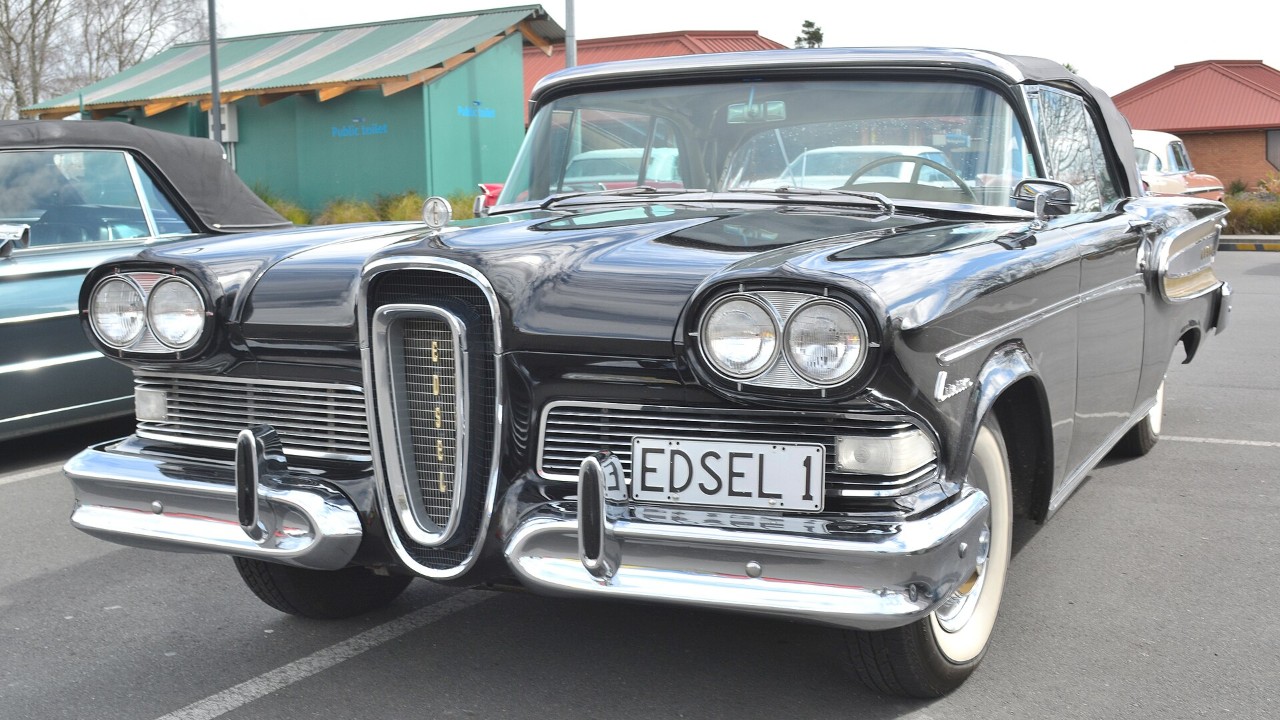
Edsel sold 8,574 Citations, and the split by body style explains why the open car is so hard to find. Buyers took 5,112 four-door hardtops and 2,532 two-door hardtops. By comparison, just 930 chose the convertible. Even then, the Citation lasted a single model year, 1958.
As the flagship, the Citation got Edsel’s biggest engine, the 410-cubic-inch E-475 V8. It made 345 bhp, and torque reached 475 lb-ft, so this full-size car never felt slow. A three-speed automatic came standard. Meanwhile, Edsel’s Teletouch system moved gear selection to the center of the steering wheel.
Our take: the convertible is the scarcest Citation body style by a wide margin. Because the model lasted only one year, its trim belongs to 1958 alone. To us, that makes a complete, original Citation convertible a real event at any show.
5. 1956 Mercury Montclair convertible
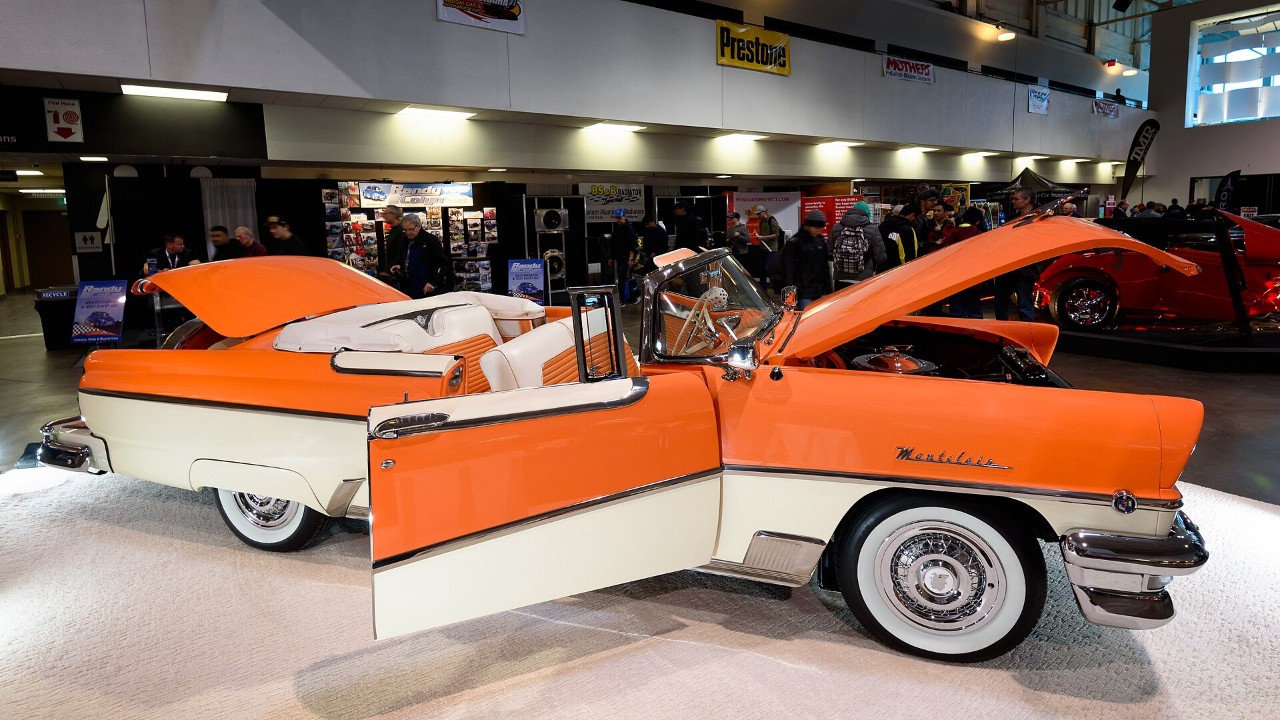
Mercury launched the Montclair for 1955 as its top line, above the Monterey. It came as a four-door sedan, a two-door hardtop and a two-door convertible. For 1956, the 312-cubic-inch V8 made 225 horsepower. Mercury also added an optional dual four-barrel version with 260 horsepower.
The 1956 car leaned hard into chrome and color. The side trim became a full-length, multi-tier chrome spear, and a “Big M” emblem replaced the hood crest. Meanwhile, buyers could choose from 31 two-tone and 28 “Flo-tone” paint combinations. As a result, the cars left the showroom in a huge range of looks.
In our view, the convertible is the Montclair that best captures the mid-1950s. It has the bright trim and the bold paint without the excess of the later cars. When a solid one turns up, we think it deserves a long look.
6. 1956 Lincoln Premiere convertible
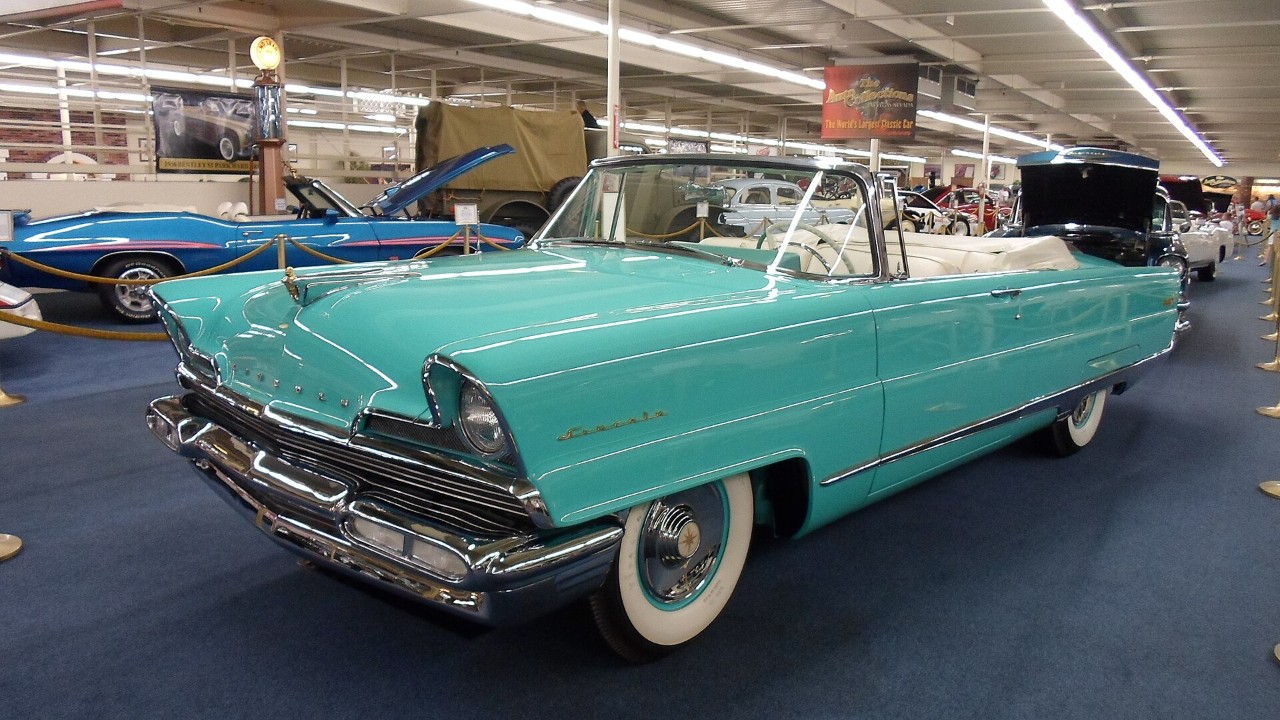
Lincoln introduced the Premiere for 1956 as an upscale version of the Capri. It became the top regular Lincoln, sitting just below the Continental Mark II. Power came from a 368-cubic-inch Y-block V8, and the car weighed 4,357 pounds. The base price was $4,601.
Most buyers chose a roof. Lincoln assembled 19,619 Premiere hardtop coupes and 19,465 four-door sedans in 1956. By contrast, it built just 2,447 convertibles. Meanwhile, the car stretched to about 223 inches, which gave it a long, low profile with the top down.
Our take: the 1956 Premiere convertible is one of the cleanest Lincoln designs of the decade. In our eyes, it avoided the heavier styling of the 1958 to 1960 cars, and the open body shows off its long lines. With so few built, it is a car we would stop for every time.
7. 1958 Chrysler 300D
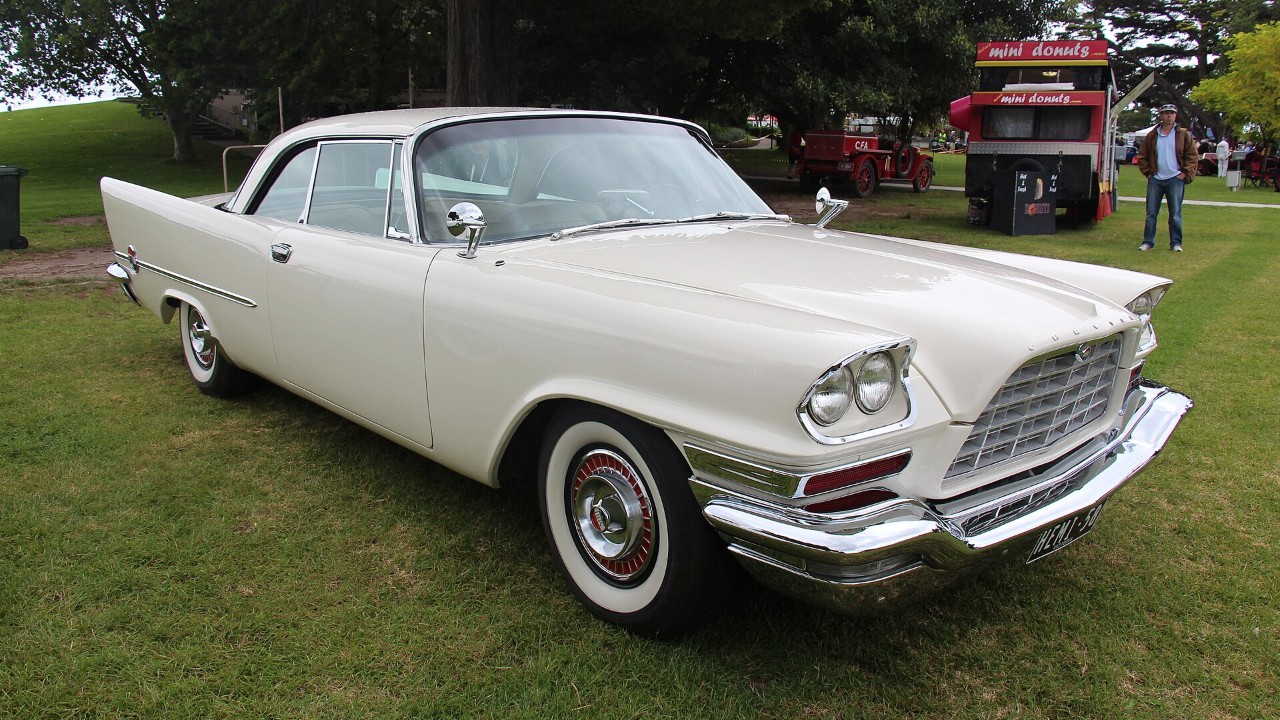
The 300D was the last letter-series Chrysler with the FirePower Hemi. Its 392-cubic-inch V8 made 380 horsepower as standard. In addition, 35 cars got Bendix Electrojector fuel injection and a 390-horsepower rating. Reliability problems led to recalls, and Chrysler refitted those cars with dual four-barrel carburetors.
In total, Chrysler built only 618 hardtops and 191 convertibles, for 809 in total. At the time, the hardtop listed at $5,173, and the convertible at $5,603. That was serious money for 1958. Even so, the car backed it up, because a 300D reached 156.387 mph at the Bonneville Salt Flats. For more cars of this decade, see our list of forgotten 1950s cars that were years ahead of the competition.
In our view, the 300D is the end of an era in one car. With 809 built, it was rare from day one. Because it was the Hemi’s last year in the series, it is the 300 we would most like to find.
8. 1955 Packard Clipper Custom Constellation hardtop
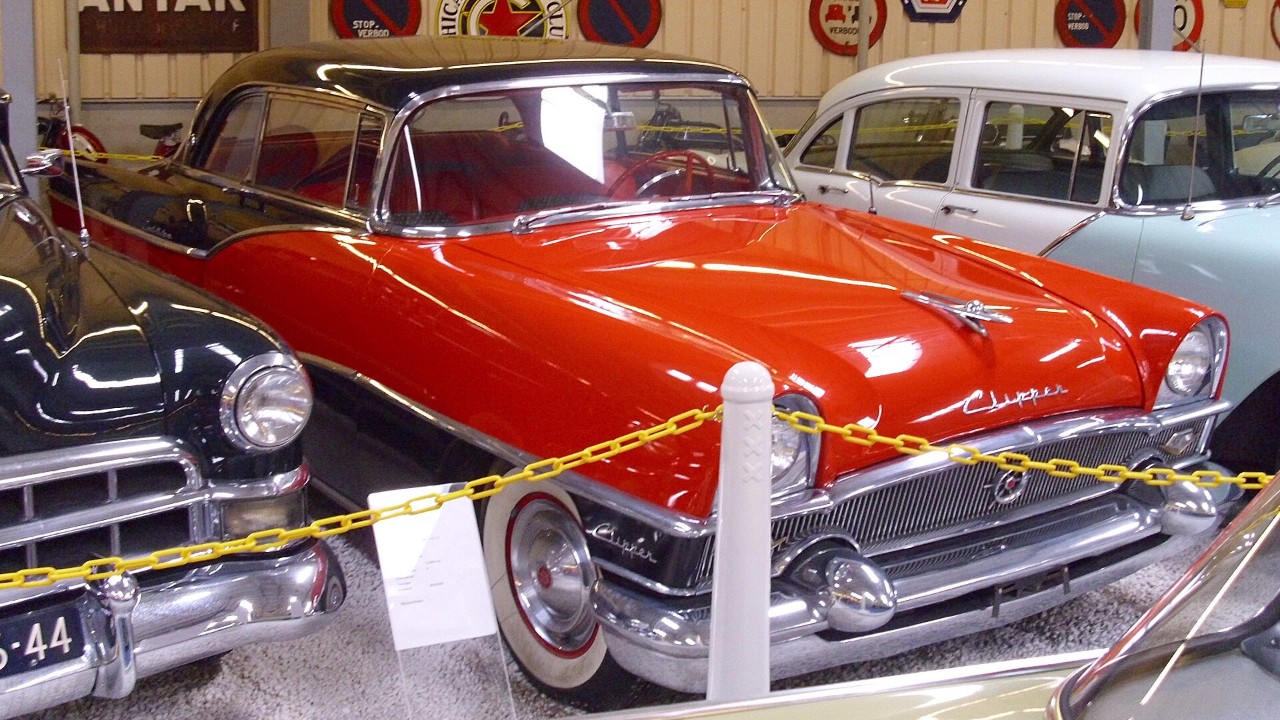
The car in our photo is model 5567, the hardtop in Packard’s 1955 Clipper Custom series. It listed at $3,076. That year, the Clipper Custom got a new Packard-built V8 of 320 cubic inches. It also rode on torsion-bar suspension.
Packard built 15,380 Clipper Customs in 1955, a figure that covers every body style in the series. The next year, the Clipper became its own make within Studebaker-Packard, with a ship’s wheel logo and separate dealer agreements. In 1956, the Constellation hardtop accounted for 1,466 sales.
Our take: the Constellation is a reminder of how close Packard came to a comeback in the mid-1950s. A modern V8 and torsion-bar ride made it a sophisticated car for its price. Then the Clipper split off as its own make for 1956, so the 1955 Custom Constellation hardtop marks the last year before that break.
More from Fast Lane Only