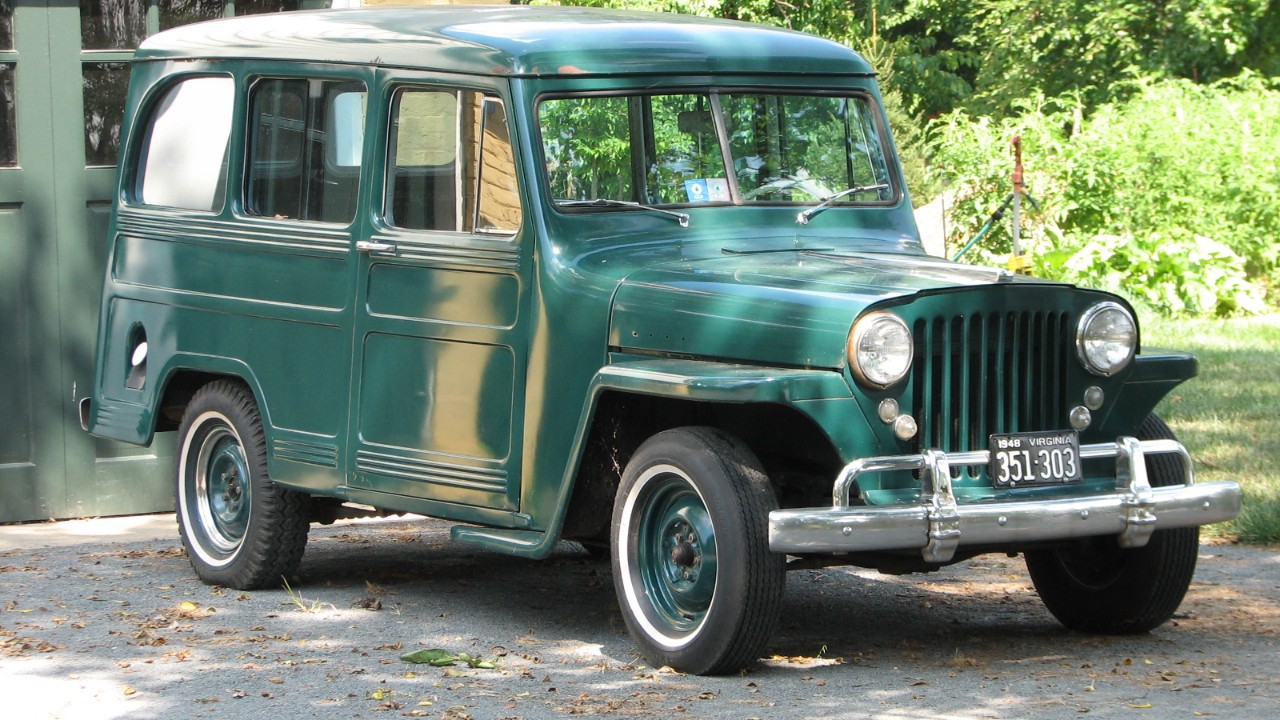
The Willys Jeep Station Wagon arrived in 1946 with an all-steel body, which Jeep calls a first for an American station wagon. It seated seven and ran a small four-cylinder engine. In other words, Willys designed it to work, and that attitude runs through the best Jeeps ever since.
Not every Jeep has been trouble-free, of course. Some had quirks, and owners drove plenty of them hard. However, certain models earned a reputation for simple, stout hardware that keeps going when the road ends.
These are our picks, nine Jeeps that rarely let anyone down, from postwar wagons to the Wrangler Rubicon. The verdicts are our opinion. Every date and figure behind them comes from a source we checked for this story.
1. 1950 Willys Jeep Station Wagon
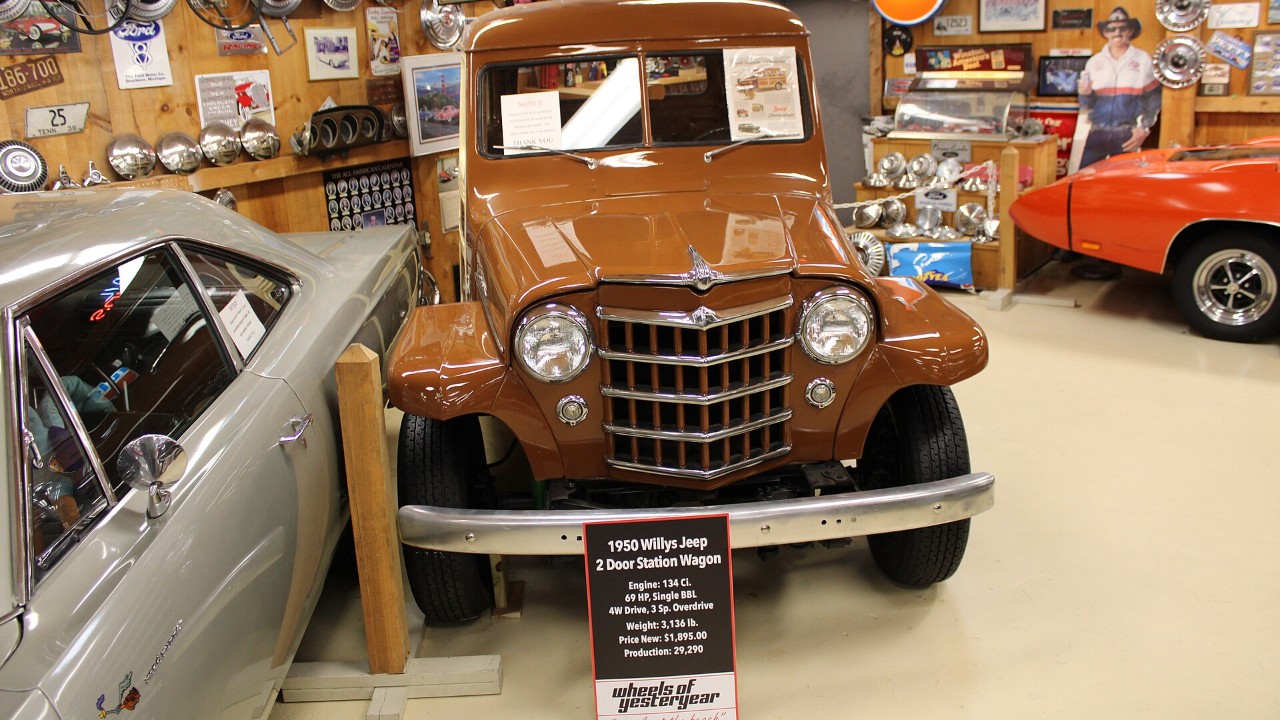
According to Hagerty’s profile of the early Wagoneer and its roots, the first Willys Jeep Station Wagon was a two-door with a 2.2-liter four rated at 63 hp. It also came with a three-speed manual. Then, in 1949, a four-wheel-drive version followed, built on the back of a 1948 special order from the U.S. Army.
Jeep’s own history pages add the practical touches. The steel body wore three-tone paint to mimic a wood-panelled woodie, yet it would not peel or squeak. Better yet, owners could hose out the interior, and the tailgate folded down for loading.
The 1950 wagon pictured here sits at the Wheels of Yesteryear Vintage Auto Museum. Our take: a simple engine, a steel body and a washable cabin make this the most honest Jeep on the list. If you buy one, check the body for rust before anything else.
2. 1971 Jeepster Commando SC-1 pickup
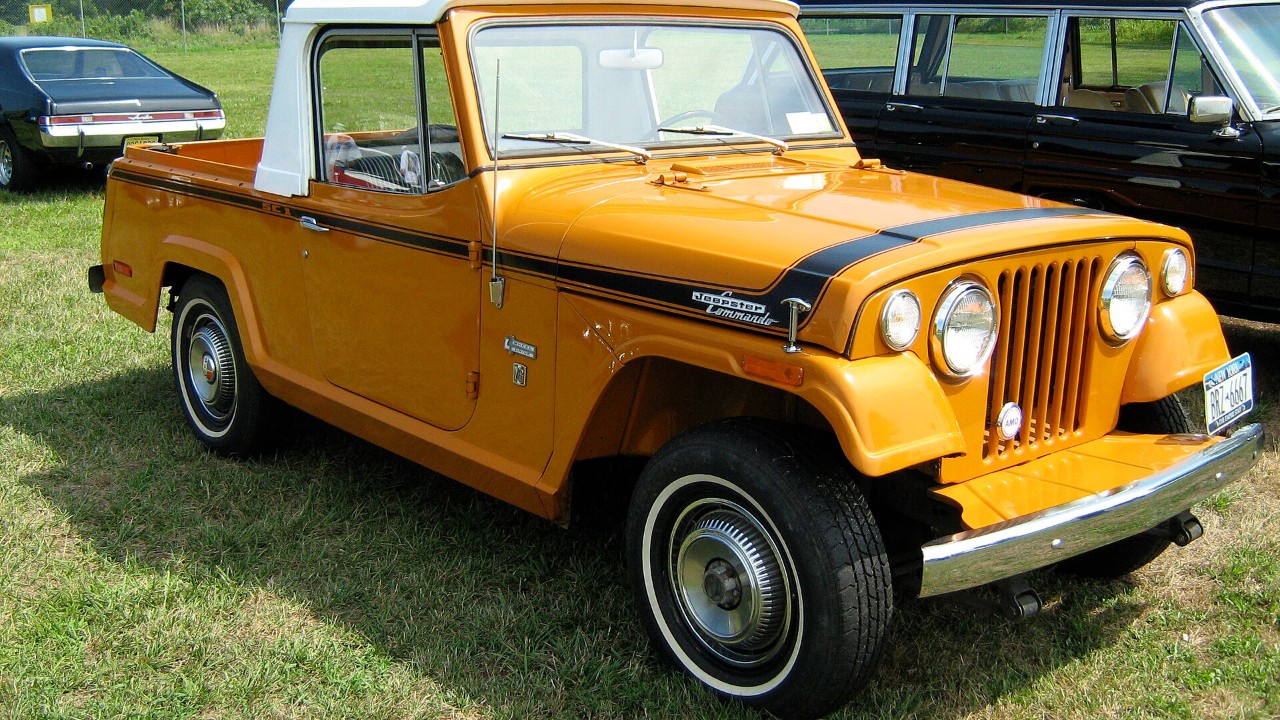
The Jeepster Commando went into production in 1966 as a 1967 model. At first, it came as a pickup like this one, a convertible, a roadster and a two-door wagon. Four-wheel drive was standard on every version.
Kaiser Jeep built the early cars, and American Motors took over production after it bought Kaiser Jeep in 1970. Meanwhile, buyers could pick a 75 hp Hurricane four, or the popular Dauntless 225 V6 with 160 hp. The original C101 series totaled 57,350 vehicles.
In our view, the V6 Commando pickup is the smart pick. It offers small-truck usefulness on a short wheelbase, with an engine that has plenty of torque. Before you buy, though, make sure the parts you need for that exact year are easy to find.
3. Jeep CJ-8 Scrambler

The Scrambler was a long-wheelbase CJ-7, built from 1981 to 1986 on a 103.5-inch wheelbase. As a result, the extra length went into a long rear overhang for cargo. According to Jeep’s own history, it never came with a V8.
That might sound like a weakness. Instead, it kept the Scrambler simple, and six-cylinder models could get an automatic. Jeep also exported a steel-hardtop version to Australia, so the Scrambler earned its keep on two continents.
Our take: the CJ-8 is a pickup and an open-top Jeep in one, with simple, proven running gear. We’d trust one for daily chores and weekend trails alike. Buyer advice: inspect the frame and the bed floor, because a working life shows up there first.
4. 1991 Jeep Grand Wagoneer
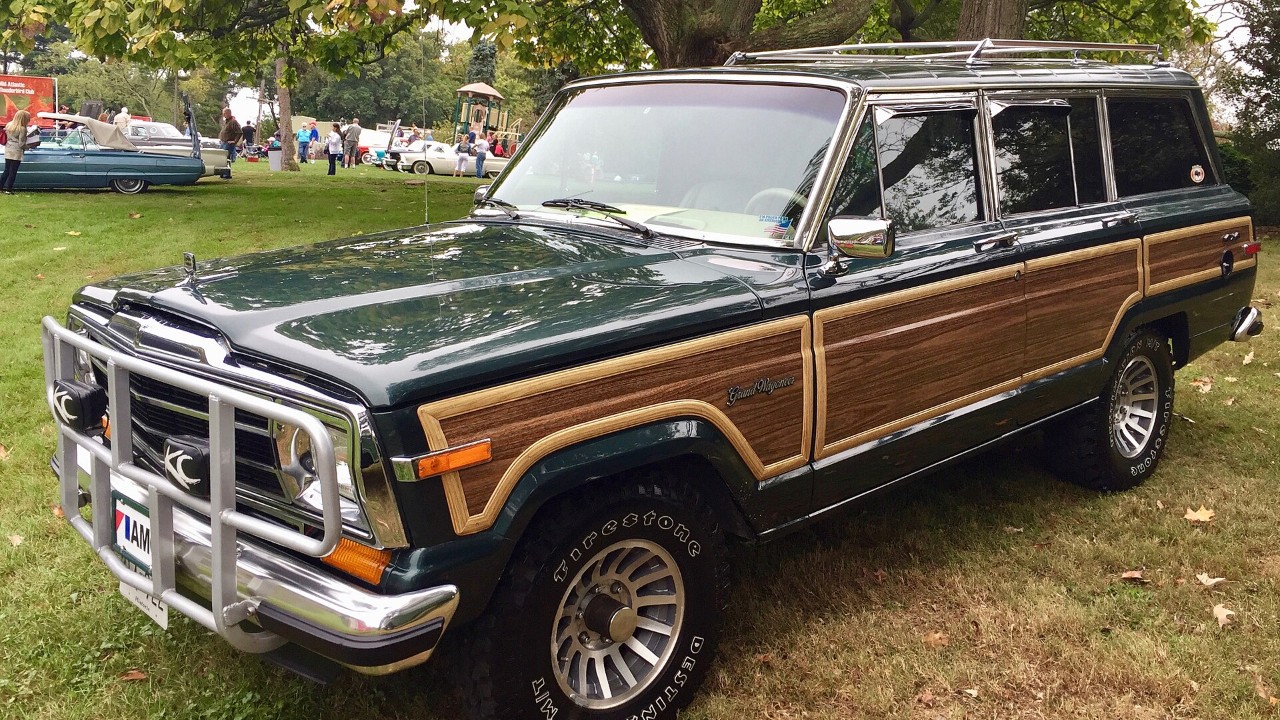
Jeep’s full-size wagon ran far longer than anyone might have guessed. It kept the 1962 body shell with only minor updates, and it took the Grand Wagoneer name for 1985. Finally, its last year was 1991, and those final trucks carried a “Final Edition” badge on the dash.
The Grand Wagoneer was also one of the last vehicles sold in North America with a carburetor, according to Jeep’s history pages. Back in 1972, AMC had added Quadra-Trac, which spared drivers from engaging the transfer case and locking hubs by hand.
In our view, a late Grand Wagoneer is a proven design at its most refined. Nearly three decades of updates went into this final truck. Buyer advice: budget for carburetor tuning, and you’ll have one of the comfiest classic 4x4s around.
5. Jeep Wrangler Rubicon TJ

Jeep built the TJ Wrangler from January 1996 to July 2006, and it replaced old leaf springs with Quadra-Coil suspension. Meanwhile, power came from the 4.0-liter AMC inline six, rated at 190 hp and 235 lb-ft. Then, for 2003, Jeep introduced the Rubicon, named after the Rubicon Trail in the Sierra Nevada.
The Rubicon added Dana 44 axles at both ends, with air-actuated Tru-Lok lockers. In addition, it got the Rock-Trac transfer case with a 4:1 low range, 31-inch Goodyear MT/R tires and diamond-plate rock rails. For a full ranking of the breed, see our top Wrangler Jeeps ranked by capability.
Our take: the TJ Rubicon pairs the proven 4.0 with serious trail hardware straight from the factory. That’s why we’d trust it deep on a trail. Buyer advice: check the frame for rust and look for signs of hard rock crawling.
6. 1998 Jeep Cherokee XJ Limited four-door
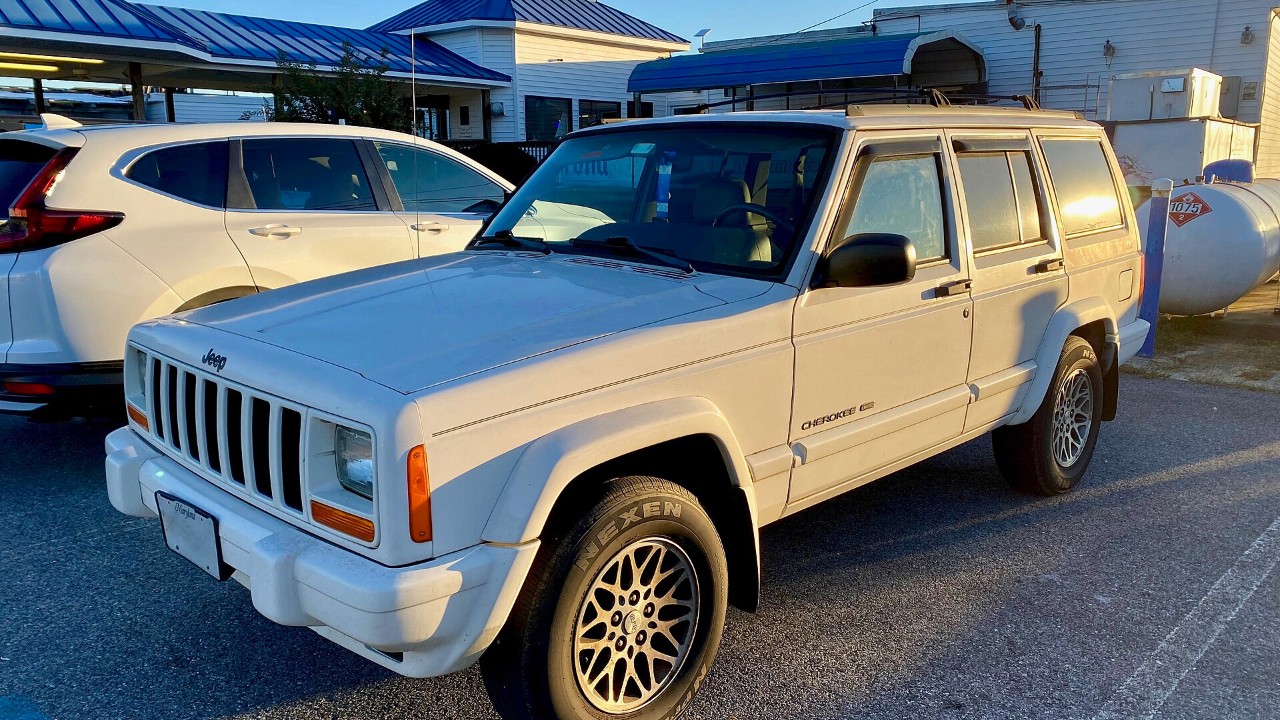
The Cherokee XJ was AMC design chief Dick Teague’s last vehicle. As Hagerty’s Bull Market pick explains, it used a unibody instead of a separate frame. As a result, Jeep says it weighed 1,000 pounds less than the full-size Wagoneer. About 2.5 million found buyers from 1984 through 2001.
The key to its reputation is the 4.0-liter inline six, which entered production in 1987. Hagerty lists a 2000 model at 190 hp and 225 lb-ft, and it praises that stout six. To be fair, Hagerty also says the XJ is “hardly built like a Toyota.”
In our view, a well-kept 4.0 Cherokee like this Limited is one of the most dependable used 4x4s you can buy. Hagerty values them at $7,600 to $10,400. Buyer advice: look past the scuffs and focus on rust, cooling and a clean service history.
7. 1966 Jeep Gladiator J-3000
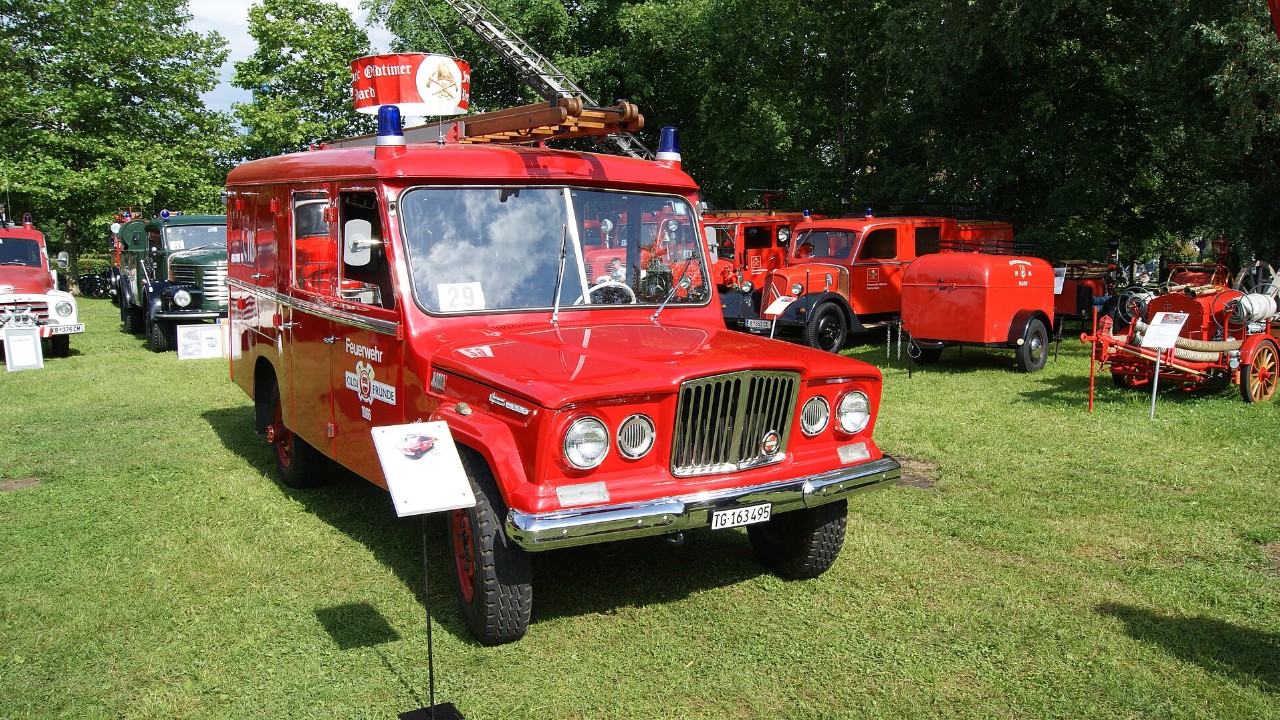
Jeep introduced the Gladiator pickup in 1962 for the 1963 model year. It shared its platform, front styling and powertrain with the Wagoneer. At first, the trucks used the 230-cubic-inch Tornado overhead-cam six, rated at 140 hp.
In late 1965, Jeep renamed the 126-inch-wheelbase J-300 as the J-3000. Also from 1965, buyers could order AMC’s 327 V8, rated at 250 hp. This 1966 J-3000 went on to serve as a fire-service truck in Europe, which says plenty about how hard owners leaned on these pickups.
Our take: few trucks look as tough as an early Gladiator, and the family stayed in production until 1988. We’d trust one for heavy work. Buyer advice: check the cab corners, the bed and the frame.
8. 1947 Willys Jeep Pickup
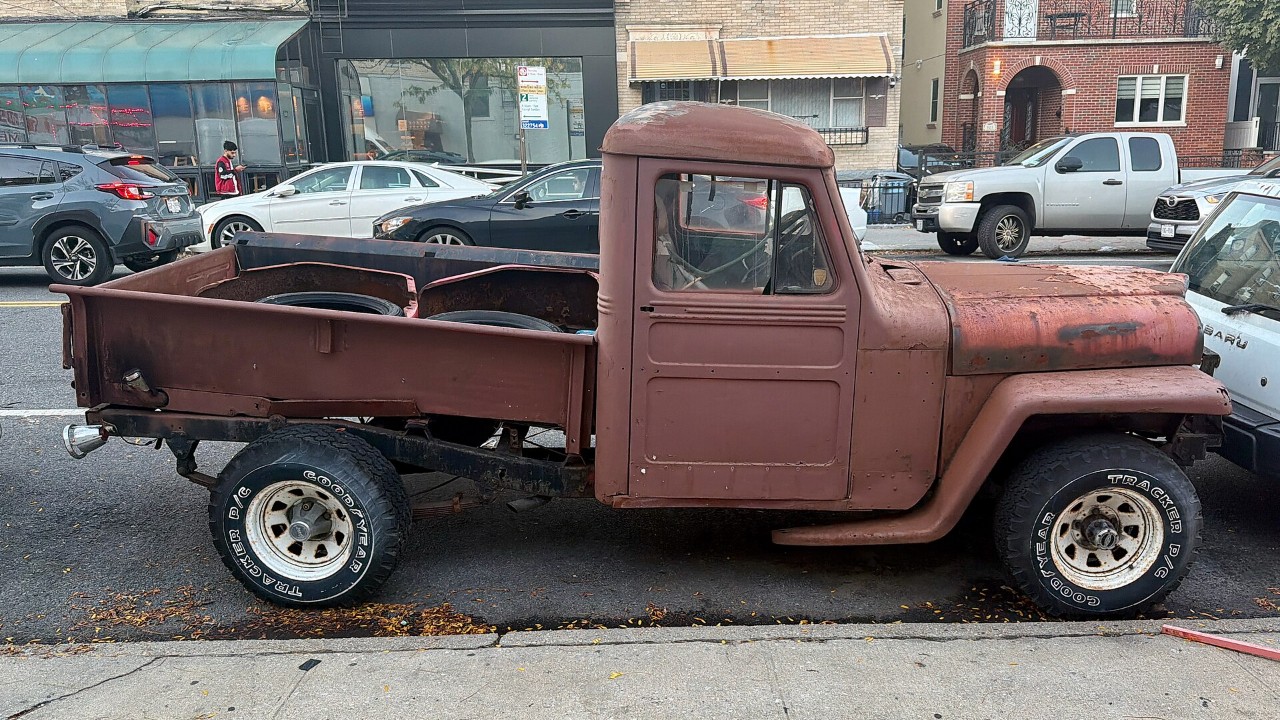
Willys-Overland built its Jeep truck from 1947 until Gladiator pickups replaced it in the 1960s. In contrast to the flat-fender Jeep, it rode a longer 118-inch wheelbase. Buyers could order a pickup, a stake bed, a cab and chassis, or a bare chassis.
The big story was traction. Jeep’s history pages note that its late-1940s pickups offered four-wheel drive, while Chevy and Ford did not until 1957 and 1959. Engines included the Go Devil four at first and, later, six-cylinder options.
In our view, the Willys pickup is the root of every Jeep truck since. It is slow and simple, and that’s exactly why it keeps going. Buyer advice: favor an original four-wheel-drive truck with solid floors.
9. 1974 Jeep CJ-5 Renegade V8

American Motors bought Kaiser Jeep in 1970 for roughly $75 million, according to Jeep’s 1970s history page. Soon after, AMC power reached the CJ. Then the Renegade package arrived in 1972 with AMC’s 304-cubic-inch V8, alloy wheels and a Trac-Lok limited-slip differential.
The yellow CJ-5 Renegade pictured here is an all-original 1974 example, shown at an AACA regional meet. That matters, because a V8 CJ-5 with its factory parts intact tells you how well the basic design holds up.
Our take: a short wheelbase, a torquey V8 and a limited-slip rear end make the Renegade a capable, simple trail Jeep. Buyer advice: check the frame and the tub. Jeep kept the Renegade package in the CJ range through 1983.
More from Fast Lane Only