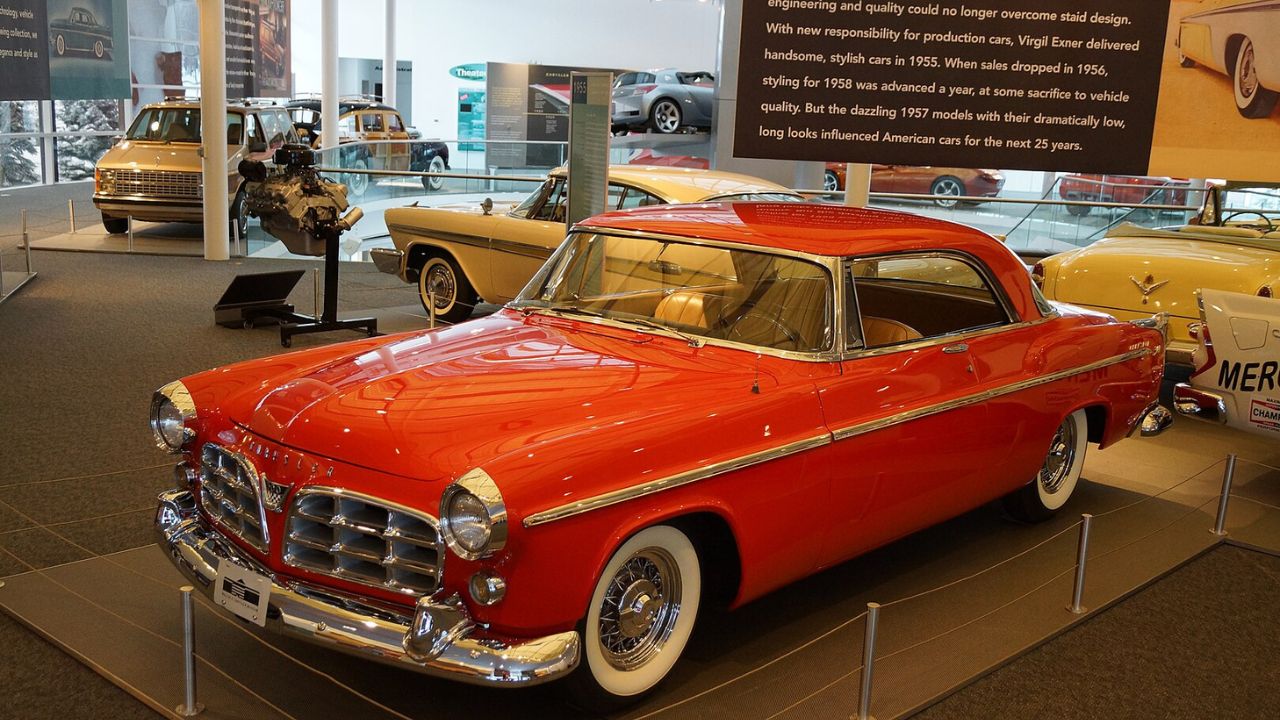
The 1955 Chrysler C-300 took its name straight from its engine, a 331-cubic-inch Hemi rated at 300 horsepower. Chrysler built only 1,725 of them. Yet, in our view, it gets far less attention than the later letter cars that followed it.
That happens a lot in the collector world. A handful of famous cars soak up the auction headlines and magazine covers, while their sharpest rivals and smarter contemporaries sit in the background. Some of those overlooked cars were faster, rarer or simply more interesting than the cars that became icons.
These 11 are our picks, the collector cars we think deserve to be the most collectible of their era. That ranking is our own opinion. However, the engines, production totals and records come from marque clubs, model histories and factory records, and we use a number only where a source we read gives it.
1. 1955 Chrysler C-300
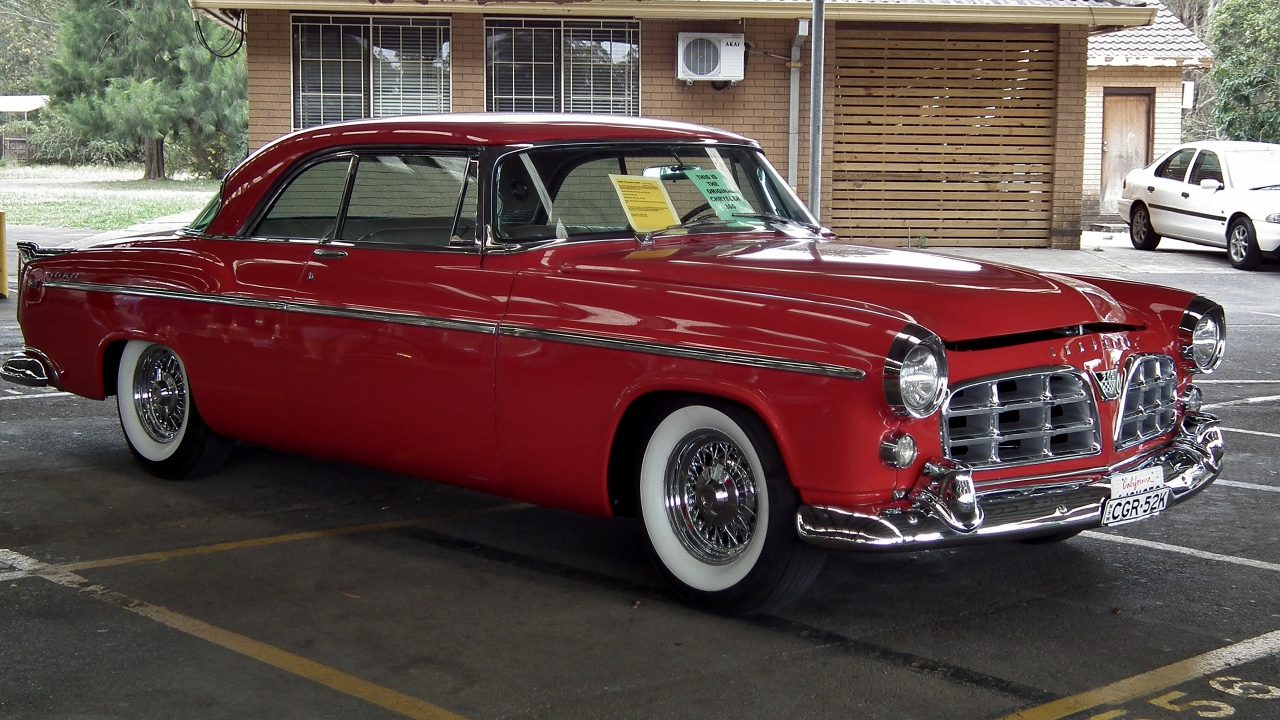
Virgil Exner’s team built the Chrysler C-300 from parts Chrysler already had. The front clip and grille came from that year’s Imperial, while the midsection came from a New Yorker hardtop and the rear quarters from a Windsor. Then they stripped off the hood ornament, side trim and back-up lights for a cleaner look.
Under the hood sat a 331 Hemi with two four-barrel carburetors, solid lifters and a full-race camshaft. According to the Chrysler 300 Club’s C-300 page, it reached 127.58 mph in the Flying Mile. The club also notes that Tim Flock won the Daytona Beach race in one and went on to take the 1955 NASCAR Grand National title. Also, Chrysler C-300 buyers could only choose black, red or white.
Our take: the Chrysler C-300 should sit at the very top of any list of 1950s American performance cars. It came first in the letter-car line, it won on the sand at Daytona and it came in a tiny run. Meanwhile, the club estimates that only about 8% of the Chrysler C-300 cars built still survive. In our view, that combination makes it one of the most deserving collector cars of the decade, and its 1,725-car total backs that up.
2. 1964 Studebaker Daytona
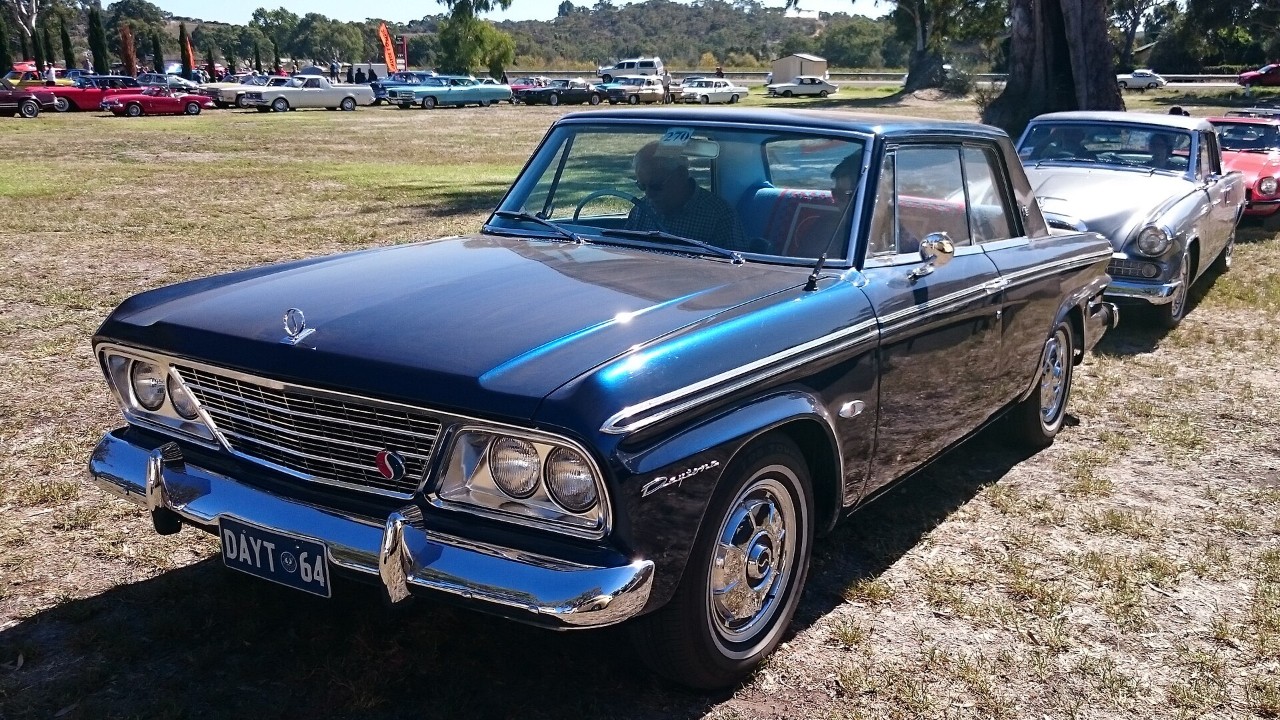
Daytona was Studebaker’s top trim for its compact Lark-based cars, and it arrived in 1962 on hardtops and convertibles. For 1964, Brooks Stevens gave the line a cleaner face with a full-width stamped aluminum grille and squared-off headlamp surrounds. That year, Daytona also added a four-door sedan.
Still, the engine list made it interesting. Buyers could order the Avanti-derived R-series 289 V8s, including the supercharged R2. One factory Daytona hardtop even received the R4, a 304 with two four-barrel carburetors. However, the bigger story was the calendar. Studebaker announced the closure of its South Bend plant on December 9, 1963. Then, on December 20, a Bordeaux Red 1964 Daytona hardtop became the last Lark-type car built in the United States.
In our view, that history alone should make the 1964 Daytona a prize. It marks the end of Studebaker car building in South Bend, and it came with real performance options. Production moved to Hamilton, Ontario, after that, and the R-series engines did not last into the later Canadian-built 1964 cars. We think an R-engined South Bend Daytona deserves far more attention from collectors than it gets.
3. 1984 Dodge Omni GLH

Carroll Shelby picked the name, and he did not hide what it meant. GLH stood for Goes Like Hell. The 1984 Omni GLH took Dodge’s plain hatchback and added stiffer suspension, bigger brakes and wider tires, with a five-speed manual as the only gearbox.
At first, its 2.2-liter high-output four made 110 horsepower and 129 lb-ft of torque. That does not sound like much today. In a small, light hatchback in 1984, though, it felt like plenty to us. A year later, the GLH-T added an optional Turbo I engine with 146 horsepower and 170 lb-ft. If you want to tell a 1986 car apart, look for the center brake light.
Our take: the Omni GLH is one of the purest early hot hatches America built, and we think its collector standing should match that. It turned an economy car into something genuinely quick without hiding where it came from. That honesty is part of the appeal. We covered the turbo car’s story too, in our look at how the Omni GLH Turbo resurfaces as a forgotten ’80s standout. The non-turbo 1984 car, in our view, is the cleanest place to start.
4. 1986 Dodge Shelby GLHS
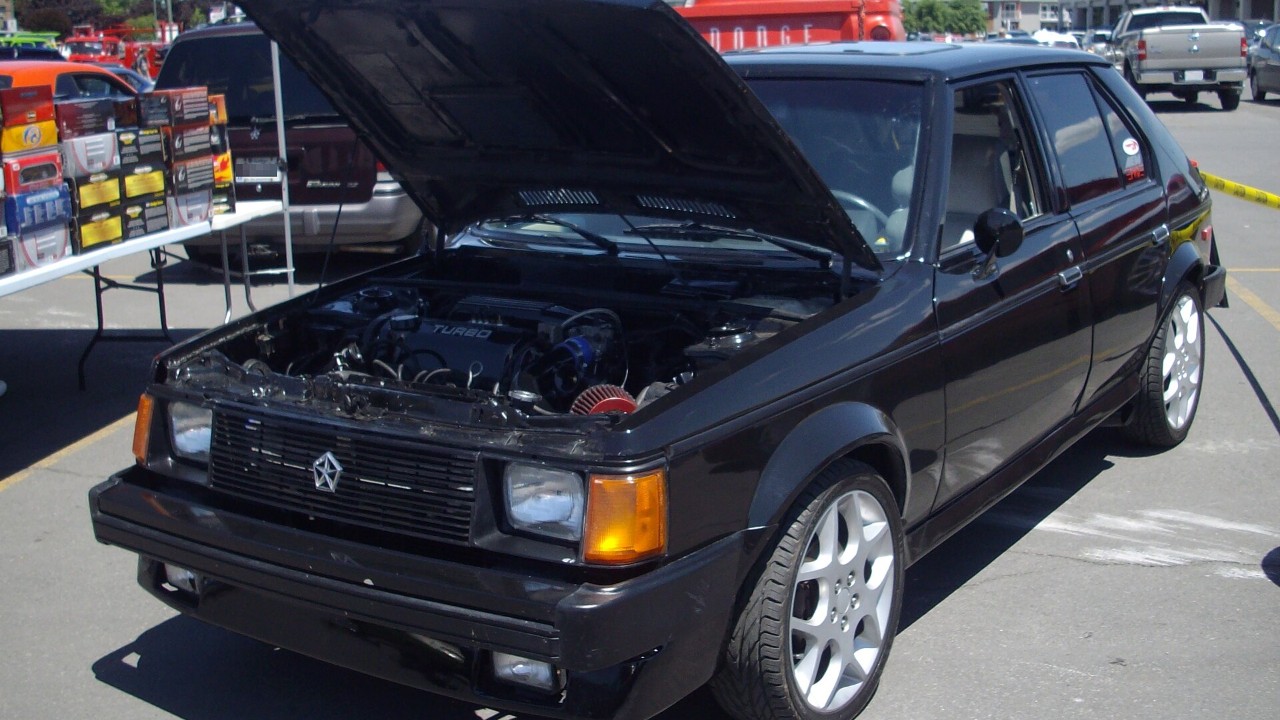
The GLHS was Shelby’s own last word on the Omni. Shelby Automobiles bought the final 500 GLH-T cars from 1986, all of them painted black. Then it modified them in California, so they could be sold legally as Shelbys rather than Dodges.
However, the changes went well past badges. Shelby fitted adjustable Koni struts and shocks, stiffer springs and larger tires on Shelby-designed wheels. A modified Turbo I engine raised output to 175 horsepower and 175 lb-ft of torque. On the outside, silver pinstripes, new badging and a Shelby windshield decal set the car apart from a regular GLH-T.
In our view, the GLHS deserves a place among the most collectible cars of the 1980s. It is a true limited run of 500, built by Shelby’s own company, and every one left as a black car with its own identity. That is a clear story for a collector. A documented GLHS, by comparison, is one of the more exclusive cars you can buy from that period.
5. 1987 Shelby CSX
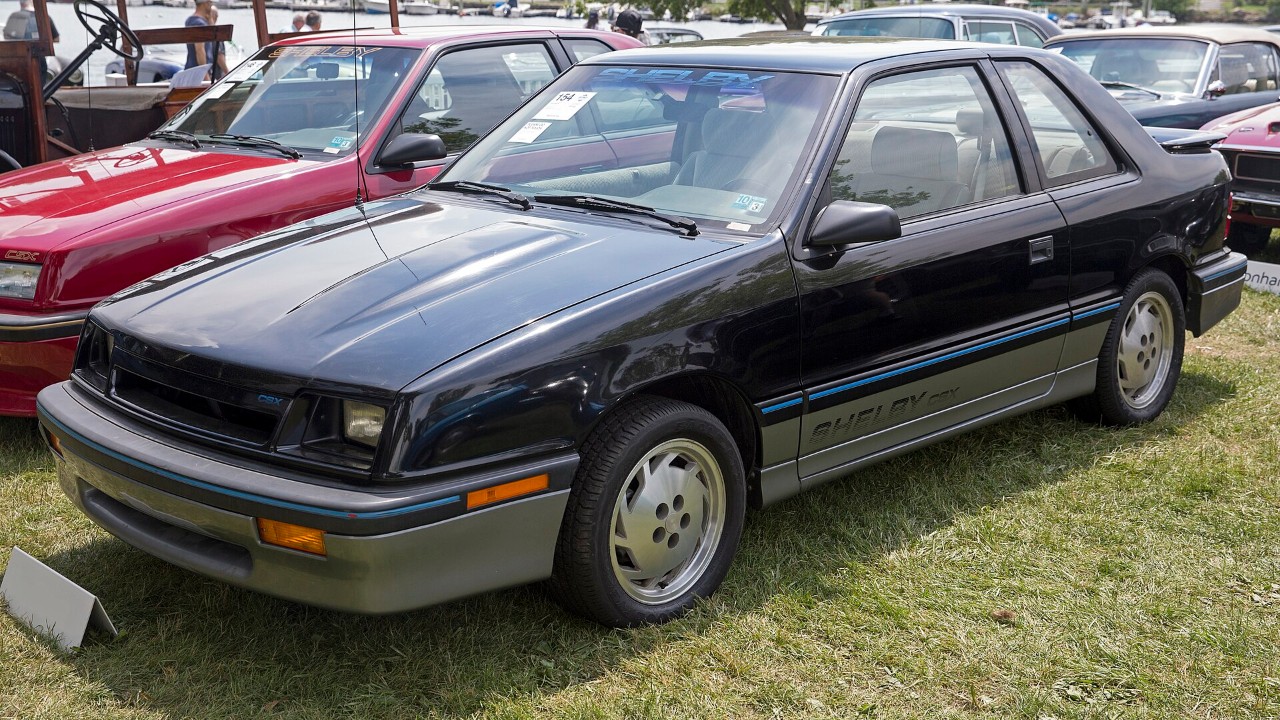
After the Omni, Shelby moved to the larger Dodge Shadow platform. The 1987 CSX used Shelby’s intercooled 2.2-liter Turbo II, rated at 175 horsepower. Shelby offered it in one color only, black, and priced it at $13,495.
Even so, the CSX story did not end there. For 1988, Shelby built 1,001 CSX-T cars for the Thrifty rental company, its only buyer, all in white with grey and blue trim. Then came the 1989 CSX-VNT, limited to 500 cars including two prototypes. That car used a Garrett variable-nozzle turbo and lightweight composite wheels called Fiberrides, and it wore Exotic Red paint with gold wheels and trim.
Our take: the 1987 CSX is the sleeper of the Shelby Dodge family. It had more power than the original GLH, a more grown-up body and an all-black look that still works. Meanwhile, the CSX-T and CSX-VNT give collectors a full set to chase. We think the original black car deserves to lead that set. If you are shopping, start with complete original paperwork, because Shelby built each version for a very specific purpose.
6. 1986 Mercedes-Benz 190E 2.3-16
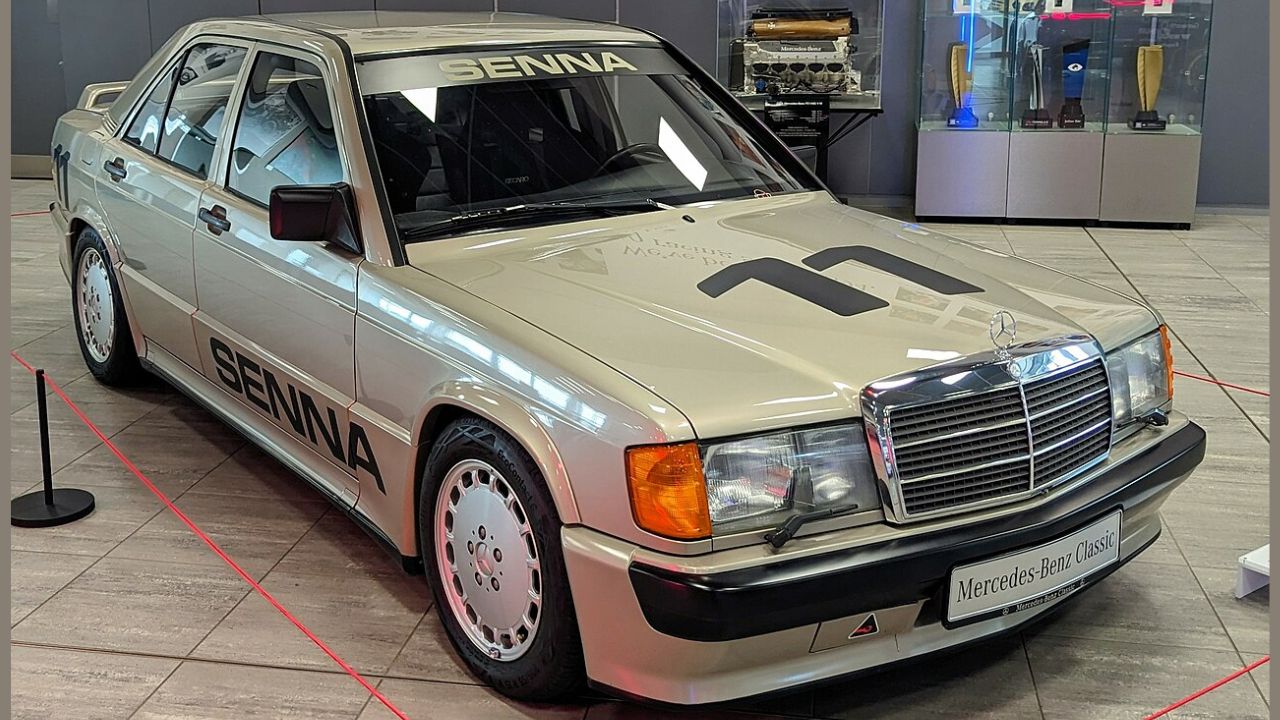
Before it went on sale, the 2.3-16 proved itself at the Nardò test track in Italy. Starting on August 13, 1983, the cars ran 50,000 kilometers in 201 hours, 39 minutes and 43 seconds. According to the 190E 16V history site, two cars finished at an average of 247 km/h, setting three world records and nine international class records.
First, Mercedes worked with Cosworth on the 16-valve cylinder head. In European form, the engine made 185 horsepower, while U.S. cars were rated at 167. Then, on May 12, 1984, a young Ayrton Senna won the race that opened the new Nürburgring in one, ahead of several former champions. In total, Mercedes built 19,487 cars of the 2.3-16, including 5,473 in 1986.
In our view, the 2.3-16 is the car that made a compact Mercedes cool. It has a record-setting debut, a racing link and a Formula 1 legend’s early win in its history. Few sedans of the 1980s can match that list. If you want more on its race career, we wrote about when the 190E 2.3-16 went racing. We think it deserves the top tier.
7. 1986 Volkswagen Scirocco 16V
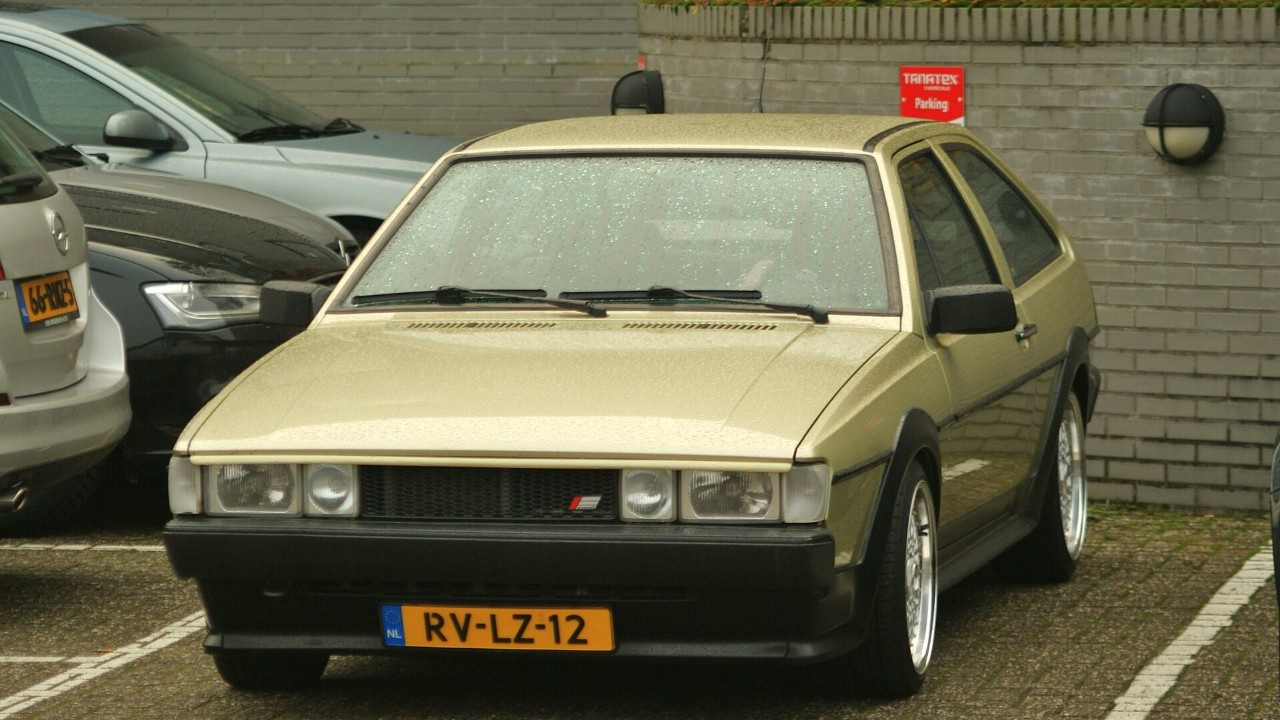
The second-generation Scirocco was a Volkswagen built by someone else. Karmann of Osnabrück assembled it for Volkswagen, just as it had the first car. In the United States, the 16-valve version ran from 1986 to 1988 before American sales ended.
Better still, the 16V engine gave the sleek coupe real performance. Volkswagen rated its 16-valve 1.8-liter engines at either 129 or 139 PS, depending on the version. Trim names included the GT 16V and the GTX 16V. Over the whole second generation, Volkswagen and Karmann built 291,497 cars, so plenty of standard Sciroccos exist. The 16V cars, however, make up only part of that total.
Our take: the Scirocco 16V lives in the shadow of the Golf GTI, and we think that is unfair. It is a more stylish car, it shares the same lively spirit and it came from a coachbuilder with a long history. That makes it a smarter buy for a collector who wants something different. Look for an unmodified example, because originality matters most on a car like this. A clean 16V, in our view, should be worth far more attention than it gets.
8. 1988 BMW M3 E30 Evolution
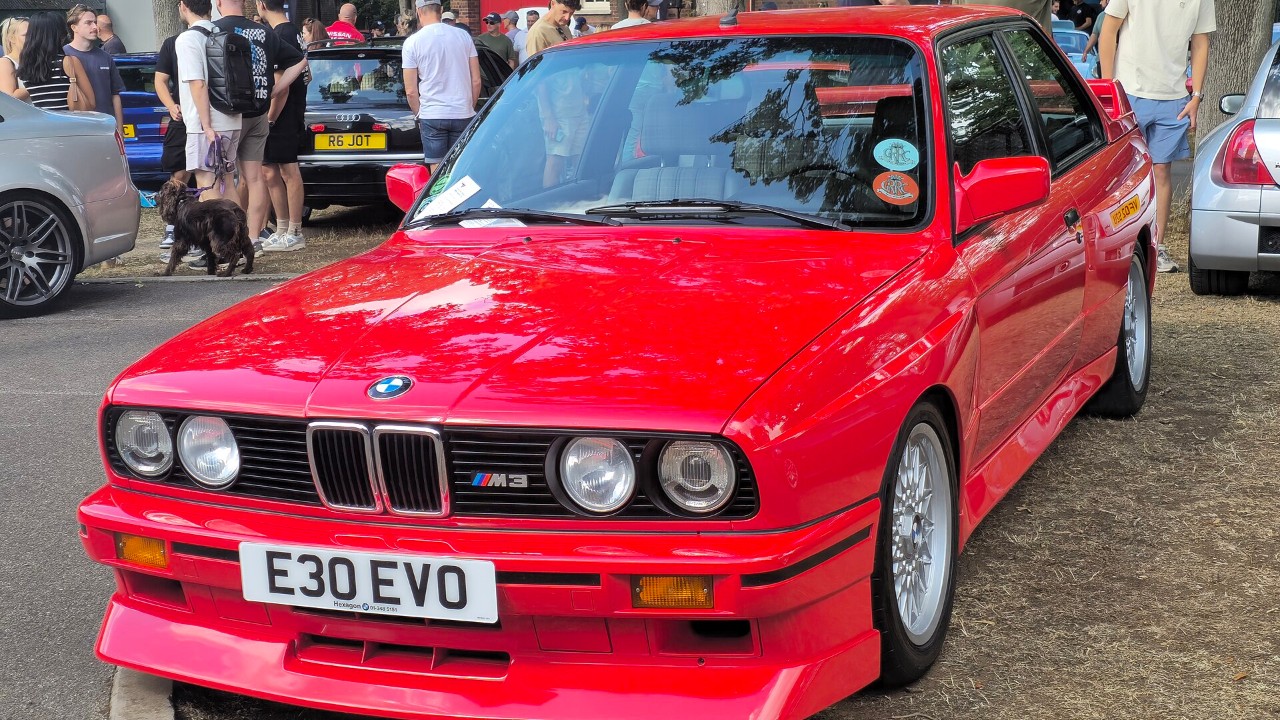
The E30 M3 existed to go racing, and its rules shaped every version. Homologation for the DTM and Group A touring series required 5,000 base cars plus 500 evolution specials. So BMW kept building small batches of upgraded cars as the rules changed.
The 1988 Evolution, often called the Evo 2, was one of those batches. BMW built 501 of them between March and May 1988. The car got a revised camshaft and pistons, and compression rose from 10.5:1 to 11.0:1, for 220 PS at 6,750 rpm. Its S14 four used a head closely based on the S38 six and a block from the M10 four. Meanwhile, the M3 won DTM titles in 1987 and 1989.
In our view, the regular E30 M3 already has a strong following. However, the Evolution cars deserve to be the stars of the line, because they are the closest link to the racing cars. A 501-car run is very small for a BMW. We also covered how the 1989 BMW M3 defined homologation greatness. For collectors, we think the Evo 2 is one to find.
9. 1991 Mazda MX-5 BRG Limited Edition
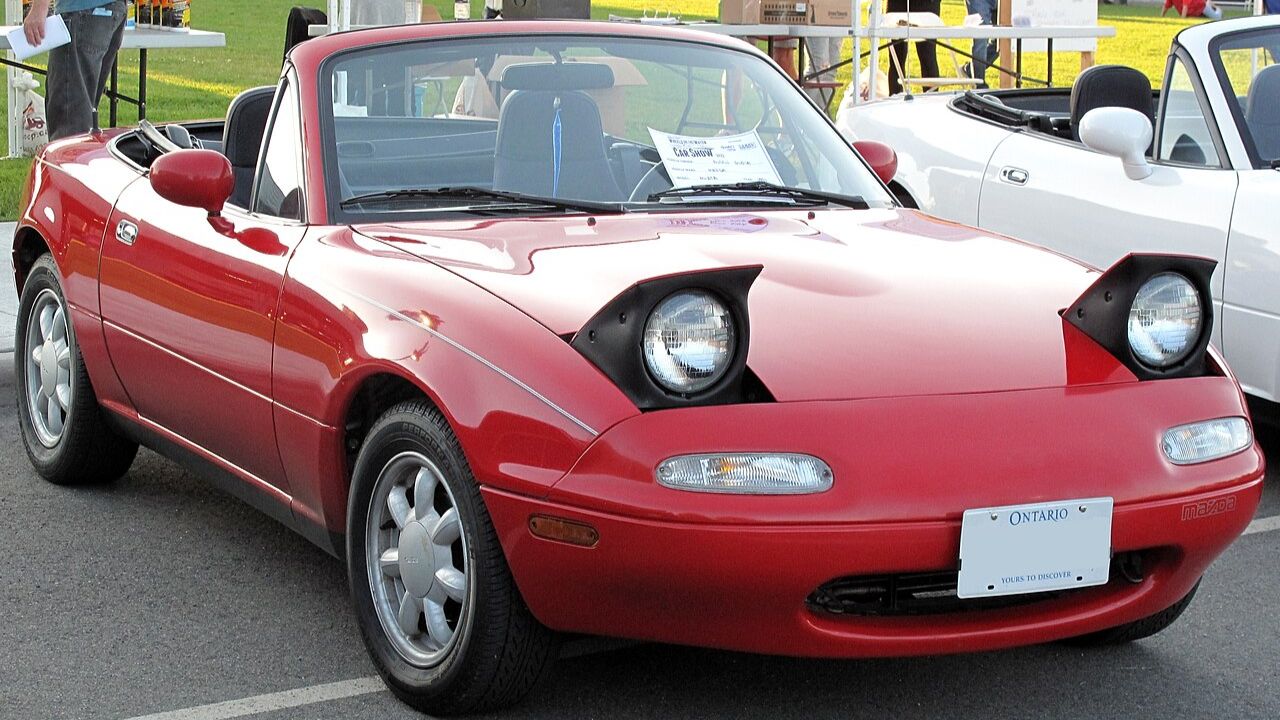
Mazda marked the MX-5’s first anniversary in Britain with a 250-car run. The UK Limited Edition went on sale in March 1991 in British Racing Green over a tan interior. Each one carried a numbered brass plaque on the passenger-side dashboard and on the front of the owner’s book.
Then there were the details that made it special. It wore color-matched 15-inch OZ alloys, which people often mistake for BBS wheels, but which are unique to this model. It also had a wooden steering wheel, a wooden handbrake grip and gear knob, and an analog clock. Underneath, it kept the standard 1.6-liter engine, rated at 115 bhp in the original manual car. By comparison, the U.S. Special Edition in the same color ran to 3,997 cars, plus 1,051 in Canada.
Our take: the MX-5 is so common that collectors often overlook its special editions. That is a mistake, in our view. A numbered, 250-car UK edition in the classic green has exactly the kind of story that collectors chase in older British sports cars. We think it deserves that same respect. If you find one, check the plaque number against the owner’s book first.
10. 1965 Buick Riviera Gran Sport
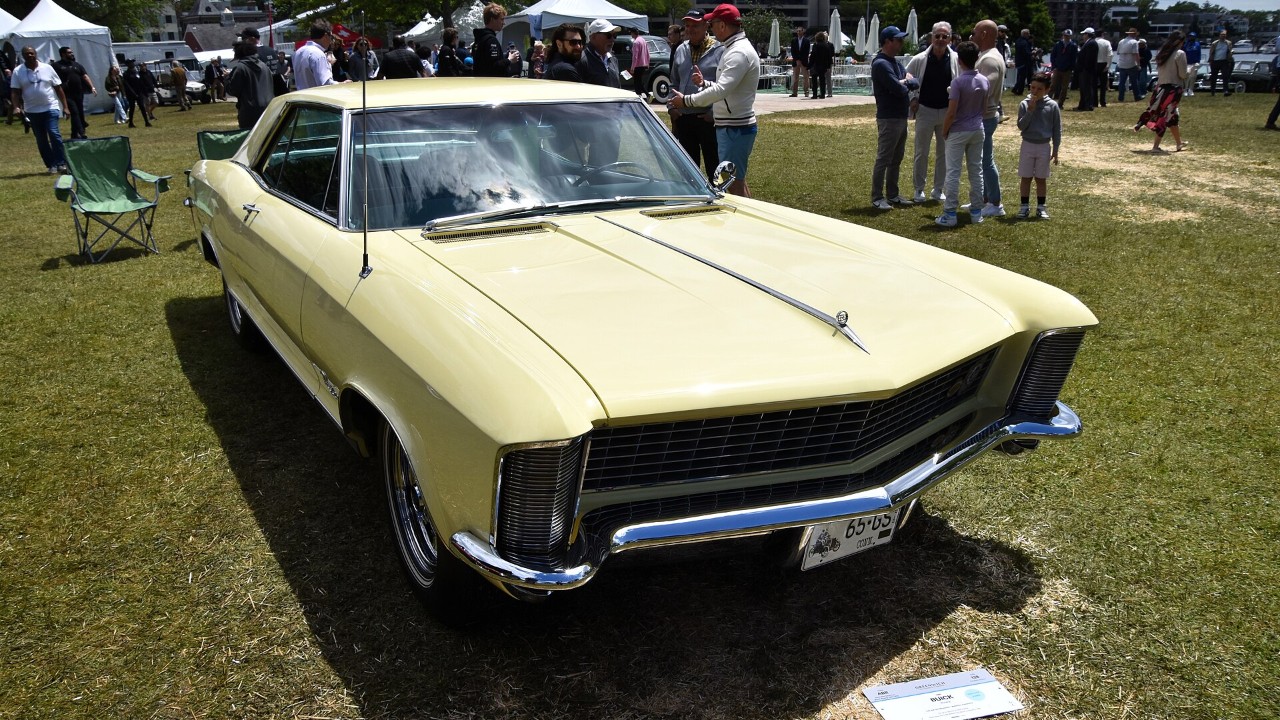
Buick turned its personal luxury coupe into a fast one for 1965. The Riviera Gran Sport used the Super Wildcat V8, rated at 360 horsepower and fed by two Carter 625-cfm carburetors. In addition, it came with a more aggressive 3.42 axle ratio.
The Super Turbine 400 automatic also gained a variable-pitch torque converter that year. Meanwhile, the 1965 car finally got the headlamps its designers had first planned. They sat hidden behind clamshell doors in the leading edge of each front fender. Buick built 34,586 Rivieras for 1965 in total, and the Gran Sport made up only part of that number.
In our view, the 1965 Riviera Gran Sport is one of the best-looking performance cars of its decade. It combined real power with a body that still looks sharp today. Yet it often sits behind louder muscle cars in collector circles. We think that should change. We covered it in more depth when we looked at how the Riviera GS turned Buick from quiet to downright brutal. If you want one, look for the hidden headlamps working properly.
11. 1970 AMC Rebel Machine

The Rebel Machine started as a joint project between Hurst Performance and AMC. Once it went into production, though, the two companies had no official link. AMC’s 390-cubic-inch V8 made 340 horsepower and 430 lb-ft of torque through a 690-cfm Motorcraft four-barrel carburetor.
Above all, the look was impossible to miss. The standard car came in white with a big blue stripe on the hood, plus red, white and blue reflective stripes. A large tachometer sat in a raised fairing at the back of the ram-air hood scoop, right in the driver’s view. The factory rated the car at 10.7 pounds per horsepower, which put it in NHRA’s F-stock class. The sticker price was $3,475.
Our take: the Rebel Machine is the most patriotic-looking muscle car of 1970, and AMC still does not get enough credit for it. It had real power, a sensible price and a clear drag-racing purpose. We think it deserves to sit beside better-known Chevrolets and Mopars. Its quoted 0-to-60 time of 6.4 seconds backs up its place on this list.
More from Fast Lane Only