The Buick Riviera GS occupies a rare space in American car culture, blending personal luxury with genuine performance hardware in a way that still feels distinctive today. Collectors now look back on the Gran Sport and GS years as the moments when The Riviera by Buick most confidently chased style and speed at the same time, and market data shows that values are finally catching up to that reputation. I want to trace when Buick actually built the Riviera GS and Gran Sport, then look at what those cars are trading for now so buyers and sellers can gauge where this icon really sits in today’s classic market.
How the Riviera became Buick’s luxury performance coupe
Before the GS badges appeared, the Buick Riviera itself had to establish a new niche, and it did that by redefining what an American personal luxury coupe could look like. The Riviera by Buick is described as an automobile produced by Buick in the United States from the 1963 to 1999 model years, a long production run that allowed the nameplate to evolve through multiple design eras while staying focused on two-door style and comfort. That continuity matters, because it set the stage for performance-oriented variants to stand out as high points rather than one-off curiosities within a short-lived model line.
Design is central to the Riviera story, and it is no accident that enthusiasts still single out the earliest generations as the most influential. Reporting on the Buick Riviera notes that the knife-edged styling of the first-generation Buick Riviera marked a design breakthrough, a clean, sharp alternative to the more ornate shapes that had dominated American showrooms. Later coverage of This Second-Gen Riviera GS Is Packed With Buick Style And Muscle reinforces that the first-generation Buick Riviera, built from the early 1960s, set expectations for the mix of elegance and aggression that later GS models would try to amplify. In other words, the GS years did not invent the Riviera’s appeal, they sharpened a formula that was already working.
The first Gran Sport: 1965 Buick Riviera Gran Sport
The Gran Sport story on this platform starts in the mid 1960s, when Buick turned the already striking coupe into a more focused driver’s car. Market data for the Buick Riviera Gran Sport, identified as the Buick Riviera Gran Sport, 1st Gen, shows that the Gran Sport package was offered on the first generation in 1965, creating a short but important window when buyers could pair that original knife-edged body with upgraded performance hardware. The fact that the listing specifies Buick Riviera Gran Sport, 1st Gen, and ties it to 1965 underscores how concentrated this first wave of Gran Sport production was, which is a key reason collectors now treat 1965 cars as a distinct subset.
That scarcity, combined with the car’s design pedigree, is reflected in current valuations and asking prices. A valuation snapshot for a 1965 Buick Riviera 2dr Sport Coupe with an 8-cyl. 401cid/325hp 4bbl shows a figure of $29,500, with a noted change of 8.1%, which signals that the market has been moving upward for well-kept examples. On the retail side, listings for a 1965 Buick Riviera 401ci V8, described as Pre-Owned Buick and presented as a Classified Ad with Best Offer, show an asking price of $54,999.00, illustrating how sellers position strong cars at a premium above guide values when they believe condition and specification justify it. Taken together, the valuation tools and live ads suggest that a solid driver-grade 1965 Sport Coupe sits around the high twenties, while top-shelf or heavily optioned cars can push well into the fifty-thousand-dollar range.
Second-generation Riviera GS and the early 1970s
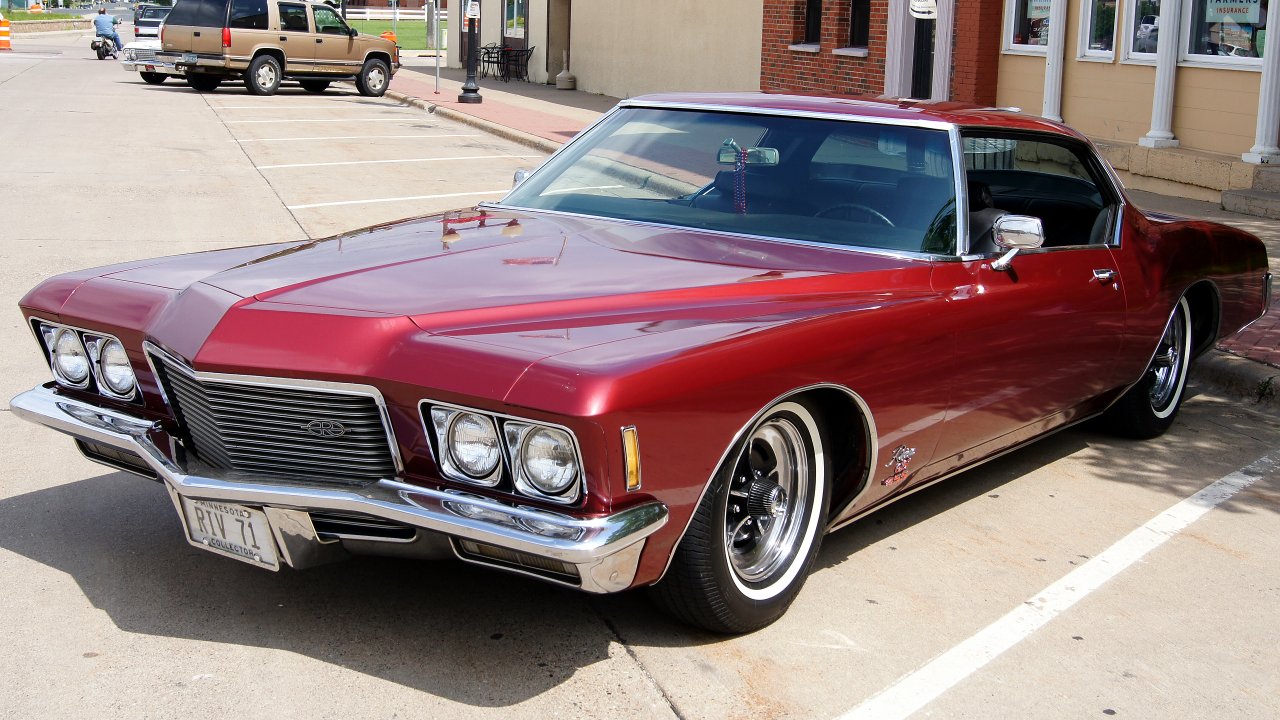
After that first Gran Sport experiment, Buick carried the performance idea into the second generation, where the Riviera GS badge became closely associated with the swoopier late 1960s and early 1970s body styles. Coverage of This Second-Gen Riviera GS Is Packed With Buick Style And Muscle, dated Dec 18, 2022, highlights how a second-generation Riviera GS combined Buick style and muscle, and it explicitly connects that car back to the first-generation Buick Riviera to argue that the lineage remained intact. That continuity is important for collectors, because it means the GS badge did not drift into mere appearance-package territory, it stayed tied to real performance and visual drama.
Enthusiast documentation of The GS and Stage options helps clarify how Buick structured these packages in the early 1970s. A breakdown titled What is a Gran Sport/GS/Stage 1? (Part 3) lists 1970 GS, 1971-1972 GS, 1973-1974 GS/Stage 1, and 1975 GS, and it notes that The GS and Stage I options do not include upgrade interiors, which is a reminder that these were primarily mechanical and performance-focused upgrades rather than luxury trims. That detail matters when assessing value today, because it means a plain-looking interior does not disqualify a car from being a genuine GS or Stage example, and buyers need to verify driveline and option codes rather than judging by upholstery alone.
Market values for 1970–1972 Riviera GS today
By the 1970 model year, the Buick Riviera had fully embraced its role as a large, dramatic personal coupe, and the GS variants sat at the top of that range. Valuation guidance for a 1970 Buick Riviera notes under Common Questions that the value of a 1970 Buick Riviera can vary greatly depending on its condition, mileage, options, and history, which is especially true for GS cars that may carry rarer drivetrains or better documentation. While the tool focuses on base models, the same logic applies to GS examples, and in practice, a clean, well-optioned GS will usually sit above a comparable standard Riviera because of its performance cachet and lower production.
The early 1970s cars follow a similar pattern. A valuation entry for a 1972 Buick Riviera, again under Common Questions, asks How much is a 1972 Buick Riviera worth and explains that the value of a 1972 Buick Riviera can vary greatly depending on its condition and specification, with typical expectations for a car in good condition with average spec. That framework gives buyers a baseline for non-GS cars, and then the GS and Stage packages described in the Stage and The GS documentation help explain why certain examples command a premium. In practice, a 1972 Riviera GS in strong driver condition will often trade above the guide numbers for a standard car, while a tired example may still lag behind if it needs extensive mechanical or cosmetic work.
Design legacy and why GS Rivieras are gaining attention
Part of the renewed interest in Riviera GS models comes from a broader reappraisal of the car’s design legacy. A feature dated Apr 24, 2023 on the Buick Riviera emphasizes that the knife-edged styling of the first-generation Buick Riviera marked a design breakthrough, and it uses that heritage as the foundation for a modern restomod rendering. When contemporary designers and digital artists choose the Riviera as a canvas, they reinforce the idea that this shape still resonates, which in turn supports collector demand for original GS and Gran Sport examples that capture the car at its most purposeful.
Later historical overviews of the Riviera GS, dated Sep 25, 2025, argue that the Riviera’s final, eighth generation eventually closed the book on the nameplate, but they also highlight how earlier GS models rank among America’s most beautiful classic muscle and personal luxury cars. By placing the GS years within the full 1963 to 1999 production span of The Riviera, these accounts show that performance-oriented Rivieras are not just footnotes, they are central chapters in the story of Buick in the United States. As more collectors look beyond the usual Chevelle and GTO choices, that narrative helps explain why Riviera GS prices, from the $29,500 Sport Coupe valuations to the $54,999.00 classified listings, are edging upward and why the Gran Sport and GS badges now carry more weight in the marketplace than their relatively modest production runs might suggest.