Toyota built its name on cars that start every morning, yet the same company keeps making cars that grin back at you. A rear-drive Corolla became the star of a drifting cartoon. A mid-engined Toyota sold in American showrooms in the 1980s. Today, a three-cylinder Corolla makes 300 horsepower.
That split personality is the fun part. Most Toyotas are sensible, but a few are built for a back road and a free Saturday. Those cars tend to share a recipe: light weight, a revvy engine and a chassis that talks to you.
These are our picks: seven Toyotas we think define fun, from the 1980s to now. The verdicts are our opinion. Every engine, rating and date comes from Toyota specifications, period road tests and reference sources we checked this week.
1. 1985 Toyota Corolla GT-S AE86
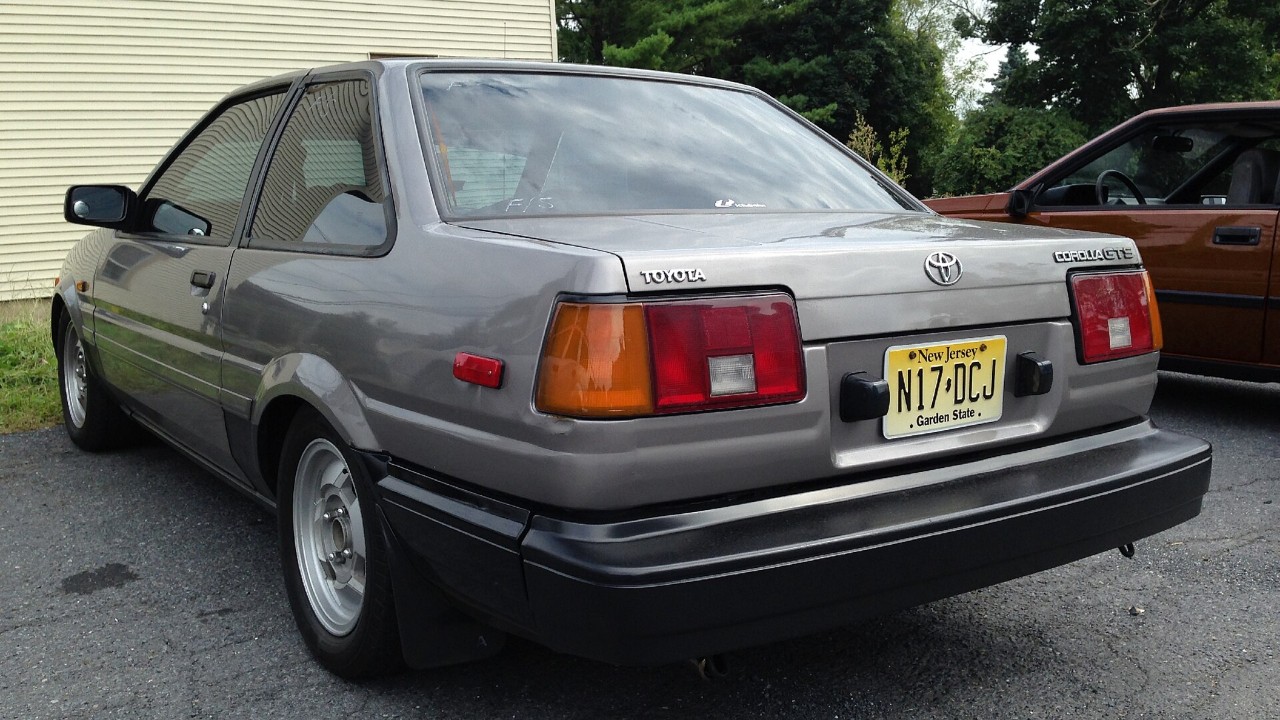
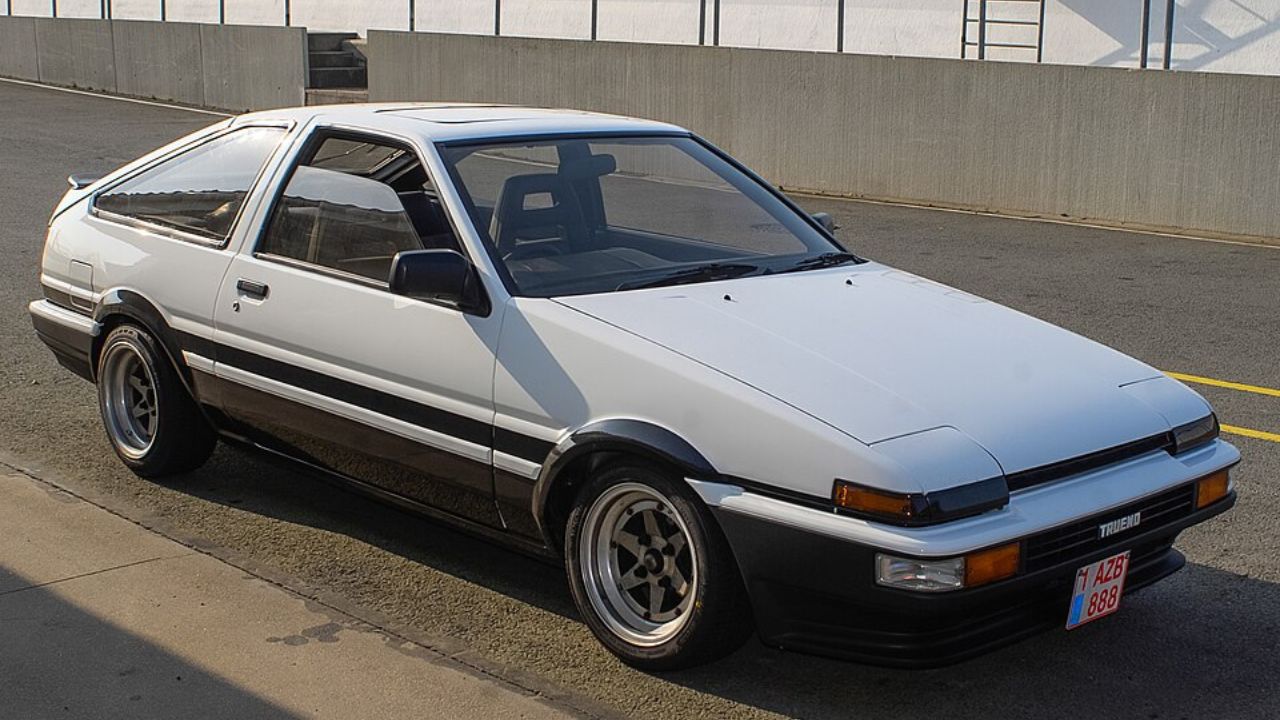
Toyota added the top-spec GT-S to the American Corolla Sport lineup in August 1984. Under the hood sat the 4A-GEC, a 1,587-cc, twin-cam, 16-valve four with fuel injection. It made 112 horsepower at a busy 6,600 rpm, and it loved every last bit of the tach.
Still, the real draw was the layout. The AE86 was the last production Corolla with rear-wheel drive, and the GT-S could carry an optional limited-slip differential. At roughly 2,200 to 2,300 pounds, it felt light on its feet. American cars mixed Trueno pop-up headlights with Levin taillights, a quirky blend of the Japanese twins.
Fame, however, followed later. Drift pioneer Keiichi Tsuchiya helped popularize the sport, and the comic series Initial D made the AE86 its hero’s tofu delivery car. Our take: this is the Toyota that taught a generation to steer with the throttle. If you shop for one, check for rust and crash repair first, because so many of these cars were driven hard. Toyota’s compact story started long before, as our look at the 1969 Toyota Corolla shows.
2. 1988 Toyota MR2 Supercharged
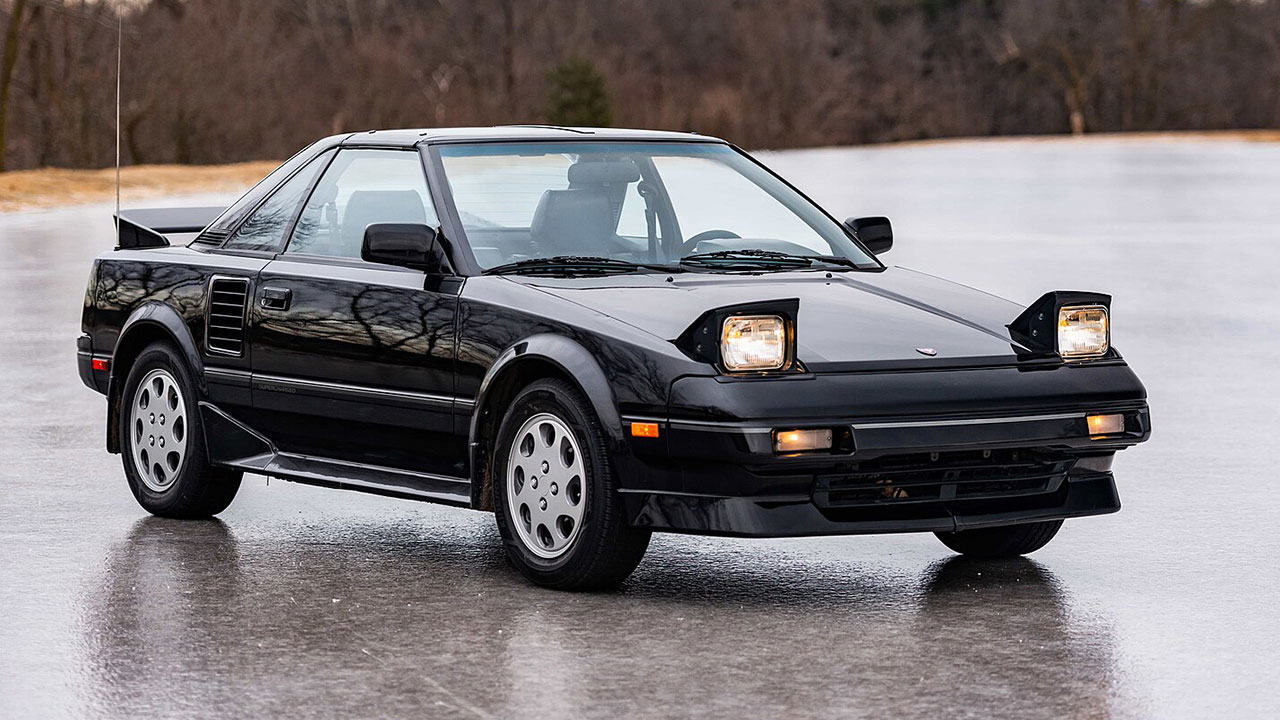
The MR2 arrived as a 1985 model, a small mid-engined Toyota with a big personality. Then, for 1988, the American market got the version Japan had enjoyed since 1986. A Roots-type supercharger and intercooler sat on the 1.6-liter four, raising output to 145 horsepower.
As a result, the numbers made it quick for its day. According to The Truth About Cars, the manual car ran 0 to 60 mph in 6.5 seconds. The extra hardware added weight, up to about 2,494 pounds, so Toyota fitted stiffer springs. You could also spot one easily, because Toyota added dual hood vents, cut-out alloy wheels and “SUPERCHARGED” decals. Meanwhile, the engine stayed behind the seats, so the balance that made the regular MR2 so sweet carried over.
For 1989, the last first-generation year, supercharged cars added a rear anti-roll bar. Our take: the blown MR2 is the sweet spot of the first generation, with instant shove and the same eager handling. Before you buy, have a specialist inspect the supercharger, since it is the part that sets this car apart. A clean manual car is the one to chase.
3. 1988 Toyota Celica All-Trac Turbo
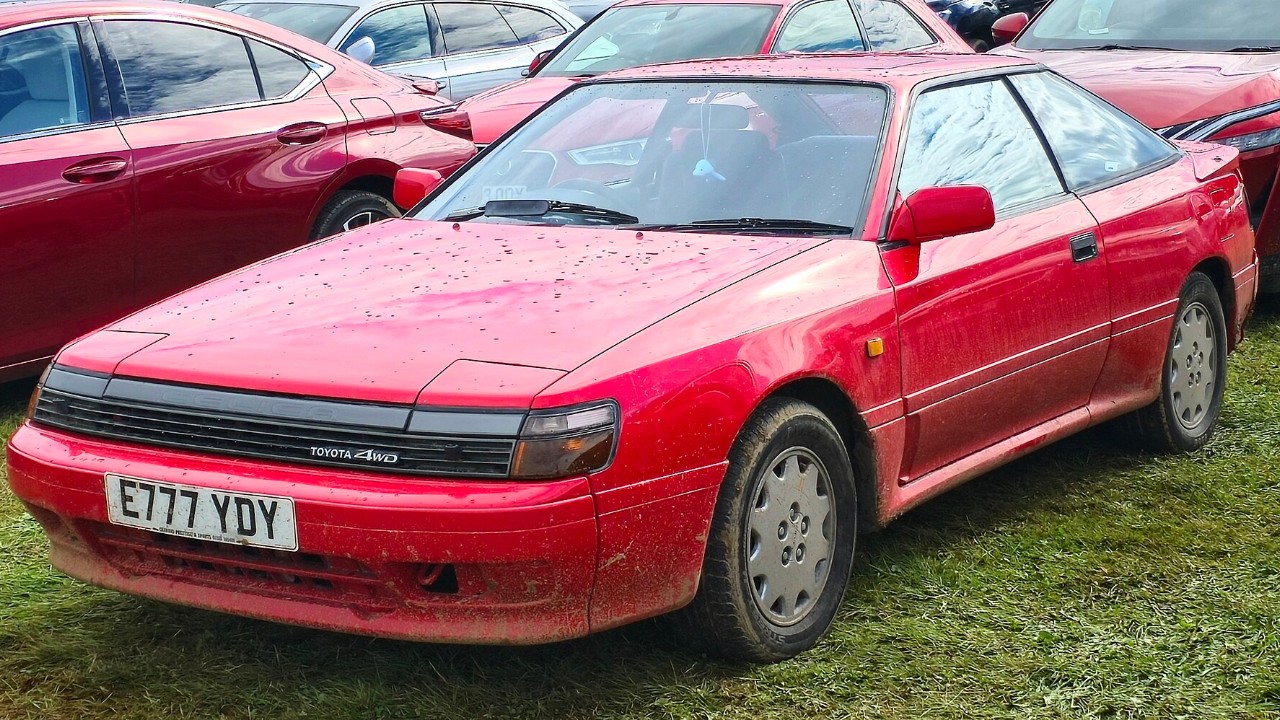
Toyota launched the Celica GT-Four in Japan in October 1986. It reached North America for 1988 as the All-Trac Turbo. Power came from the 3S-GTE, a turbocharged 2.0-liter four rated at 190 horsepower at 6,000 rpm and 190 pound-feet at 3,200 rpm.
Even so, the drivetrain was the star. The American car came only with a five-speed manual and full-time all-wheel drive, using a viscous-coupling center differential. In other words, it was a homologation-flavored rally car you could buy at the local Toyota store. The GT-Four made its World Rally debut at the 1988 Tour de Corse and took its first WRC win at the 1989 Rally Australia.
Then came the title. In 1990, Carlos Sainz won the drivers’ championship with this ST165 generation. Because the road car shared its name and basic layout with the rally car, owners could claim a real link to that success. Our take: few 1980s coupes offered a world-champion bloodline and all-weather grip for daily use. If you want one, budget for turbo and center-differential work, because both age with mileage. Factory-looking cars are worth extra effort to find.
4. Toyota Corolla FX16
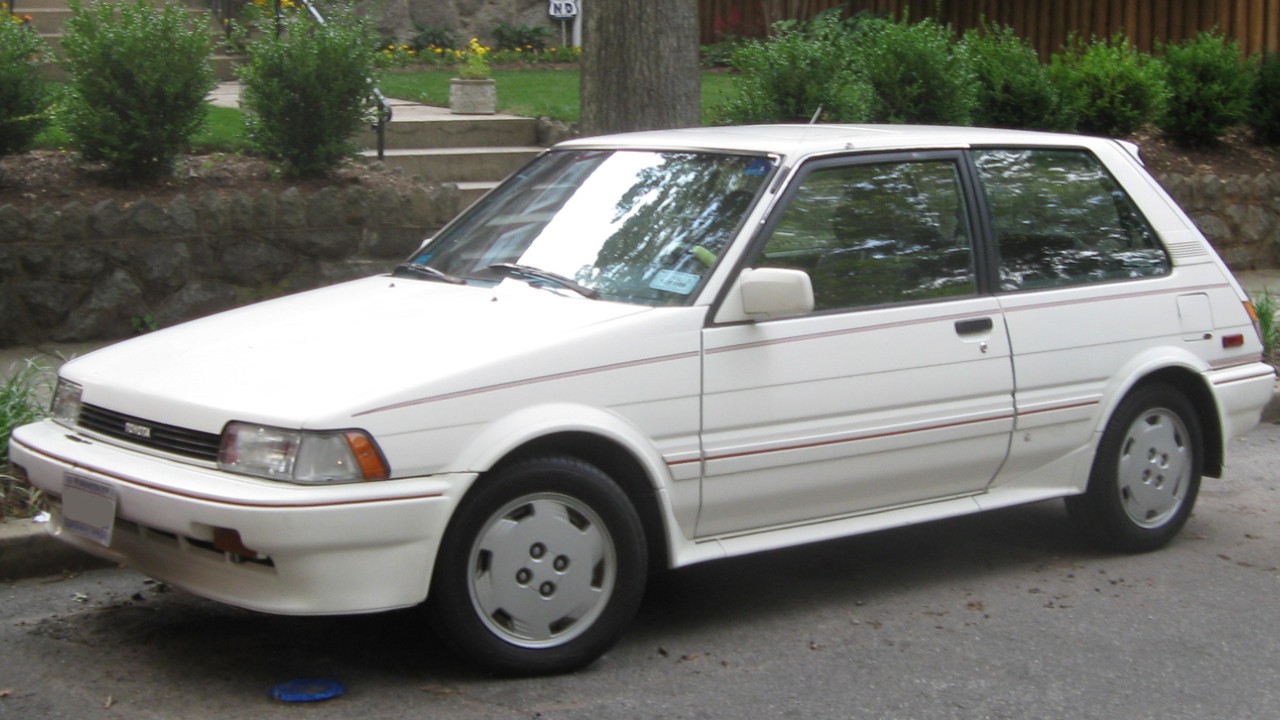
The Corolla FX arrived in October 1984 as a front-drive, three-door hatchback for North America. It replaced the Starlet in that market. The hot version, the FX16, borrowed the twin-cam 16-valve engine family from the AE86. In front-drive form, it made 108 horsepower, only a little less than the rear-drive GT-S.
The FX16 also had an unusual birthplace. Toyota built the Corolla FX, including the FX16, at the NUMMI plant in California. So this sporty hatch was, in a sense, an American-built Japanese hot hatch. That makes it a neat footnote in Toyota’s history.
It never got the AE86’s fame, mostly because front drive does not drift. However, the FX16 offered the same rev-happy character in a more practical package. You got a hatchback that could carry a weekend’s gear, then reward you on the drive home. For many young buyers in the 1980s, that mix made more sense than a coupe. Our take: it is the thinking person’s 1980s Toyota, small and light enough to feel alive at legal speeds. If you find one, keep it stock and ask for the timing belt history before you drive it hard.
5. 2023 Toyota GR Corolla Circuit Edition

Toyota introduced the GR Corolla on March 31, 2022, for the 2023 model year. It uses a turbocharged 1.6-liter three-cylinder, and in American trim it makes 300 horsepower and 273 pound-feet of torque. A six-speed manual was the only transmission at launch, and the GR-Four all-wheel-drive system can shift torque toward the rear.
The Circuit Edition was the launch special. It added a forged carbon-fiber roof, a vented hood bulge, a larger rear spoiler and Torsen limited-slip differentials front and rear. Motor1 reported that Toyota built about 1,500 Circuit Editions for 2023, out of roughly 8,000 GR Corollas. Toyota assembles the car at the “GR Factory” inside its Motomachi plant, without a conveyor-belt line.
The engine is shared with the GR Yaris, a car our story on the GR Yaris and homologation covers. Our take: a manual, all-wheel-drive hatch with a hand-built feel is about as fun as new cars get. If you buy a used one, ask for service records and avoid cars with heavy track use.
6. 2022 Toyota GR86 Premium
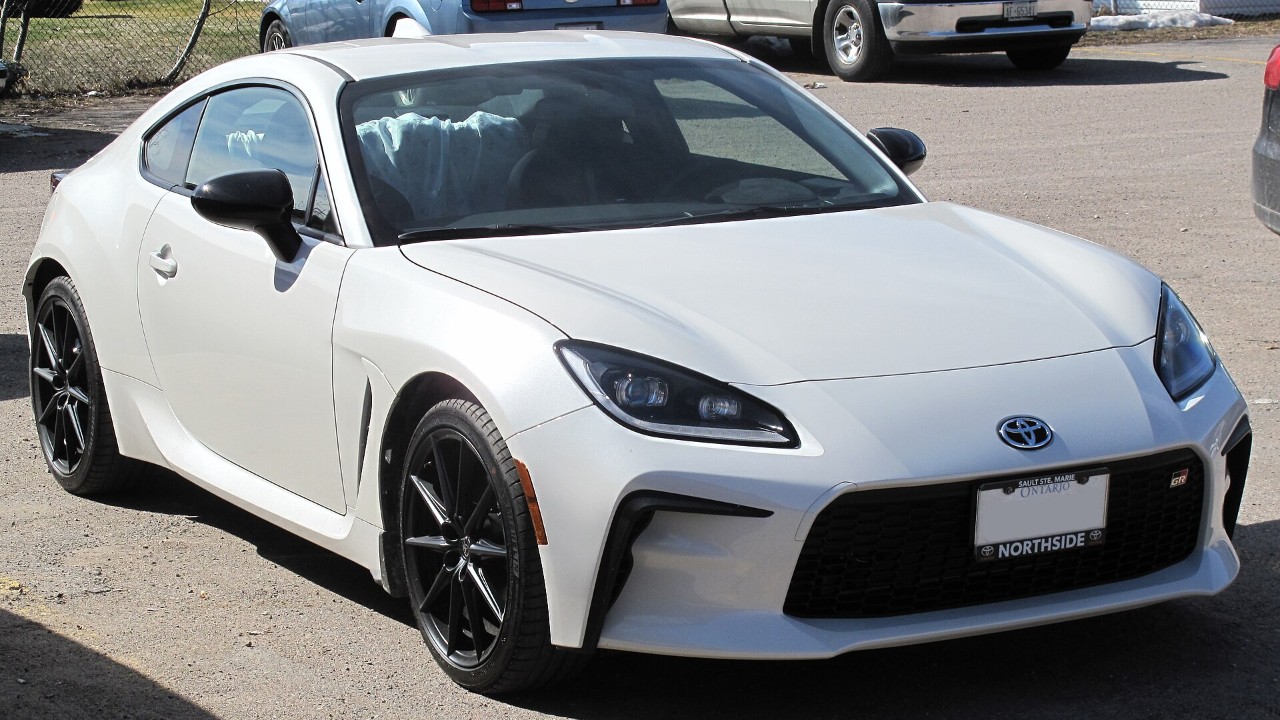
Toyota introduced the second-generation GR86 on April 5, 2021, and sales began that October. Its new 2,387-cc flat-four makes between 228 and 232 horsepower at 7,000 rpm. Torque is 184 pound-feet at 3,700 rpm.
Otherwise, the rest of the recipe stayed true. It is front-engined and rear-wheel drive, with a six-speed manual or six-speed automatic. Toyota also developed the car with Subaru, whose BRZ is its twin. Both use elements of the Subaru Global Platform, and the makers claim 50 percent more torsional rigidity than before.
Premium is the top trim in North America. In fact, Toyota based its 2023 10th Anniversary Special Edition on it. Our take: the GR86 proves that you do not need huge power to have a great time. It also keeps the old-school formula alive at a time when most small coupes have disappeared. Instead, it is light, balanced and affordable, and it rewards a driver who carries speed through corners. If you shop used, choose the manual, and check that the car has not been modified with cheap parts.
7. 2000–2005 Toyota MR2 Spyder
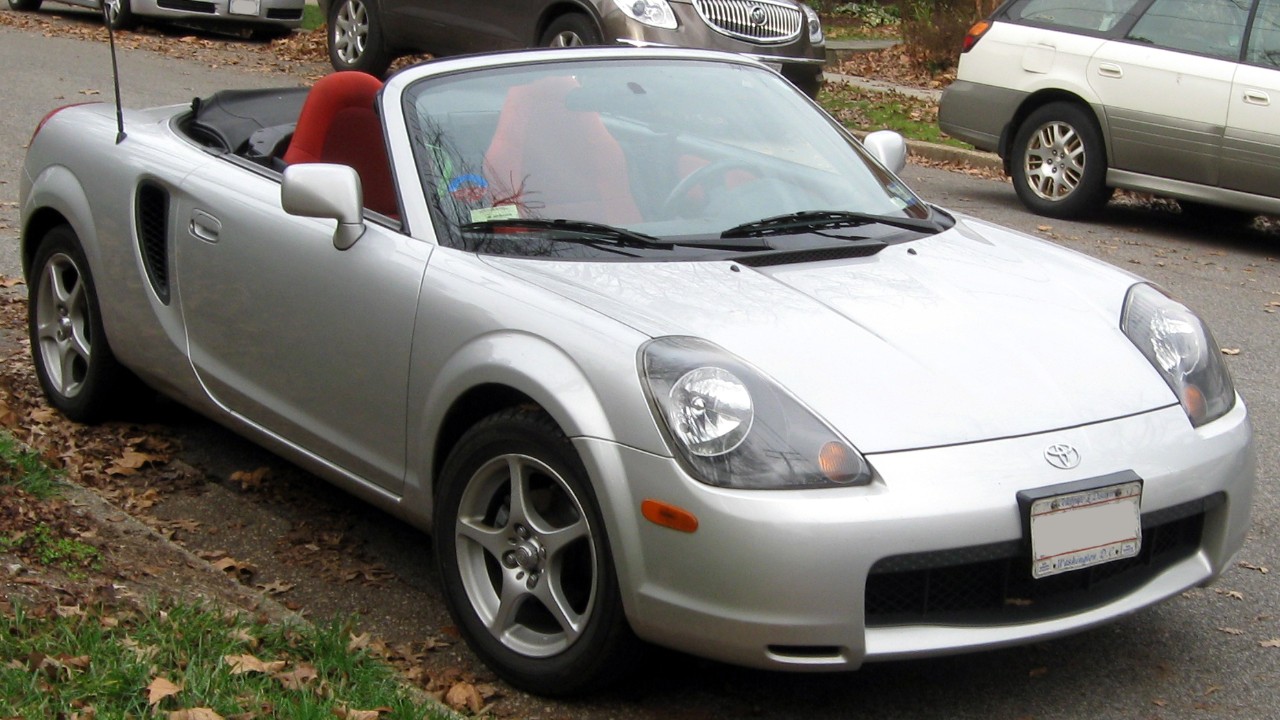
The third MR2 went topless, and that changed its whole character. Toyota sold the MR2 Spyder in America from 2000 through 2005. It used the 1ZZ-FE 1.8-liter four, rated at 138 horsepower. That was less than earlier MR2s, but the car weighed only about 2,195 pounds with the manual gearbox.
For that reason, light weight was the point. The Spyder paired a mid-mounted engine with a simple soft top. From 2002, Toyota also offered the SMT, an automated manual with no clutch pedal. Later, a six-speed SMT became an option. We, however, prefer the plain manual for its direct feel.
U.S. sales ended in 2005, although Toyota kept building the car for other markets until July 2007. Our take: the Spyder is the closest Toyota came to a modern Lotus Elise for normal money. With the top down on a twisty road, it feels faster than its numbers suggest, and that is the essence of fun. If you buy one, have the SMT checked by a Toyota specialist, or simply choose the manual. A sorted manual car is pure, simple fun.
More from Fast Lane Only