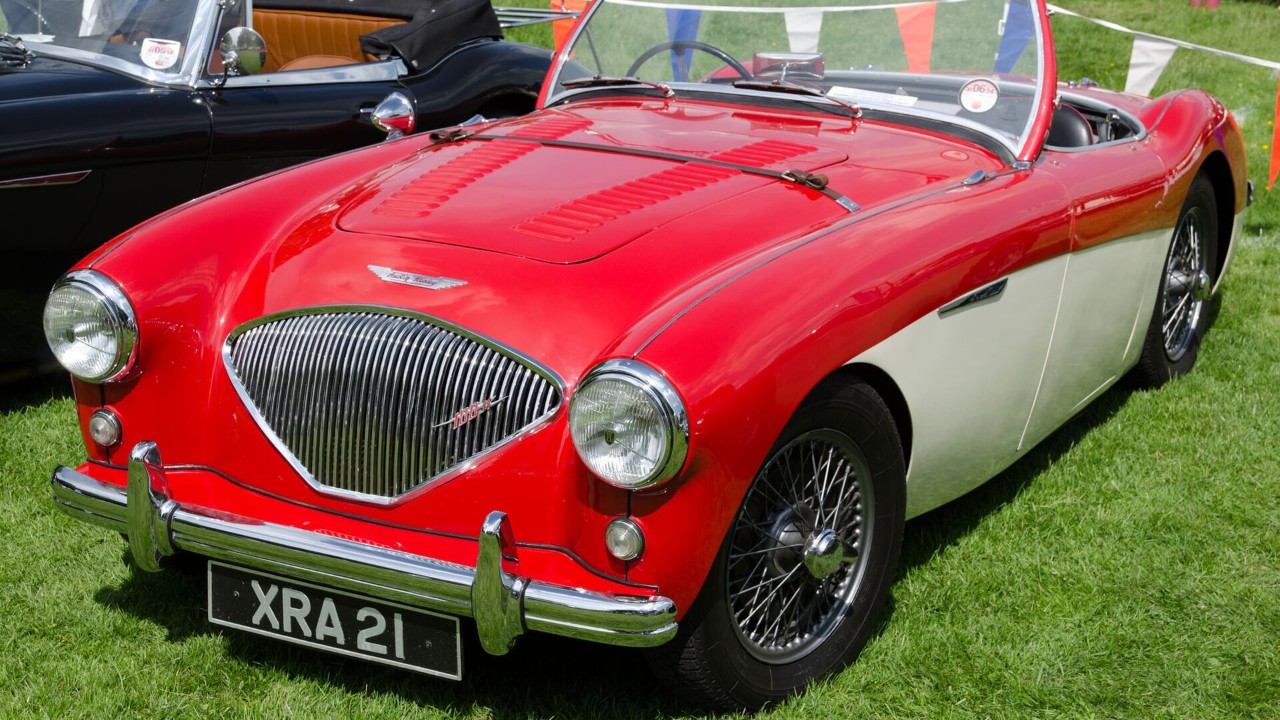
Only 640 cars left the factory as a true Austin-Healey 100M, and each one was a fast four-cylinder roadster with a louvred bonnet and a racing name. That is a tiny number for a brand that sold thousands of sports cars every year. In fact, most of the Healeys you meet at a show are ordinary 3000s or “frogeye” Sprites.
The rarer versions are a different story. Some were special-order racers, some were short-lived model codes, and some were simply the first or last of a line. As a result, the badge on the grille looks the same while the car behind it can be very scarce.
These seven are our picks for the Austin-Healeys we would most like to find at a cars-and-coffee meet. The build dates, engines and production totals come from the marque’s registries, period sources and auction records. However, the picks and the opinions are ours.
1. 1956 Austin-Healey 100M Le Mans
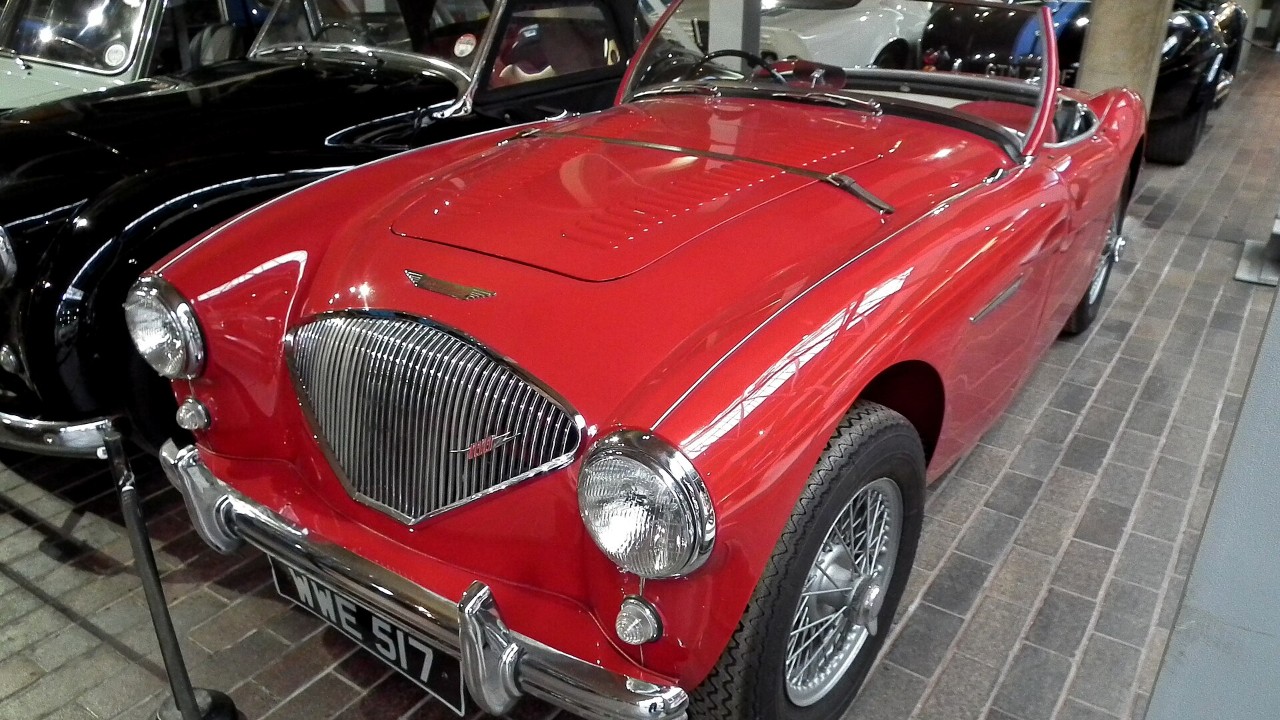
The Austin-Healey 100M began with a kit. According to the 100M Registry’s history of the model, Healey first offered a Le Mans modification kit in 1954, based on changes tried on four BN1 test cars. About 500 kits went to dealers and owners. Then the factory began building the complete Austin-Healey 100M to the same spec.
Those factory cars ran from September 5, 1955 to July 16, 1956, and the build cards show 640 of them. Each got a louvred bonnet, larger carburettors, a cold air box, a high-lift camshaft and 8.1:1 pistons. Output rose to 110 horsepower at 4,500 rpm. In addition, about 70 percent wore two-tone paint.
Because kit cars and later conversions look almost identical, the registry keeps them in separate categories. That matters when money changes hands. For example, RM Sotheby’s sold a certified factory 100M at its Arizona 2017 sale for $165,000. Our take: the Austin-Healey 100M is the Big Healey to chase, but only with paperwork that proves it left the factory as a 100M.
2. 1960 Austin-Healey Sebring Sprite
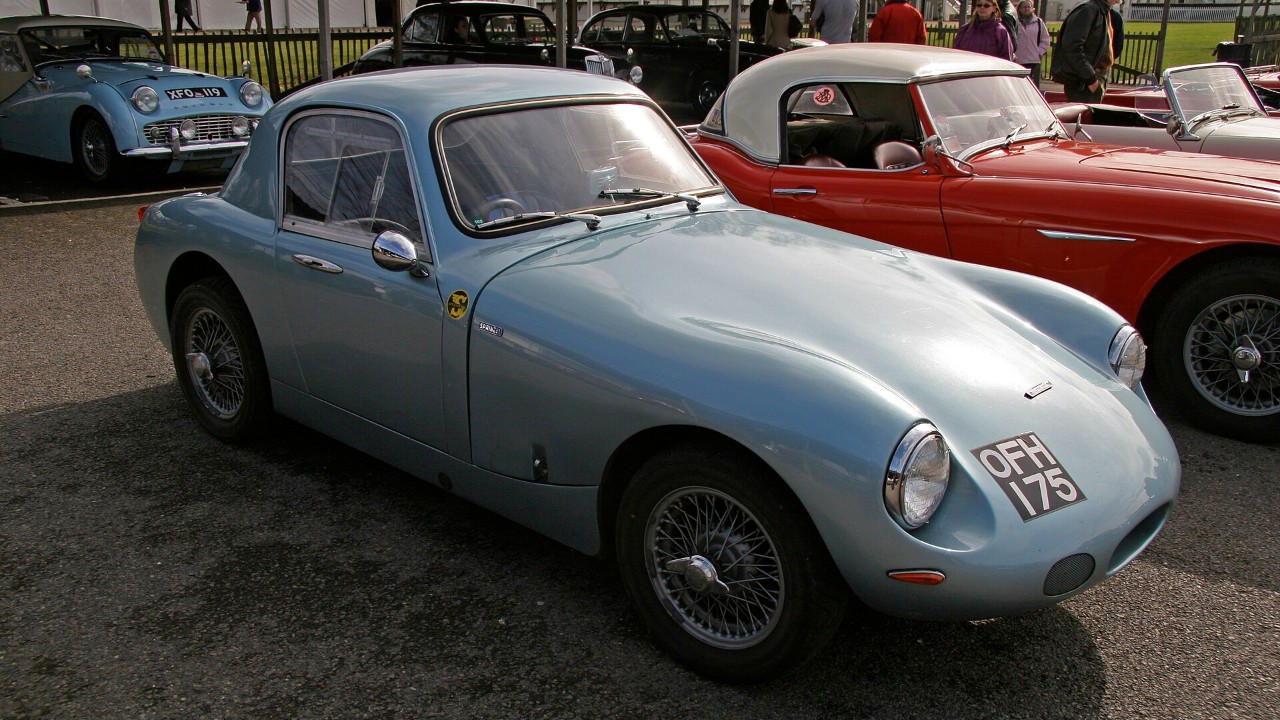
The little Sprite earned its reputation in Florida. In March 1959, BMC sent three Sprites to the Sebring 12 Hours, and they finished first, second and third in their class. Afterward, the name “Sebring Sprite” stuck to a faster, better-braked version of the car.
The FIA recognized the Sebring Sprite as a separate model on September 17, 1960. Customer cars used Girling discs at the front, 8½ inches across, with drums at the rear. Meanwhile, rally driver John Sprinzel commissioned coachbuilder Williams & Pritchard to make sleek coupé bodies. Sprinzel’s coupés were once said to number six. Today, eight are known.
The racing record backs up the hype. At Sebring in 1960, Stirling Moss drove one to a class win and second overall in a four-hour race for small GT cars. BMC’s competition department also built works rally cars, and Moss Motoring’s profile of one of them tells how Pat Moss and Ann Wisdom drove it on the 1960 Tour de Corse. In our view, a real Sebring coupé is among the most charming small racers Britain ever built.
3. 1958 Austin-Healey 100-6 BN6 two-seater
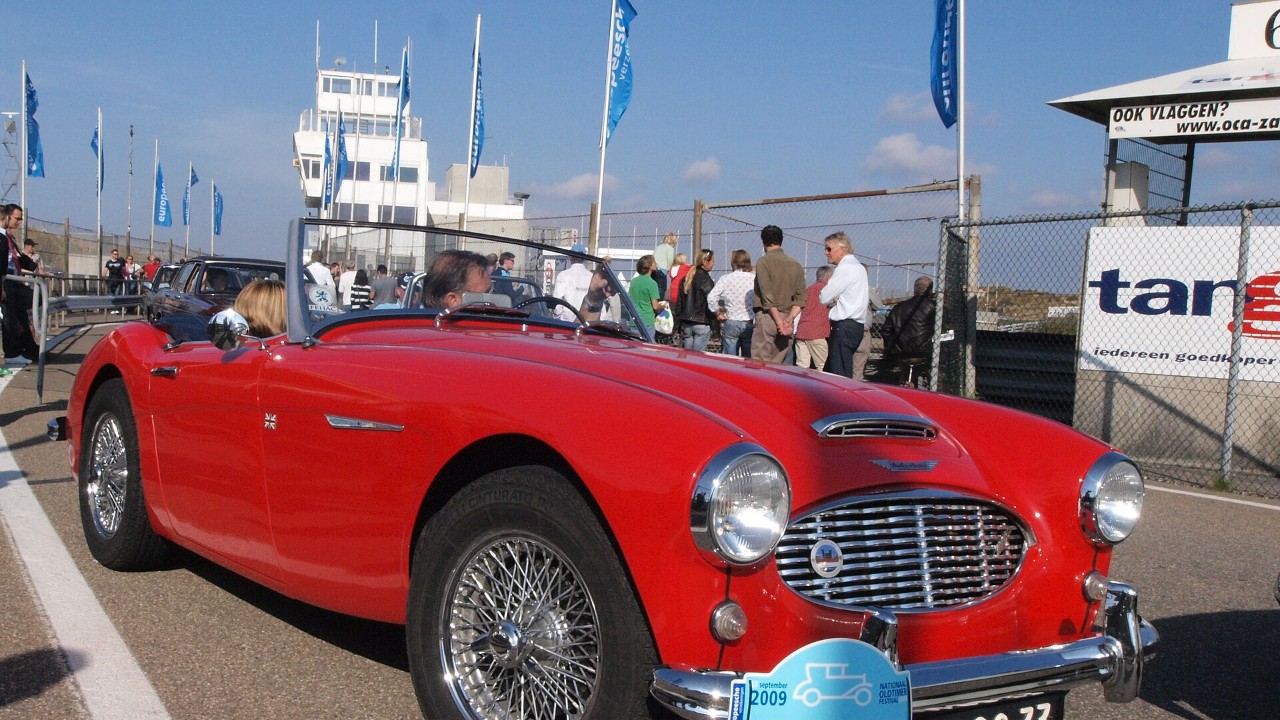
The 100-6 swapped the four-cylinder engine for a 2,639 cc C-Series six. At first it made 102 horsepower. Then, for 1957, a revised manifold and cylinder head lifted it to 117 horsepower. The wheelbase also grew by two inches, to 92 inches.
Most 100-6s were BN4 models with a small rear seat for children or luggage. However, the BN6 code marked the strict two-seater, built only in 1958 and 1959. Its timing is interesting too. In late 1957, production moved from Austin’s Longbridge plant to the MG works at Abingdon, so the BN6 is an Abingdon car through and through.
Total 100-6 output reached 14,436 cars before the 3000 replaced it in 1959. That total covers both body styles, so the two-seater share is smaller still. Overdrive also changed status on this model, from standard to optional, which means cars differ more than you might expect. If you like the six-cylinder sound but want the cleanest cockpit, the BN6 is the one we would look for. It drives like a 3000 and looks like an early 100.
4. 1962 Austin-Healey 3000 BJ7 Mark II
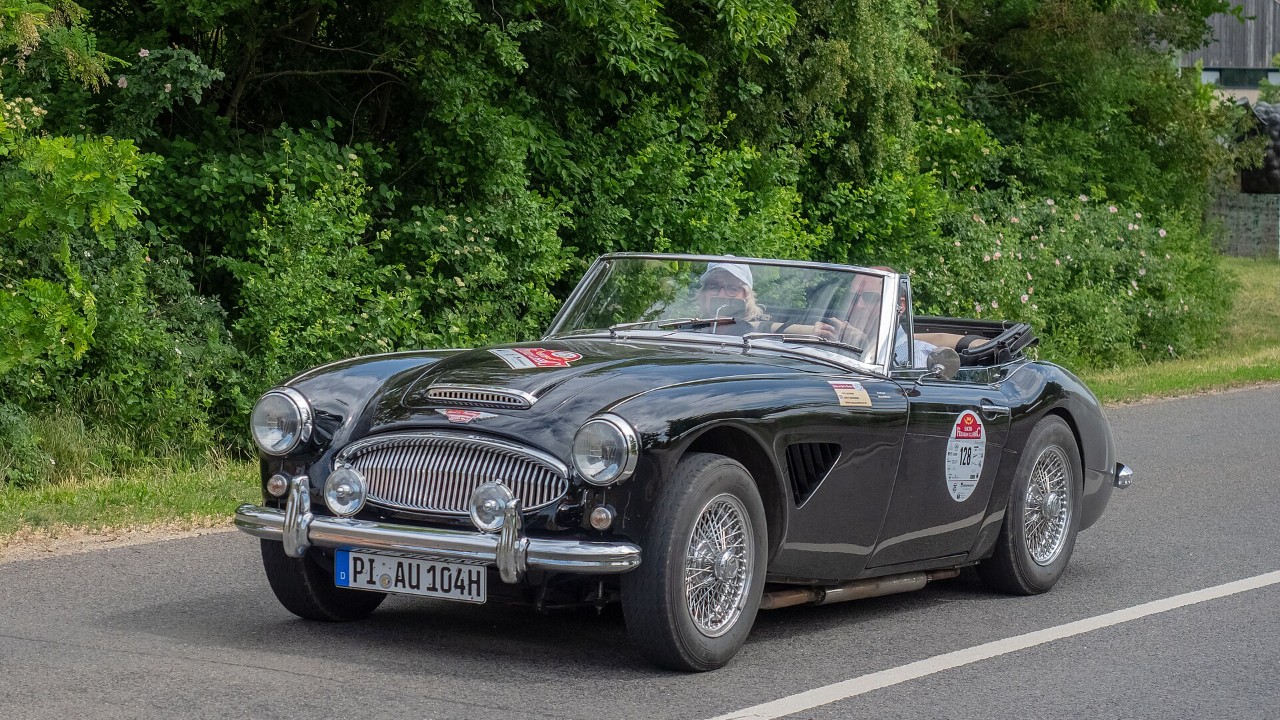
The BJ7 changed what a Big Healey felt like on a wet day. Austin-Healey launched the 3000 sports convertible at the end of August 1962. It brought wind-up side windows and a new wrap-around windscreen, so owners could finally leave the side curtains at home.
The engine room changed as well. The convertible dropped the earlier triple SU carburettors for a pair of SU HS6 units, which were easier to keep in tune. Only 6,113 BJ7 convertibles were built before the Mark III arrived. That makes it a short chapter between the racier early cars and the plusher final model. For a closer look at that year, see our story on when the 1962 Austin-Healey 3000 peaked.
Most of these cars came to America. In 1963, 91.5 percent of all Austin-Healey 3000s were exported, mainly to North America. That means many survivors live here, although a BJ7 is easy to mistake for the more common BJ8. Our take: the BJ7 is the sweet spot for anyone who wants a usable Healey with a little of the old rawness left in it.
5. 1970 Austin-Healey Sprite Mark IV
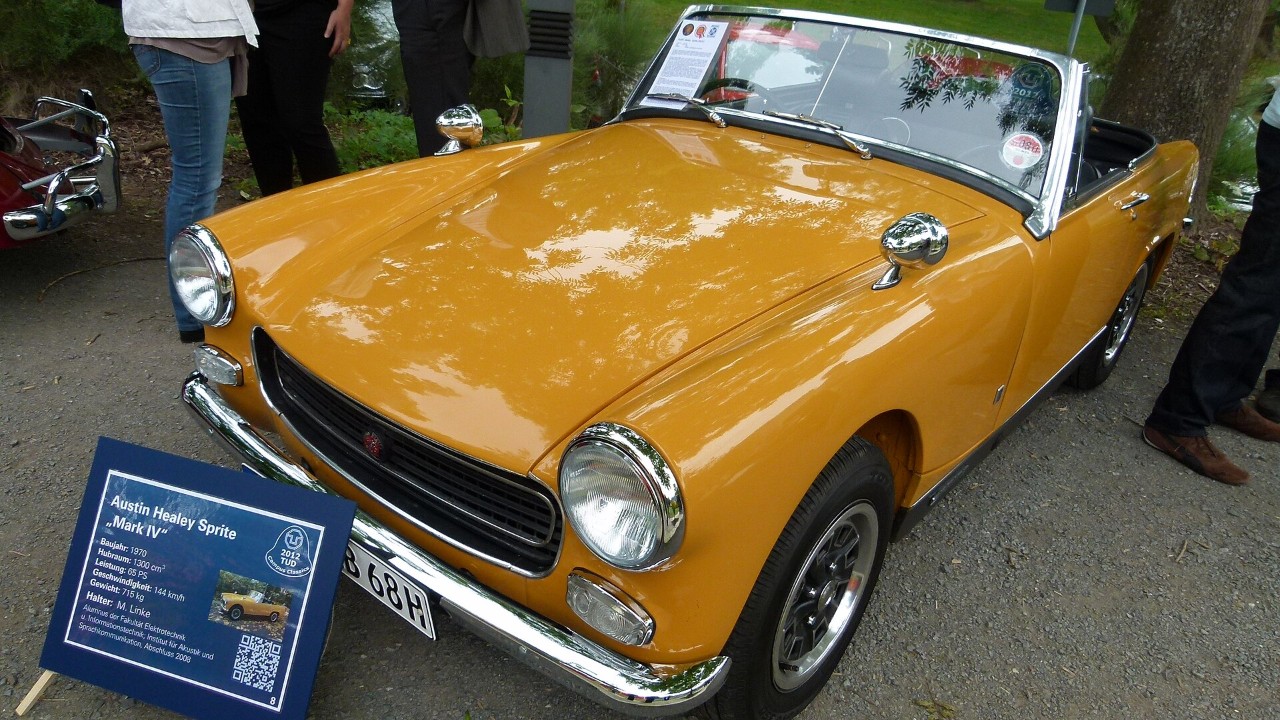
The Sprite outlived the Big Healey, but its name did not last much longer. The Mark IV appeared at the London Motor Show in October 1966 with a 1,275 cc engine. Then, for the 1970 model year, it received a facelift that began in September 1969, after Austin-Healey and MG had become part of British Leyland.
Those late cars are the last chapter of the story. Production of the Mark IV reached 22,790 cars. However, the Healey connection was dropped in 1971, and the final 1,022 cars were sold as plain Austin Sprites. As a result, a facelifted Mark IV with Austin-Healey badges is a narrow window of just over a year.
Compare that with the start. The first “frogeye” of 1958 had a 948 cc engine with 43 horsepower and sold for £669, and Austin-Healey built 48,987 of them. The late Mark IV is faster, more comfortable and far less common. For a look at how the Sprite stacks up against its MG twin, read our 1965 Sprite vs MG Midget comparison. In our view, the last Healey-badged Sprite deserves more respect than it gets.
6. 1953 Austin-Healey 100 BN1
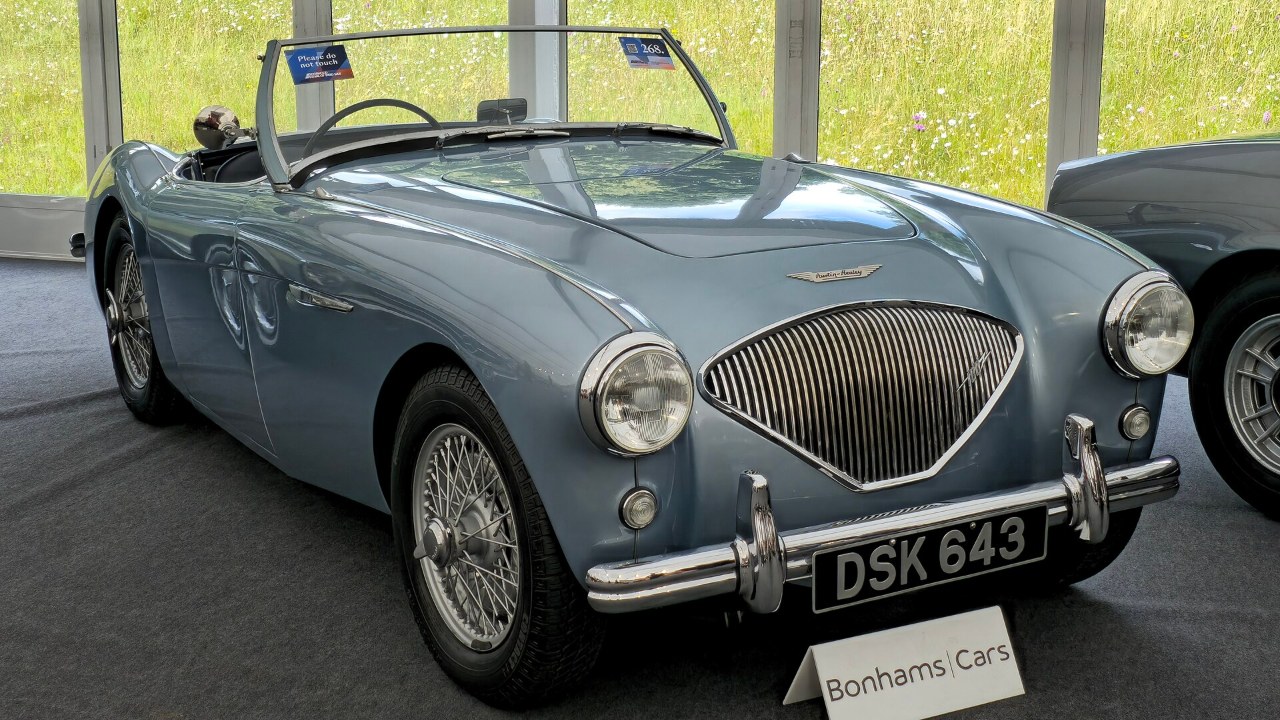
This is where the whole family began. Donald Healey had Tickford build a single Healey Hundred for the 1952 London Motor Show. That show car led straight to production, and BN1 cars rolled out from May 1953 until August 1955.
The BN1 has a quirk every owner knows. Its gearbox was a three-speed with overdrive on second and top, and first gear was blanked off. Power came from a 2,660 cc four-cylinder engine rated at 90 horsepower. Jensen built the bodies in West Bromwich, and apart from the first twenty cars, Austin finished them at its Longbridge plant.
Austin built 10,030 BN1s, so this is not the rarest Healey on our list. Even so, originality is worth checking. Healey sold the Le Mans kit for BN1 cars as well as BN2s, so some early cars carry later upgrades. Our take: a BN1 with its original three-speed box is a history lesson you can drive, and we would keep one exactly as built.
7. 1967 Austin-Healey 3000 Mark III BJ8
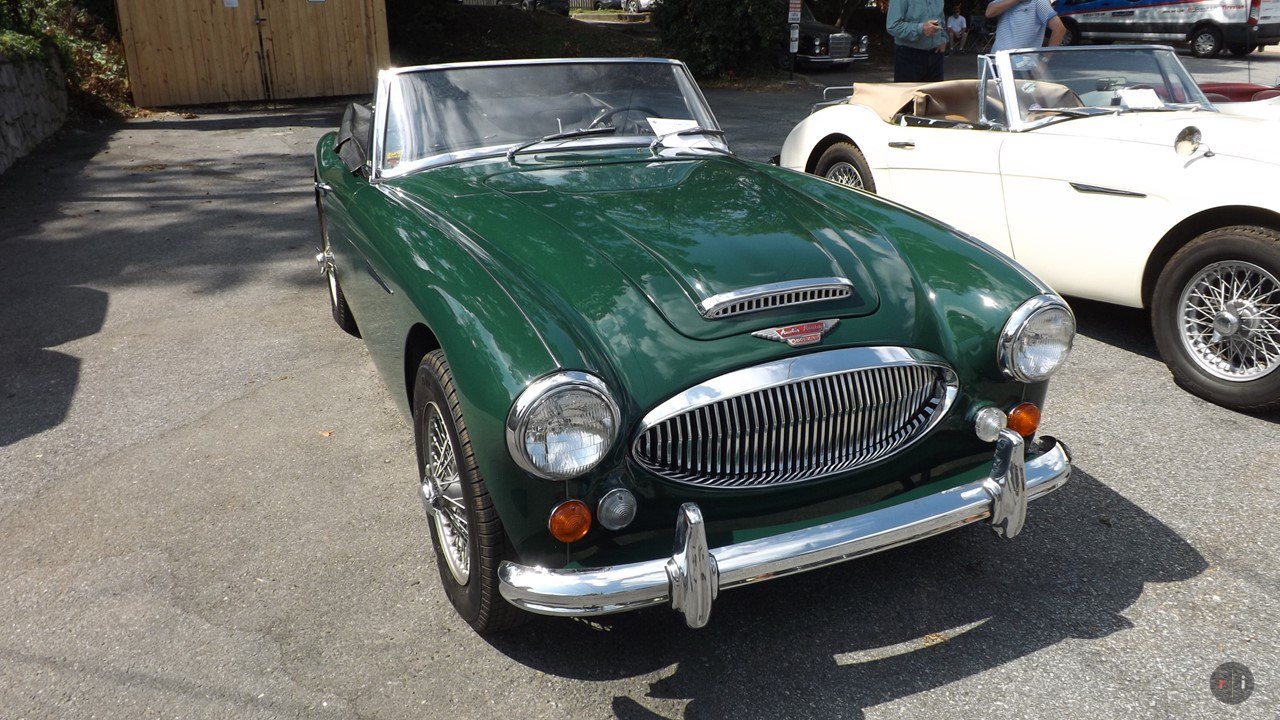
The BJ8 was announced in February 1964, and it brought the biggest power bump of the 3000’s life. Output climbed from 136 to 150 horsepower. Inside, the speedometer and tachometer moved directly in front of the driver, and the trim became more grown-up.
So why is a 1967 car on a rare list? Because it is one of the last. The Mark III stayed in production until the end of 1967, when the 3000 line closed for good. Austin-Healey built 17,712 Mark IIIs in all, but a late car sits at the very end of that run. Because of this, it is the final chapter of a sports car that began in 1952 with a single show car.
A 3000 also proved itself in competition. One works car, registered 727 URX, finished first in the Liège–Rome–Liège Rally. The BJ8 carried that reputation into the luxury era. In our view, a late, original-spec BJ8 is the best everyday Big Healey ever made. If you find a 1967 car with its first engine and trim, buy it before someone else does.
More from Fast Lane Only