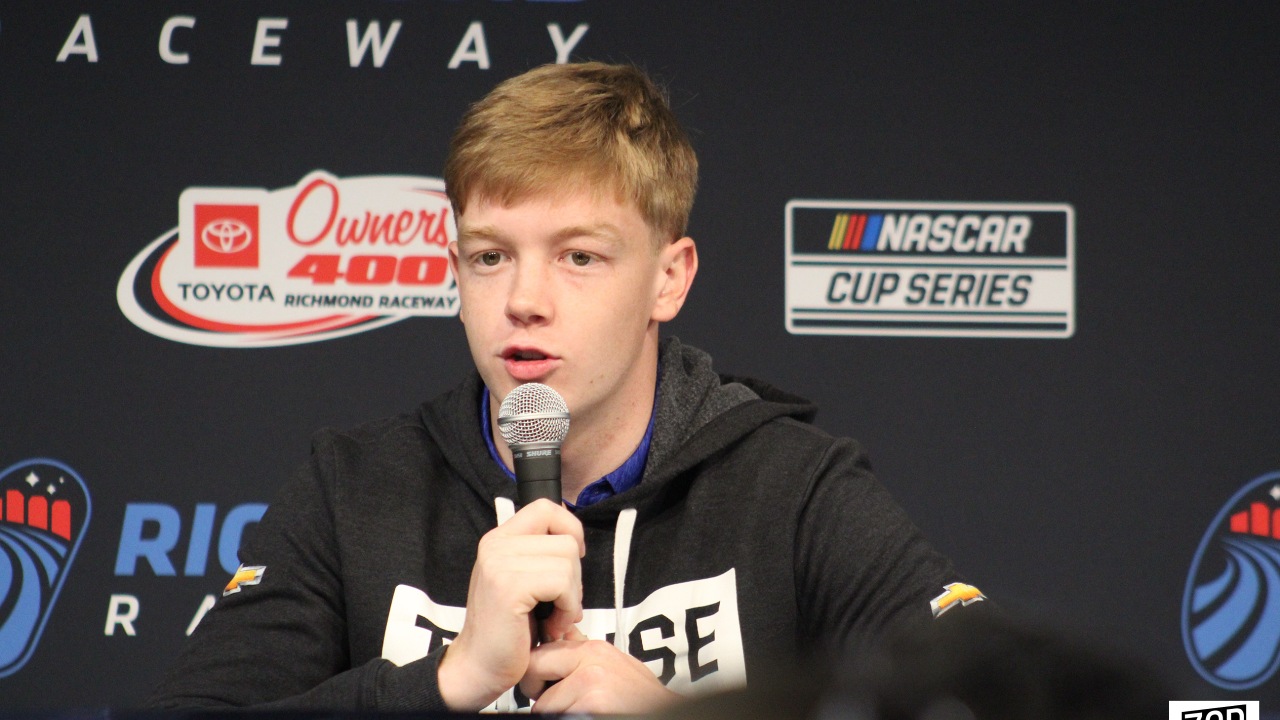
Connor Zilisch arrived at Daytona International Speedway with more on his mind than simply learning the rhythm of a 24‑hour classic. Before his first Rolex 24 at Daytona start as a rookie, the highly rated prospect chose to address lingering questions about his health, offering a clear update on the shoulder and collarbone that had threatened to slow his rapid rise. His message was measured but reassuring, signaling that the physical setbacks of the past year would not define his debut on one of sports car racing’s biggest stages.
The timing of that update matters. Endurance racing demands stamina, precision, and resilience, and any doubt about a driver’s fitness can overshadow even the most promising opportunity. By speaking directly about his condition on the eve of his Rolex 24 run, Zilisch reframed the narrative around his Daytona appearance, shifting it from concern over his recovery to anticipation of how his talent might translate in one of motorsport’s most demanding events.
From freak accident to surgical repair
The story behind Zilisch’s health update begins with a moment that was as mundane as it was costly. While climbing atop his car, he slipped and fell, an awkward landing that resulted in a fractured collarbone and an abrupt end to what had been building into a standout campaign. The injury was serious enough that he required surgery to insert a stabilizing structure in the bone, a procedure that instantly turned his off‑season into a rehabilitation project rather than a period of normal preparation. That fall, and the hardware now in his shoulder, framed every subsequent question about whether he could withstand the physical strain of top‑level competition.
The collarbone fracture did more than sideline a rising driver, it interrupted momentum at a critical juncture. Zilisch had been racing deep into the schedule, with the accident occurring around the time of the championship finale at Phoenix, and the timing meant he had to balance recovery with the expectations that come with being labeled a NASCAR phenom. Reports detailing how he underwent surgery on August 12 to insert a stabilizing structure in his collarbone, and how the injury was directly tied to that slip while climbing onto his car, underscored that this was not a minor knock but a bone‑breaking setback that required months of careful management.
A determined return to Daytona
That context made his planned return to race action at Daytona a significant milestone rather than a routine entry on the calendar. When word emerged that the injured NASCAR star was set for a stunning comeback at Daytona, it was framed around the idea that Zilisch was not merely returning to any track, but to one of the sport’s most scrutinized stages. The same reports that described him as a NASCAR phenom also emphasized that his comeback followed a fractured collarbone, reinforcing that his presence at Daytona was the product of determination and medical clearance, not wishful thinking.
Daytona carries a particular weight in stock car and sports car circles, and for a young driver, it can either accelerate a career or expose lingering weaknesses. The fact that Zilisch’s return was tied specifically to Day racing at Daytona, after an injury that had sidelined him and forced surgery, added a layer of intrigue to his program. It suggested that his camp and his doctors believed the shoulder could withstand the demands of high‑speed, high‑load competition, and it set the stage for his next challenge, the Rolex 24, where the physical and mental tests are even more extreme.
Health update ahead of Rolex 24 rookie debut
With that backdrop, Zilisch’s decision to address his condition while already at Daytona for practice ahead of the Rolex 24 at Daytona was a calculated step toward transparency. He confirmed that his shoulder was feeling strong as he turned laps in preparation for the endurance classic, a message aimed at easing concerns that the repaired collarbone might still be a limiting factor. By speaking up before the race week intensity fully ramped up, he allowed teams, competitors, and fans to recalibrate their expectations around performance rather than durability.
The phrasing of his update mattered as much as the content. Rather than hinting at lingering pain or hedging about his readiness, he presented his shoulder as capable of handling the workload required at Daytona for the Rolex event. That stance aligned with earlier indications that he had been cleared to return to racing at Daytona after his surgery, and it connected the dots between the initial injury, the August operation, and the current state of his recovery. In effect, he was signaling that the long rehabilitation arc had reached a point where the focus could shift from medical charts to lap times.
Mental reset and adapting to new demands
Physical clearance, however, is only part of the equation for a driver stepping into a new arena. Zilisch has been candid that some of the changes around him have not been easy to accept, particularly as he navigates evolving NASCAR formats and expectations. In recent comments, he acknowledged that certain structural shifts in the series were “not the easiest thing” for him to embrace, a blunt verdict that revealed how seriously he takes the craft and how carefully he studies the balance between tradition and innovation. That mindset carries over to his Rolex 24 preparation, where he must adapt to multi‑class traffic, long stints, and the shared‑car dynamic that defines endurance racing.
Historically, figures like Jeff Gordon and Tony Stewart mastered both stock cars and other disciplines at the highest level, setting a standard that looms over any modern driver attempting to branch out. Zilisch’s willingness to voice discomfort with some aspects of the current NASCAR landscape, while still pushing himself into a demanding sports car environment at Daytona, suggests a competitor who is both self‑aware and ambitious. His health update, framed against that backdrop of adaptation and high expectations, reads less like a simple medical note and more like a statement that he intends to measure himself against the kind of multi‑discipline benchmarks that Gordon and Stewart once set.
What his health news means for Daytona and beyond
By clarifying that his shoulder is in race‑ready condition ahead of his Rolex 24 debut, Zilisch has effectively removed the most obvious caveat from any assessment of his performance at Daytona. If he excels, the story will center on his pace, racecraft, and ability to manage the unique pressures of a 24‑hour event. If he struggles, the explanation will be found in experience and execution rather than in the aftermath of a fractured collarbone. That clarity benefits not only the driver but also the teams and partners investing in his trajectory, who can now evaluate him on competitive terms instead of medical ones.
Looking beyond the immediate race, the health update also serves as a marker in his broader career arc. The slip that led to his broken collarbone, the August surgery to insert a stabilizing structure, the planned return to Day racing at Daytona, and now the confirmation that his shoulder feels strong for the Rolex 24 collectively chart a path from misfortune to recovery to renewed opportunity. For a young driver already labeled a NASCAR phenom, handling that sequence with composure and openness may prove as important as any single result. Daytona will provide the first extended look at how fully he has turned the page, but his decision to speak plainly about his condition suggests he intends to meet that scrutiny head‑on.
More from Fast Lane Only