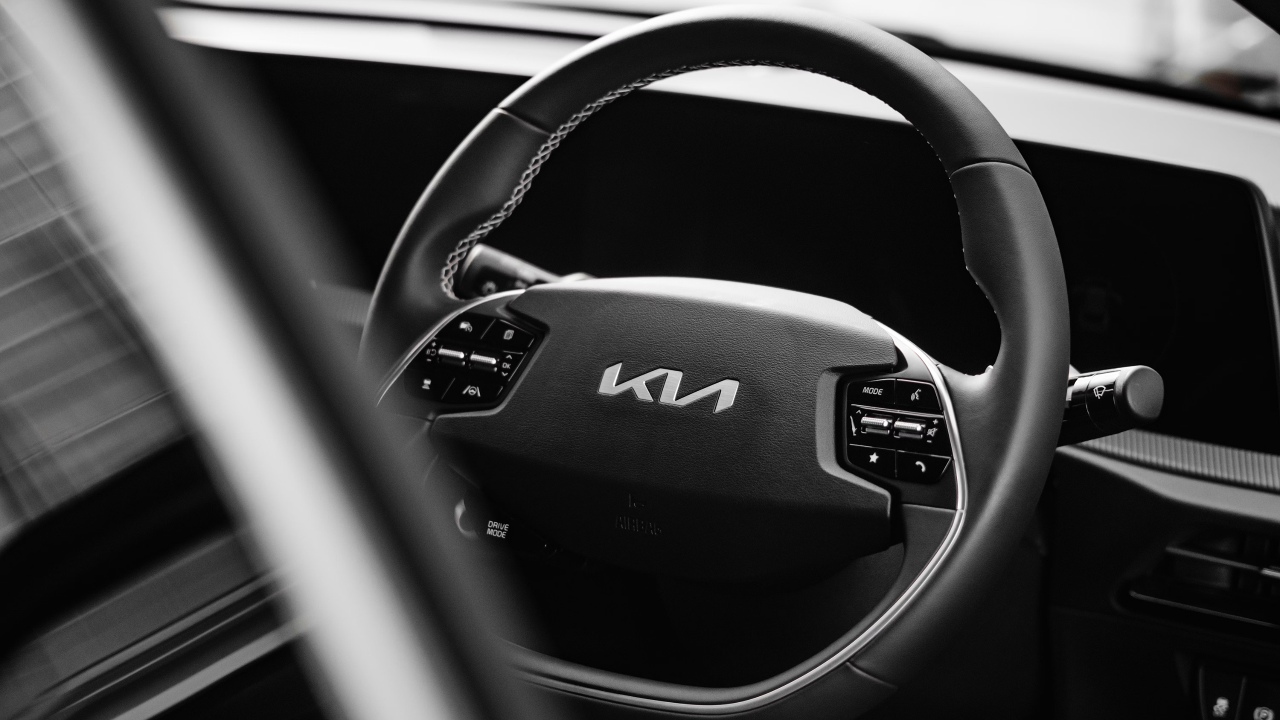
Kia is moving in a direction that runs counter to much of the car industry, keeping physical buttons at the heart of its cabins even as it adds larger displays and more software driven features. Rather than treating touchscreens as a cure all, the brand is betting that a clear, tactile interface will matter more as vehicles become more complex. That choice is shaping everything from its latest compact models to how it prepares for new safety rules in Europe.
The strategy is not nostalgic. It is a calculated response to driver frustration with overloaded touch interfaces and to regulators who are starting to treat screen heavy dashboards as a safety risk. As rivals chase minimalist interiors dominated by glass, Kia is trying to prove that technology can feel advanced without forcing every interaction through a pane of pixels.
Kia’s design philosophy: tech forward, not touch only
Kia has never fully abandoned physical controls, and executives have been explicit that they do not intend to. While some competitors removed knobs and switches in favor of flat panels, the company has argued that certain functions must remain instantly accessible by feel. That stance reflects a belief that drivers should not have to hunt through layered menus to adjust core features such as temperature or audio volume, even as the brand expands its digital offerings.
Design leaders inside Kia have framed the goal as a balance between physical and digital controls that can appeal to a broad global audience. They describe a cabin where screens handle complex tasks, such as navigation or connected services, while hard keys and rotary dials cover the operations that drivers use constantly. The emphasis is on technology that adds clear value rather than novelty for its own sake, a point underlined by internal discussions about how future Kia vehicles will integrate more software without sacrificing intuitive operation.
Real world cabins: K4 and Sportage show the mix in practice
The philosophy is already visible in recent models. In the 2026 Kia K4 GT Line Turbo, reviewers have highlighted an interior that sets the tone for the rest of the lineup, with prominent screens paired with a row of physical controls. The car uses a wide digital display for instrumentation and infotainment, but key climate and media functions are still handled by dedicated buttons and switches. That layout is intended to keep the cabin feeling modern while avoiding the kind of touch only interface that can frustrate more than it impresses.
Feedback on the latest Kia Sportage points in a similar direction. Commentators have noted that the model has moved away from heavy use of shiny black plastic, a design trend that often goes hand in hand with capacitive touch panels. In its place, the Sportage leans on more practical finishes and clearer physical controls, which makes smudges less obvious and buttons easier to locate by touch. The result is a cabin that still looks contemporary but is less likely to distract the driver with reflective surfaces or ambiguous touch zones.
Safety regulators push back against screen overload
Kia’s commitment to physical controls is not only about brand identity, it is increasingly aligned with regulatory pressure. In Europe, new testing rules from Euro NCAP are set to link top safety ratings to how much a car relies on screens for basic functions. The organization has signaled that vehicles will need fewer screens and more buttons if they are to earn a 5 star score, reflecting concern that complex touch interfaces can draw attention away from the road for too long.
Technical guidance around these changes stresses that starting in January 2026, manufacturers will be required to include physical buttons for important functions if they want to meet the highest safety benchmarks. Analysts who track these developments argue that tactile controls reduce the time drivers spend looking down, since they can be operated by muscle memory rather than visual confirmation. For brands that had moved almost everything into touch menus, the shift could mean redesigning dashboards to reintroduce hardware that Kia never removed.
Why drivers still reach for buttons first
Behind the regulatory language is a simple human factor: physical controls are easier to use while driving. A button or dial provides immediate feedback through shape and resistance, so a driver can adjust it with a quick glance or sometimes no glance at all. Touchscreens, by contrast, often require precise taps on small icons, confirmation that the input registered, and sometimes multiple steps to reach the desired setting. That extra cognitive load can be manageable when parked, but it becomes a liability at highway speeds.
Suppliers that study in car ergonomics have pointed out that combining physical controls with touchscreens can shorten reaction times and reduce distraction. Their research underpins the argument that critical functions, such as hazard lights, wipers, and demisting, should never be buried in software. Instead, screens are better suited to tasks that inherently demand more attention, like map browsing or app selection, which drivers are more likely to handle when stationary. Kia’s approach, which keeps essential operations on real buttons while letting displays handle richer content, fits neatly within that framework.
The competitive stakes for Kia’s button first stance
As the industry races toward more connected and software defined vehicles, Kia’s insistence on tactile controls could become a differentiator. Buyers who have grown weary of laggy or confusing touch interfaces may see the brand’s cabins as a relief, especially if they still deliver the large screens and digital features that have become table stakes. In models like the K4 GT Line Turbo, the combination of a strong visual statement with practical controls suggests that Kia is trying to occupy a middle ground between tech minimalism and traditional dashboards.
The strategy also positions Kia to respond quickly to evolving safety expectations in Europe and beyond. With Euro NCAP tying top ratings to the presence of physical buttons for key functions, brands that doubled down on all screen interiors may face costly redesigns. Kia, having refused to kill buttons in the first place, can focus instead on refining how its hardware and software work together. If regulators in other regions follow Europe’s lead, the company’s early commitment to a balanced interface could shift from a design preference to a clear competitive advantage.
More from Fast Lane Only