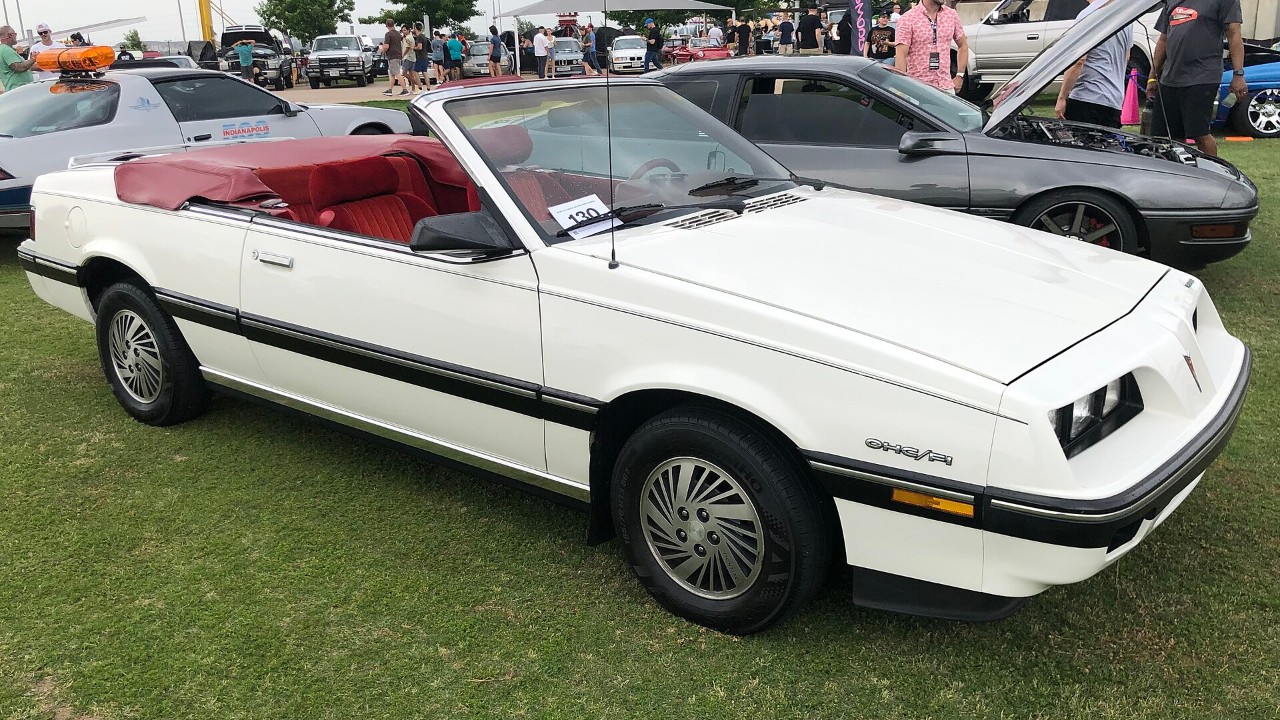
For 1987, the Pontiac Sunbird Turbo GT convertible was the only open Sunbird Pontiac sold, and its turbocharged 2.0-liter four made 165 hp. Few people remember that. Even fewer go looking for one at a car show.
Collector money tends to chase the same famous names from every decade. Meanwhile, plenty of convertibles with real engineering, odd stories or tiny production runs get overlooked. Some of them sold well when new, yet today they barely register.
These are our picks for 12 convertibles we think deserve to be the most collectible of their era. That verdict is our opinion. The facts behind each one come from model records, factory histories and auction catalogs, and we’ve kept them as specific as the sources allow.
1. 1987 Pontiac Sunbird Turbo GT convertible
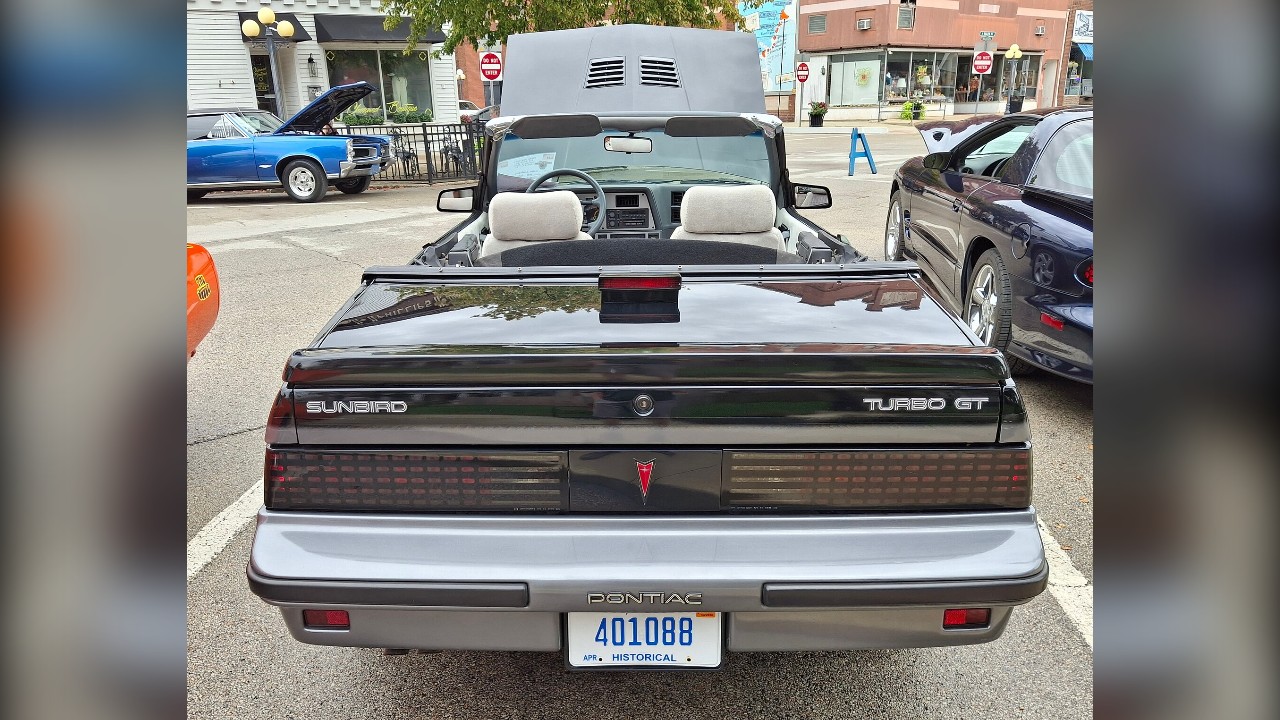
Pontiac first turbocharged the Sunbird for 1984. That 1.8-liter engine wore a Garrett T25 turbo and made 150 hp. Then, for 1987, the turbo four grew to 2.0 liters and 165 hp, and the GT convertible became the only drop-top Sunbird in the lineup.
The GT also had a face you don’t forget. Its semi-concealed headlamps sat behind partial covers that gave the car a “raised eyebrows” look when lit. Pontiac built fewer than 1,300 Sunbird GT convertibles in 1986, so the open GTs were never common.
In our view, the Pontiac Sunbird Turbo GT is one of the purest turbo-era American convertibles. It’s small, quick for its day and honest about what it is. Clean examples deserve far more attention than they get.
2. 1991 Dodge Shadow ES convertible
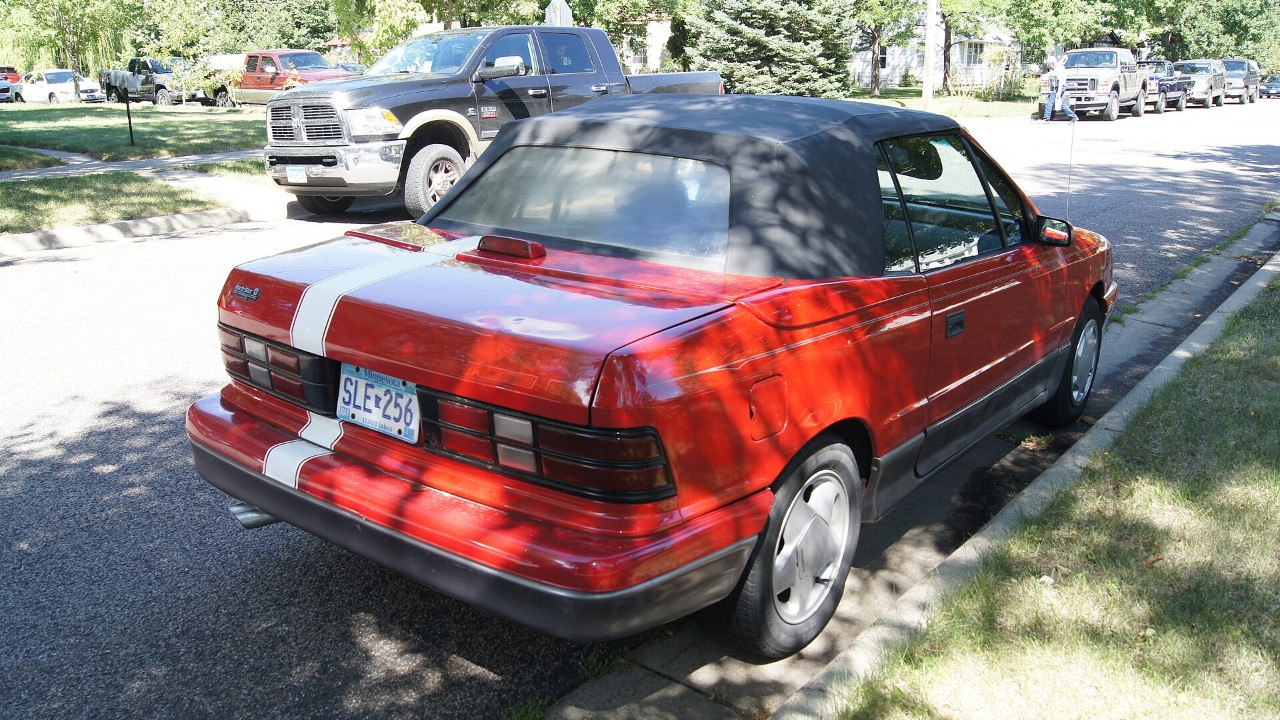
Dodge added a two-door convertible to the Shadow range for 1991, and it lasted through 1993. Plymouth’s twin, the Sundance, never got one. As a result, the open Shadow stands alone in the Chrysler compact family of its time.
The ES name carried weight. From the start, the Shadow ES was the sportiest version, with wider wheels and tires than the other trims. Meanwhile, the Shadow’s turbocharged 2.5-liter four was rated at 150 hp in 1989–1992 cars.
We think an ES convertible is the most interesting Shadow ever sold. It paired a sporty trim with an open roof in a car most people bought as basic transportation. If you find an unmodified one, it deserves a closer look.
3. 1988 Chevrolet Cavalier Z24 convertible
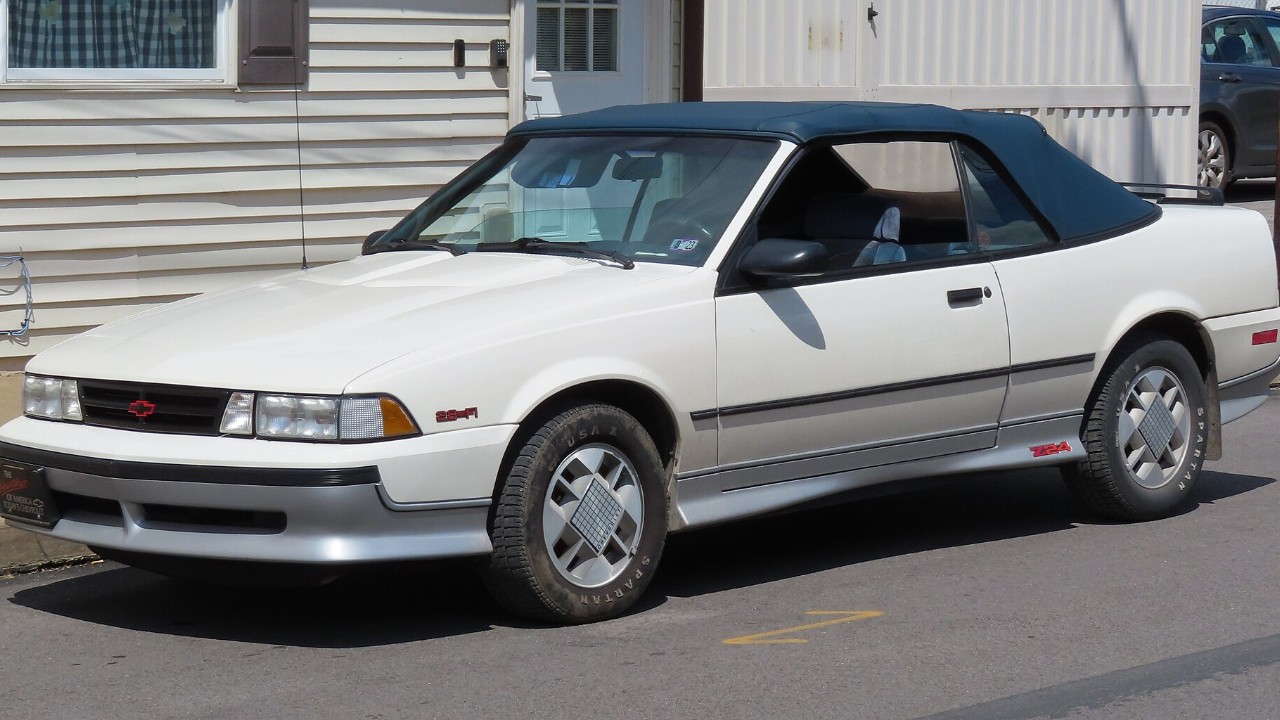
The Cavalier convertible started life late in the 1983 model year, when American Specialty Cars built the first ones. Later, the Z24 package arrived for 1986 with digital gauges, sport wheels and a ground-effects kit. By 1988, Chevrolet offered the convertible only as a Z24.
That makes the 1988 car the purest version of the idea. Power came from the 2.8-liter V6, rated at 125 hp in 1987–1989 cars. In addition, the 1988 car belonged to the restyled second generation.
Most Cavaliers were bought as commuter cars. For that reason, we think a tidy Z24 convertible is worth far more attention than its badge suggests. We’d put it near the top of any 1980s bargain-convertible list.
4. 1960 Lincoln Continental Mark V convertible
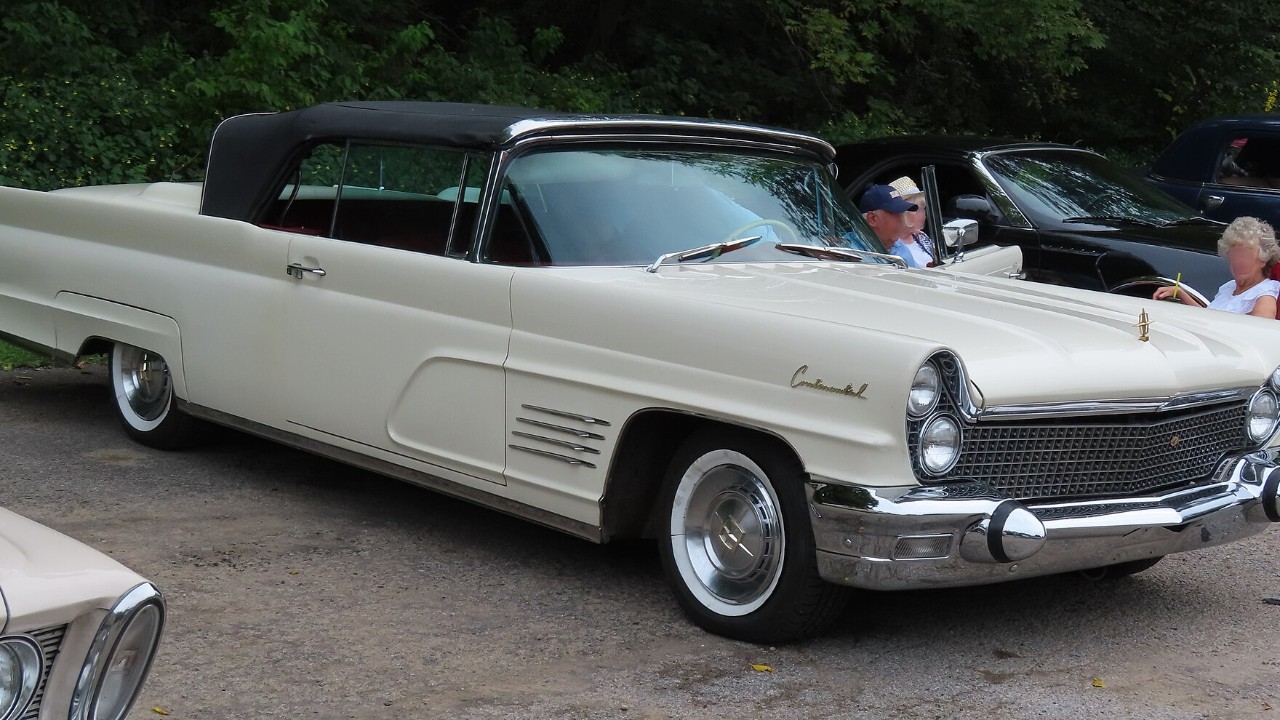
Ford stylist John Najjar designed the 1958–1960 Continental, with contributions from Larry Shinoda. The 1960 Mark V convertible rode a 131-inch wheelbase and stretched 227.2 inches long. Under the hood sat a 430-cubic-inch V8 rated at 315 bhp.
According to RM Sotheby’s, Lincoln built 2,044 Mark V convertibles, and the auction house called it the largest open-top American car built after World War II. Another RM catalog from 2015 said fewer than 500 are reported to survive. Even so, the Arizona car sold for $66,000 in 2017.
The 1961 Continental that followed gets most of the attention. However, we think the 1960 Mark V convertible is the more extravagant car. It deserves a place in the same conversation.
5. 1964 Chrysler 300 K convertible
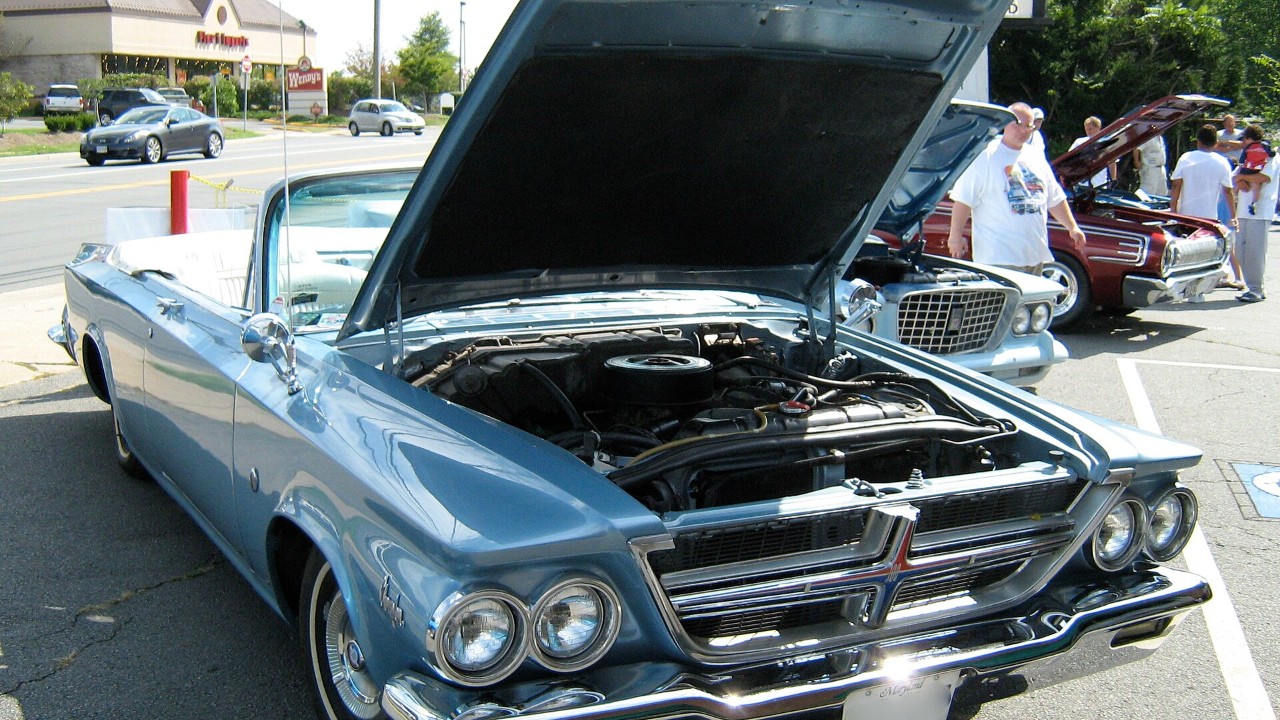
Chrysler’s letter-series 300s ran from 1955 to 1965, and the K was the best seller of them all. For 1964, Chrysler cut the base price by more than $1,000. Buyers responded, and production reached 3,647 cars, the largest total the letter series ever saw.
Only 625 of those were convertibles. The convertible listed at $4,694. Under the hood sat a 413-cubic-inch wedge V8 with a single four-barrel carburetor, rated at 360 hp and shared with the Imperial.
Earlier letter cars usually get the headlines. Still, the 300 K convertible combines big power, real luxury and low production. In our opinion, that’s the definition of an underrated collector car.
6. 1965 Rambler Ambassador 990 convertible
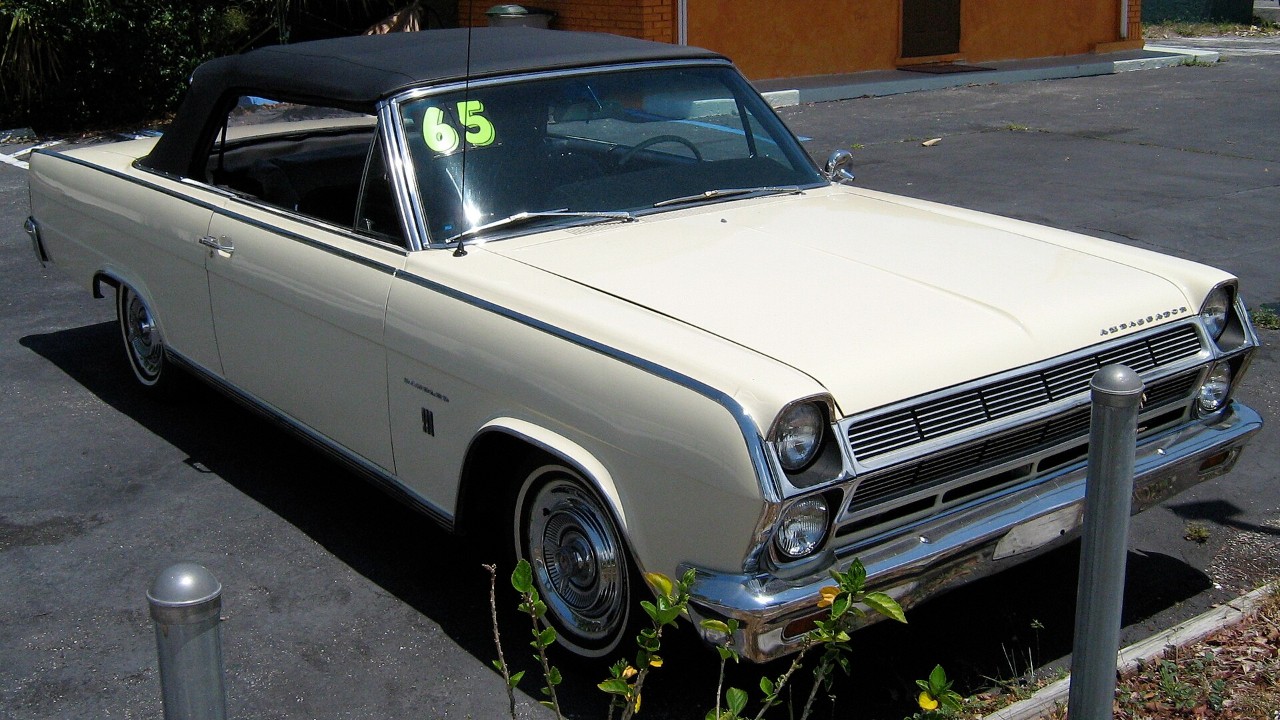
Dick Teague restyled the Ambassador for 1965, giving it an integrated, all-new look on the existing platform. The 990 line also gained a two-door convertible. In fact, it was the first Ambassador convertible since 1948.
AMC built 3,499 of them. The Ambassador rode a 116-inch wheelbase, four inches longer than the Rambler Classic, with all the extra length ahead of the cowl. Buyers could pick a 232 six or a 287 or 327 V8.
The redesign worked. Ambassador sales jumped from 18,647 in 1964 to more than 64,000 in 1965. For us, a 990 convertible is the most stylish way to own the car that turned AMC’s flagship around.
7. 1988 Mazda RX-7 convertible
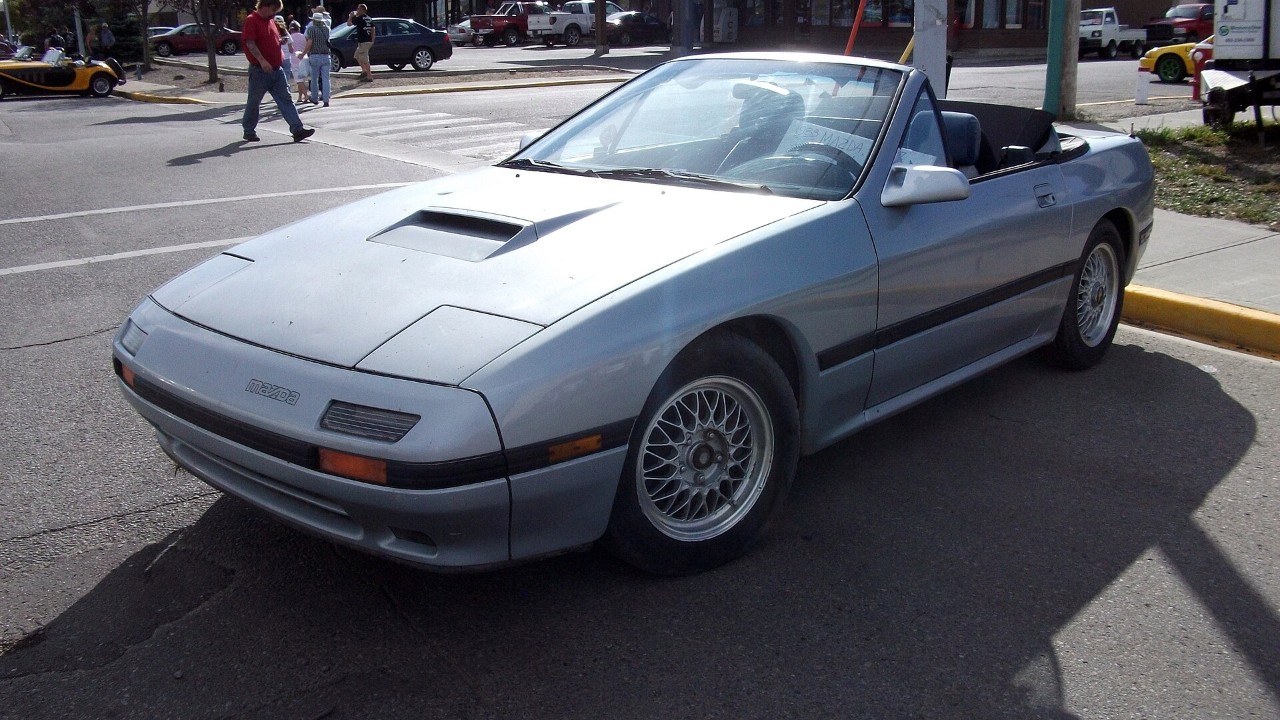
Mazda brought the second-generation RX-7 convertible to the U.S. for 1988. Its 13B rotary made 146 hp in naturally aspirated North American form. The top was clever, too, because a rigid center panel lifted out by hand while the rear section folded under power.
The car also introduced Mazda’s first integral windblocker. That rigid panel folded up behind the seats to cut drafts with the top down. Optional headrest speakers completed the open-air package.
Mazda built about 22,000 FC convertibles, and production ended in 1991 apart from a final run of 500 for Japan. Given that the coupes get most of the rotary love, we think the convertible is the smart collector’s pick of the FC generation.
8. Volkswagen Golf Mk1 Cabriolet
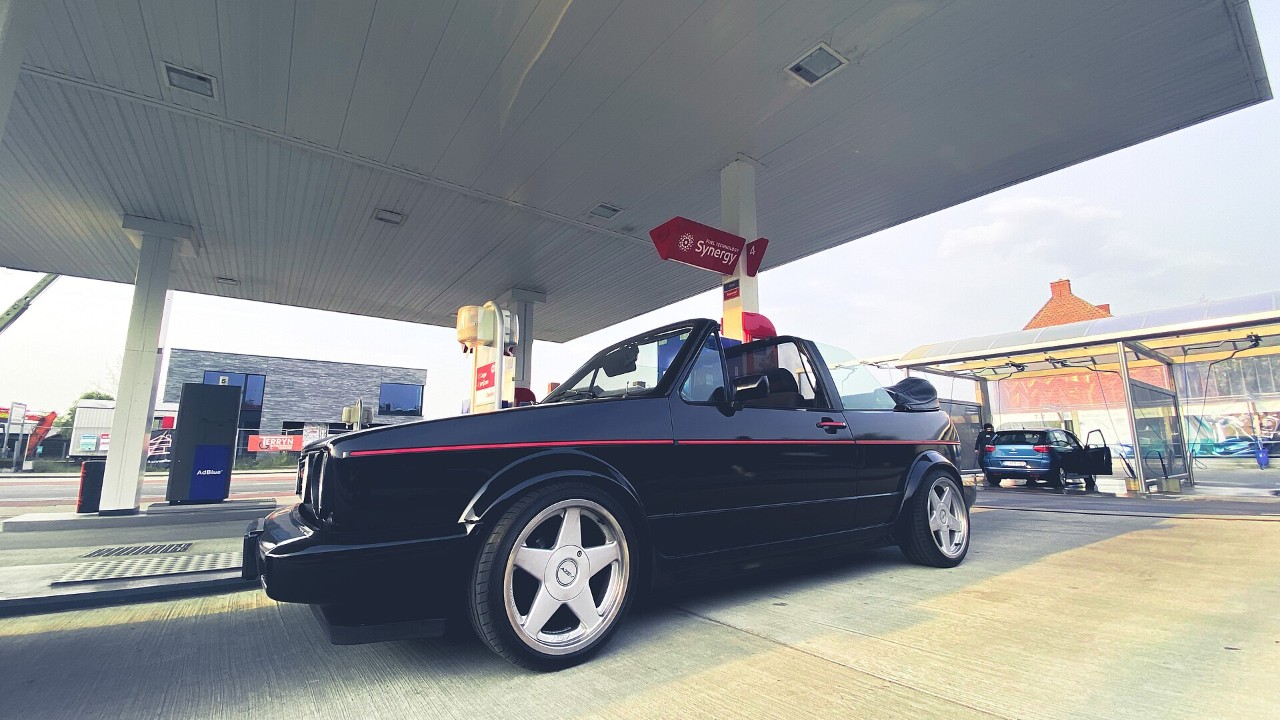
Volkswagen and Karmann presented the Golf Cabriolet at the Geneva show on February 27, 1979. According to the Volkswagen Newsroom, it was the first car in its class with a permanently installed roll bar.
The car outlived its own generation. Volkswagen kept building the Mk1-based Cabriolet right through the Mk2 Golf era, and the last 1.8i versions ended in April 1993. By then, VW had built 388,522 of them.
Volkswagen calls it the most successful cabriolet of its time. That’s exactly why original cars like this Sportline are worth saving. We’d argue it’s the definitive affordable convertible of the 1980s.
9. 1991 Mercury Capri XR2 convertible
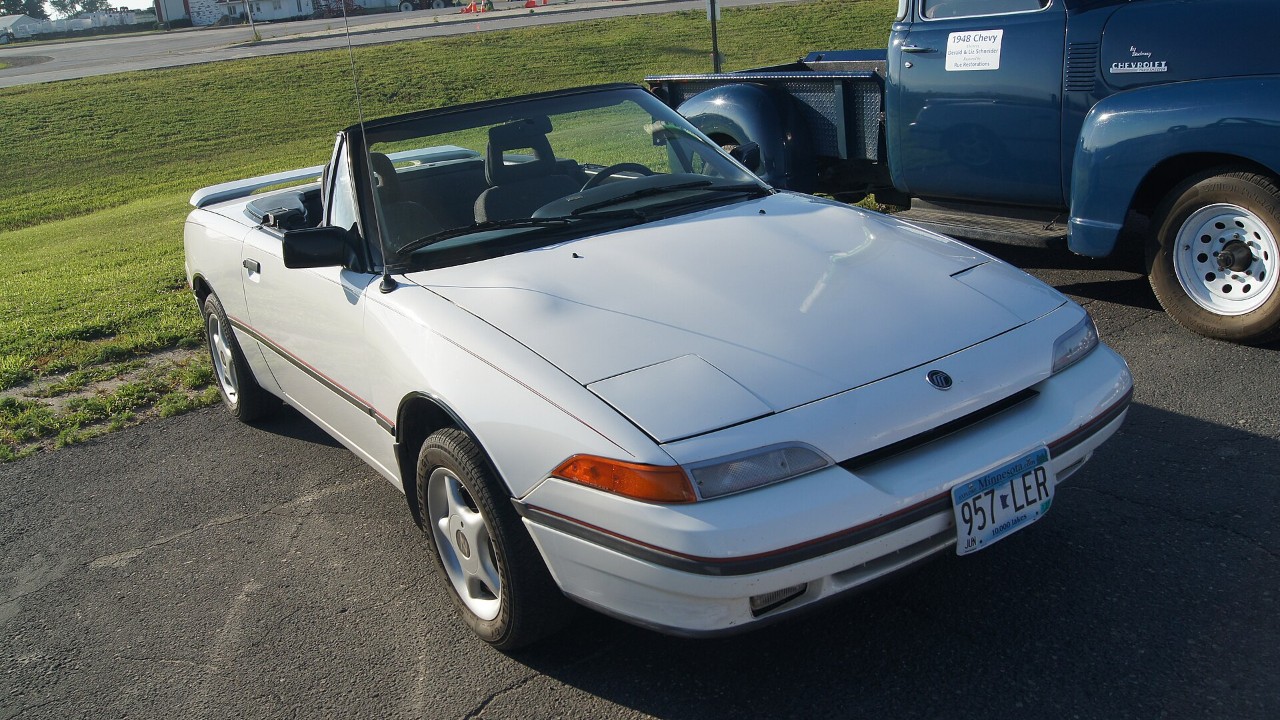
This Capri came from Australia. Ford built the convertible at Broadmeadows, Victoria, from 1989 to 1994, and exports to the U.S. as the Mercury Capri began in 1990. Ghia shaped the exterior, while ItalDesign handled the interior.
Underneath sat Mazda 323 running gear and front-wheel drive. The turbocharged 1.6-liter four made 134 hp. Altogether, Ford built 66,279 of these convertibles, though early cars earned a poor reputation for reliability and a leaking roof that Ford later fixed.
The Miata overshadowed it in the U.S., partly because of its rear-wheel drive. Even so, we think a sorted XR2 is a fascinating piece of global car history. An American badge, an Australian factory and a Japanese engine in one small convertible deserves collector respect.
10. Cadillac Allanté
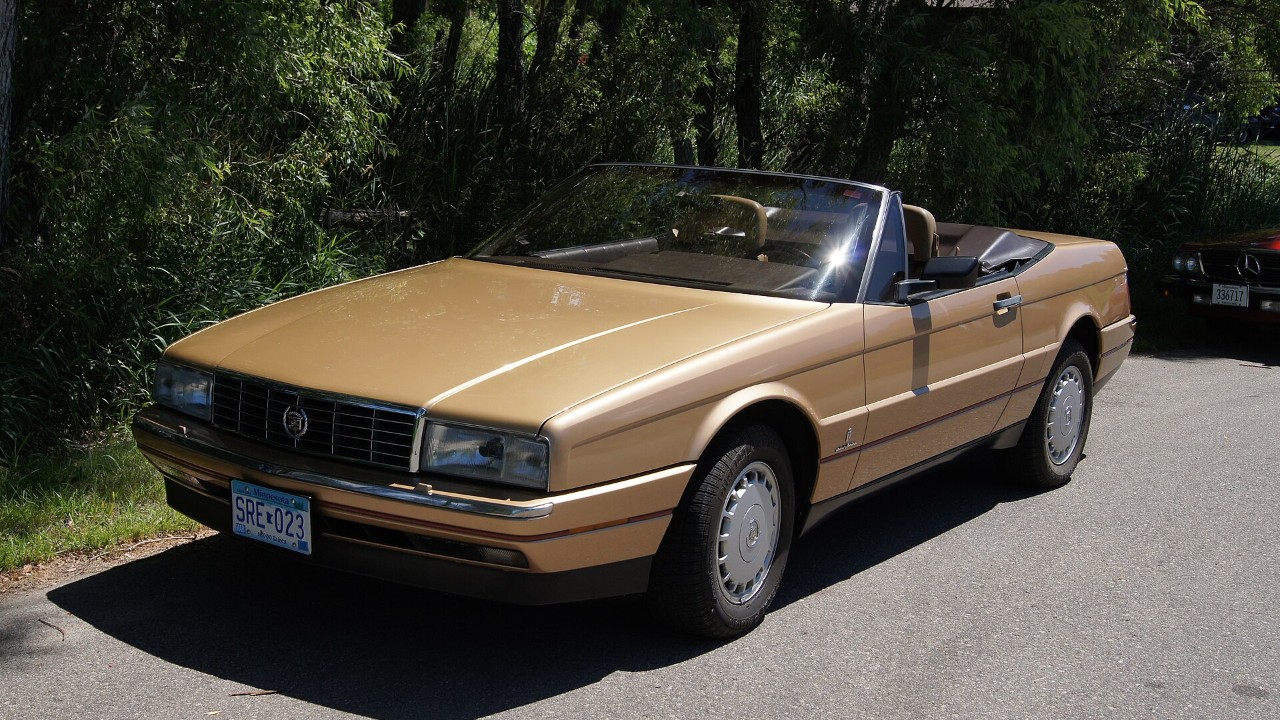
Few production cars had a supply chain like the Allanté’s. Pininfarina built the bodies near Turin, Italy. Then specially equipped Boeing 747s flew them to Detroit, 56 at a time, for final assembly at Hamtramck. Cadillac called the operation the “Allanté Air Bridge.” We told the full story of the Allanté’s 747 air bridge earlier.
Cadillac sold the Allanté from 1987 to 1993 and built 21,430 in total. The last year was the best. For 1993, the Northstar 4.6-liter V8 arrived with 295 hp, and output reached 4,670 cars, the most of any model year. The year before, an Allanté paced the Indianapolis 500 with Bobby Unser at the wheel.
We think the Allanté deserves more credit than its reputation gives it. A 1993 Northstar car is the one to hunt.
11. 1990 Chrysler TC by Maserati
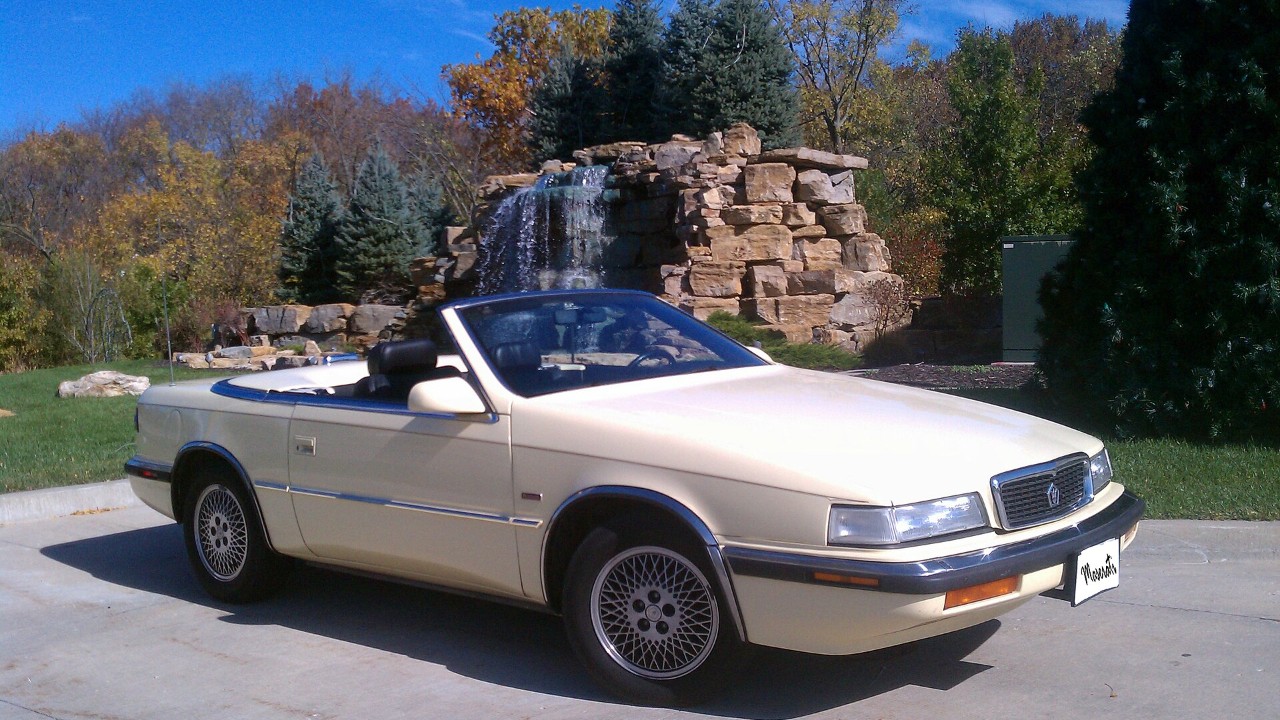
The 1990 model year changed the TC’s heart. Chrysler swapped the earlier turbo four for a 3.0-liter Mitsubishi V6 with 141 bhp, paired with a four-speed automatic. The base price rose to $35,000.
Its build process was unusual for a Chrysler. Stamping took place in Turin and assembly in Sparone, with final assembly at Maserati’s Innocenti complex in Milan. Every car came with a cloth top plus a removable hardtop that wore round, beveled-glass opera windows.
Chrysler built only 1,900 TCs for 1990, out of 7,300 in total. In our view, the V6 car is the easygoing cruiser of the bunch. Its Italian assembly story alone makes it worth preserving.
12. Nissan 300ZX convertible
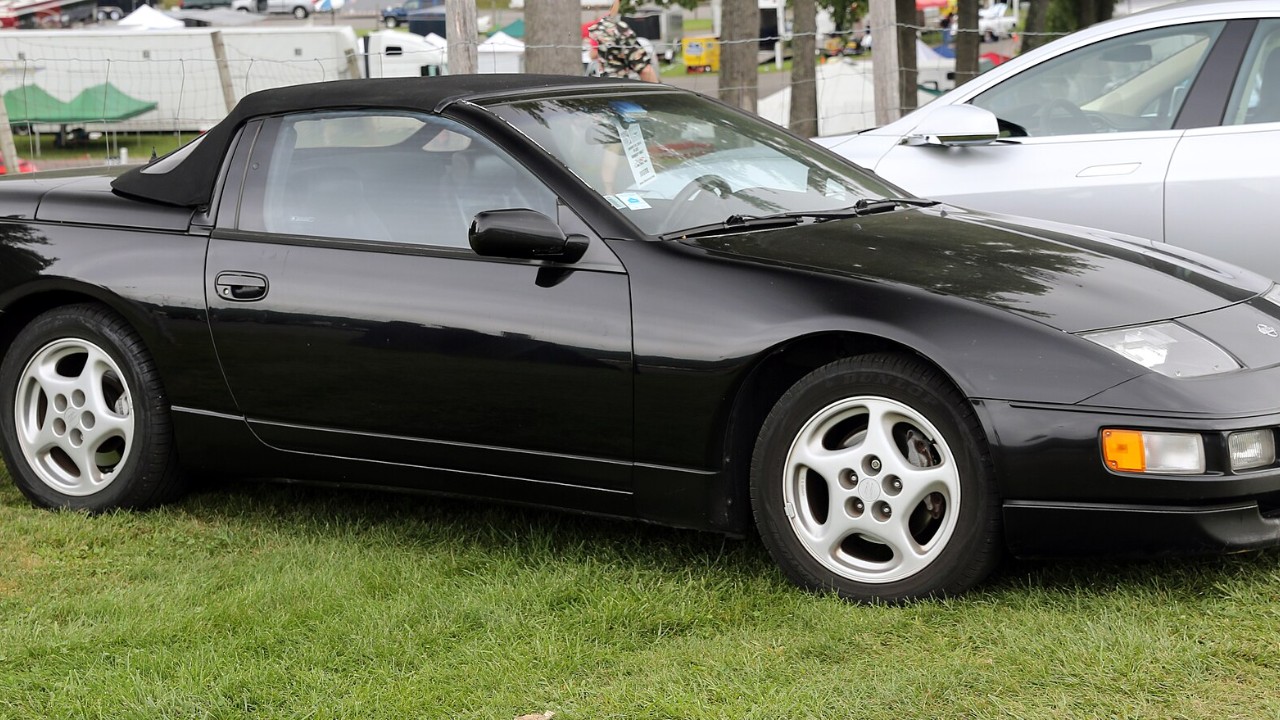
Nissan added a convertible to the Z32 300ZX as sales began to slow. According to a report published on AOL, ASC built the cabriolets from 1993 to 1996, and they carried Nissan’s full factory warranty.
The conversion started from a strong base, since the 300ZX already had a reinforced targa roof. ASC then added a roll-over bar and a manual canvas top that stowed under a plastic cover. As a result, the car kept its sharp Z32 shape with the roof down. For the rest of the family tree, see our guide to the Z cars Datsun and Nissan sold from the 240Z on.
The same report says 10 cabriolets sold on Bring a Trailer averaged about $10,005. That’s a modest price for a factory-backed Z convertible, and it’s why we’d buy one before the market catches up.
More from Fast Lane Only