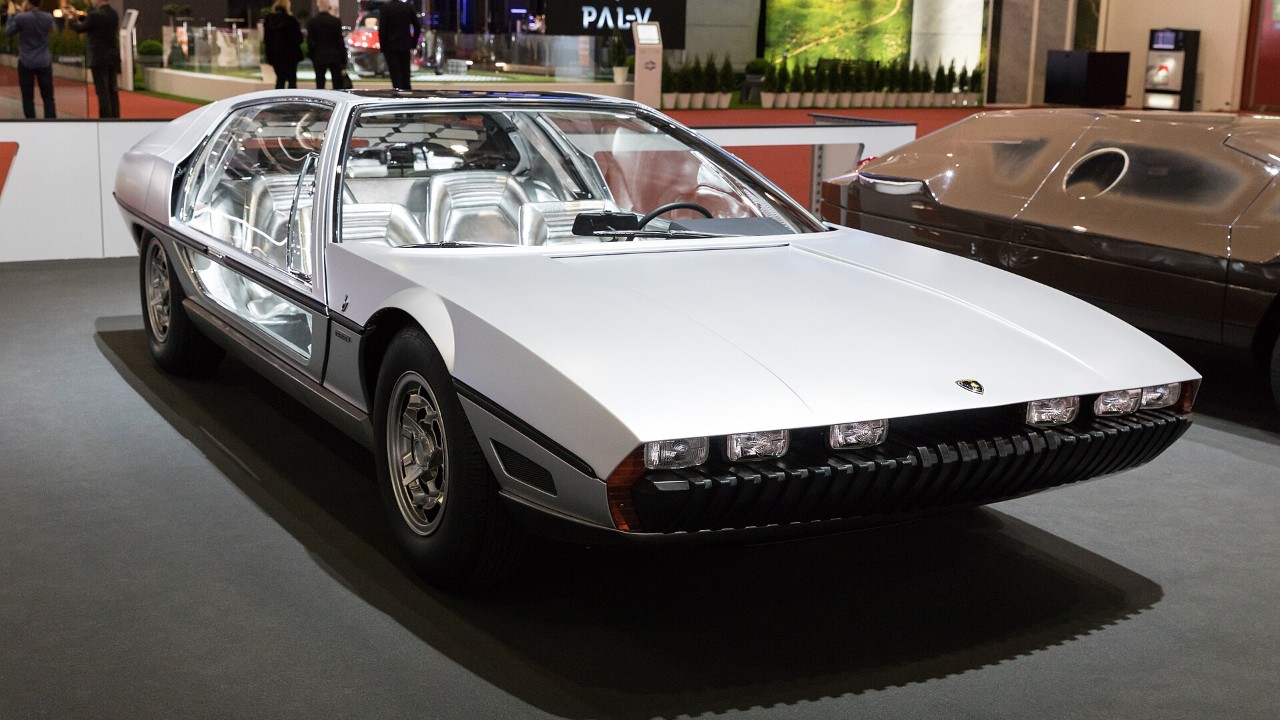
When the Lamborghini Marzal rolled onto the stand at the 1967 Geneva Motor Show, it carried 4.5 square meters of glass and doors that opened toward the sky. Nobody could buy one. Still, it showed exactly where coupe design was heading, and it pointed straight at the cars of the next two decades.
That kind of shock is hard to manufacture. Some coupes managed it with glass, others with wedges, rotary engines or doors that opened in strange directions. A few were concepts that never reached a showroom, while others sat at the local dealer next to ordinary sedans.
These are our picks, 11 coupes we think looked like the future when they first appeared. That verdict is our opinion. However, the build counts, engines and dates come from maker histories, show archives and reference records, and we flag the one-off concepts as one-offs.
1. Mazda RX-7 FD3S
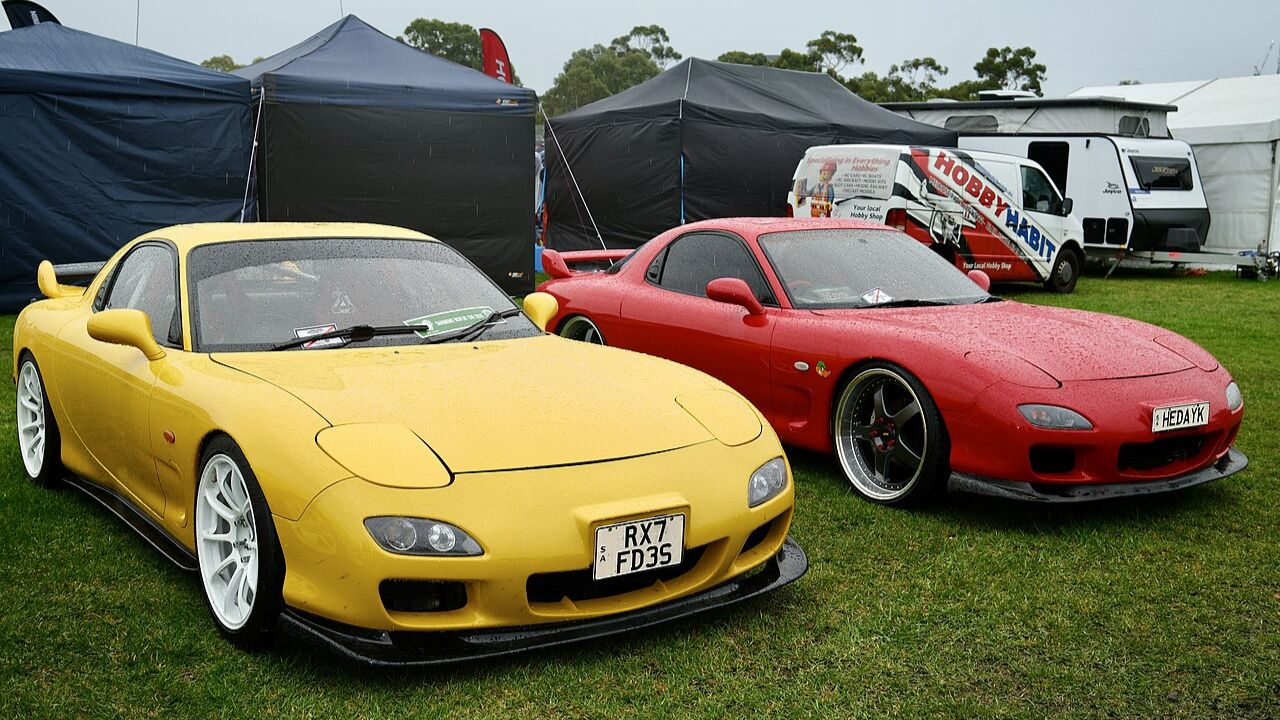
The third-generation RX-7 took shape in California. Its winning design came from Mazda’s Irvine design center, where Wu-Huang Chin drew it with help from Tom Matano. Chief designer Yoichi Sato then carried the concept through to production form.
Mazda announced the car in October 1991, and Japanese sales began that December. The 13B-REW twin-rotor engine used the first mass-produced sequential twin-turbo system exported from Japan. Output started at 255 PS in 1992 and reached 280 PS by the end of Japanese production.
Despite the turbos, the car stayed light. A Series 6 Type RZ weighed 1,230 kg. North American buyers, however, only had a short window, since Mazda sold the FD there from 1993 to 1995. In total, Mazda built 68,589 of them. We dug into its light-weight recipe in our feature on the RX-7 FD.
Our take: the FD still looks like a concept car that escaped into production. Its curves have aged better than almost anything else from the early 1990s.
2. 1967 Lamborghini Marzal
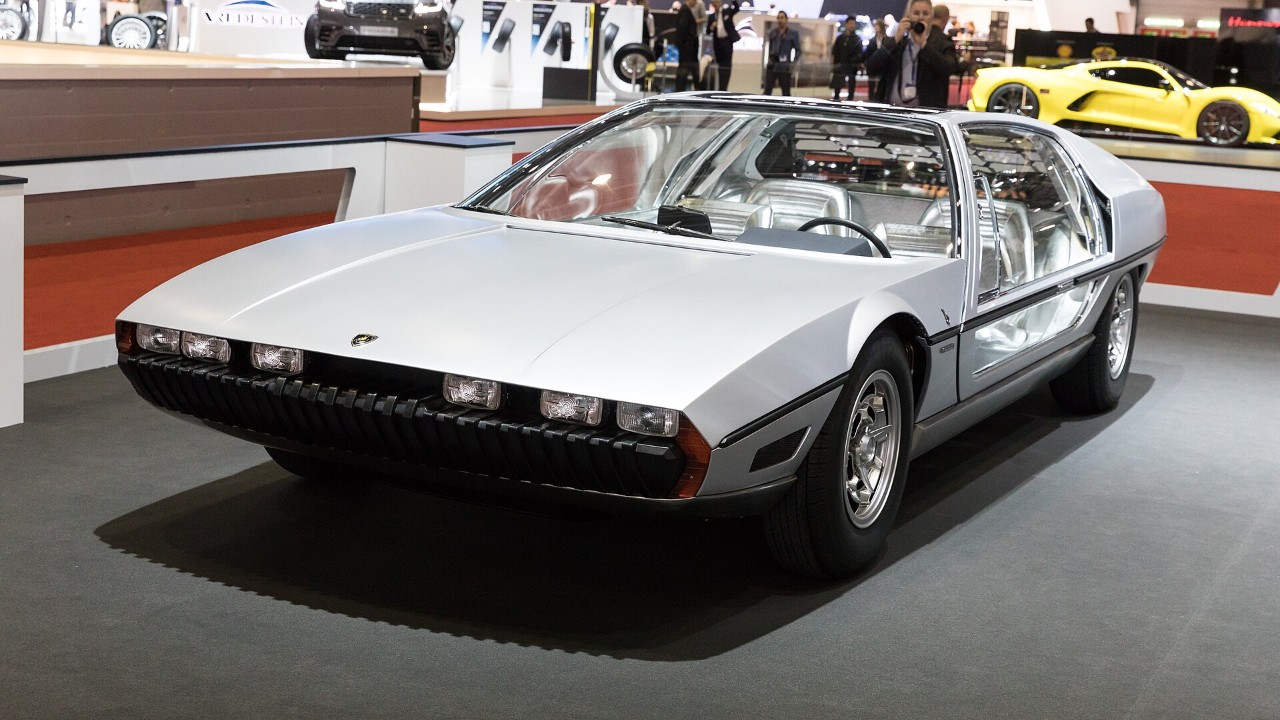
The Lamborghini Marzal was a one-off concept, and Lamborghini never meant to sell it. Marcello Gandini styled it at Bertone. Meanwhile, Ferruccio Lamborghini wanted a true four-seater, and Nuccio Bertone paid for the project.
According to the Geneva show’s own heritage page, the car had 4.5 square meters of curved glass and huge glazed gullwing doors. Its rear-mounted 2.0-liter six came from a Lamborghini V12 split in half, and the show lists it at 177 PS. Hexagons ran through the design, from the louvered rear window to the wheels.
The Marzal also got a royal outing soon after its debut. Prince Rainier III drove it, with Princess Grace beside him, on the parade lap before the 1967 Monaco Grand Prix. Much later, RM Sotheby’s sold the Lamborghini Marzal at Villa d’Este on May 21, 2011, for 1,512,000 euros.
In our view, the Lamborghini Marzal is the clearest preview of what came next. Gandini followed it in 1968 with the Espada, a 2+2 coupe with a 325 PS V12 that borrowed the Marzal’s overall shape.
3. Alfa Romeo SZ
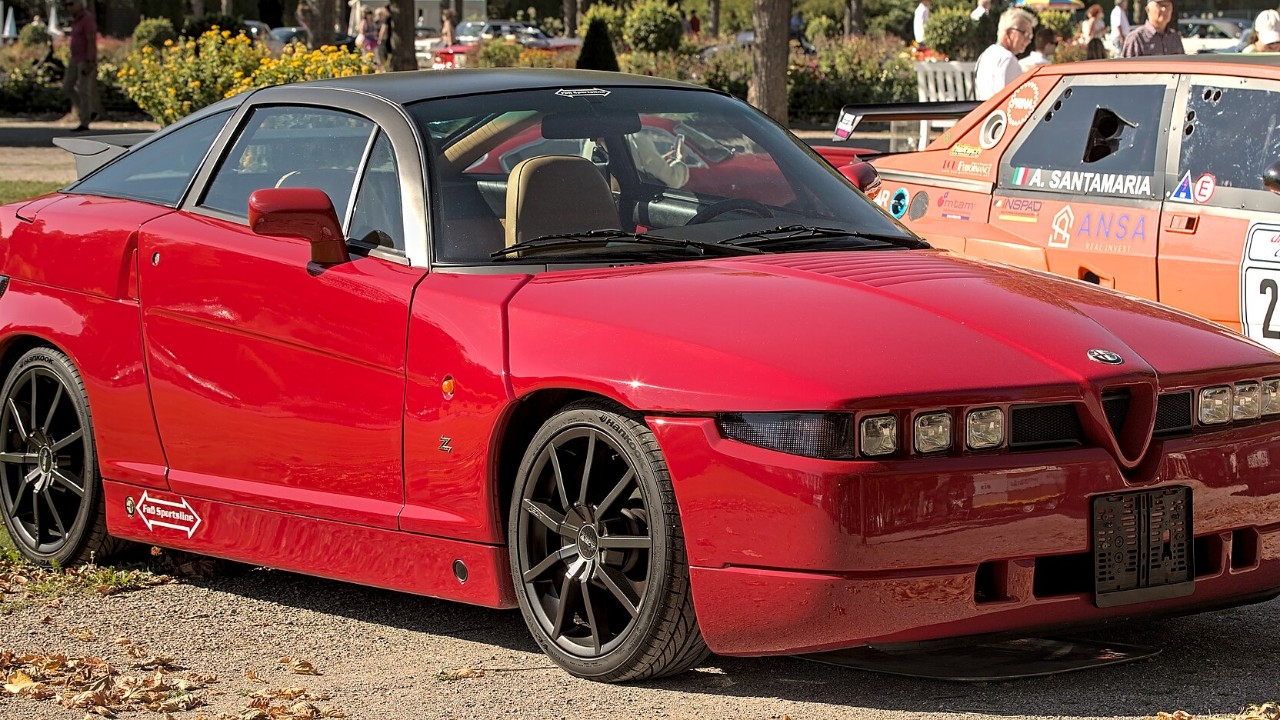
Alfa Romeo called the project ES-30, short for “Experimental Sportscar 3.0 litre.” It also earned a nickname, Il Mostro, or “the monster.” That name fits, since the SZ looks like nothing else Alfa ever built.
Robert Opron made the first sketches at Fiat’s Centro Stile, and Antonio Castellana finished the styling and interior. Zagato assembled the cars at Terrazzano di Rho. The body panels were injection-molded thermoplastic composite rather than steel. Underneath, a 3.0-liter V6 made 210 PS.
In addition, the chassis had racing roots. The suspension came from the Alfa Romeo 75 Group A and IMSA race car, modified by Giorgio Pianta. Alfa Romeo built 1,036 SZ coupes, plus a few hundred RZ convertibles afterward.
Our take: the SZ is brutal, blocky and completely confident. It looked like a 21st-century car while most of its rivals still wore 1980s curves.
4. Isuzu Impulse
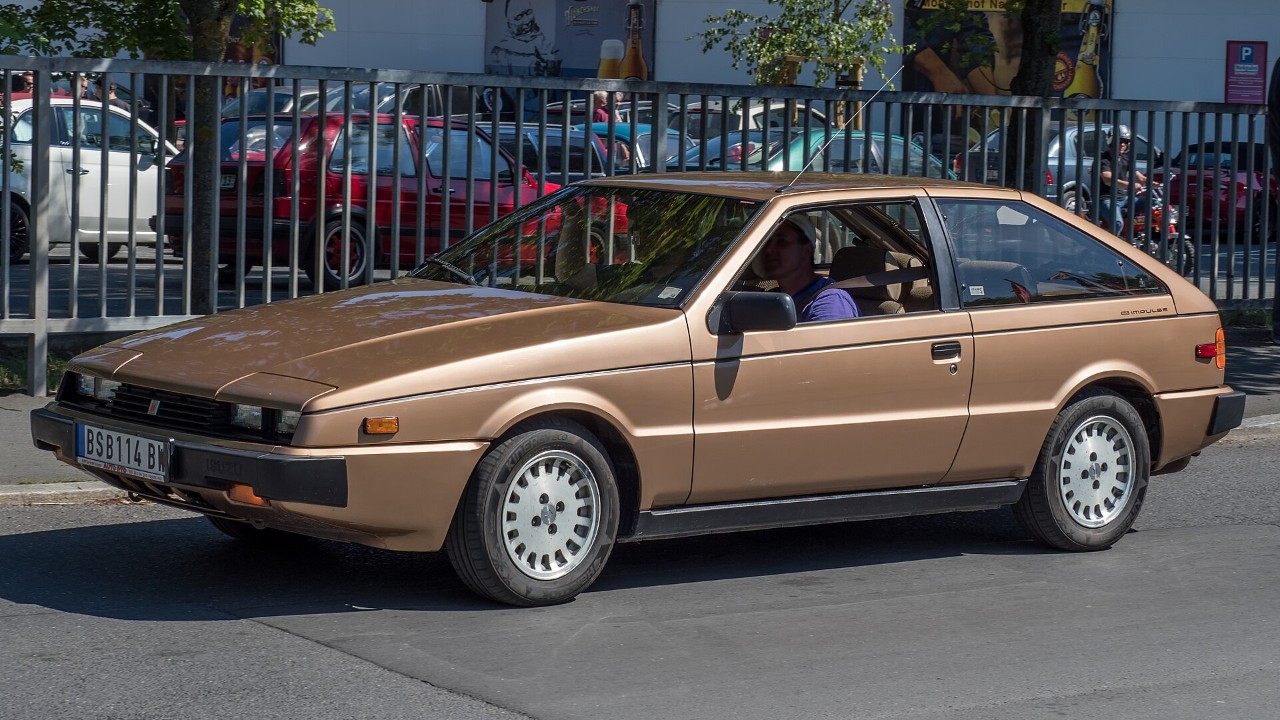
Isuzu asked Giorgetto Giugiaro for a new coupe in 1978. Italdesign gave him free rein, and the result was the wedge-shaped “Asso di Fiori,” or Ace of Clubs. It debuted at the 1979 Tokyo Motor Show, and Isuzu put it into production with very few changes.
The first Piazza came together in Fujisawa, Japan, in September 1980. American buyers met it as the Impulse for the 1983 model year, with a 2.0-liter four rated at 90 hp. Then, in 1985, a turbocharged version arrived with 140 hp.
Later, Isuzu improved the handling with help from Lotus. US Impulses got a Lotus-tuned suspension from the 1988 model year. By the end of the run in 1990, Isuzu had built 113,419 first-generation cars worldwide.
In our view, the Impulse is the most underrated Giugiaro shape of the 1980s. It took a show car almost unchanged to an affordable showroom, and that rarely happens.
5. 1986 Nissan Pulsar NX
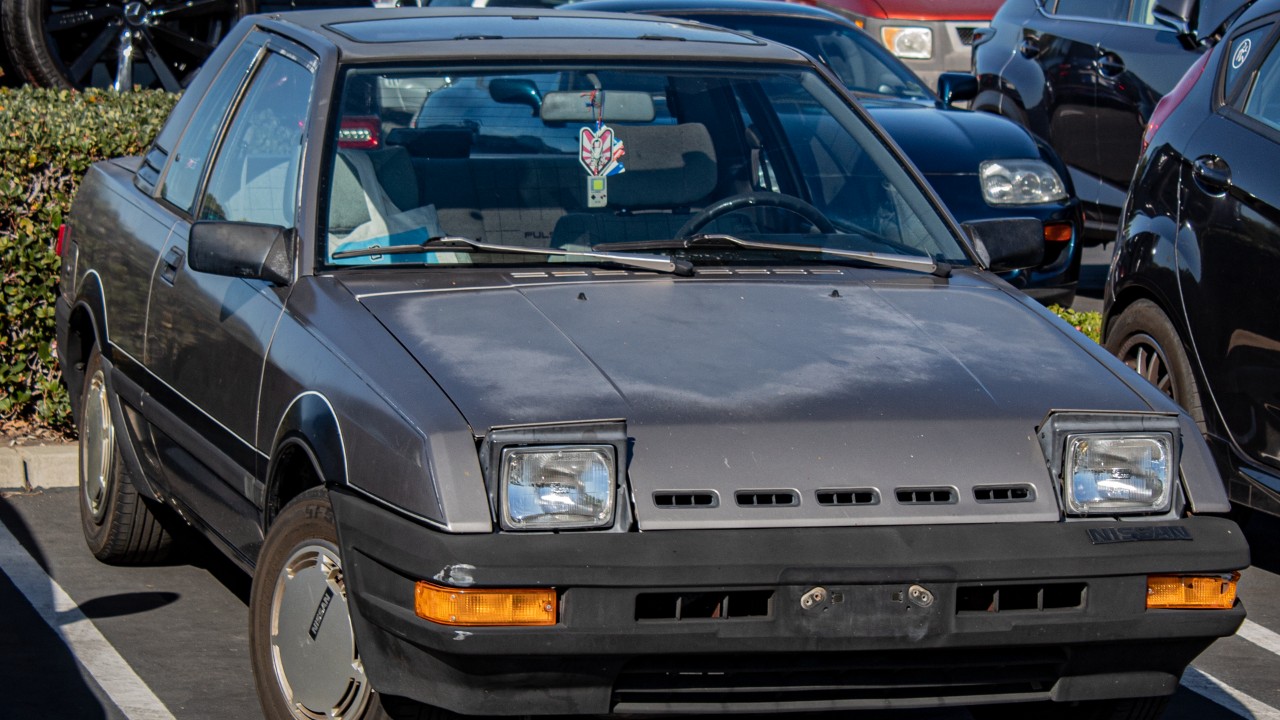
Nissan offered the Pulsar NX coupe alongside sedans and hatchbacks in 1983. From 1984, though, the Pulsar line in America came only as the NX. That made the small, wedgy coupe the face of the whole model.
Its best party trick was a removable roof that turned the commuter into an open car on sunny days. In the United States, the 1.5-liter engine came two ways. Buyers could choose a carbureted version or a fuel-injected turbo. According to The Truth About Cars, the turbo made 113 hp and ran from 0 to 60 mph in 8.8 seconds.
The year 1986 was the last for this first-generation NX. A three-door NX replaced it for 1987. We rarely see one today, since most served as cheap daily transportation until they wore out.
Our take: the Pulsar NX proved futuristic styling didn’t need a big budget. It looked like a small spaceship and still sipped fuel like an economy car.
6. Lotus Esprit S2
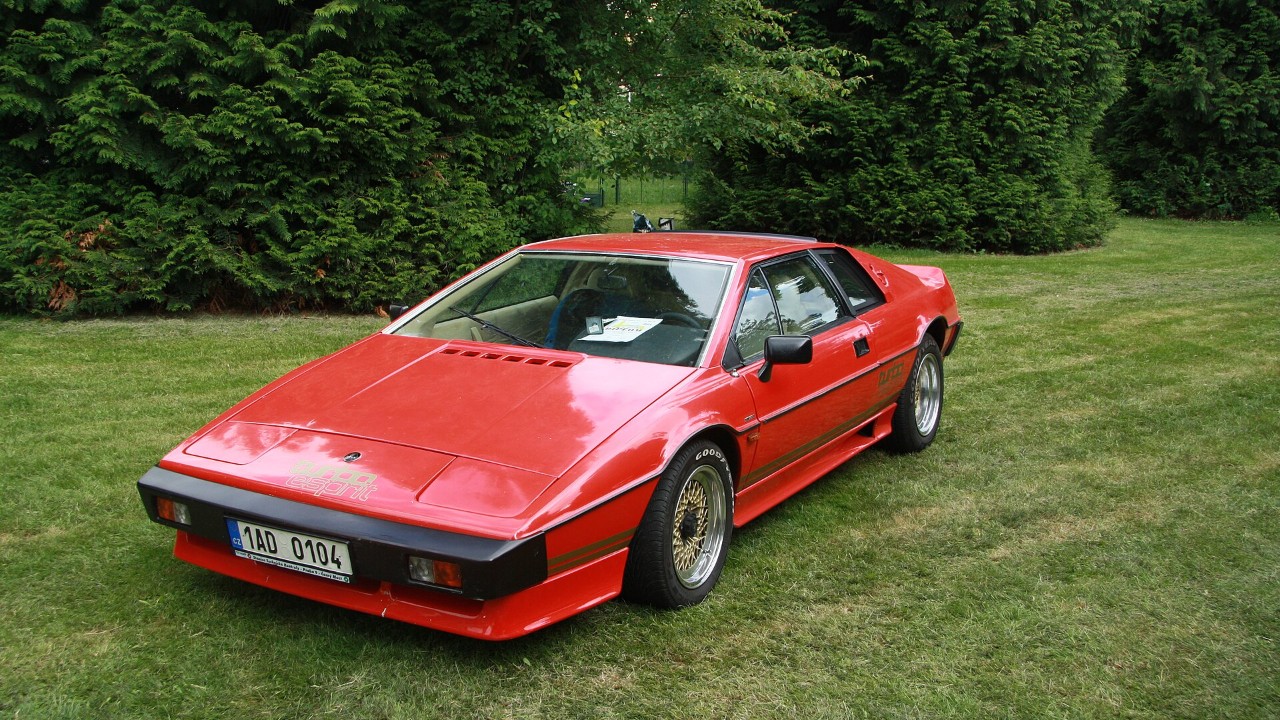
Giugiaro’s sharp wedge for Lotus first appeared as a full-size mock-up at the 1972 Turin show. People nicknamed it “the Silver Car,” and its warm reception led Colin Chapman to approve development.
The production Esprit made its debut at the Paris Motor Show in October 1975 and entered production in June 1976. Its 1,973 cc Lotus 907 four was rated at 160 hp in European trim. Lotus built 718 of the first-series cars, and one starred as a submarine in the 1977 Bond film “The Spy Who Loved Me.”
Then the S2 followed in 1978 with a series of small but visible changes. It gained 14-inch Speedline alloys, cooling ducts behind the rear quarter windows and larger ribbed taillights borrowed from the Rover SD1. Lotus built 1,149 S2s. For more on this era, see our story on the 1978 Esprit.
Our take: the S2 is the purest version of the wedge. It looks like a folded sheet of paper, and that is a compliment.
7. Matra-Simca Bagheera
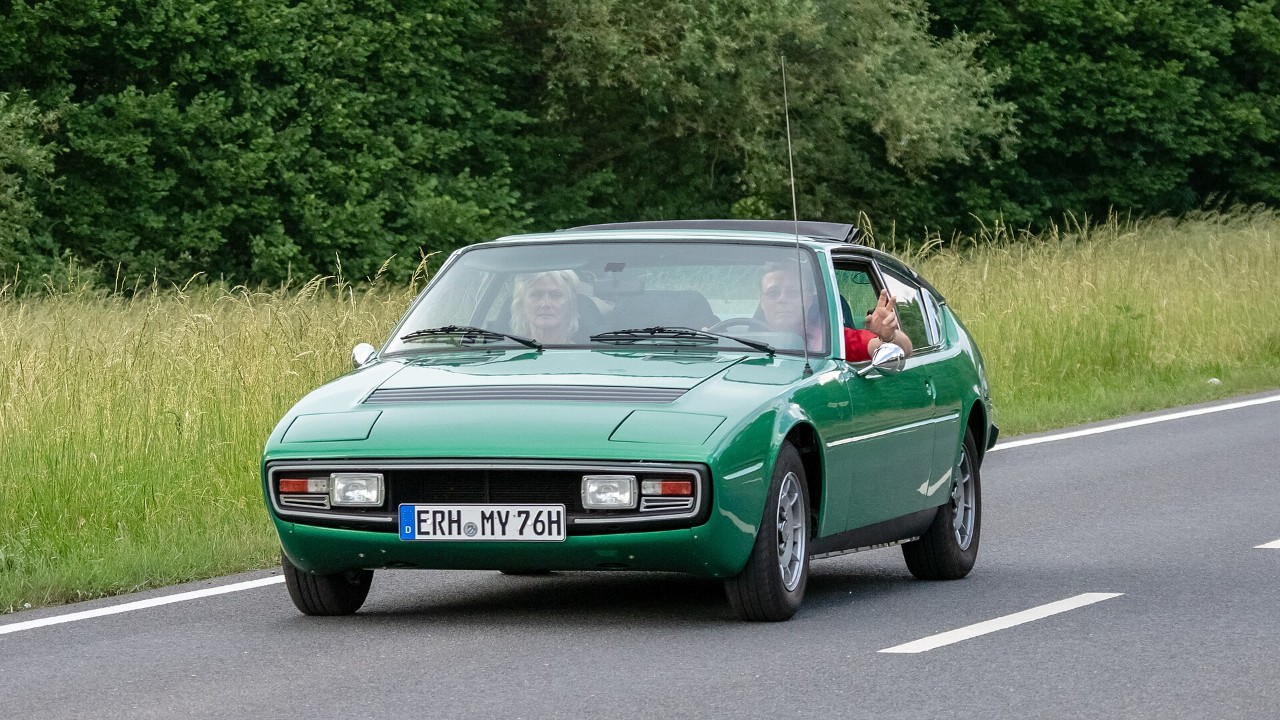
The Bagheera seated three people side by side. The driver had a normal seat, while the passenger side used a two-place bench. As a result, its 2+1 layout made it unlike any other coupe of the 1970s.
Matra built it with Simca from 1973 until 1980. A transverse engine sat behind the cabin, so the car was mid-engined. The launch engine was a 1,294 cc four with 84 hp. Meanwhile, the body used 19 fiberglass-reinforced polyester panels on a pressed steel chassis.
That steel frame had almost no rust protection, and corrosion claimed many cars. Even so, Matra built 47,802 Bagheeras by April 1980. A V8 prototype called the U8 also existed, but only three were made before Chrysler Europe stopped the project.
In our view, the Bagheera was the most original packaging idea of its decade. If you find a solid one, check the chassis first.
8. 1972 Citroën SM
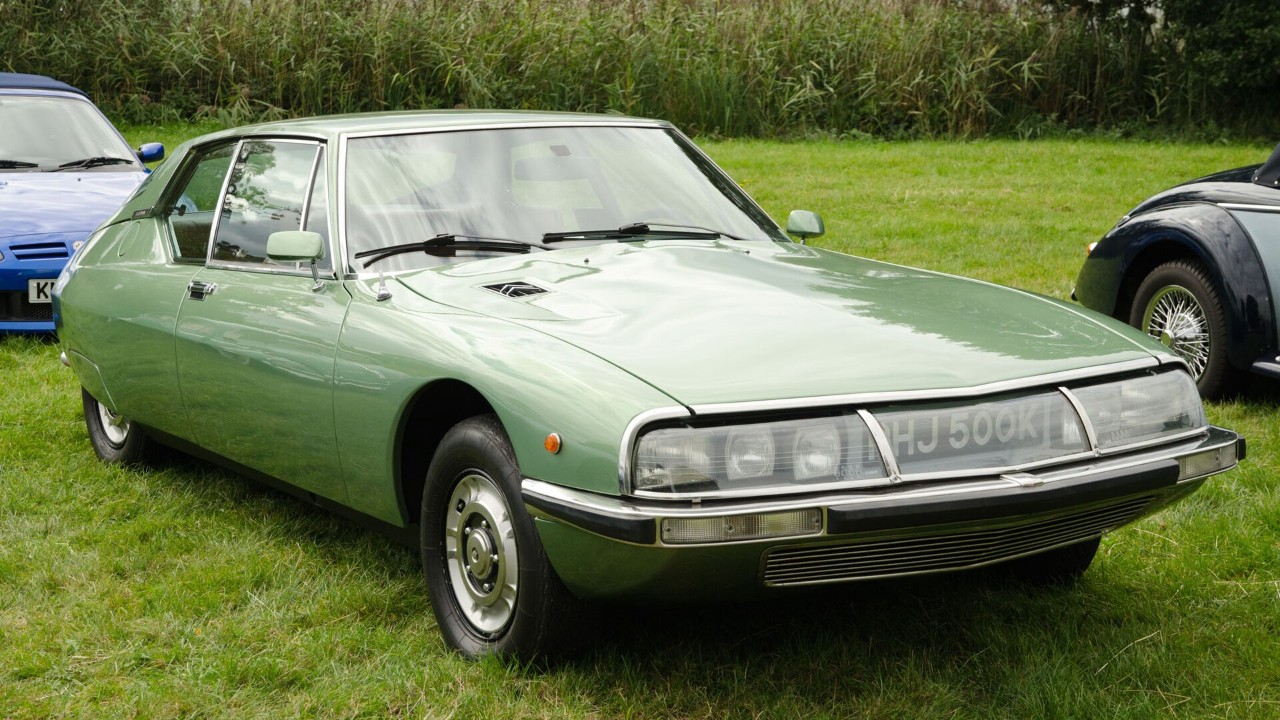
Citroën first showed the SM at the Geneva Motor Show in March 1970. Sales began in France that September, and production ran until 1975. Chief designer Robert Opron shaped it in-house.
Under the long hood sat a Maserati V6 designed by Giulio Alfieri. The 2.7-liter version made 170 PS. The SM rode on hydropneumatic self-leveling suspension adapted from the DS, while its DIRAVI steering was fully powered and self-centering. Outside the United States, its headlights even swiveled with the steering wheel.
American judges noticed, too. The SM won Motor Trend’s Car of the Year award for 1972, the year of the car named here. Citroën built 12,920 SMs in total, and the factory quoted a top speed of 220 km/h.
Our take: the SM still feels like a message from a different future, one where French engineering won. Few coupes have ever been so bold under the skin.
9. Subaru XT 1.8 Turbo coupe
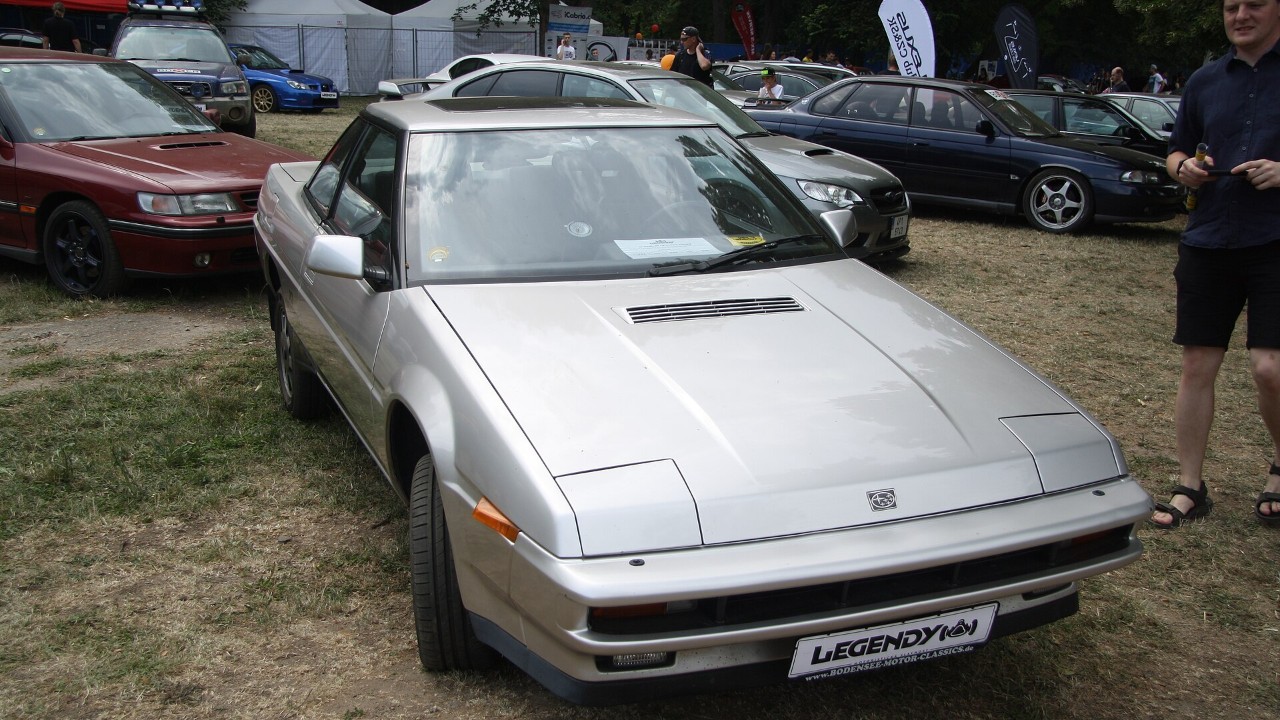
The XT arrived in 1985 with a drag coefficient of 0.29. At launch, it was the most aerodynamic production car sold in America. Japan called it the Alcyone, while Australia and New Zealand knew it as the Vortex.
Its cabin looked just as unusual as its shape. The turbo model offered a digital instrument cluster with an orange LCD display, and the whole gauge pod tilted with the steering column. A joystick-style shifter had a thumb trigger for the on-demand four-wheel drive. Even the single 22-inch wiper tucked under the hood when not in use.
Power came from a 1.8-liter turbocharged flat-four rated at 112 hp in 1985 US form. It rose to 115 hp for North America from 1987. The car also had height-adjustable air suspension. Subaru built 98,918 XTs, XT6s and Alcyones by the end of production in 1991.
In our view, the XT is the most fearless car Subaru ever built. It looked like a stealth jet in a parking lot full of boxes.
10. 1979 Aston Martin Bulldog
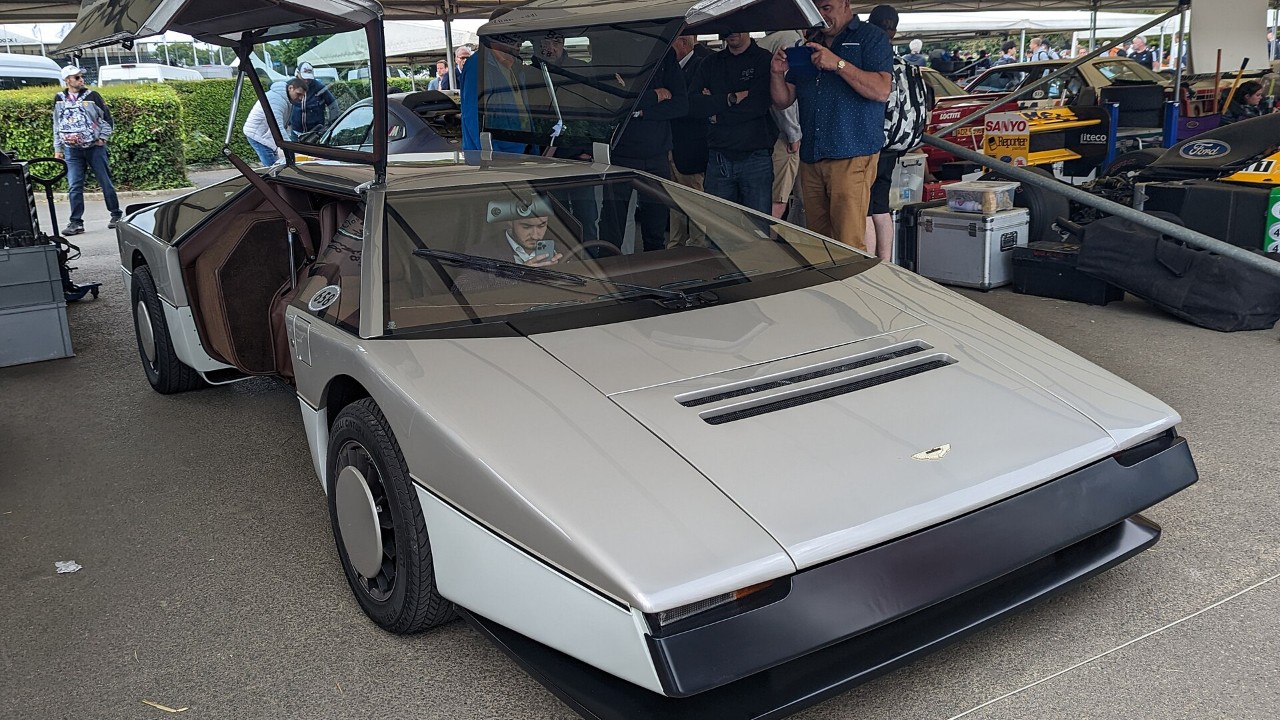
The Bulldog is a one-off concept. William Towns designed it, Aston Martin built it in 1979, and the company launched it on March 27, 1980. It stood just 1,092 mm tall, or about 43 inches, and used gullwing doors.
Behind the cabin sat a 5.3-liter twin-turbo V8 rated at 600 bhp, so speed was the whole point. Aston Martin claimed the car could reach 237 mph. In testing at the MIRA track in late 1979, it recorded 191 mph. The company planned a run of 15 to 25 cars, then shelved the idea as too costly.
Aston Martin sold the car in 1984 to a Middle Eastern collector for £130,000. Decades later, Phillip Sarofim bought it in 2020, and Classic Motor Cars in Bridgnorth restored it. On June 6, 2023, the Bulldog finally reached 205.4 mph at Campbeltown Airport.
Our take: the Bulldog is a 1979 idea that took 44 years to prove itself. That alone earns it a place here.
11. Toyota Sera
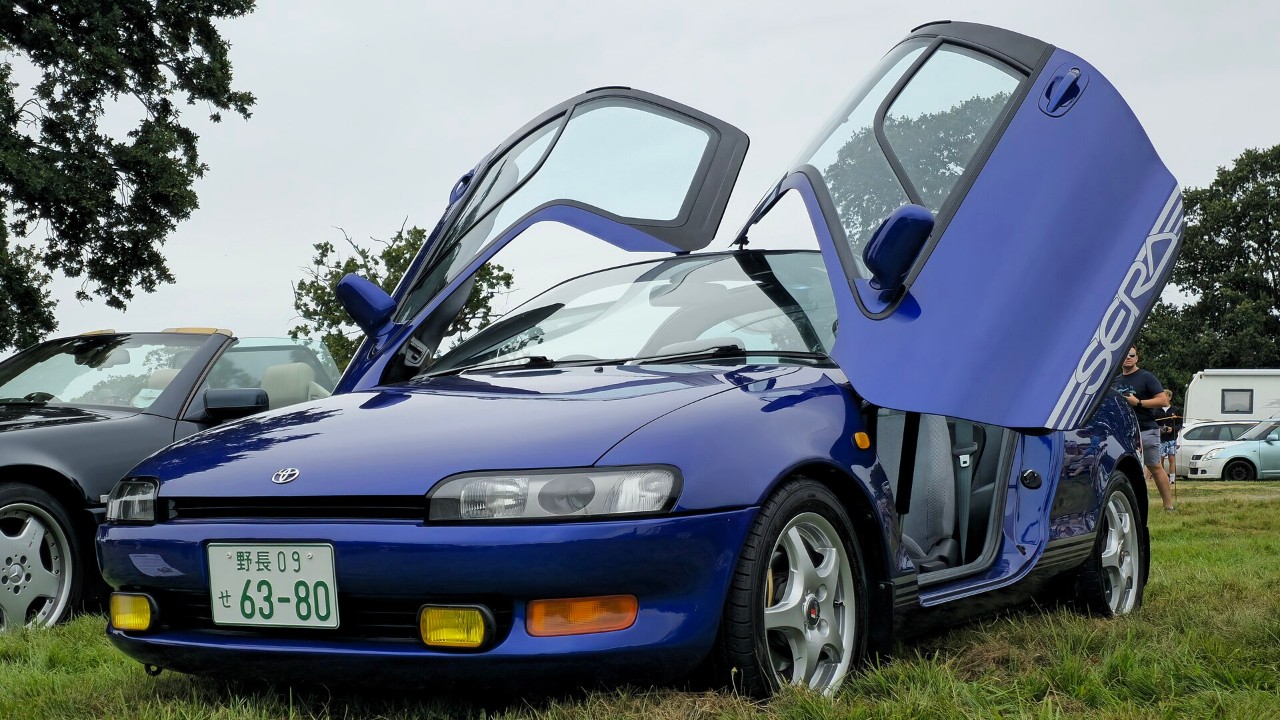
The Sera began as the AXV-II concept at the 1987 Tokyo Motor Show. Toyota advertised it as “an experiment designed to anticipate automobiles and technologies of the next decade.” Production then started in February 1990.
Its doors hinged above the windshield and swung forward and up. The cabin was almost entirely glass, so Toyota made air conditioning and power windows standard because of the sun. Power came from a 1,496 cc twin-cam four. According to Toyota UK’s history of the car, it made 108 bhp.
In addition, buyers could order a Super Live Sound System with ten speakers and an acoustic resonance woofer in the trunk. However, Toyota sold the Sera only in Japan. Production ended in December 1995, after just under 16,000 cars.
Our take: the Sera turned a small economy car into a glass bubble with butterfly doors. Toyota built 15,941 of them, and each one still draws a crowd.
More from Fast Lane Only