A federal judge has delivered a sharp rebuke to the Trump administration’s attempt to halt a nationwide buildout of electric vehicle charging, ruling that the White House cannot sideline billions of dollars that Congress already set aside for the task. The decision keeps a massive stream of infrastructure money flowing to states and private operators, preserving a central pillar of the country’s transition away from gasoline. It also draws a bright legal line around how far the executive branch can go when it tries to rewrite climate and transportation policy on its own.
By blocking the administration’s effort to interfere with the rollout, the court has effectively reaffirmed that the electric vehicle charging network is not a discretionary pilot project but a binding national commitment. The ruling signals to automakers, utilities, and drivers that the federal government’s promise of a coast‑to‑coast charging backbone still stands, even amid fierce political fights over climate spending.
The legal showdown over EV charger funding
The clash began when the Trump administration moved to suspend a federal program that channels billions of dollars into public charging stations along highways and in communities, despite Congress having already appropriated the money. Several states, led by Washington, argued that the White House had no authority to unilaterally freeze a program that lawmakers had written into law and funded in full. Their lawsuit framed the suspension as an unlawful attempt to rewrite statute through executive fiat rather than through the legislative process.
U.S. District Court Judge Tana Lin of the Western District of Washington agreed, entering a final judgment that the administration’s suspension of the electric vehicle charger infrastructure program violated federal law. In the case brought by the State of Washington and joined by Colorado and California, Judge Lin concluded that the executive branch could not simply walk away from a clear congressional directive to deploy charging infrastructure funded by the law. Her ruling restores access to the blocked funds and prevents the administration from using administrative maneuvers to sidestep the program’s core requirements, according to the court order and supporting filings.
States, advocates, and the fight to keep chargers on track
The lawsuit was not only a clash between state attorneys general and the White House, it was also a test of how aggressively local governments and advocates would defend climate‑related infrastructure when federal policy shifts. Washington, Colorado, and California argued that the suspended funds were central to their own transportation and climate plans, which rely on a dense network of fast chargers to support drivers who purchase battery‑powered vehicles. They warned that if the administration could mothball this program, it could similarly derail other clean energy investments that depend on long‑term federal support.
Environmental and consumer groups joined the states in emphasizing the practical consequences of a stalled rollout, pointing to the billions of dollars at stake for reliable EV charging, cleaner air, and lower driving costs across the country. In their view, the administration’s suspension threatened to strand existing investments by utilities and private charging companies that had already begun planning around the federal program’s timelines and technical standards. The court’s judgment, described in detail in public statements from the Southern Environmental Law Center, preserves those expectations and keeps the federal government on the hook for delivering the charging backbone that states and communities were promised.
What the ruling means for drivers, air quality, and costs
For drivers, the most immediate impact of the ruling is stability. The federal program is designed to fill in the gaps that private investment alone has been slow to cover, such as long stretches of interstate highways and rural corridors where fast chargers are still sparse. By preventing the administration from freezing the funds, Judge Lin’s decision keeps projects on track that will make it more realistic to drive vehicles like the Chevrolet Bolt EUV, Ford F‑150 Lightning, or Hyundai Ioniq 5 across state lines without worrying about where to plug in. That reliability is especially important for households that cannot install home chargers and instead depend on public infrastructure.
The judgment also reinforces the program’s role in cutting tailpipe pollution and lowering transportation costs over time. Public filings in the case stress that a robust charging network is essential for shifting trips away from gasoline and toward electricity, which can significantly reduce emissions of nitrogen oxides and particulate matter in urban corridors. Because electric models typically cost less per mile to fuel than comparable gasoline vehicles, especially when charged overnight or during off‑peak hours, the court’s decision to protect billions in charger funding is expected to support lower long‑term driving costs for many households. The Southern Environmental Law Center has highlighted that these benefits are particularly meaningful in communities that have historically borne the brunt of highway pollution and high fuel expenses.
Limits on presidential power over climate infrastructure
Beyond the immediate infrastructure stakes, the ruling is a pointed reminder that the president cannot unilaterally dismantle programs that Congress has clearly authorized and funded. The Trump administration’s attempt to suspend the EV charger program tested how far the executive branch could go in reinterpreting or delaying statutory mandates it disagreed with. Judge Lin’s decision underscores that once Congress has appropriated money and set out a specific purpose, the White House must implement that law in good faith rather than using administrative tools to nullify it.
Legal advocates involved in the case have framed the judgment as part of a broader pattern in which courts are scrutinizing efforts to sideline climate and infrastructure laws through procedural maneuvers. By siding with Washington, Colorado, and California, the court signaled that climate‑related spending is subject to the same separation‑of‑powers protections as any other major federal program. The decision therefore serves as a warning that future attempts to pause or gut congressionally mandated clean energy initiatives, whether in transportation, power generation, or building efficiency, will face a high legal bar and close judicial review.
Next steps for the EV network and political fault lines
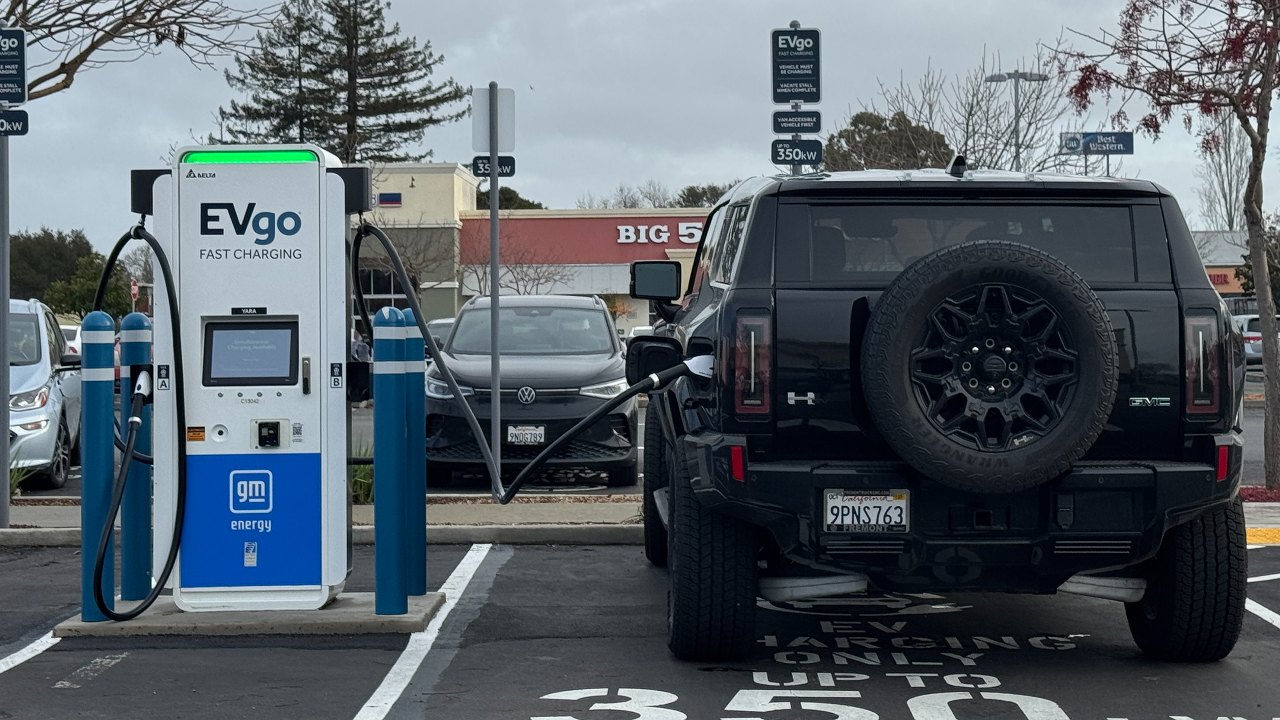
With the legal cloud lifted, states and private partners are expected to move ahead with projects that had been delayed or thrown into uncertainty by the administration’s suspension. Transportation departments can now proceed with competitive grants, site selection, and contracts for new fast‑charging plazas along major routes, often in partnership with companies that operate existing networks and apps such as ChargePoint, Electrify America, and EVgo. Utilities that had been hesitant to invest in grid upgrades for highway charging sites now have stronger assurance that the federal cost‑share will materialize, which is critical for projects that require new transformers, substations, or high‑capacity lines.
Politically, the ruling deepens the divide between a Congress that has committed large sums to clean transportation and an executive branch that has tried to slow or redirect that spending. President Donald Trump has repeatedly criticized federal support for electric vehicles, and his administration’s suspension of the charger program fit that broader skepticism. The court’s intervention means that, at least for this program, statutory commitments will outweigh ideological opposition inside the executive branch. As the buildout accelerates, the legal precedent set in the State of Washington case is likely to shape how future administrations, regardless of party, approach efforts to unwind or delay climate infrastructure that Congress has already locked into law.
More from Fast Lane Only