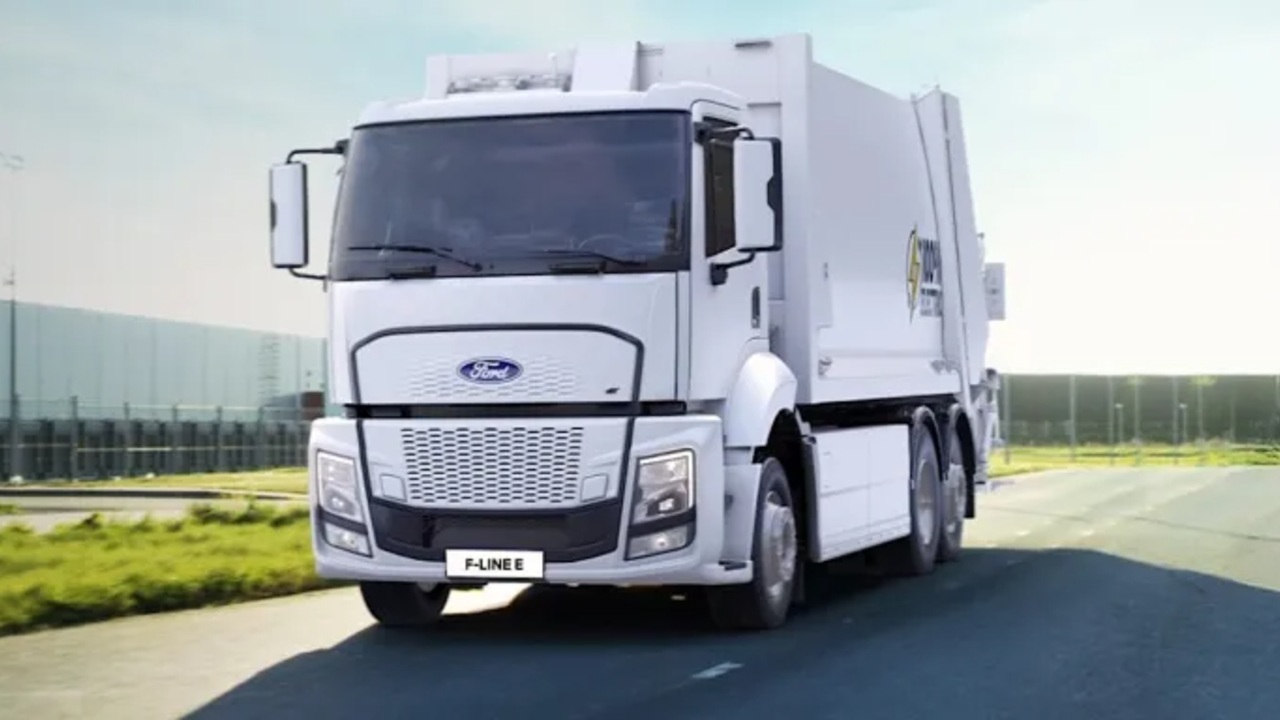
Ford is pushing into one of the toughest corners of commercial transport with the 2026 F-Line E, an all-electric heavy-duty truck aimed squarely at the emerging market for battery-powered semis. Rather than treating electrification as a side project, the company is positioning this model as a core workhorse for medium- and heavy-duty fleets that need real-world range, payload, and uptime.
The move signals that the electric truck contest is no longer a niche experiment but a full-scale fight for the future of freight, with Ford betting that a purpose-built platform and familiar badge can win over operators who have been cautious about abandoning diesel. The F-Line E is designed to slot directly into existing logistics operations while promising lower operating costs and emissions.
Ford’s strategic leap into electric heavy-duty trucks
Ford’s decision to launch the F-Line E reflects a strategic calculation that the center of gravity in commercial transport is shifting toward zero-emission drivetrains. The company is not merely electrifying a legacy chassis, it is entering what it explicitly frames as the MD and HDEV space, targeting medium-duty and heavy-duty electric vehicles that can handle regional haul, urban distribution, and vocational roles. By branding the truck as part of the F-Line, Ford is leaning on decades of familiarity among fleet buyers who already run its conventional trucks, signaling that this is meant to be a direct successor to diesel workhorses rather than a boutique technology showcase.
That positioning matters because the electric semi segment is already crowded with startups and incumbents, from dedicated EV manufacturers to established truck builders experimenting with limited pilot programs. Ford is stepping into that fray with a product it presents as ready for real work, not just demonstration fleets, and it is doing so with a clear narrative that the F-Line was built for demanding commercial duty cycles. The company is effectively telling operators that they no longer have to choose between a recognizable brand and a fully electric powertrain, and that the F-Line E is intended to compete head to head with other electric semis on capability rather than on novelty.
Key specs and what they mean for real-world operations
The technical centerpiece of the F-Line E is its battery and powertrain package, which is designed to address the core concerns of range, performance, and payload. In its top specification, a 6×2 configuration is paired with a battery capacity described as 498 k, alongside an electric motor output of 523 horsepower. Those figures place the truck firmly in heavy-duty territory, with enough stored energy and power to support regional haul routes and dense urban delivery schedules without constant charging interruptions. The 6×2 layout, with a single driven axle and two support axles, is a familiar configuration for European and global fleets that need to balance traction, weight distribution, and efficiency.
For operators, the significance of 498 k and 523 horsepower is not abstract. It translates into the ability to pull substantial loads while maintaining acceptable speeds on grades and highways, and to do so with the smooth torque delivery that electric drivetrains naturally provide. The large battery pack is intended to support full-day duty cycles in many use cases, particularly where routes are predictable and can be planned around depot charging. By anchoring the F-Line E in these concrete numbers, Ford is signaling that it understands the minimum performance thresholds fleets expect before they will consider replacing diesel tractors with electric alternatives.
European launch and the global competitive landscape
Ford is initially positioning the F-Line E for Europe, where regulatory pressure and urban air-quality rules are accelerating the shift to zero-emission trucks. The reference to an all-electric heavy-duty truck debuting in Europe, with the 6×2 version carrying the 498 k battery and 523 horsepower package, underscores that the company is targeting markets where low- and zero-emission zones are already reshaping freight patterns. European fleets are under mounting pressure to decarbonize, and many operate in dense corridors where range requirements are demanding but still compatible with depot-based charging strategies.
Launching in Europe also places Ford directly into a competitive field that includes both regional incumbents and global players racing to secure early market share in electric semis. By offering a heavy-duty configuration that aligns with European axle layouts and regulatory norms, Ford is signaling that the F-Line E is not a one-size-fits-all adaptation of a North American product but a truck tailored to local operating realities. That approach could give it an advantage with operators who need a vehicle that fits existing infrastructure, from loading docks to maintenance facilities, while still delivering the benefits of a fully electric drivetrain.
Design choices tailored to MD and HDEV customers
Beyond raw specifications, Ford is framing the F-Line E as a tool built around the needs of MD and HDEV customers who prioritize uptime, predictable costs, and driver acceptance. The emphasis on the F-Line identity is a deliberate signal that the truck is meant to integrate into fleets that already rely on Ford for medium-duty and heavy-duty vehicles, simplifying training, parts stocking, and service relationships. By aligning the electric model with the broader F-Line family, the company is trying to lower the psychological and operational barriers that can slow EV adoption in conservative segments of the trucking industry.
The truck’s configuration and performance envelope are also tuned to the realities of commercial duty cycles rather than to headline-grabbing acceleration or top speed. The 6×2 layout, combined with the substantial 498 k battery and 523 horsepower output, is aimed at applications where consistent torque, regenerative braking, and predictable range matter more than outright performance. Ford’s messaging around the F-Line E suggests a focus on total cost of ownership, with the electric powertrain positioned as a way to reduce fuel and maintenance expenses over the vehicle’s life while helping fleets meet tightening emissions requirements in key markets.
Market reception, challenges, and Ford’s next steps
Early coverage of the F-Line E highlights that Ford is entering the electric semi contest at a moment when fleet operators are moving from pilot projects to larger-scale deployments. Commentary around the launch notes that the company is stepping into the MD and HDEV arena with a product that is meant to be judged on the same terms as established diesel and emerging electric competitors. The involvement of industry observers such as Jo Borr, who has detailed how Ford is framing the F-Line as a purpose-built electric work truck, underscores that the model is being scrutinized not just as a technical achievement but as a commercial proposition.
At the same time, the truck faces the same structural challenges that confront every electric semi, from charging infrastructure and grid capacity to questions about residual value and battery longevity. Fleet managers will weigh the promise of lower operating costs and emissions against uncertainties about public charging availability on key corridors and the need to invest in depot hardware. Ford’s ability to support the F-Line E with robust service networks, financing options, and clear data on real-world performance will be critical to its success. The company is entering a space where early adopters are vocal, as reflected in the 47 Comments that have already engaged with the F-Line E’s debut, and where feedback from those first customers will shape how quickly the broader market follows.
More from Fast Lane Only