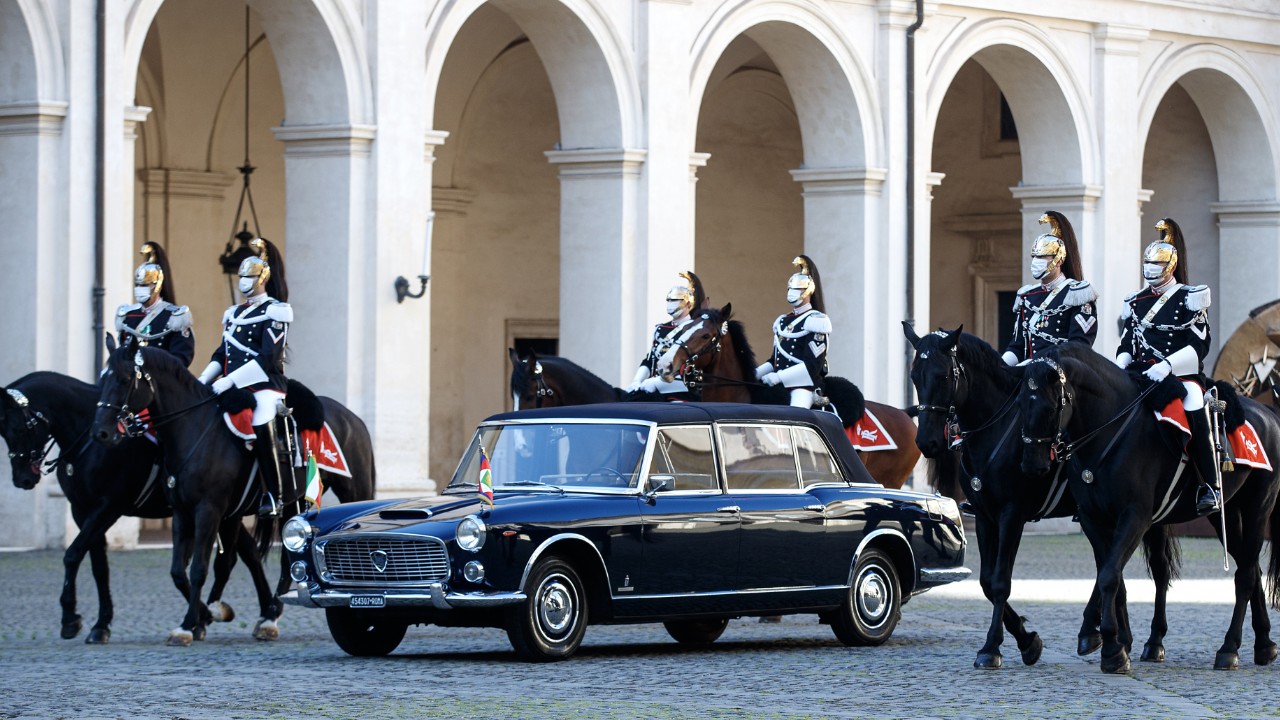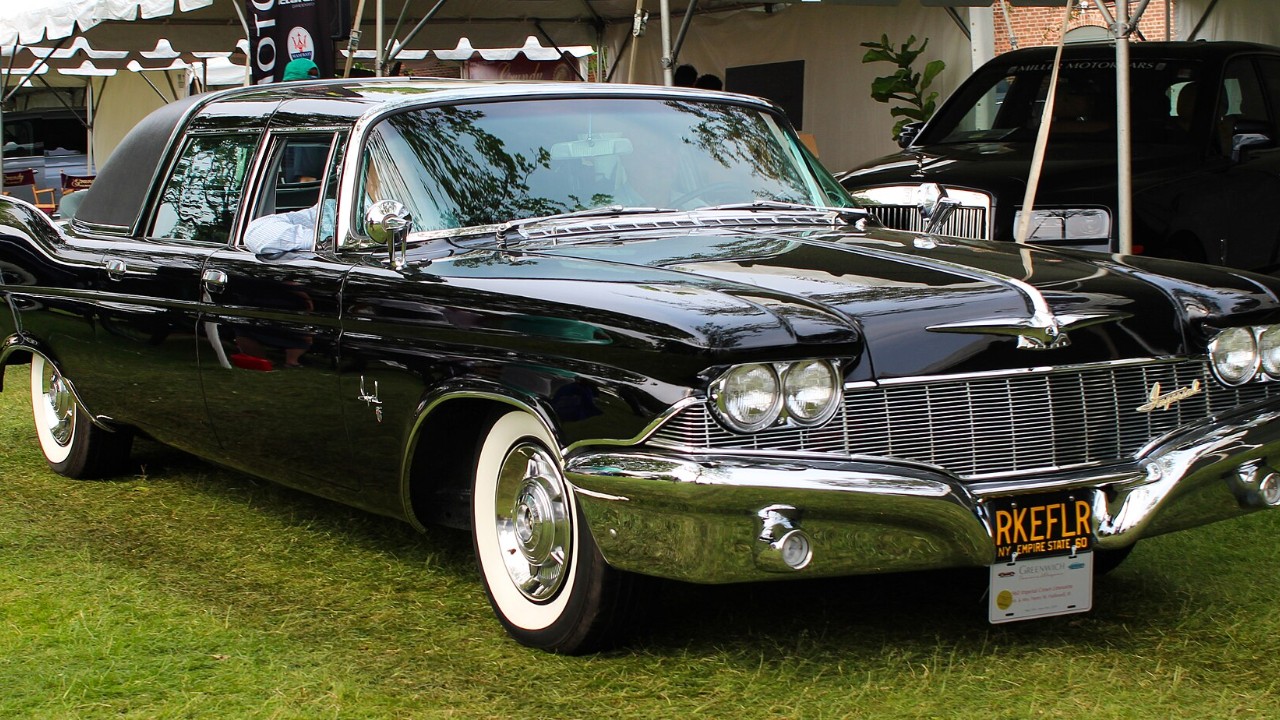
From 1957 through 1965, every Crown Imperial limousine began as an ordinary Imperial hardtop and finished as a hand-built Italian conversion. Chrysler shipped the cars to Carrozzeria Ghia in Turin, where craftsmen cut them apart and stretched them by 20.5 inches. In all, Ghia turned out 132 of them, and each one took about a month.
That made for an unusual route to market. Hagerty notes that Ghia built them by hand and Chrysler shipped them across the Atlantic, so they cost a great deal.
So why would Chrysler send its flagship across the Atlantic to be finished? The answer comes down to money, timing and a design partnership that already worked.
Why Chrysler sent the Crown Imperial limousine to Italy
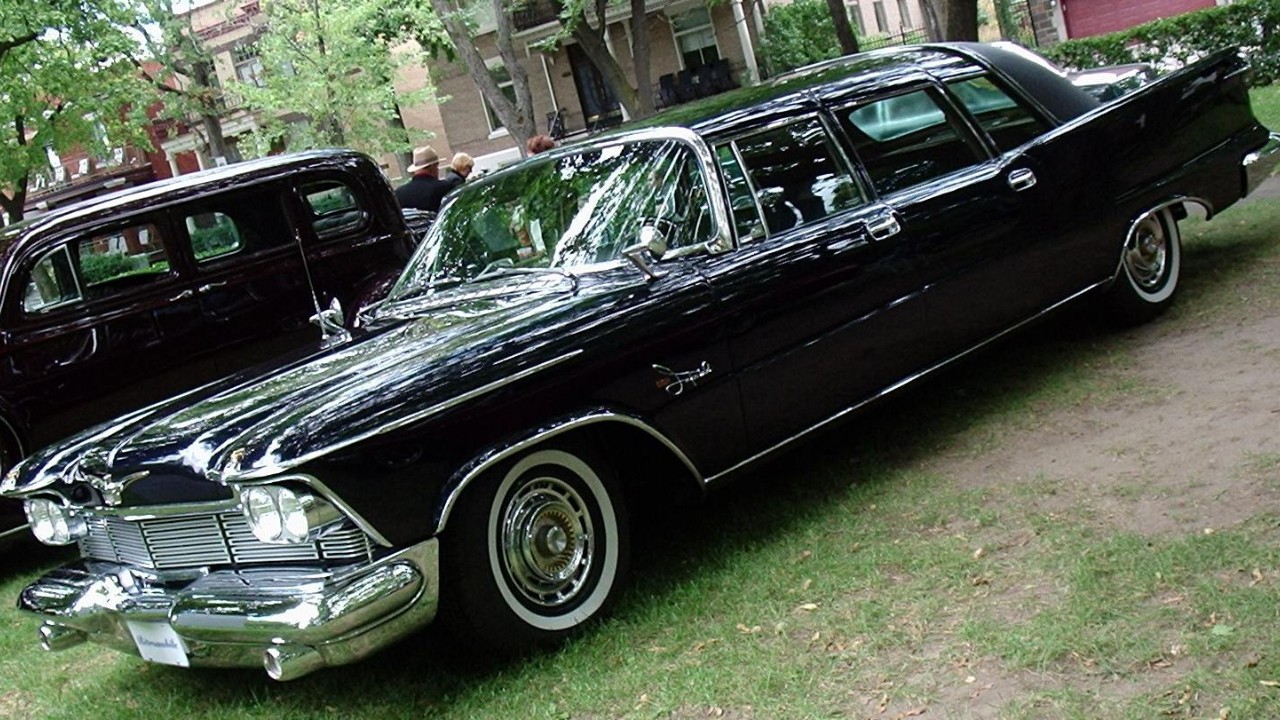
Imperial became a separate marque above Chrysler in 1955, according to Hagerty’s history of the 1960 Crown Imperial. Then Virgil Exner’s 1957 redesign gave it new “Forward Look” sheet metal. Earlier Imperial limousines came from Chrysler’s own plants. Starting in 1957, however, they no longer did.
Hagerty explains the reason plainly. Chrysler did not have the deep pockets General Motors had, so it hired an outside firm for the limousine work. Ghia was a natural pick, because it had built one-off concept cars for Chrysler since the early 1950s.
The St. Louis Car Museum’s history of a 1958 car adds the people involved. Paul Farago, an Italian-American Chrysler engineer, supervised the project. Meanwhile, Exner brought in Luigi Segre, the president of Ghia, to help keep costs under control.
How Ghia stretched each car 20.5 inches
Chrysler sent Ghia an Imperial hardtop on a 129-inch wheelbase with a reinforced X-frame and no interior, according to the St. Louis Car Museum. Ghia’s workers then stretched each chassis 20.5 inches, for a total wheelbase of 149.5 inches.
The Imperial Club’s page on a 1957 Ghia car confirms the jump from 129 to 149.5 inches. It also says Ghia started from two-door hardtops on the Imperial convertible frame. The finished car measured 244.7 inches long and weighed just under 6,000 pounds.
Ghia did not use stamping dies or an assembly line. Instead, its workers formed body panels with air hammers, the Imperial Club says. Citing historian Jeffrey Godshall, the same page adds that each body took about 150 pounds of lead, sanded by hand for hours.
The fit was precise for a hand-built car. Ghia hung panels and doors to four-millimeter tolerances, according to the Imperial Club. The St. Louis Car Museum adds that workers adjusted door and fender gaps for days.
What Chrysler shipped with each car
Turin did not have to invent the mechanical parts. Chrysler supplied doors, window glass, a wired dashboard, two air-conditioning units and a longer driveshaft, the St. Louis Car Museum says. It also sent stiffer torsion bars and rear leaf springs from Chrysler’s Suburban station wagon.
Ghia then added a center pillar and rear doors that cut farther into the roof. In addition, it fitted larger rear side windows and a black leather-covered canopy. The Imperial Club credits designers Cliff Voss and Bill Brownlie, working under Exner, with adapting the body.
The first cars arrived late in the 1957 model year. As a result, the Imperial Club notes, those late 1957 limousines already wore 1958-style trim, including the moldings and grille.
Inside the Crown Imperial limousine
Buyers could choose from five interior layouts, according to the Imperial Club. The chauffeur sat on a fixed bench trimmed in black leather. By contrast, passengers in back got a bench in gray wool broadcloth plus two folding jump seats.
The equipment list matched the price. Every car had power windows and a power glass partition between the driver and the rear compartment. It also carried dual air conditioners and three heaters, the Imperial Club says.
Power came from Chrysler’s own V8. For example, the 1957 car on the Imperial Club page has the 392-cubic-inch FirePower V8, rated at 325 horsepower.
The numbers: price, build time and production
The factory price was $12,000, according to the Imperial Club. The St. Louis Car Museum puts it at more than $12,000. Most buyers, it says, were wealthy individuals, world leaders and government agencies.
Each car took about a month in Turin. Because of that, customers waited roughly six months from order to delivery, the Imperial Club says. The St. Louis Car Museum gives the build time as 30 days.
Production stayed small. Hagerty counts 25 cars in the first batch, and the Imperial Club page puts the 1957 total at 36. For 1958, the St. Louis Car Museum says Ghia built 31. Ghia also updated the limousine each year to match the regular Imperial, according to Hagerty.
By the time the partnership ended after 1965, the total stood at 132 cars. Hagerty, the Imperial Club and the St. Louis Car Museum all give that same figure.
Who bought them, and where to see one
Hagerty lists movie stars, starlets, dictators, governors and company presidents among the buyers. Its rivals at the top of the market included the Mercedes-Benz 600 “Grosser” and the Rolls-Royce Phantom V. Closer to home, the Imperial Club says records show Anna Thompson Dodge bought a 1957 Ghia car when new.
One famous survivor is on public display today. New York governor Nelson Rockefeller originally ordered the 1960 car that Hagerty features. Unlike every other 1960 car, it has blind rear quarters with no third side window, and it now sits in the AACA Museum in Hershey, Pennsylvania.
More from Fast Lane Only
- Unboxing the WWII Jeep in a Crate
- 15 rare Chevys collectors are quietly buying
- 10 underrated V8s still worth hunting down
- Police notice this before you even roll window down
This article was created with the help of AI and was reviewed and edited by Fast Lane Only editors before publication.