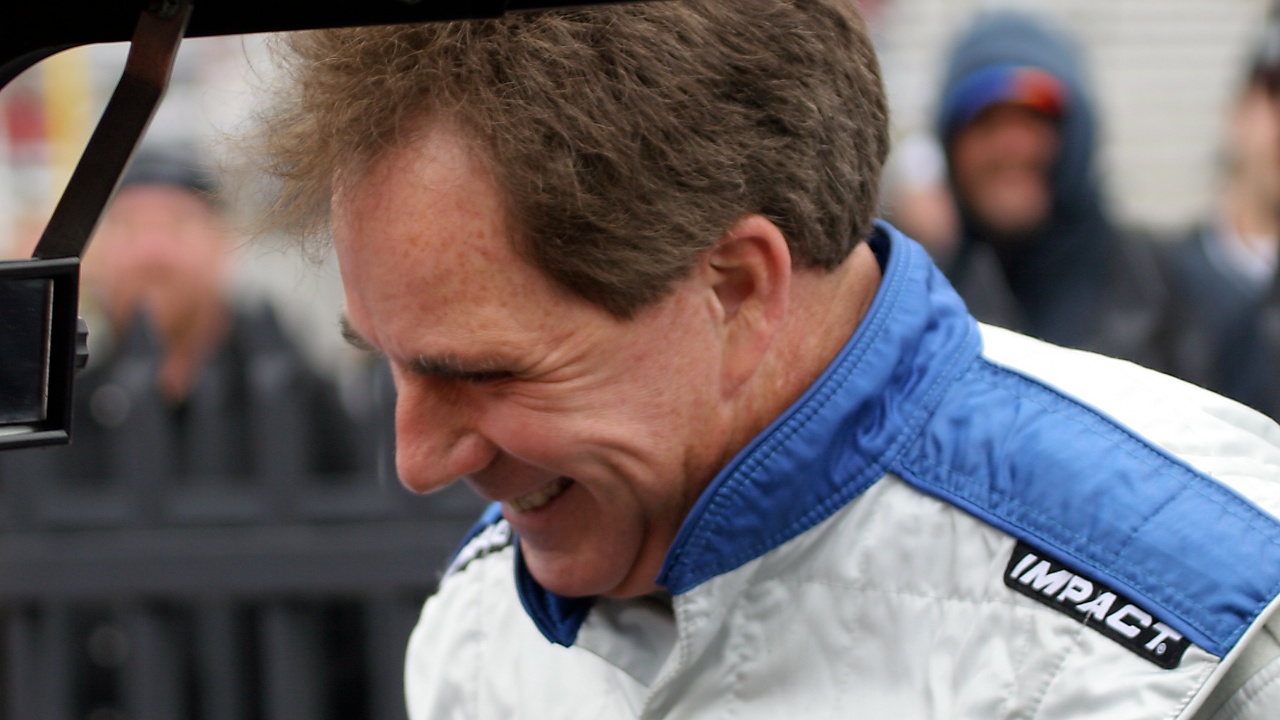
Darrell Waltrip did not ease his way into NASCAR folklore. He fought, talked and clawed his way there, transforming over decades from a polarizing agitator into one of stock car racing’s most trusted voices and enduring heroes. His story is not just about trophies, it is about how a driver nicknamed “Jaws” for his mouth eventually became the sport’s conscience.
Tracing that arc, from brash outsider to Hall of Fame fixture and television mainstay, reveals how much NASCAR itself changed around him. Waltrip’s evolution mirrors the sport’s shift from rough‑edged regional show to polished national spectacle, and helps explain why a man once booed at driver introductions now stands as a beloved racing icon.
The loud arrival of “Jaws”
Waltrip’s early years in NASCAR were defined by speed and swagger in equal measure. When he arrived in the 1970s, he did not defer to the established stars, he challenged them in public and on the track, a posture that earned him the nickname Jaws for his outspoken demeanor. One detailed account notes that When Jaws arrived, he made his name by calling out veterans and embracing media attention that the old guard often shunned. That approach made him a lightning rod, but it also signaled a new, more media‑savvy generation of driver.
Rivals bristled at the young Kentuckian’s confidence. Cale Yarborough is credited with giving Waltrip the “Jaws” label because he believed Darrell Waltrip talked too much, a jab that captured how grating his confidence could feel to competitors. Even future allies were skeptical. Several rivals shared that view, and Before hiring him, team owner Johnson reportedly called him “mouthy,” a word that summed up how the paddock saw this ambitious newcomer.
From villain to respected champion
What began to change perceptions was not a softer personality but relentless performance. Waltrip’s partnership with team owner Johnson produced a torrent of wins, 43 in six seasons, as older stars began to fade. That run of dominance forced fans and competitors to reckon with his talent, not just his talk. A Hall of Fame profile notes that His 59 poles rank fifth all time in the NASCAR premier series, a statistic that underlines how often he was the fastest driver in the field.
Even as his image remained divisive, the results kept stacking up. A retrospective on his career notes that By BOB KEIM UPI Sports Writer, observers in DAYTONA BEACH, Fla, were already describing how Darrell Waltrip had shifted from villain to good guy in the eyes of many fans. That pivot did not happen overnight, but as he matured, his sharp edges began to look more like competitive fire than arrogance, especially to a new generation that had grown up watching him win.
The Daytona 500 breakthrough and a changing image
If there is a single race that crystallized Waltrip’s transformation, it is his long‑awaited triumph in the sport’s biggest event. After years of frustration in the Great American Race, Waltrip finally captured the 500 at Daytona, winning by stretching fuel and driving with discipline rather than sheer aggression. A Hall of Fame biography highlights that his 1989 Daytona victory was a career landmark, one that came after 17 attempts and symbolized persistence as much as speed. In that moment, the once‑cocky upstart looked more like a veteran craftsman finally getting his due.
The emotional release was visible in Victory Lane. A later Hall of Fame feature recalls how The Associated captured Darrell Waltrip hugging his wife Stevie in Victory Lane after that win, an image that softened his public persona. Later profiles describe how During the drive home from another pivotal experience, Stevie asked him how he felt, and he struggled to describe how his outlook had shifted. Those glimpses behind the bravado helped fans see a more reflective competitor, one whose toughness masked vulnerability and growth.
Hall of Fame validation and the “Greatest Driver” debate

By the time Waltrip’s driving career wound down, his résumé had moved him from controversial figure to automatic Hall of Fame selection. A detailed Hall entry notes that he competed in the top series from 1972 through 2000 and that After retiring at the end of the 2000 season, he had already secured his place among the sport’s legends. Another profile from a major motorsports shrine describes how, beneath a polished, almost cosmopolitan exterior, But at heart Darrell remained a rugged racer, as tough and tenacious as any of his peers.
His standing in the record books fuels ongoing debates about his place in NASCAR history. One analysis of each decade’s top performers labels the 1980s Greatest Driver Darrell Waltrip, noting that Darrell Waltrip became a three‑time champion in that era. Another overview of his career points out that Darrell Waltrip is one of the biggest figures in NASCAR and an unlikely fan favorite, a description that captures how far he traveled from his early “villain” label. His eventual induction into multiple halls, including a class that celebrated Darrel Waltrips Long Ride Ends In Hall, formalized what fans had already come to accept.
From cockpit to broadcast booth
Waltrip’s second act in the broadcast booth may have done as much as his driving to cement his status as a racing icon. After stepping out of the car at the end of 2000, he quickly transitioned into television, where he became lead color analyst for Fox Sports on race telecasts. His energetic calls, most famously his “Boogity! Boogity! Boogity!” race starts, translated the intensity of the driver’s seat into a living room‑friendly style that drew in new fans while keeping longtime viewers engaged.
That broadcast presence lasted nearly two decades, long enough for a generation to know him more as a voice than as a driver. When he announced his retirement from television, Now 72, Waltrip said it was finally time to go, reflecting on how much he would miss his television “family.” Another profile of his post‑retirement uncertainty noted that for the first time in 47 years he did not know exactly what came next, a striking admission from someone who had always projected supreme confidence. That vulnerability only deepened the bond with fans who had grown accustomed to his voice every race weekend.
Legacy: from “mouthy” upstart to beloved elder
Today, Waltrip’s legacy rests on more than statistics, though those remain formidable. A kid‑friendly biography notes that Oct profiles of his career still highlight that breakthrough Daytona win, while Hall of Fame entries emphasize how Waltrip and Stevie settled in Franklin, TN, and that he was named one of NASCAR’s “50 Greatest Drivers” in 1998. Another recent feature on Darrell Waltrip points out that he was never the most popular driver in the garage, but that he earned respect slowly and was widely appreciated by the time he stepped away.
That slow‑burn respect is what makes his journey from “mouthy” upstart to beloved elder statesman so compelling. A long‑view retrospective titled Forty years after his debut in NASCAR described how Darrell Waltrip had gone from a rookie ruffling feathers to a Hall of Famer whose retirement would leave the sport poorer. Another kid‑oriented fact sheet simply states that Waltrip is one of the biggest figures in NASCAR history, an “unlikely fan favorite” whose influence still lingers. For a driver once cast as the villain, there may be no higher compliment than that.