Tony Stewart has spent decades turning raw emotion into race-winning speed, and that edge still shapes how competitors and fans talk about him. His intensity did not retire with his final NASCAR Cup start, it simply shifted into new arenas where he remains a central figure in American motorsports.
To understand why Stewart still matters, it helps to see how his mindset, his record and his expanding footprint as an owner and driver in other series all feed the same competitive fire that once defined him in stock cars.
The “Michael Jordan” mindset that never shut off
Stewart’s reputation for volcanic emotion has always been obvious, but the more revealing story is how he weaponized it. He treated every slight, every run-in and every controversy as fuel, turning frustration into sharper focus rather than letting it consume him. That approach, likened by those around him to a “Michael Jordan” mentality, framed setbacks as personal challenges to answer on the track, not as excuses.
Former crew chief Greg Zipadelli, who worked with him from 1999 to 2008, has described how Stewart used that emotional charge to elevate performance for both driver and team, not just himself. Their partnership showed that his anger was rarely aimless, it was directed into dominance when the stakes were highest, a pattern that helps explain why he still chases new disciplines with the same edge he once brought to NASCAR Cup races.
From “SMOKE” to Hall of Fame standard-bearer
Long before he became a team owner and multi-series racer, Stewart built a résumé that forced the sport to take his intensity seriously. As “SMOKE,” he arrived in the Cup Series and immediately proved he was more than hype, stacking three victories in his Rookie of the Year season and signaling that he was prepared to challenge established champions rather than defer to them. That early burst of success set a tone that followed him through multiple titles and cemented his place among the drivers who defined the modern era.
His Hall of Fame induction formalized what competitors already knew, that Stewart’s blend of talent and relentlessness made him a benchmark for the drivers who followed. The same profile that earned him that honor also carried a complicated edge, because the aggression that produced wins also produced headlines, yet the record shows that his determination consistently outweighed the turbulence around him.
Legacy of talent, determination and controversy
Stewart’s NASCAR story has never been tidy, and that is part of why his presence still looms so large. His career has been framed as a mix of elite skill, relentless drive and controversy, a combination that kept him at the center of the sport’s conversation even when he was not winning. That tension between brilliance and volatility made him one of the most scrutinized figures in the garage and helped define the emotional stakes of the era he raced in.
Coverage of his retirement underscored that duality, describing how Tony Stewart paired championships and marquee victories with a long list of on-track and off-track flashpoints. Writer Michael Knight, in a piece labeled as Special for the Arizona Republic, captured that balance by emphasizing both his accomplishments and the disputes that followed him through sprint and midget car events and into the Cup Series. The throughline is that Stewart never tried to sand down his edges, and that authenticity still shapes how fans and competitors view him today.
The business of being Tony Stewart
Even at the height of his driving career, Stewart treated his name as an asset that required careful management, not just a signature on a hero card. He understood that his time and his brand had to be leveraged with every partner, and that the “SMOKE” identity carried commercial weight that could support teams, tracks and sponsorships. That realism about his market value helped him transition from star driver to influential owner without losing relevance.
Reporting on the business side of his career has noted that a big part of his operation revolves around how he allocates his own time, because his name is literally on the building and on the cars. Stewart has been described as a realist about what his image can and cannot do, which is why he has been selective about projects and partnerships. That discipline is one reason his influence in NASCAR and beyond has outlasted his full-time driving days, keeping him in the conversation whenever major decisions or new ventures surface in the stock car world.
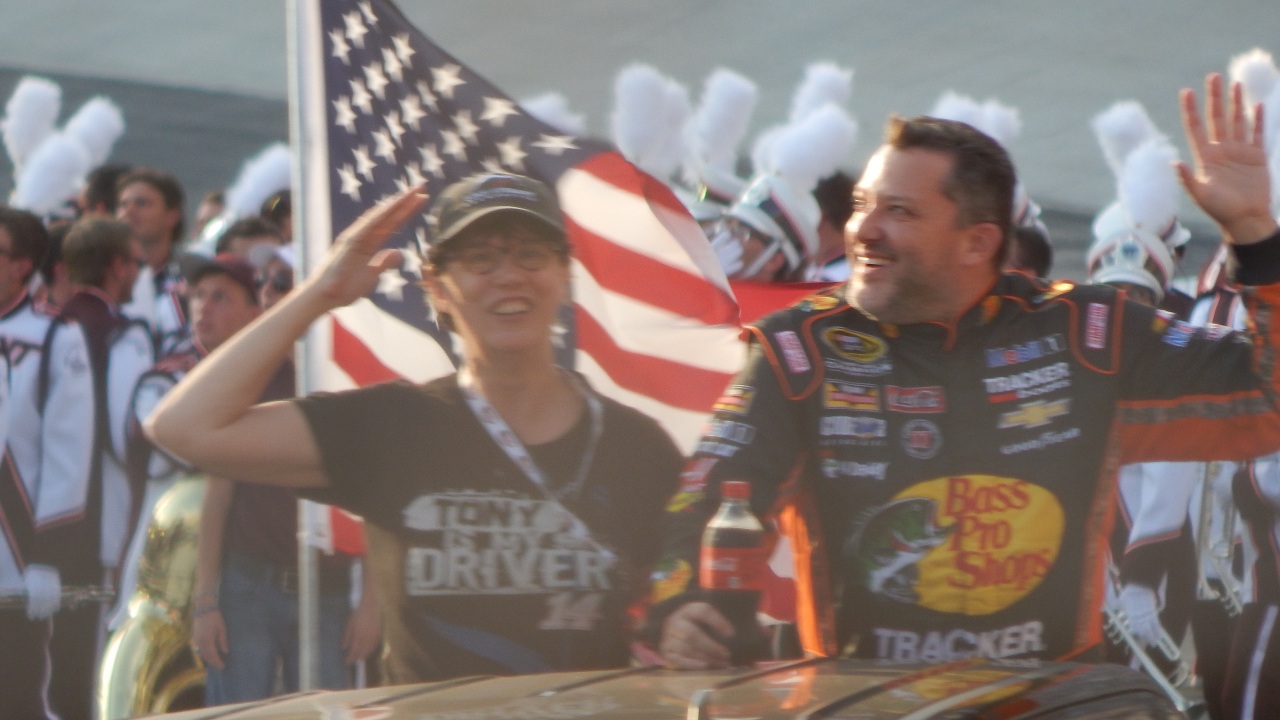
From spectator to owner: the Eldora blueprint
Stewart’s path at Eldora Speedway shows how his competitive instincts extend beyond the driver’s seat. He first experienced the track as a spectator, then as a competitor, and eventually as an owner, a progression that illustrates how he tends to fully immerse himself in any racing environment he cares about. His comments about Eldora have highlighted how tough the events are and how seeing drivers outside their usual divisions underscores the depth of talent on display.
In reflecting on Eldora, Stewart has pointed to the level of competition as proof of how demanding the venue is, noting that the event showcases just how competitive the field can be. That perspective, from someone who has seen the place from the grandstands, the cockpit and the owner’s office, reinforces the idea that he is not content to be a figurehead. He wants to shape the racing product directly, and that hands-on approach has become a template for how he engages with other series and facilities.
Why dirt racing still pulls him back
For all his success in NASCAR and now in drag racing, Stewart continues to describe dirt racing as a core part of who he is. He has spoken about a lifelong passion for the discipline and about how it keeps him grounded in the roots of American motorsport. That connection is not nostalgic window dressing, it is a living part of his weekly schedule and a key reason he remains visible to fans who follow short-track and grassroots events.
In a recent conversation about staying involved in dirt racing, Tony Stewart explained that his enthusiasm for the sport has never faded and that he still finds energy in being around those tracks and teams. The way he talks about dirt racing, as both a NASCAR legend and an active participant, shows that his intensity is not limited to big TV events. It is just as present on a midweek night at a local oval, which helps explain why his influence spans so many corners of the racing world.
Reinventing himself in Top Fuel and beyond
Stewart’s move into drag racing, particularly in Top Fuel, is the clearest current example of how his competitive drive keeps pushing him into new challenges. He has described how a Top Fuel car forces a driver to make one split-second decision and then immediately stack another on top of it, with each gear change demanding precise timing. That description fits neatly with the way he has always approached racing, as a series of rapid, high-stakes choices that reward total commitment.
His team, Tony Stewart Racing, now fields two full-time entries, one in Top Fuel that he drives himself and one in Funny Car. The organization has already produced a career-best season for its Funny Car entry, evidence that Stewart is not dabbling in drag racing but building a serious program. When he talks about testing an Elite Motorsports Pro Stock car, he frames it as another way to understand the craft and expand his skill set, not as a retirement hobby, which reinforces how deeply his identity is tied to active competition.
Mastering the nuance of four-wide nitro
Stewart’s debut in nitro four-wide racing in Las Vegas highlighted how quickly he absorbs new formats and turns them into another arena for his intensity. He has spoken about gearing up for that event and about how the four-wide layout, with its extra staging beams and simultaneous runs, demands a different kind of focus than traditional two-lane drag racing. That willingness to embrace complexity rather than avoid it is consistent with the way he once juggled multiple series and disciplines in the same season.
In discussing the Las Vegas four-wide event, Tony Stewart emphasized the nuance involved in managing the starting line and reacting to three other cars instead of one. He framed the challenge as something that resonated with him, a fresh puzzle to solve at high speed. That mindset, treating each new format as an opportunity to sharpen his competitive instincts, is a big reason he remains a compelling figure even for fans who primarily know him from his NASCAR years.
Why his intensity still matters to NASCAR
Even as Stewart devotes more time to drag racing and dirt, his shadow still stretches across NASCAR. His Hall of Fame status, his history as a multi-time champion and his ongoing role as an owner and influencer mean that his views on competition, safety and business still carry weight in the stock car paddock. When teams or drivers talk about balancing aggression with control, Stewart’s career is often an unspoken reference point.
His “Michael Jordan” style mentality, where every slight becomes motivation, continues to resonate in a Cup Series that now features younger stars trying to carve out their own identities. Stewart showed that intensity could be both a weapon and a responsibility, something that could lift a team to titles or drag it into controversy. That dual lesson, backed by his record as SMOKE, his business acumen and his ongoing success with Tony Stewart Racing in Top Fuel and Funny Car, is why I see him as a lasting force in NASCAR culture even as he chases new trophies far from the stock cars that made him famous.