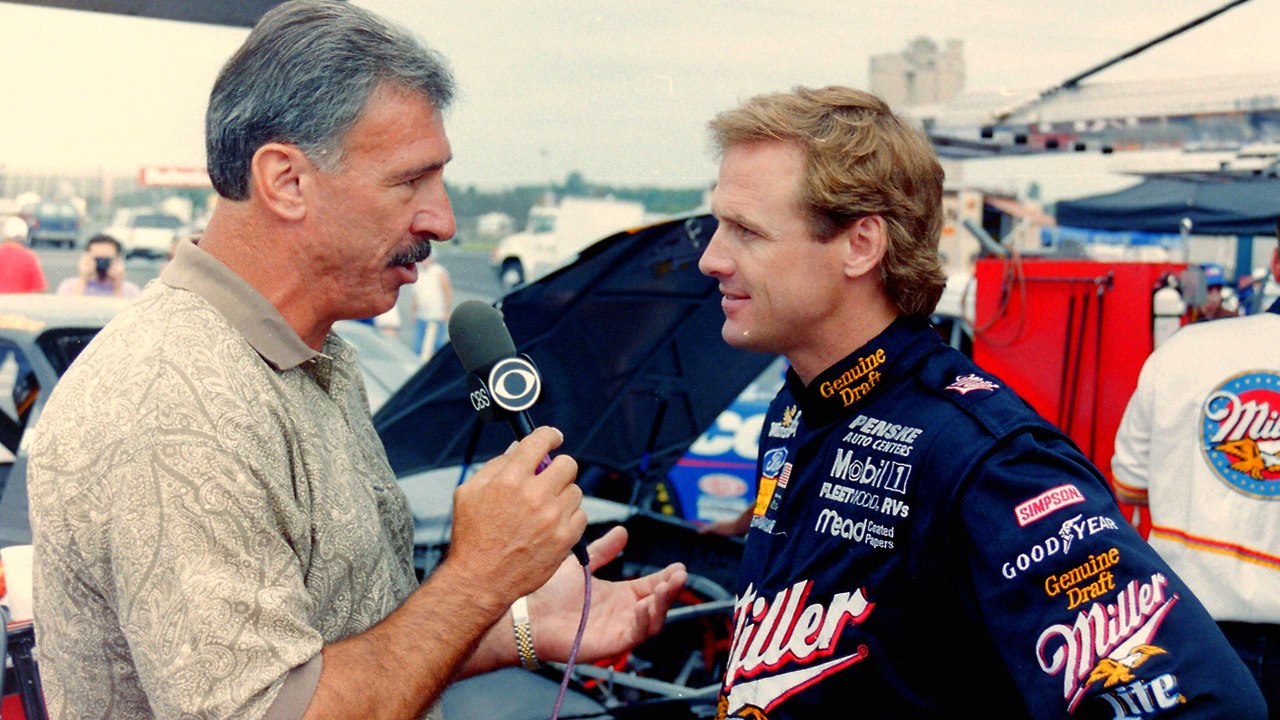
Rusty Wallace’s reputation as a short-track specialist did not come from a single hot streak or a flattering label. It was built over decades of precision, aggression and adaptability on the tight bullrings that define stock car racing’s toughest tests. Even as modern data and simulation reshape how drivers attack places like Bristol and Martinsville, the way Wallace dissected those tracks still stands out as a benchmark for what short-track mastery looks like.
His career numbers alone place him among the sport’s elite, but the story of his short-track skill is about more than statistics. It is about how a driver with a dirt and Midwest background translated raw car control into a repeatable edge, how he responded when that edge slipped, and why his approach continues to be the comparison point when new stars rise on the same asphalt.
From Midwest prodigy to NASCAR short-track benchmark
Before Rusty Wallace ever became a Cup champion, he was already sharpening the traits that would define his short-track legend. He did not arrive in the big leagues as a polished corporate product, but as a hard-nosed racer who had already learned how to manage traffic, conserve tires and attack late in runs on tight ovals. Reports on his early years describe him amassing over 200 feature wins in the mid-1970s and earning a Rookie of the Year award in the Central Racing Ass, a volume of success that speaks to how quickly he learned to dominate in close-quarters racing. That kind of repetition on short tracks, week after week, is where his feel for balance and rhythm was forged.
By the time he reached the top level of stock car racing, Wallace’s toolbox was already packed with those habits. His Cup résumé reflects that foundation: Rusty Wallace finished his career with the 1989 Winston Cup Championship, 36 career poles and 55 career wins. Hall of Fame biographies list him as Number 9 in all-time victories with 55, and note that he became a Class of 2013 inductee as a Rusty Wallace, 1989 NASCAR Cup Champion and 55-time winner in NAS. Those totals are not short-track specific, but they underline how a driver who built his craft on tight ovals translated that skill into a complete championship profile.
The craft behind Wallace’s short-track dominance
What separated Wallace on short tracks was not just raw speed, but how he managed a race from the first lap to the last. He had a knack for leading long stretches, then still having enough left to defend or attack in the closing laps, a pattern that later analysts would use as a measuring stick for others. When one recent statistical breakdown compared modern star Hamlin to past greats at Martinsville, it described Wallace as the closest historical comparison and noted that he led seven of the last eight races he ran at that track. That kind of sustained control over a venue is the essence of short-track dominance.
Wallace’s broader record reinforces how complete his skill set was. Hall of Fame profiles describe Russell William “Rusty” Wallace Jr as Number 3 in road course victories behind Jeff Gordon and Tony Stewart, proof that his car control translated beyond short ovals. Yet his reputation still circles back to the bullrings, where his ability to roll the center of the corner and launch off the exit made him a constant threat. Longtime descriptions of his career even frame him as one of NASCAR’s best short track racers, a label that reflects how consistently he turned those skills into trophies.
When the edge dulled, Wallace retooled instead of retreating

Even the best short-track racers eventually face a moment when the field catches up, and Wallace was blunt about that reality. Around the turn of the century, he acknowledged that his once-automatic advantage on places like Bristol had started to slip. In one candid reflection, Mar reporting captured Wallace saying he “knew we had to work hard to do some things different, rededicate ourselves to the short tracks.” That is not the language of a driver coasting on reputation. It is the mindset of someone who understands that short-track success is a moving target, shaped by evolving setups, rules and competition.
He paired that honesty with specific expectations. In another account from Mar, Wallace recalled a Bristol win and admitted that if you had asked him then how many races he would win that season, he would have predicted more than what actually came. Speaking on a Thursday, he contrasted that earlier dominance with a more recent finish deeper in the field behind Dale Earnhardt. The key detail is not the disappointment, but the response: he spoke in terms of rededication, not resignation, which is why his short-track legacy is framed as a standard to chase rather than a relic of a single era.
The Intimidator’s most respected rival, forged on tight ovals
Short-track skill is not just about lap times, it is about how a driver races others when the space is tight and the stakes are high. In that context, Wallace’s relationship with Dale Earnhardt is central to understanding why his craft still resonates. One retrospective described how, Perhaps more than any other driver in NASCAR history, Rusty Wallace earned a unique off-track bond with the Intimidator. The two spent years vacationing together, a level of personal trust that grew out of countless laps spent leaning on each other’s doors in traffic.
That mutual respect was built in the very environment where tempers usually flare the hottest. On short tracks, where contact is inevitable and patience is thin, Wallace managed to race Earnhardt hard enough to be considered a true rival while still earning his admiration. Later conversations about their relationship, highlighted in a Nov classic interview, frame Wallace as the Intimidator’s most respected opponent. That status says as much about his racecraft in tight quarters as any stat sheet, and it is a big reason his short-track style is still studied by drivers who want to be aggressive without crossing the line.
Why Wallace’s short-track template still matters in 2025
Modern Cup racing is more data-driven than anything Wallace experienced, yet his template for short-track success still fits the current landscape. Analysts looking at drivers like Hamlin at Martinsville still reach for Wallace as the historical comparison, because the traits that defined his dominance remain the ones that separate contenders from champions today: the ability to lead repeatedly at the same track, to adjust when the field closes the gap and to maintain composure in traffic. When a current driver is measured against him, it is an acknowledgment that Wallace’s standard still holds weight.
His broader career arc reinforces why that standard endures. Biographical notes describe About Our Guest Rusty Wallace as someone who, for nearly 40 years, delighted fans, with his achievements on and off the track widely recognized. Another profile lists him as Born August 14, 1956, notes his Age as 69, lists his Country as the United States, and notes Current Competition as not active after 795 starts. Those numbers frame a full career, but the way his name still surfaces in short-track debates shows that his influence did not retire with him.
Hall of Fame citations that list him as Number 9 in all-time wins with 55 and highlight his versatility behind Jeff Gordon and Tony Stewart on road courses are really pointing to the same core truth: Wallace built a complete Hall of Fame résumé on the back of skills that were honed in the tightest, most unforgiving environments. When I look at how current drivers are judged on short tracks, from their ability to control a race to the respect they earn from rivals, I still see Rusty Wallace’s blueprint in the criteria. That is why his short-track skill stands out today, not as nostalgia, but as a living standard that continues to shape how excellence on the bullrings is defined.
More from Fast Lane Only: