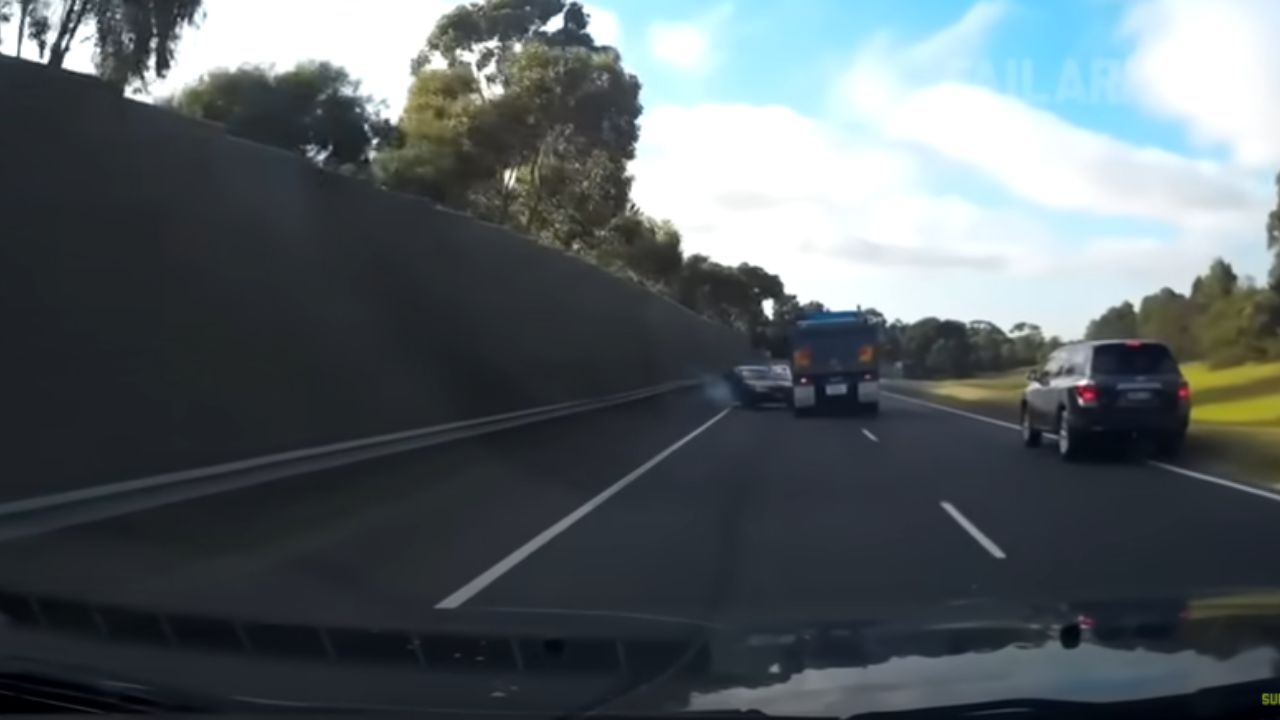
On any given day, your social feeds can feel like a rolling highlight reel of close calls, fender‑benders and outright chaos on the road. What used to be fleeting moments are now captured in crisp detail and uploaded within minutes, turning dash cam clips into a global spectator sport and a new layer of accountability for how you drive.
Behind the viral near misses is a fast‑maturing industry that is reshaping everything from insurance claims to fleet safety policy. As cameras get smarter and communities grow around them, you are not just watching the road, you are helping define a new culture of how driving is recorded, judged and, increasingly, policed.
The social media spectacle of everyday driving
You no longer need a film crew to turn a commute into content. A compact camera on your windshield can capture a truck cutting across lanes, a cyclist’s narrow escape or a spectacular spinout, and within hours that footage can be stitched into compilations that rack up millions of views. Long‑running formats such as Dashcam Disasters and other “Unbelievable Driver Fails” channels have normalized the idea that your worst driving moment might end up as someone else’s entertainment. A newer wave of clips, such as the “Caught on Dash Cam: Hilarious Fails Shocking Near Misses” video that surfaced in Dec, leans into the mix of slapstick and genuine danger that keeps viewers hooked.
That appetite for spectacle has helped push dash cams from niche gadget to mainstream accessory. One industry analysis notes that Videos from these cameras have become a social media staple, with drivers explicitly buying devices so they can share what happens on the road. Dedicated groups such as the Dash Cam Footage, which promotes “Crazy Road Accidents” as Public posts, turn anonymous clips into shared narratives, complete with comment‑section investigations into who was at fault and whether a driver deserved a “second chance.”
From viral clip to courtroom evidence
Once you hit record, you are not just creating content, you are generating evidence. Lawyers now routinely ask clients whether they had a camera running, because a few seconds of footage can make or break a claim. Legal guides describe how One Small Camera, has become a reality in accident disputes, with judges and insurers increasingly relying on video to reconstruct events. That same guidance warns you that mishandling or selectively sharing clips can backfire, especially if the footage contradicts your own statement.
Rising financial pressure is accelerating that shift. Consumer advocates point out that Auto insurance premiums have skyrocketed by 55% since 2020, a spike that has coincided with more uninsured drivers and staged crashes. In that environment, you are more likely to be asked to prove you were not responsible, and a camera can be the difference between a quick payout and a drawn‑out dispute. Police forces are also leaning on citizen footage, with initiatives such as Watch portals like Operation Snap invite you to upload clips of dangerous driving so officers can pursue offenders you may never meet again.
AI turns passive recording into active safety
The newest generation of dash cams is not content to sit quietly until something goes wrong. In commercial fleets, you are seeing a shift described as New Reality of, where cameras do not just capture crashes but actively monitor for Distracted behavior. These systems watch your eyes and hands, flagging when you are glancing at a phone or drifting in your lane, and they feed that data back to managers who can intervene before a collision sidelines a vehicle and its driver.
Developers describe this as The Critical Shift to Predictive Safety, a break from Traditional cameras that only come into play after the fact. Because the latest AI tools are tuned so that Because these systems flag only behavior that truly indicates risk, fleets report less alert fatigue and higher buy‑in from drivers who might otherwise resent constant monitoring. Broader Market Trends in smart fleet management show that this kind of integrated video is becoming standard, with predictive alerts used to optimize uptime and warn managers of dangers before they escalate.
Hardware races ahead, regulators hit the brakes
As you scroll through dash cam clips, you are also seeing the output of a rapid hardware arms race. Guides to The Future of 4K Dash Cams describe how image sensors, night vision and cloud connectivity are evolving so you can make an informed choice for your vehicle. Consumer models such as Garmin Dash Cam Live promise “Dash Cam Live: 1440p LTE dash cam with a 140-degree field of view, streaming footage straight to an app on your phone so you can check on your parked car from anywhere.
At the same time, regulators are trying to keep up with a market that is expanding across borders. A global Automotive Dash Board study highlights Market Challenges, noting that privacy and surveillance rules in different regions are forcing manufacturers to build region‑specific hardware, including disabling certain cameras in key global markets. For you, that means the same model may behave very differently depending on where you drive, and you need to understand not just what your device can do, but what it is legally allowed to do.
Safety benefits, storage limits and the ethics of always‑on recording
For all the viral chaos, there is a quieter effect when you know a lens is pointed at you. Safety advocates argue that Encourage Safer Driving, because When drivers know they are being recorded they tend to brake earlier, signal more consistently and think twice before weaving through traffic. Fleet operators are betting that this behavioral nudge, combined with AI coaching, will cut collisions and reduce the “dramatic reduction in operational downtime” that New Reality of promises when crashes are prevented rather than merely recorded.
On the consumer side, you are also dealing with practical constraints and ethical questions. Budget devices highlighted in Vital Dash Cam typically support microSD cards up to 32GB or 64GB, which gives you hours of footage before the oldest clips are overwritten. That rolling buffer means a key incident can vanish if you do not save it in time, but it also limits how much of your daily life is archived. At the same time, police in Fox Valley are warning that AI‑created crash clips on social media can spread misinformation, with the Story by Josh Cavender at FOX 11 News noting that fabricated videos can confuse the public and complicate real investigations.
More from Fast Lane Only