The full dash cam footage of a sheriff’s patrol car being struck on the highway is as gripping as it is instructive. You see a routine roadside moment turn catastrophic in seconds, the kind of collision that totals a cruiser yet somehow leaves everyone walking away. Watching it closely, you can trace every small decision that separates a terrifying near miss from a tragedy.
When you study that video alongside other recent clips of patrol vehicles hit or nearly hit in traffic, a pattern emerges. The same blind spots, the same split-second reactions, and the same pleas from law enforcement repeat across states and agencies. If you drive, especially on high-speed roads, these images are not just shocking, they are a real-time guide to what you should do differently the next time you see flashing lights ahead.
What the “Police Car Totaled” dash cam actually shows
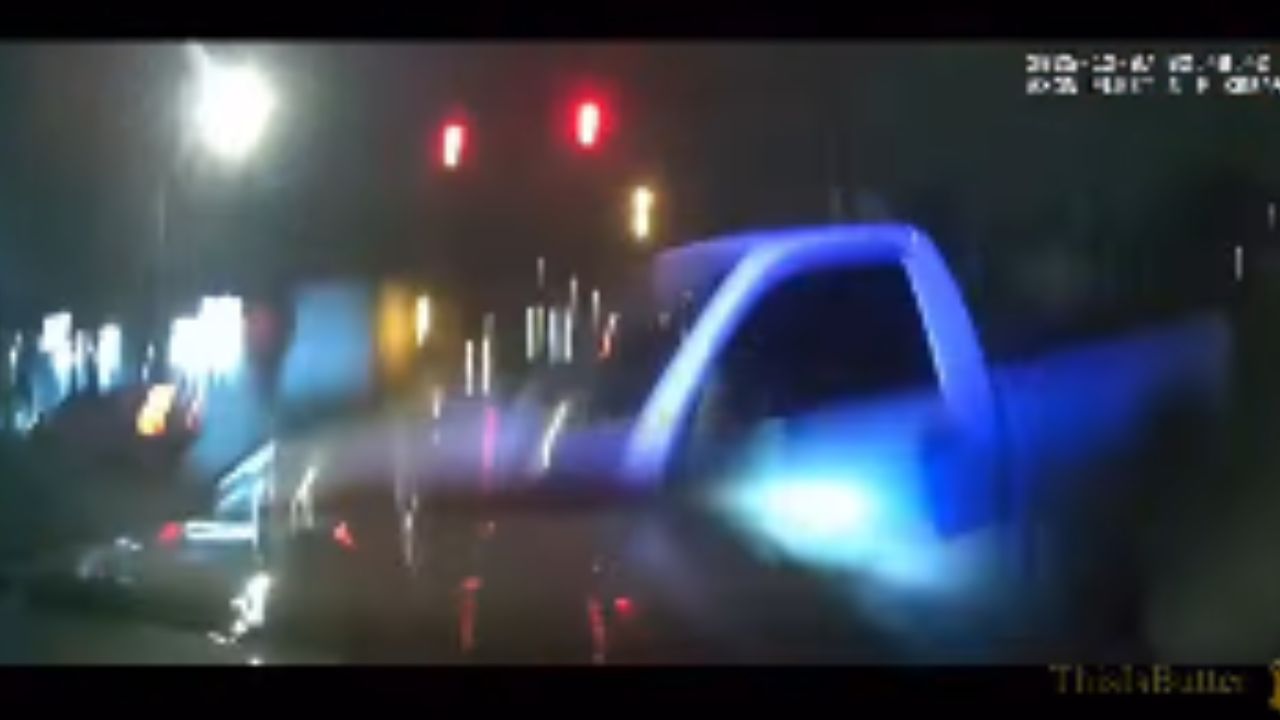
In the widely shared clip labeled “Police Car Totaled,” you watch a sheriff’s patrol vehicle sitting on the shoulder as traffic moves past at highway speed. The camera, mounted on the cruiser, records the moment a vehicle drifts or swerves toward the shoulder and slams into the parked unit, turning a stationary stop into a violent impact that leaves the police unit crumpled. The word “totaled” is not an exaggeration, the rear of the car is crushed, debris scatters across the lane, and the force of the crash shoves the patrol vehicle forward. Yet, despite the totaled cruiser and the Dramatic visuals, authorities say no one was injured, a reminder of how much the vehicle itself is designed to absorb.
From your perspective as a driver, the most important detail is not the twisted metal, it is how ordinary the scene looks until the instant of impact. The patrol unit is on the shoulder, emergency lights activated, and traffic appears to be flowing normally. Then one driver fails to maintain lane control and the collision unfolds in a single frame. When you watch the same sequence from a local traffic camera angle, shared through a Dramatic replay, you see how little time anyone has to react. That is the core lesson: if you wait until you are alongside a stopped patrol car to move over or slow down, you are already too late.
Texas traffic camera footage and the Atcosa County Sheriff near miss
The Texas crash that has circulated widely online underscores the same risk from another angle. In that clip, labeled as a crash that was caught on camera, a sheriff’s patrol vehicle is stopped on the side of a highway in Texas when another vehicle plows into it. The Dramatic Texas footage, captured both from the patrol car’s dash cam and a roadside camera, shows the cruiser being struck squarely on the side, a scenario that could easily have killed anyone standing nearby. You see the patrol unit jolt sideways, its light bar still flashing as it is shoved toward the grass.
A related video from the same region shows a truck barreling toward an Atcosa County Sheriff deputy’s vehicle during a roadside stop. In that clip, the deputy jumps out of the way just in time as the truck slams into the rear of the cruiser, a “wild video” moment that illustrates how quickly a routine assist can turn into a life-or-death sprint. When you watch the truck hit the parked unit, you can see why agencies keep repeating the same message: your decision to move over a full lane and slow down is not a courtesy, it is the only buffer protecting the people working inches from live traffic.
Near misses in Florida and the “PLEASE stay alert” warning
The danger is not limited to Texas highways. In Florida, a separate video shows a Trooper and deputy almost wiped out by a passing car while helping a stranded driver at night. The Florida Highway Patrol trooper and a Volusia Co deputy are standing near the disabled vehicle, wearing fully visible reflective vests, when a car veers dangerously close. The clip captures how even high-visibility gear and flashing lights cannot compensate for a driver who is distracted or unwilling to change lanes.
Another agency shared a similar clip with a blunt caption that begins with the word PLEASE, urging you to stay alert for emergency lights and move over for first responders, service vehicles, and disabled vehicles on the side of the road. When you compare that plea with the Florida footage, the message is unambiguous: even when officers do everything right, from reflective vests to proper positioning, their safety still depends on your choices behind the wheel. The near miss is a visual argument for treating every roadside stop as a work zone where you automatically slow down and shift away.
When drivers hit patrol vehicles and flee
Not every collision ends with a driver staying at the scene. In another widely shared clip, authorities describe a man who struck a patrol vehicle and then tried to leave, an incident summarized in a post that opens with “🚨𝐌𝐚𝐧 𝐀𝐫𝐫𝐞𝐬𝐭𝐞𝐝 𝐀𝐟𝐭𝐞𝐫 𝐒𝐭𝐫𝐢𝐤𝐢𝐧𝐠 𝐚 𝐏𝐚𝐭𝐫𝐨𝐥 𝐕𝐞𝐡𝐢𝐜𝐥𝐞 𝐚𝐧𝐝 𝐅𝐥𝐞𝐞𝐢𝐧𝐠 𝐒𝐜𝐞𝐧𝐞🚨 On January.” The agency’s account, shared through an On January reel, stresses that leaving the scene compounds the original mistake and turns a dangerous crash into a criminal case. For you, the takeaway is straightforward: if you are involved in any collision, especially with a patrol vehicle, stopping immediately is not optional, it is a legal and ethical obligation.
That same post pairs the arrest narrative with a broader reminder about impaired or distracted driving. The agency notes that a single decision at the wheel can save a life, a point that echoes across the other clips of patrol cars being hit on the shoulder. When you see the aftermath of a cruiser that is effectively destroyed yet still did its job of shielding the people nearby, you can understand why agencies keep repeating that message in every arrest video they share.
How you can respond when you see patrol lights ahead
When you watch the full dash cam and traffic camera footage from these incidents, the practical steps you should take as a driver become very clear. First, treat every set of flashing lights as a slow-down signal, even before you can tell whether it is a patrol car, a tow truck, or a disabled vehicle. The Texas CAMERA footage and the Atcosa County Sheriff clip both show how little margin there is once you are close to the stopped vehicle. If you begin easing off the accelerator and scanning for a safe lane change as soon as you spot the lights, you give yourself and everyone on the shoulder a crucial buffer.
Second, commit to the “move over” habit even when traffic laws are not top of mind. Many states require you to shift one full lane away from any stopped emergency vehicle when possible, and to slow significantly if you cannot move over. The Florida Highway Patrol and Volusia Co near miss, captured in the Florida video, shows what happens when a driver passes too close even at moderate speed. When you combine that with the repeated stay alert appeals from agencies, the expectation is clear: your responsibility does not end with avoiding a ticket, it extends to actively creating space for the people working on the roadside.
More from Fast Lane Only