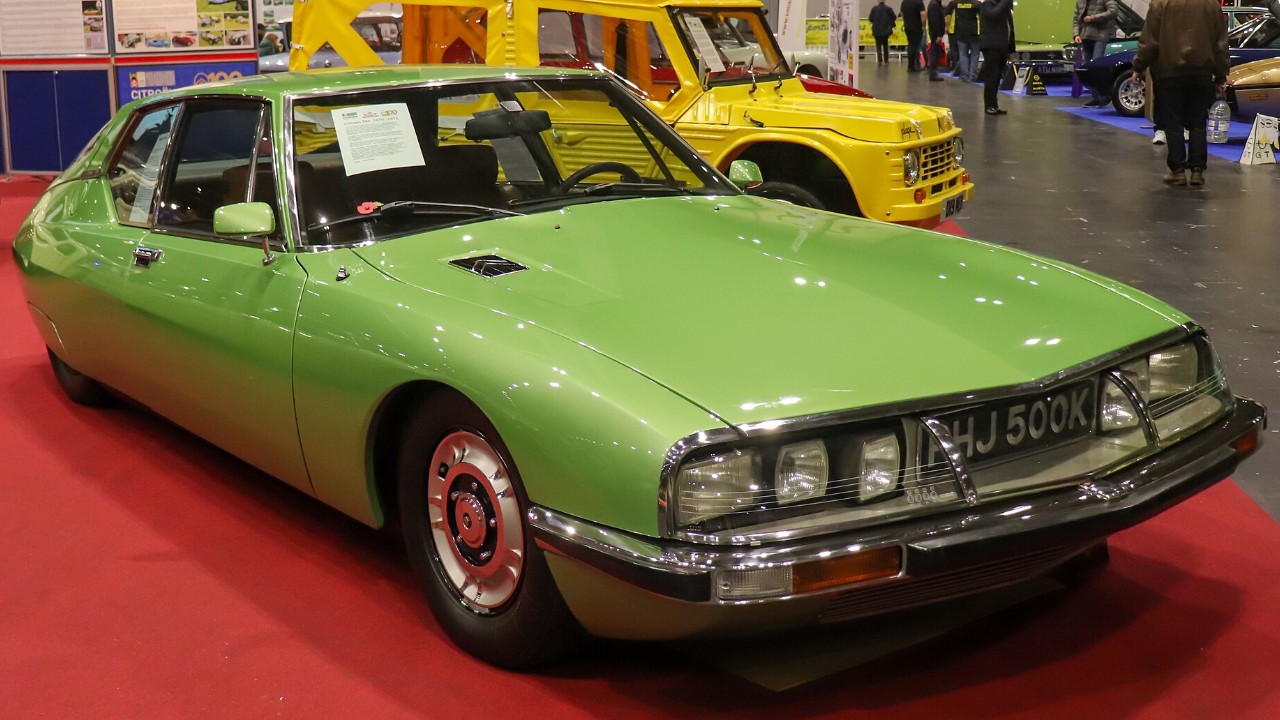
Citroën’s DIRAVI steering made its debut on the SM at the 1970 Geneva show, and it did something no production car had done before. It gave the driver full power assistance when parking, then dialed the help back as speed rose. It also pulled the wheel back to center on its own, even with the car standing still.
Speed-sensitive steering is familiar to drivers now, so it’s easy to forget how new the idea was in 1970. Citroën built it into a Maserati-powered grand tourer and then kept refining it for decades.
Citroën took a different route. In our view, the result was the most radical part of an already radical car.
What DIRAVI steering actually means
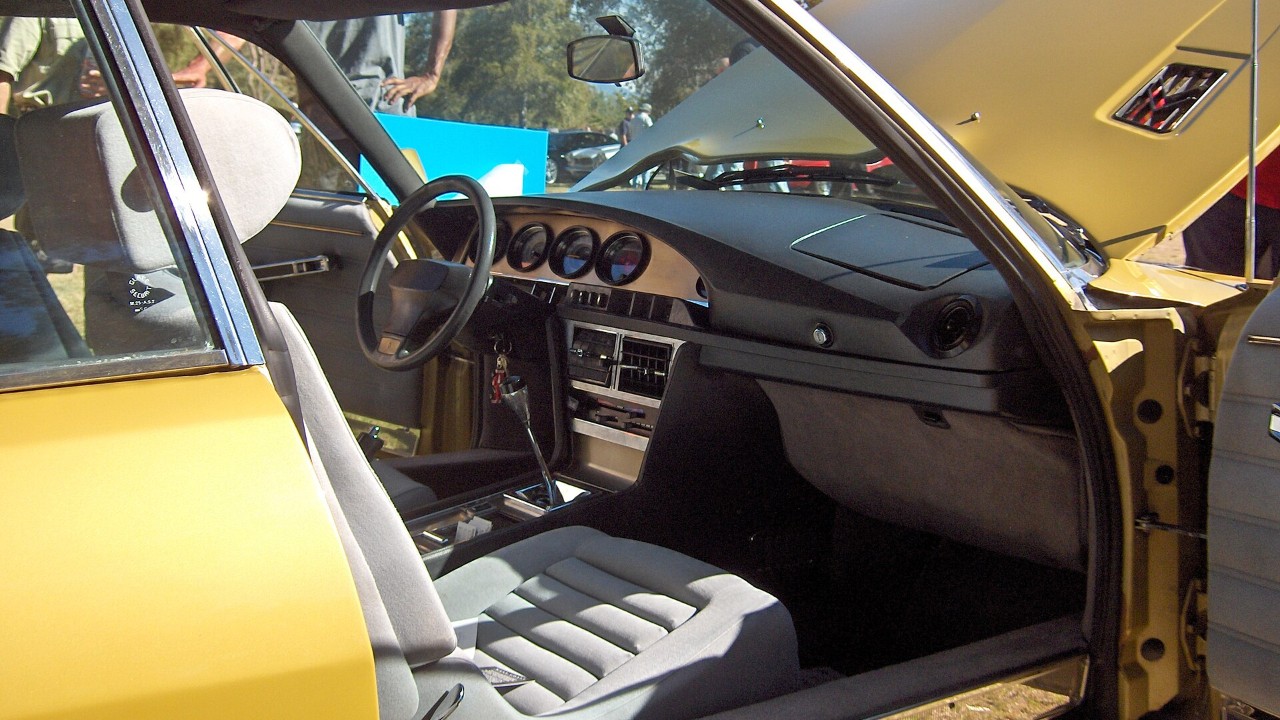
DIRAVI is short for “Direction à rappel asservi,” which roughly means steering with controlled return. That’s how Gary Axon explains it in a 2021 column for Goodwood. He calls it “the world’s first commercially available variable assisted power steering system.” Similarly, the Petersen Automotive Museum describes it as “the first variable-assist power-steering system.”
The name changed by market. Axon notes that British buyers knew it as VariPower, while Americans saw it sold as SpeedFeel.
The basic job was easy to grasp, even if the hardware wasn’t. At parking speeds, the system gave plenty of help. Then, as the car went faster, it reduced the assistance, so the wheel firmed up on the open road. Citroënet, a long-running enthusiast archive, describes it as “maximum power at low speeds with the power being reduced as velocity increased.”
A wheel that centered itself
The second trick was the “controlled return” in the name. According to Axon, the wheel would always center itself as soon as the driver let go. Aaron Severson, writing for Ate Up With Motor, says it happened even when the car was parked: crank the wheel with the engine running, and it came back to center by itself.
That had a practical side, too. Axon points out that the car could never be left with its front wheels turned toward the curb on a hill. Instead, they always returned to straight ahead.
Behind it all sat Citroën’s high-pressure central hydraulic system. Severson explains that the same system powered the SM’s suspension and brakes as well as its steering. Because hydraulic pressure was always on hand, Citroën could use it to push the wheel back to center rather than relying on the road alone.
Fast, light and short on feel
DIRAVI steering was also unusually quick. Severson says the SM needed only two turns from lock to lock, with a ratio as fast as 9.4:1. That made it “almost twice as quick as most contemporaries,” he writes. Citroënet also gives two turns lock to lock.
However, speed came with a catch. Severson warns that the lightning-fast ratio and “total lack of feedback” demanded full attention in any sudden move. Even so, he concedes that the self-centering action helped keep the car out of the weeds.
Axon, by contrast, calls his first drive in a DIRAVI car “a revelation.” It took time to adapt, he admits, because the car needed only small inputs to change direction. But once he had, everything else felt “archaic by comparison.”
The Citroën SM that carried it
The steering arrived in a very unusual grand tourer. Citroën bought Maserati in January 1968, the Petersen says, and Maserati then designed a compact all-aluminum V6 for the SM. Severson gives the first engine as 2,675 cc with 170 horsepower DIN, or 180 hp SAE net.
The car impressed American judges, too. The Petersen notes that the SM became the first foreign car to win Motor Trend’s Car of the Year award. In 1973, the museum adds, it cost $13,000.
Sales, however, didn’t last. Citroën left the U.S. market after 1973, Severson reports, and SM sales fell from 2,619 in 1973 to 294 in 1974. Production ended in 1975, when Citroën sold only 115 cars. In all, Citroën built 12,920 SMs.
DIRAVI steering after the SM
The idea outlived the car. Axon writes that Citroën carried DIRAVI over to the CX, though in watered-down form, because some drivers found the SM’s setup too extreme. Even so, he rates the CX’s steering as bettered by few cars since, “if any.”
The system kept going for years after that. According to Axon, DIRAVI steering last appeared on the Citroën XM, around 30 years before his 2021 column. Meanwhile, the SM that started it all left production in 1975, with 12,920 cars built.
More from Fast Lane Only