In 1955, Chevrolet began offering factory-installed police packages, and the humble police sedan turned into a purpose-built tool. Before that, a police car was usually an ordinary model fitted with a radio, lights and stronger brakes.
Since then, patrol fleets have tried almost everything. Agencies have run compact Studebakers, Swedish family cars, German sports cars and Australian-built V8 sedans. Some were bought for speed, while others won the contract on price or durability. A few of them still look great in uniform decades later.
These are our picks, eight police cars we’d rank among the best ever to wear a light bar. The ranking is our opinion, not an official test result. Still, every year, engine and production figure below comes from maker records, test reports and model histories. We run in date order, from a 1957 Chevy to a 2016 Ford.
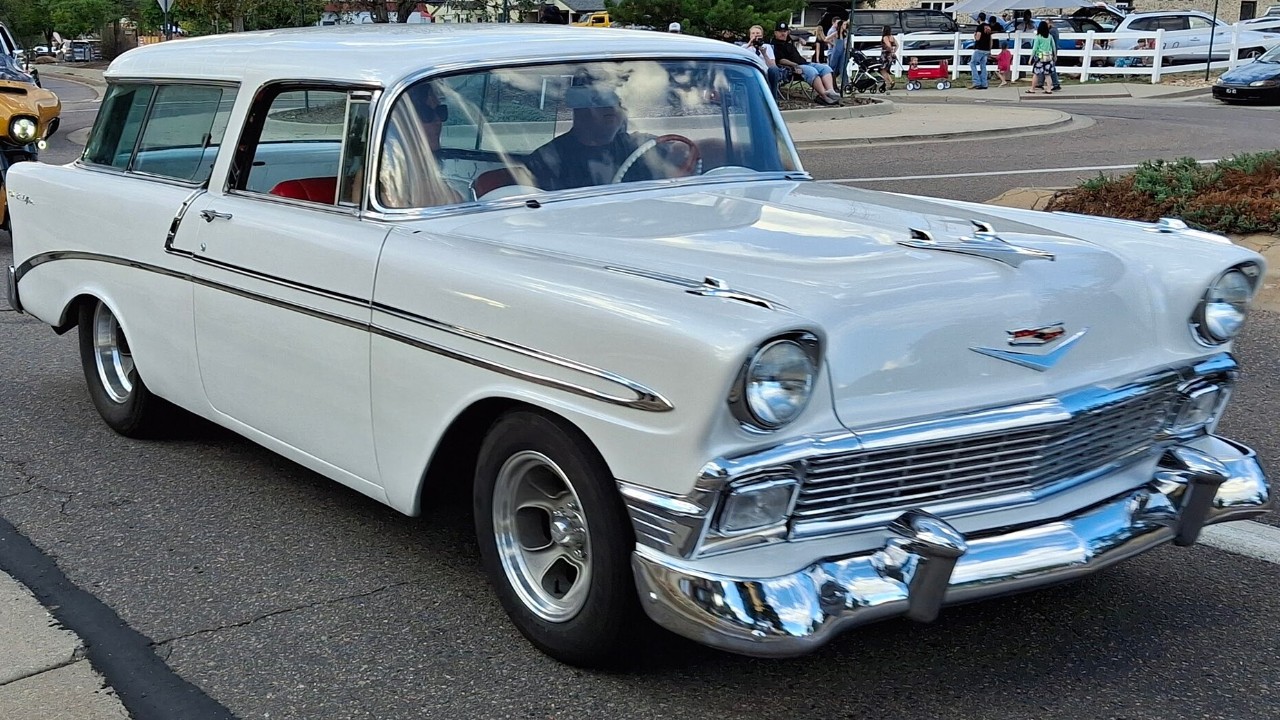
1. 1957 Chevrolet Bel Air police car
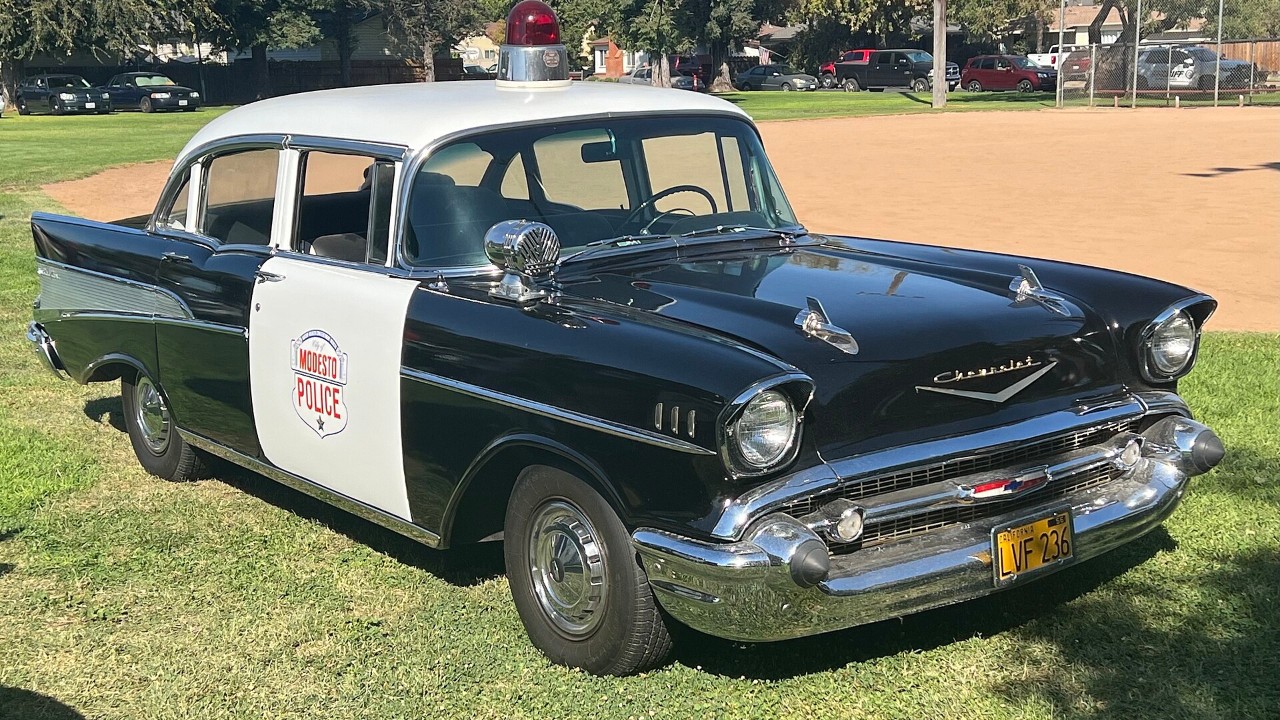
The car in our photo wears Modesto Police markings, and it shows why the tri-five Chevy still draws a crowd. By 1957, Chevy’s police program was two years old. According to GM’s own history of its police vehicles, the 1955 packages went on the One-Fifty sedan and Two-Ten wagon. They added heavy-duty chassis parts, and the strongest engine that year was a 205-horsepower 265 V8.
For 1957, the engine grew to 283 cubic inches. With Rochester fuel injection, Chevy rated it at 283 horsepower. However, most Bel Airs left the factory with carburetors, so a “fuelie” is a rare find today. That injected engine was also shared with the Corvette, which tells you how seriously Chevy took performance that year.
Our take: the 1957 Bel Air is the classic squad car most people picture first. Its fins and chrome look even better in black and white. In short, it pairs the decade’s best-known Chevy shape with a working car’s job. Meanwhile, the simple small-block underneath is cheap to keep running. If you want one, buy a sound civilian car and research the exact livery before you paint it.
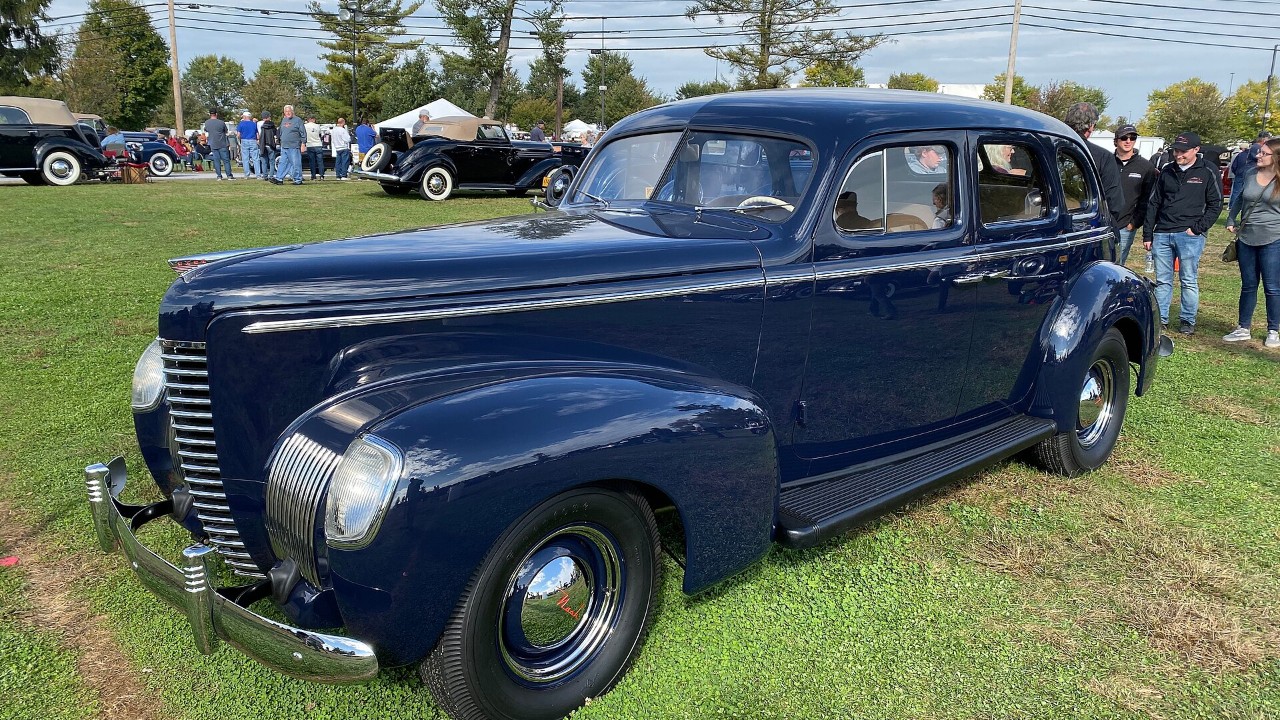
2. 1962 Studebaker Lark police sedan
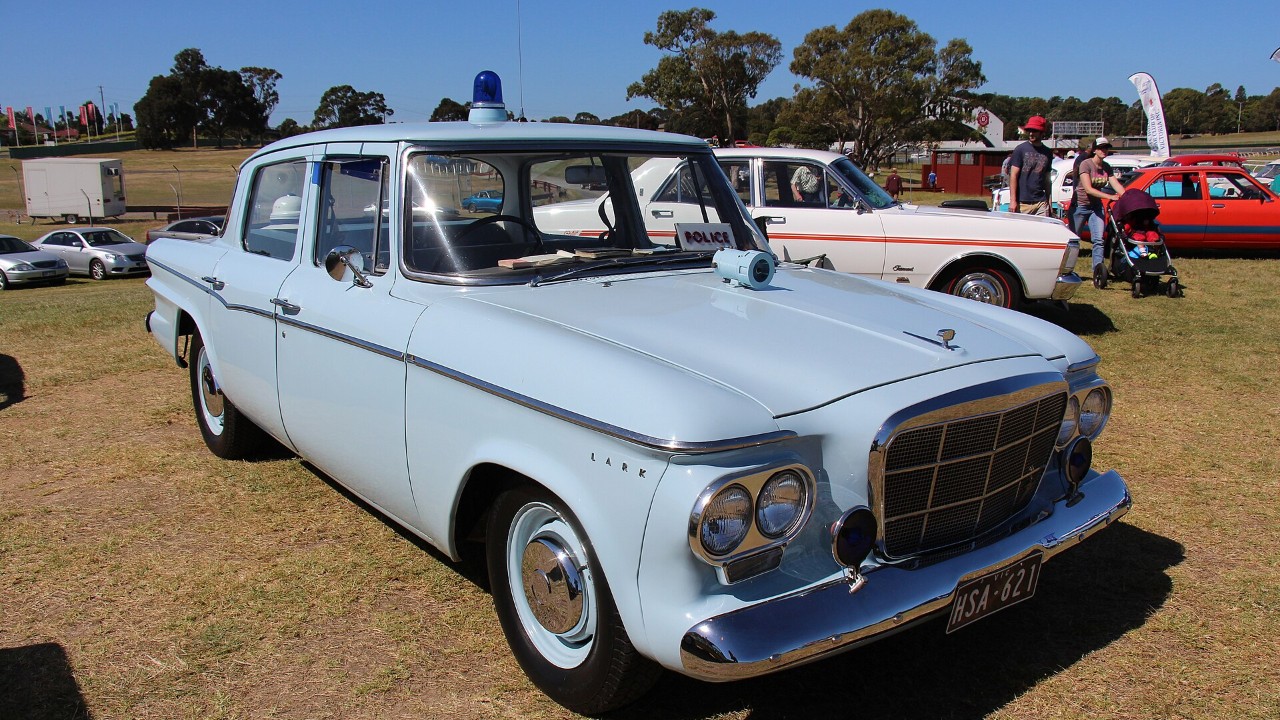
The Lark arrived for 1959 as Studebaker’s compact, and the company gave it real teeth for 1961. That year, the 289 V8 from the Hawk became a Lark option, mainly for cars bought with police pursuit packages. So a compact that started life as an economy car could carry a V8 meant for pursuit work.
Then, for 1962, Studebaker hired designer Brooks Stevens for a low-cost update. He stretched the body, especially at the rear, and modernized the cabin. In addition, every four-door sedan moved to the longer 113-inch wheelbase, which gave officers and their passengers more room. The same longer platform also served the Lark taxi, where rear legroom mattered just as much. Sales jumped to more than 90,000 cars that year, even after a strike stopped the South Bend line for 38 days.
In our view, the Lark is the underdog of this list. It proves a smaller maker could build a credible patrol car with the right engine. If you find one, check that a claimed V8 car really has its 289, because the six-cylinder Lark was far more common.
3. 1964 Porsche 356 C 1600 SC Cabriolet Polizei
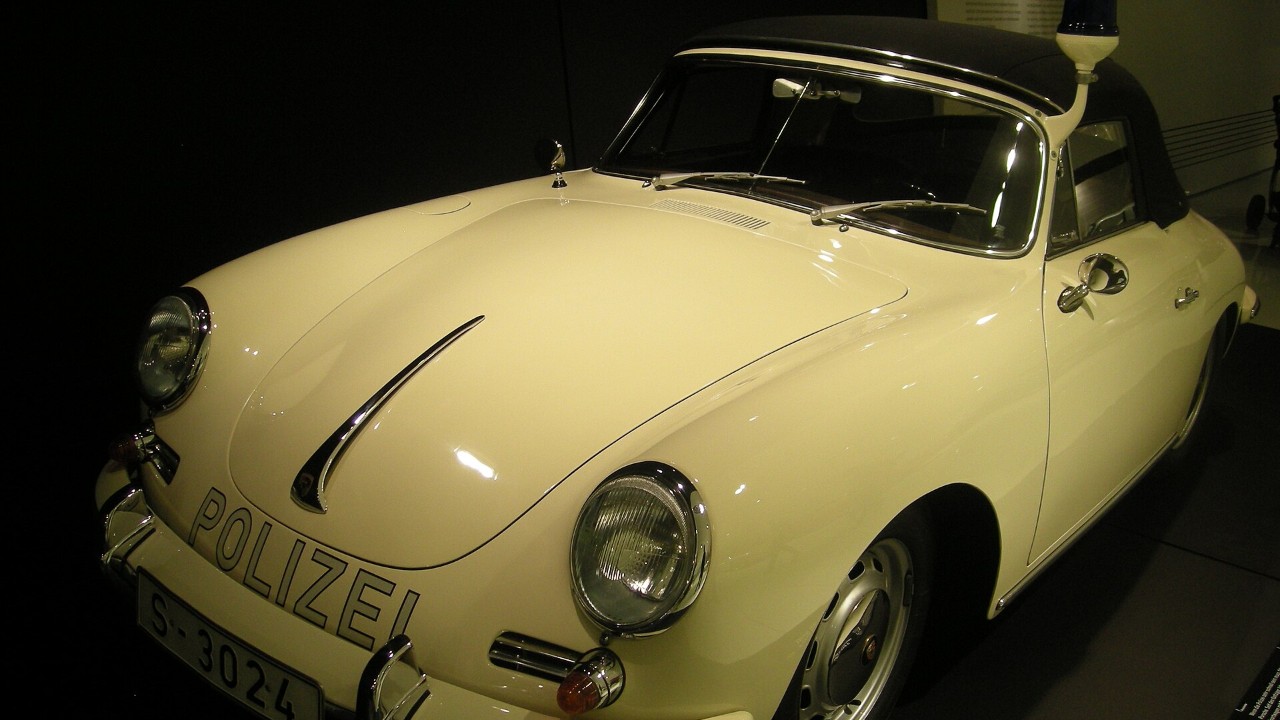
A Porsche in police colors sounds like a fantasy, yet European forces really used them. Porsche’s own account of its police cars says regional forces in Germany ran 356 coupes and cabriolets on the Autobahn. Their low weight and quick handling suited fast pursuit work. In the Netherlands, the national Rijkspolitie made the 356 its first Porsche in 1962. Officers in the open cars could even stand up to signal drivers. The Dutch force kept buying Porsches for decades, adding the 911 and 914 before the program ended in 1996.
The 356 C was the last and most refined version. It had disc brakes on all four wheels, and the 1600 SC engine made 95 horsepower. Porsche also listed a separate 1600 SC engine variant for police use. In fact, the final ten 356 cabriolets went to the Dutch force in 1966, after regular production had ended.
Our take: this is the most charming patrol car ever built, and our photo of the example at Porsche’s Stuttgart museum shows how good it looks. You won’t find one for sale easily. Instead, admire this one in person and save for a civilian 356 C.
4. 1988 Volvo 244 police car
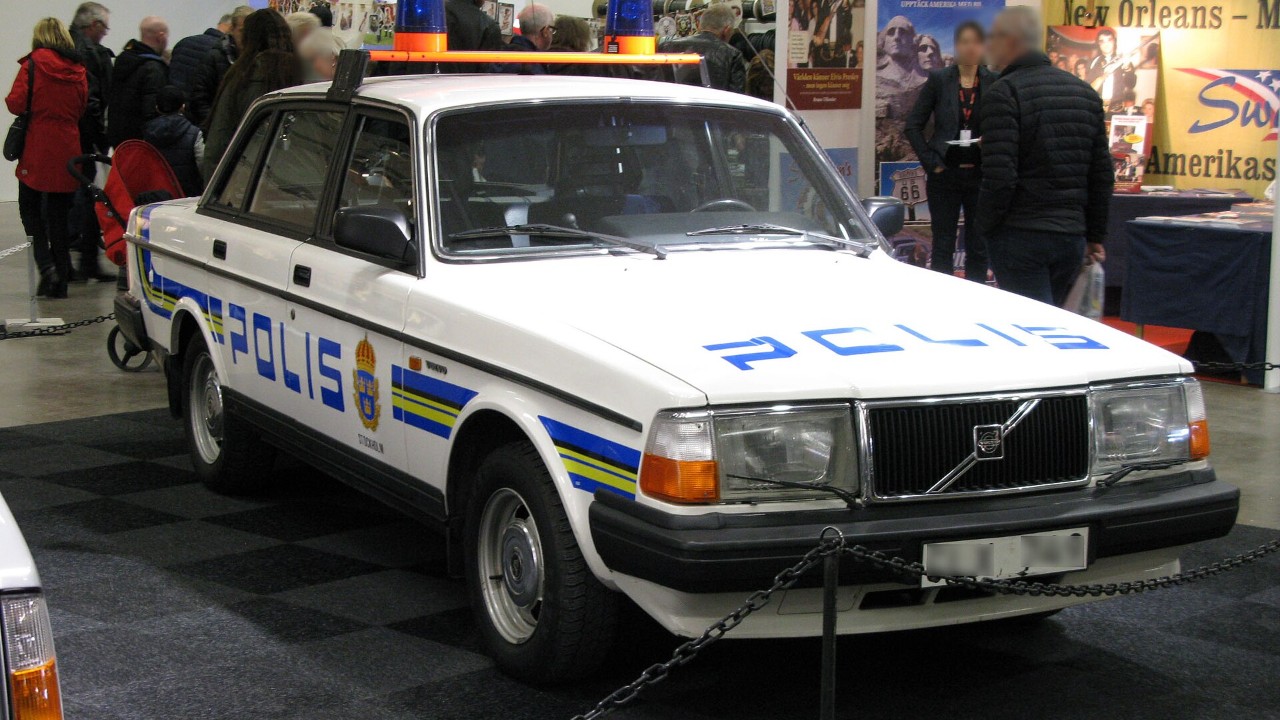
Volvo’s boxy 240 family stayed in production from 1974 to 1993, and police forces liked it for the same reasons families did. The car had large crumple zones front and rear, which grew out of Volvo’s experimental safety vehicle program. Simply put, a patrol officer spends a lot of time on the road, and the 240 was built to protect its occupants. That same design helped the 240 cement Volvo’s reputation for safety and durability.
Volvo also made a dedicated version for the Swedish police from 1981 to 1985, with vinyl trim and steel wheels. Meanwhile, right-hand-drive cars served with some British forces. Our pictured car is a 1988 244. By then, the 2.3-liter B230F four had replaced the older B21A in every non-turbo 240.
In our view, the 244 earns its place through sheer staying power. Volvo built more than 2.8 million 200 Series cars before the last 240 left the line on May 14, 1993. That huge production run is good news for anyone hunting parts. If you want a police-themed 240, start with a rust-free sedan and keep the simple B230F.
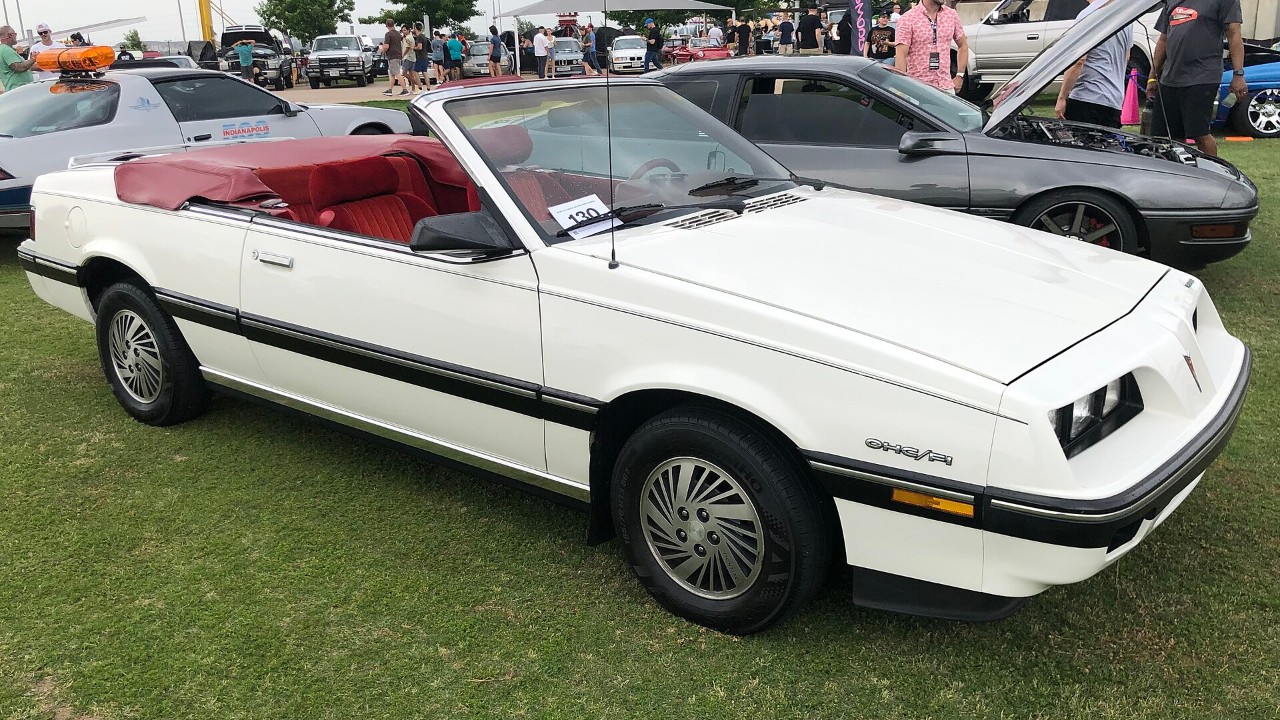
5. 1991 Chevrolet Camaro RS, Michigan State Police
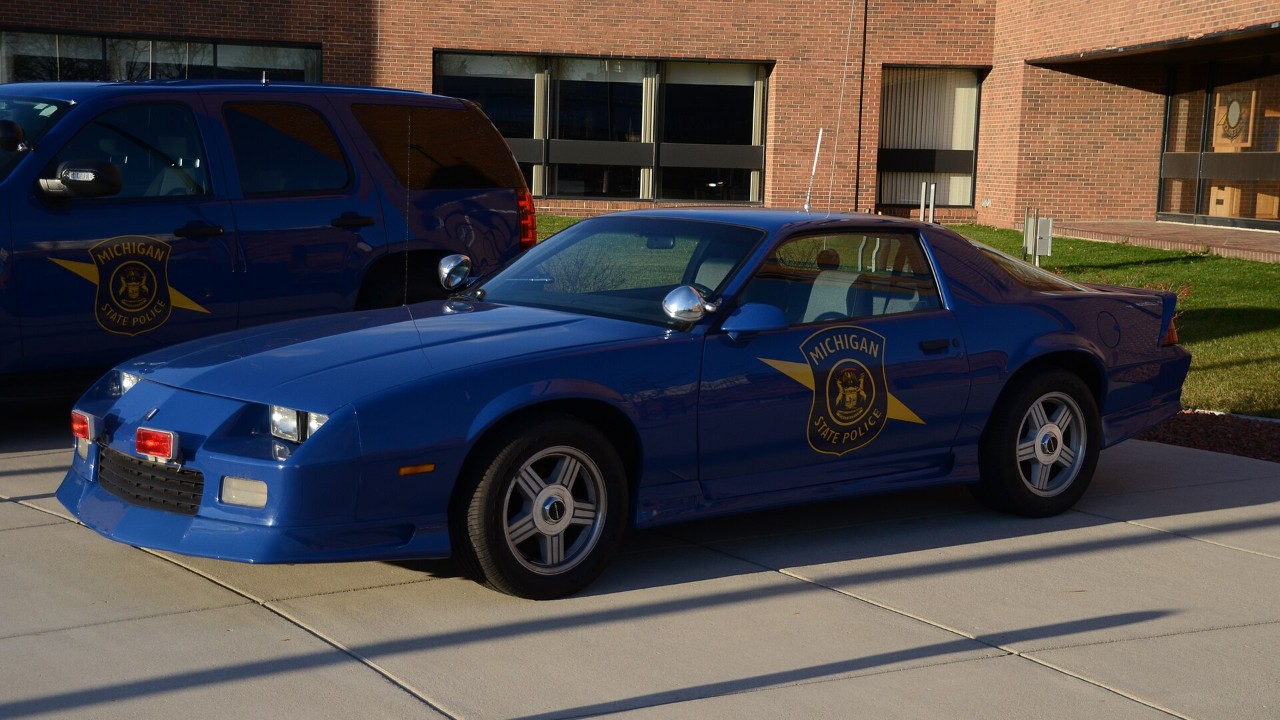
A blue Camaro with a light bar is a strange sight, but Michigan troopers knew it well. The Michigan State Police tests new patrol cars every year. In September 1992, it ran a 1993½ Camaro special-service car through those tests. That later car hit 154 mph, a test record, and reached 100 mph in 15.8 seconds, according to the Justice Department’s summary of the MSP report. The same report says it beat the previous year’s Camaro by 1.5 seconds.
Our photo shows an earlier 1991 car in RS trim. For 1991, Chevy dropped the IROC-Z name, so the RS and Z28 carried the range. Engines ran up to a 245-horsepower 350 V8. GM also offered a special-service Camaro package to agencies that year, and its sales stayed under 600 cars. If the hardware interests you, see the secrets police car engines don’t share with civilians.
Our take: no patrol car of the era looked faster parked. It also proved a pony car could handle real highway patrol duty, which is why it ranks so high for us. Before you pay a police premium, though, ask for records showing the car’s agency history.
6. 1992 Ford Mustang SSP
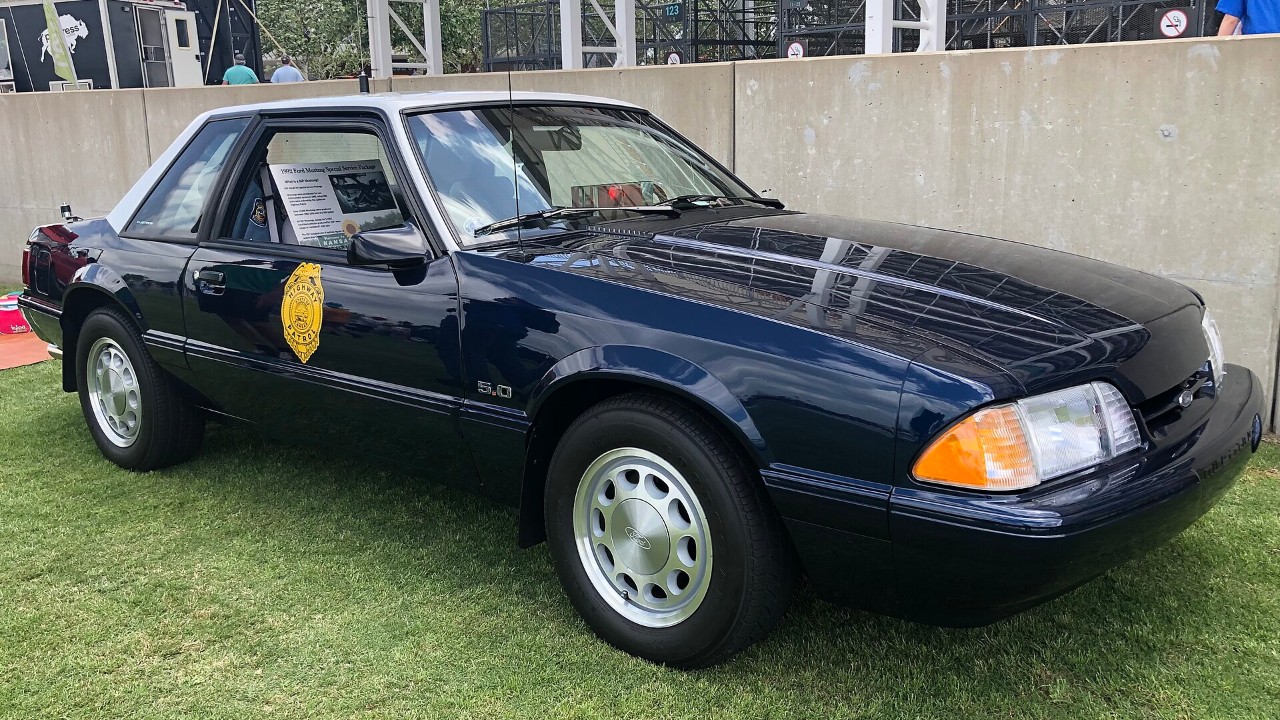
By 1992, the Mustang Special Service Package had been chasing speeders for a decade. Ford sold it only to agencies, and nearly 15,000 went to more than 60 departments before it ended in 1993. The California Highway Patrol started it all. That agency wanted something lighter and quicker than the Fairmont and the big LTD sedans. It also wanted to avoid the camshaft trouble it had seen with Camaros at pursuit speeds.
Other buyers soon followed. The Florida Highway Patrol became the second-largest user, and the Texas Department of Public Safety came third. Even the Air Force bought some as chase cars for its U-2 spy planes. Many SSPs used automatic transmissions, so officers kept a hand free for the radio. The Ford-versus-Chevy fight carried on long after the SSP, as our look at why departments preferred Ford’s 4.6 V8 over Chevy rivals explains.
In our view, a late SSP is the one to own, because it is the final form of a car agencies trusted for a decade. Fox-body 5.0 parts are also easy to source. Insist on the agency paperwork, though, before you pay extra for the SSP name.
7. 2011 Chevrolet Caprice PPV
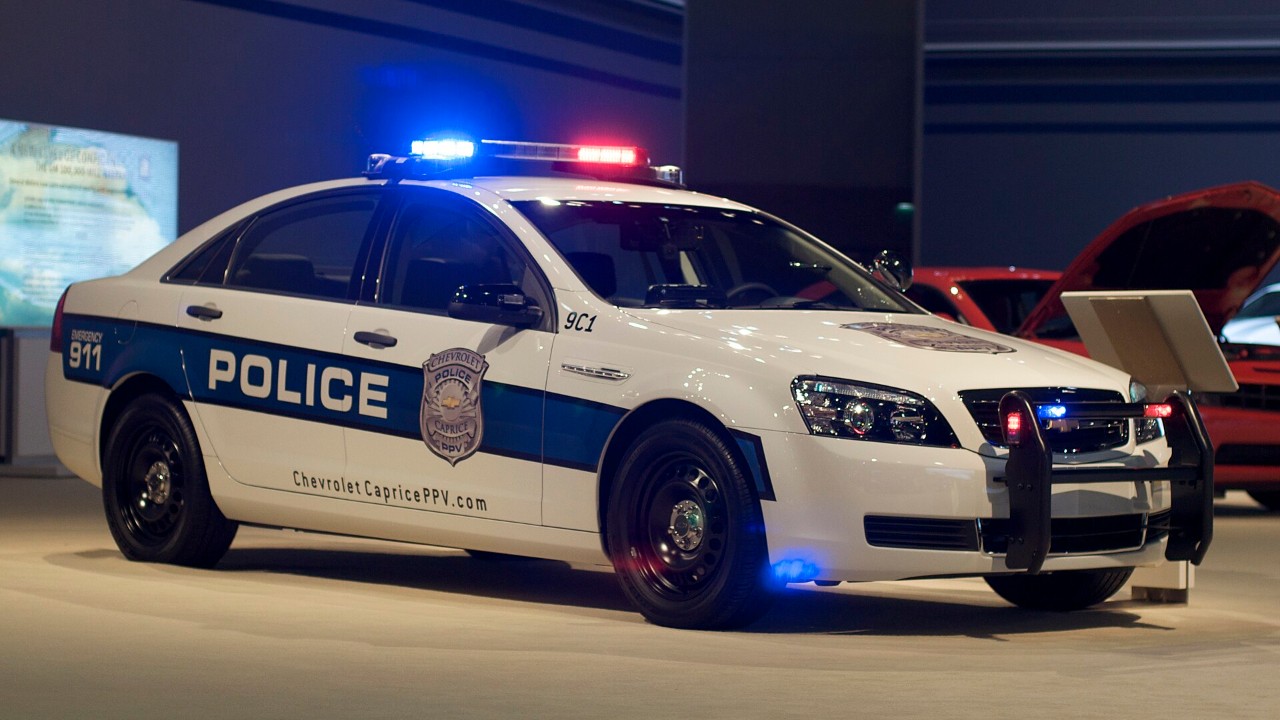
The Caprice name came back to North America for 2011, but only for police. Chevrolet’s version was a captive import, built by Holden in Australia and based on the Holden WM/WN Caprice. That gave American agencies a big rear-drive V8 sedan with a Chevrolet badge.
The figures were strong. According to Business Fleet’s report on the launch, the 6.0-liter V8 made 355 horsepower and about 384 lb-ft of torque. Chevy also claimed a 0-to-60 time under six seconds. In addition, the car rode on a 118.5-inch wheelbase, with 112 cubic feet of cabin space and an 18-cubic-foot trunk. Cylinder deactivation shut down four cylinders while cruising to save fuel. GM also said the Caprice shared its basic architecture with the new Camaro, rather than with any civilian sedan sold in North America.
Our take: the Caprice PPV was the best-driving police sedan of its decade, and almost nobody outside law enforcement ever drove one new. Chevy sold it from 2011 to 2017. If you buy a retired one, budget for worn interior parts, because patrol duty is hard on seats and trim.
8. 2016 Ford Police Interceptor Sedan
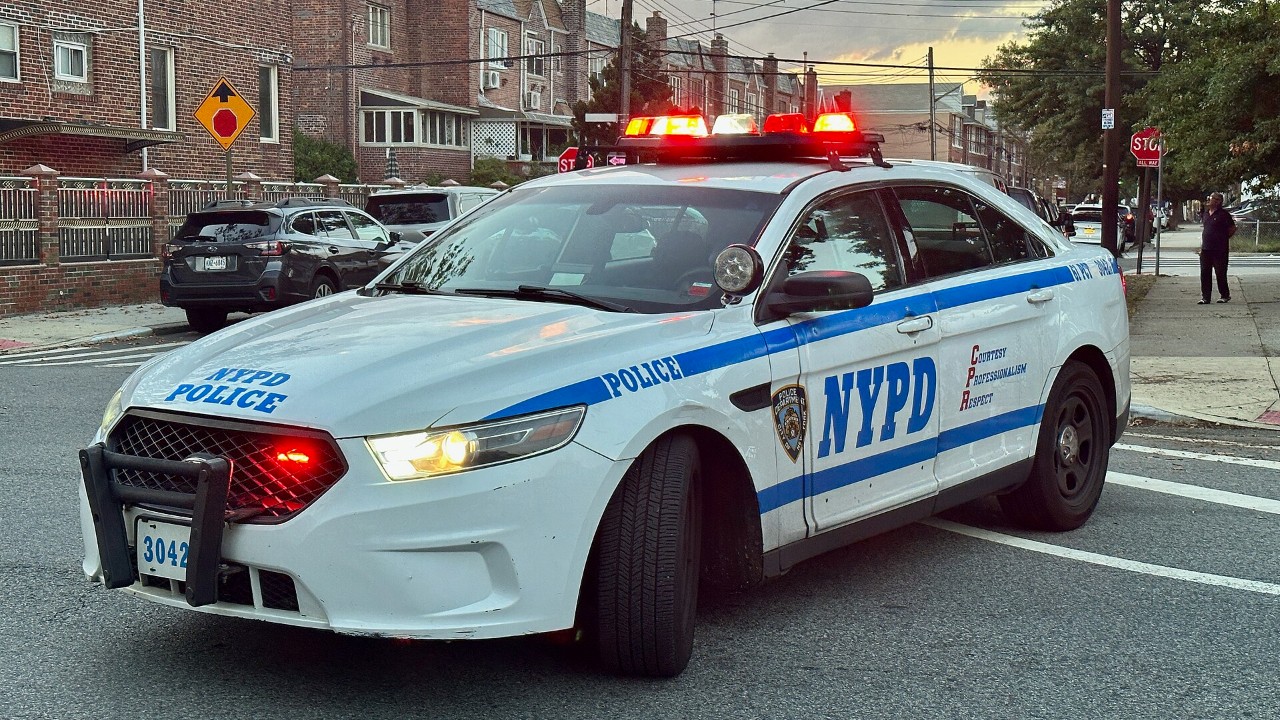
Ford had a hard act to follow when the Crown Victoria Police Interceptor bowed out. Its answer for the 2013 model year was a police sedan based on the sixth-generation Taurus, sold alongside a Police Interceptor Utility. Our photo shows a 2016 model from the middle of that run. For context on the car it followed, read our story on why the Crown Victoria became a favorite far outside police fleets.
The engine list covered every budget. A 3.5-liter V6 came standard, and a 3.7-liter V6 shared with the Mustang soon followed. At the top sat the SHO’s twin-turbo 3.5-liter EcoBoost V6 with 365 horsepower. All-wheel drive came on every version, and only the base 3.5 offered front-wheel drive as an option.
In our view, the EcoBoost car is the most capable sedan Ford ever built for patrol work. Ford ended production in March 2019, when it dropped the Taurus. After that, the Police Interceptor Utility and a hybrid Police Responder sedan took over its duties. Look for an ex-fleet EcoBoost with service records, and expect to replace worn suspension parts.
More from Fast Lane Only