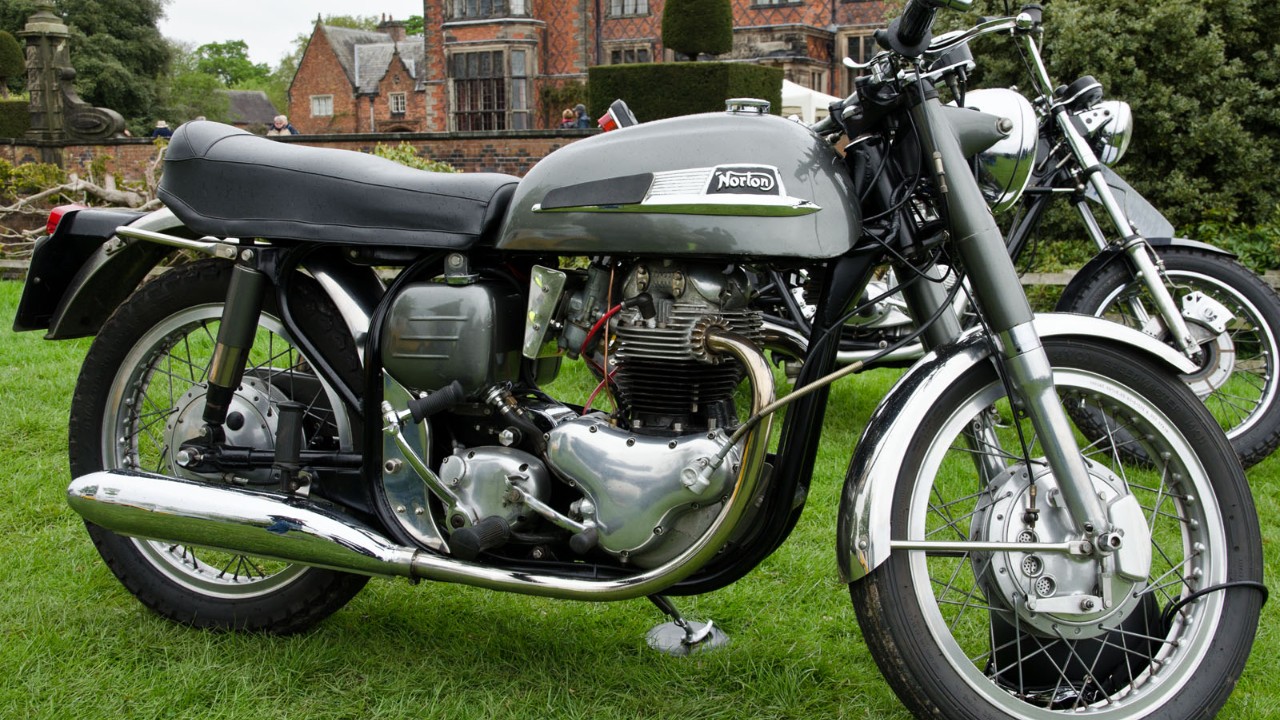
Norton built its Model 18 single for 32 years, and it kept the Norton Dominator twin family going for about two decades. Few British makers kept their ideas alive so long. That staying power explains why a Norton draws a crowd at any bike night today, whether it’s a prewar single or a rotary racer.
The badge covers a lot of ground, though. There were trials bikes and featherweight twins, as well as export specials built for the American desert. Some sold well, while others struggled. Yet fans never let any of them fade away.
These are our picks, ten Nortons we think never stopped pulling people in. That verdict is our opinion. The engines, dates and racing results behind each pick, however, come from period road tests, club histories and marque references.
1. 1937 Norton Model 18
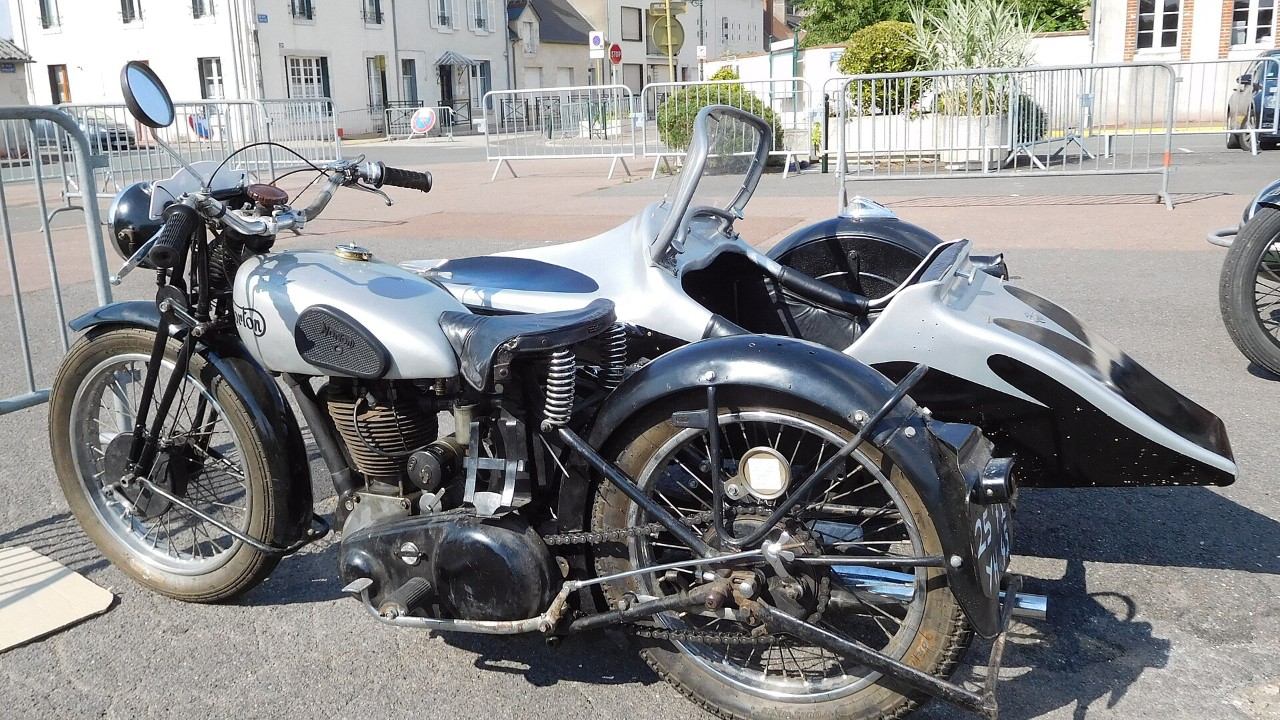
Norton put the Model 18 into production in 1923 and dropped it in 1955. Over that span, the basic recipe barely moved: a 490cc overhead-valve single in a simple frame. According to Hagerty UK’s road test, output stayed at 20 bhp at 5,000 rpm for the whole run, good for about 75 mph.
A 1937 bike sits at an interesting moment. That year brought chassis updates and a bigger, rounder fuel tank. A year later, Norton enclosed the valvegear, so the 1937 machine is one of the last with its rockers on show. It rides on girder forks with a rigid rear end, and it stops with single-leading-shoe drums at both ends. Hagerty UK’s tester also found it happy to sit at 55 mph in top gear, which is a relaxed pace for a prewar single.
Our take: the 1937 Model 18 is the purest way into old Norton ownership. It’s simple enough to fix at home, and Hagerty UK’s guide puts a nice rider at around £8,000. We traced the whole family line in seven Nortons from the Model 18 to the Commando 850.
2. 1949 Norton 500T trials
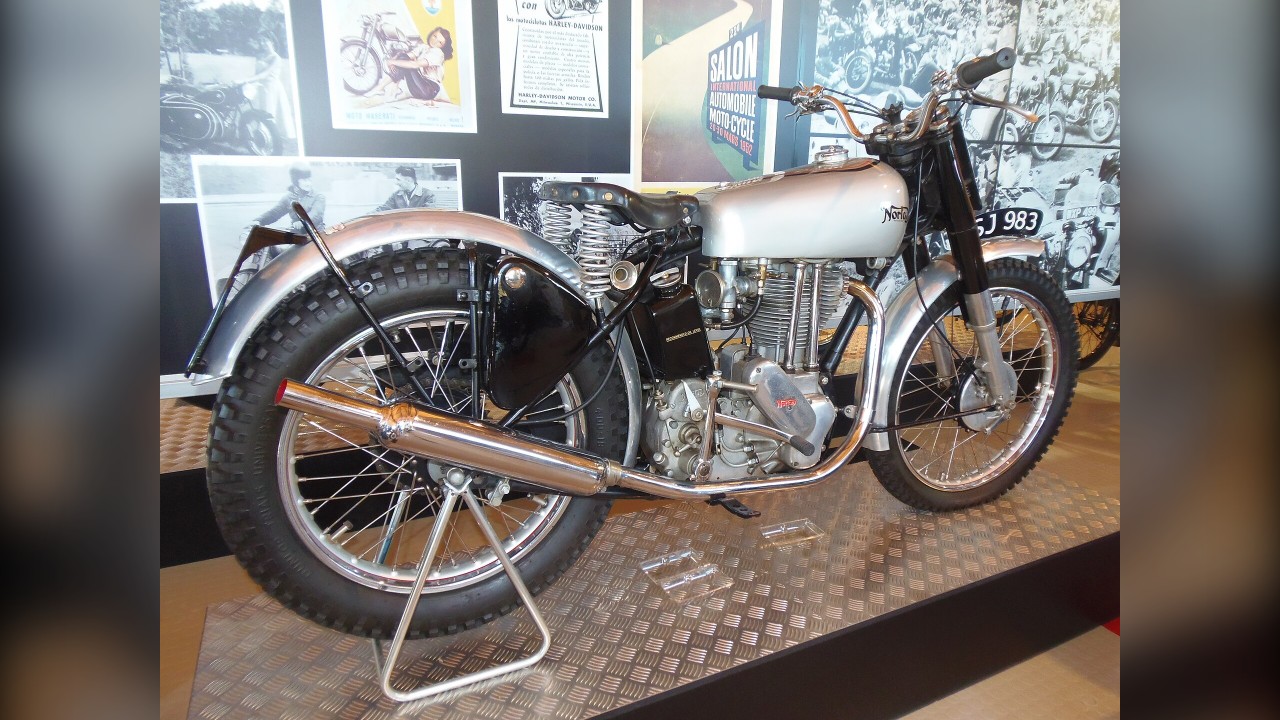
Norton showed the 500T at Earls Court in November 1948, and it was a purpose-built trials machine. Instead of starting fresh, the factory took the open frame from the wartime 16H and cut the wheelbase from 56 to 53 inches. Then it fitted an overhead-valve single derived from the ES2, with an alloy head and barrel.
The result was light for its day. Motorcycle Classics puts it a couple of pounds under 300 with the stand and toolbox removed. The same feature quotes historian Don Morley calling it “The finest rigid trials bike to be produced by any factory.” Very few were built in its final year, 1954. The magazine also lists a four-speed gearbox, a 2.5-gallon tank and seven-inch drums at both ends.
In our view, the 500T is the Norton for people who like mud more than chrome. It looks right covered in dirt, and it wears its competition history openly. If you want one, check that the frame hasn’t been cut or welded during a hard competition life.
3. 1956 Norton Model 99 Dominator
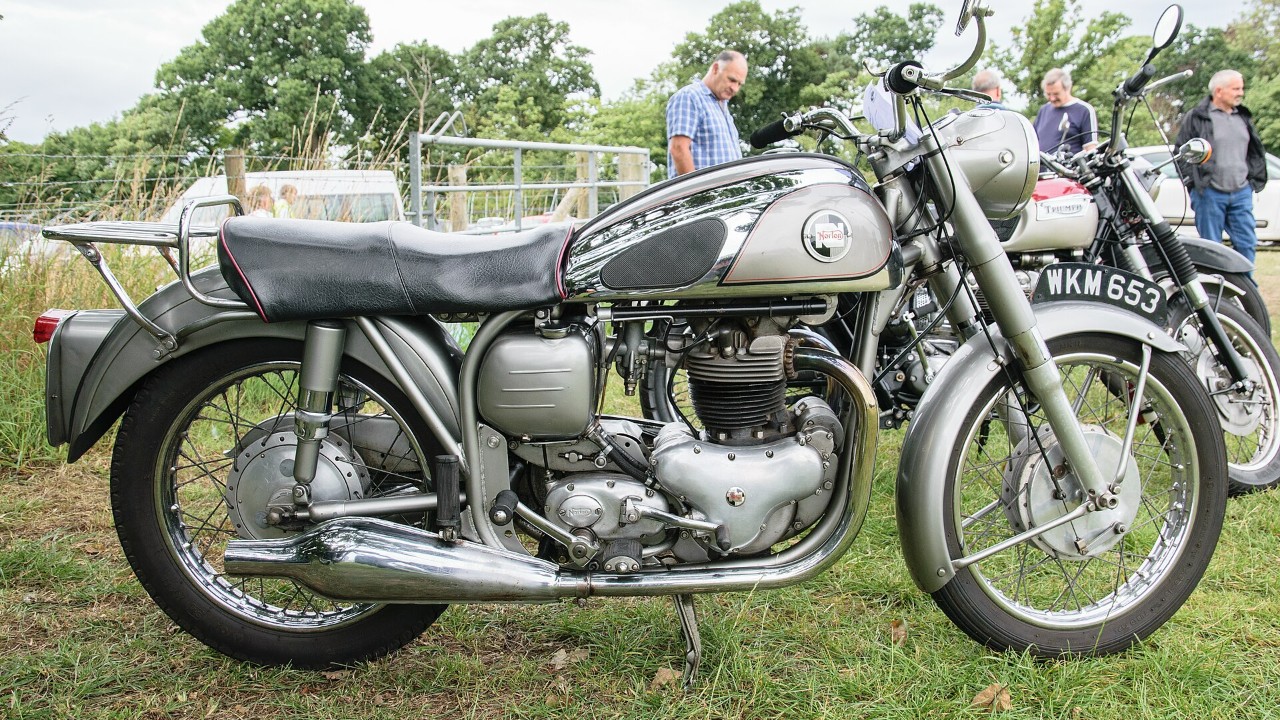
Norton added the 600cc Model 99 in late 1955 for riders who wanted more pull than the 500cc Model 88. Its engine displaced 597cc and made 31 bhp. So a 1956 bike like this one comes from the first full years of the bigger twin, before Norton started dressing it up.
The early 99 kept things simple. According to the Norton Owners Club, standard 99s came in polychromatic grey, with blue or Post Office red as options. Grey is the shade most people picture, and it suits the plain tank and chrome. The bike also rode in the Featherbed frame, so the extra capacity came with the Dominator’s handling intact. Later, for the 1960 model year, Norton added a De Luxe version with enclosed rear bodywork, and the club notes that many owners stripped those panels off.
Our take: an early 99 is the purest form of the bigger Dominator. You get the extra pull of the 597cc twin without any of the later styling experiments. If you shop for one, confirm it really is a 99 and not a 500cc Model 88, because the two share the same Dominator look.
4. 1968 Norton Atlas P11A desert sled
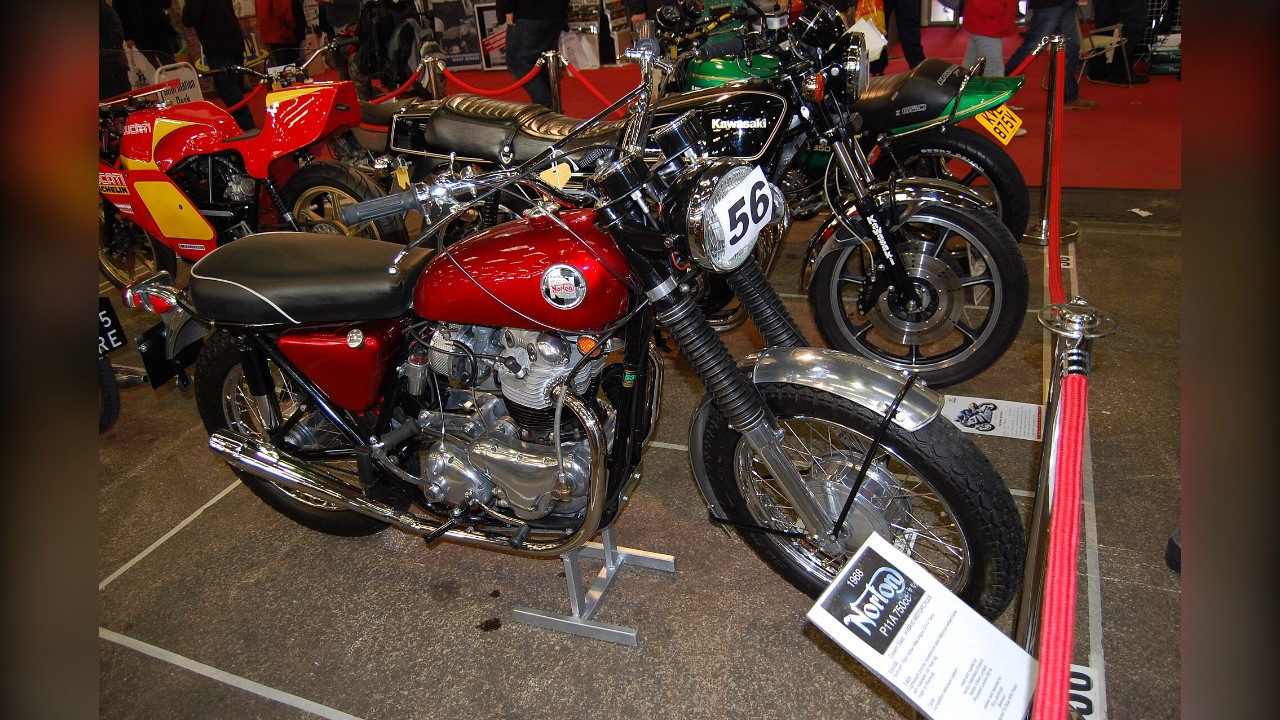
The P11 started with an American importer. Joseph Berliner, Norton’s largest customer for AMC machines, is said to have pushed for a big twin in a light off-road frame. So the factory dropped an Atlas-family 750 twin into a chassis based on the Matchless G85CS scrambler. The first P11 was completed in March 1967.
In 1968, Norton revised it as the P11A and sold it as the Ranger. The first batch went to the United States with the slogan “Dynamite on wheels,” and demand ran ahead of supply. The Atlas engine behind it made 49 bhp, according to the Norton Owners Club. By 1969, however, lighter two-strokes were winning the desert races. The P11 line ended that same year, and the last version wore the Ranger 750 name.
The bike pictured is a 750cc desert sled hybrid built around that P11A idea. In our opinion, it captures the spirit perfectly: a big British twin built to run flat out across open sand. That story alone makes it a magnet for fans of American desert racing.
5. Norton Commando café racer
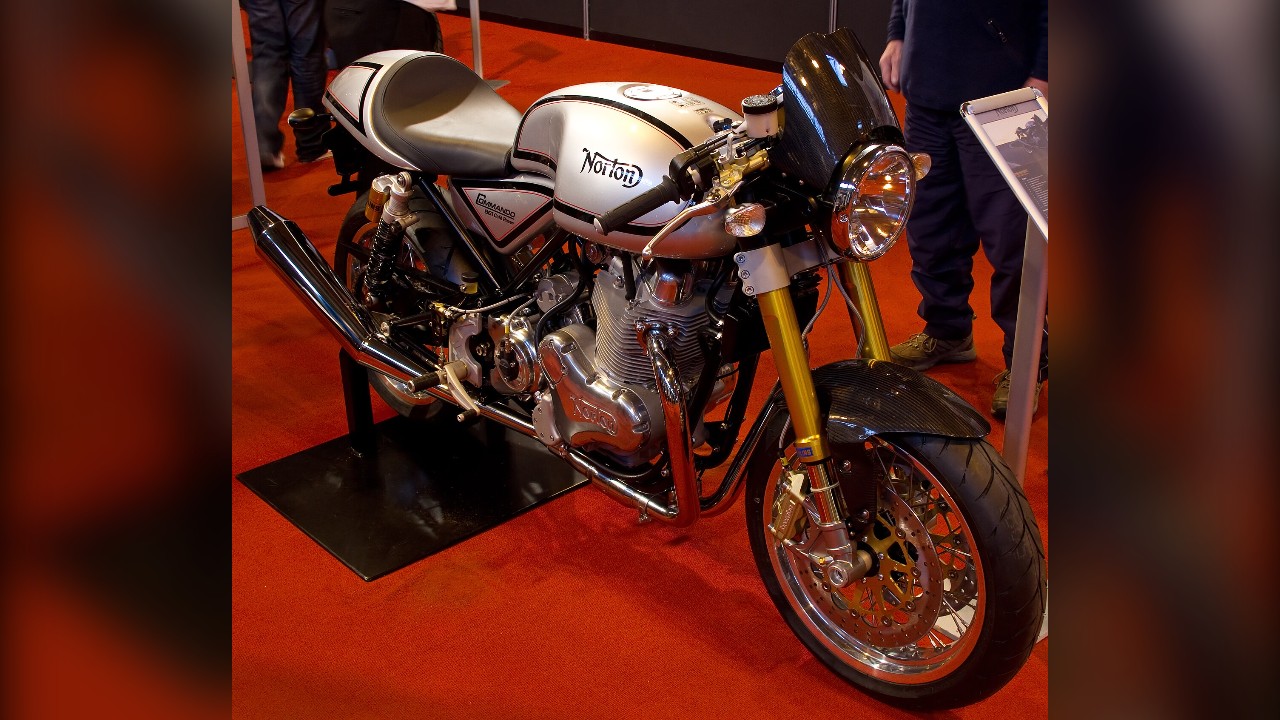
Norton gave the Commando a racing side right from the factory. In 1970, it introduced the Production Racer, a bright yellow bike nicknamed the “Yellow Peril.” Each one was hand-built at the Thruxton circuit, and the program ran until 1972. That bike gave the Commando real credibility with riders who cared about lap times as much as looks.
Owners took the hint. With its 745cc twin and stiff frame, a Commando makes a natural base for a café racer, and the bike pictured is one of those builds. Builders like it because the engine sits in rubber mounts that keep most of the vibration away from the rider.
Our take: the café-built Commando may be the most photographed Norton at any meet. It’s a custom, so every one is different, and that variety keeps people circling. If you’re buying, ask for the original frame number, and make sure the Isolastic mounts were shimmed correctly during the build.
6. 1970 Norton Commando 750
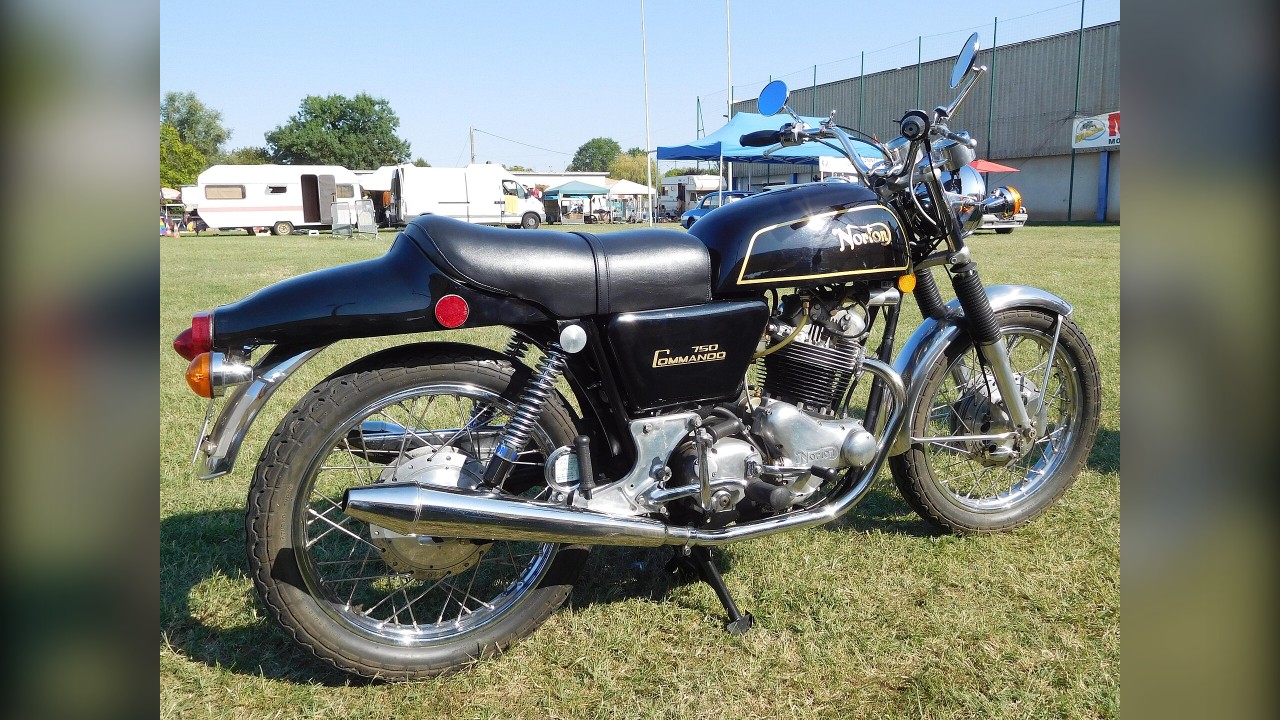
The Commando’s real trick was its frame. Norton engineer Bauer designed a chassis with a single 2.25-inch top tube for stiffness, and the engine sat in rubber mounts to soak up vibration. Then his colleagues Hooper and Trigg mounted the swingarm on the engine and gearbox plates, so the whole drivetrain moved together and the chain stayed put.
Norton called the system Isolastic, and it changed how a big British twin felt at speed. As a result, the Commando won Motor Cycle News’ Machine of the Year five years running, from 1968 to 1972. Production bikes had first reached buyers in March 1968, so the award streak began right away. In March 1970, Norton also launched the Roadster, an updated version of the S model. That Roadster later became the only 850 model, sold until 1977. Meanwhile, the 750 engine itself was really a 745cc twin, and it grew to 828cc for 1973.
In our opinion, a 1970 750 is the sweet spot of the Commando range. It has the early 745cc engine and the clean early styling, without the later electric-start weight. Before you buy, check that the Isolastic shims are within spec, because worn mounts let vibration back in.
7. Norton Rotary RC588
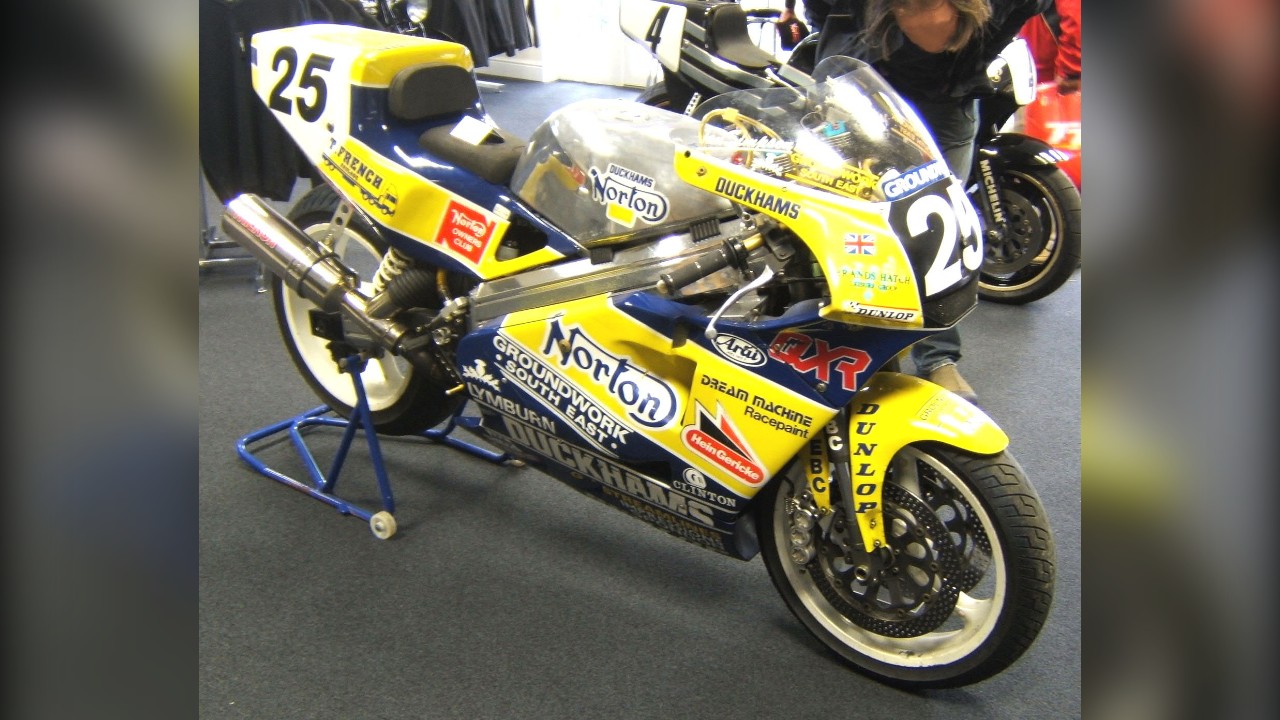
Norton’s most unusual race bike used no pistons at all. The RC588 ran a 588cc twin-rotor Wankel engine, first air-cooled and then water-cooled from 1989. Brian Crighton, who joined Norton in 1984, turned the road-bike rotary into a racer. Output climbed from the road engine’s 79 bhp to about 130 bhp.
The results followed. Steve Spray won the British Formula One title in 1989. Then, in 1992, Steve Hislop won the Senior TT, Norton’s first win in that class since 1961. Ian Simpson added the 1994 British Superbike crown on a bike in Duckhams oil colors, like the one pictured. Duckhams had first backed the team back in 1988. Crighton himself left the company in September 1990, but the bikes kept winning without him.
In our view, no Norton gets a stranger reaction at a show. People hear it, look for the cylinders and find none. We covered the road-going side of that story in seven rotary-engine motorcycles that reached the public.
8. 1957 Norton Dominator
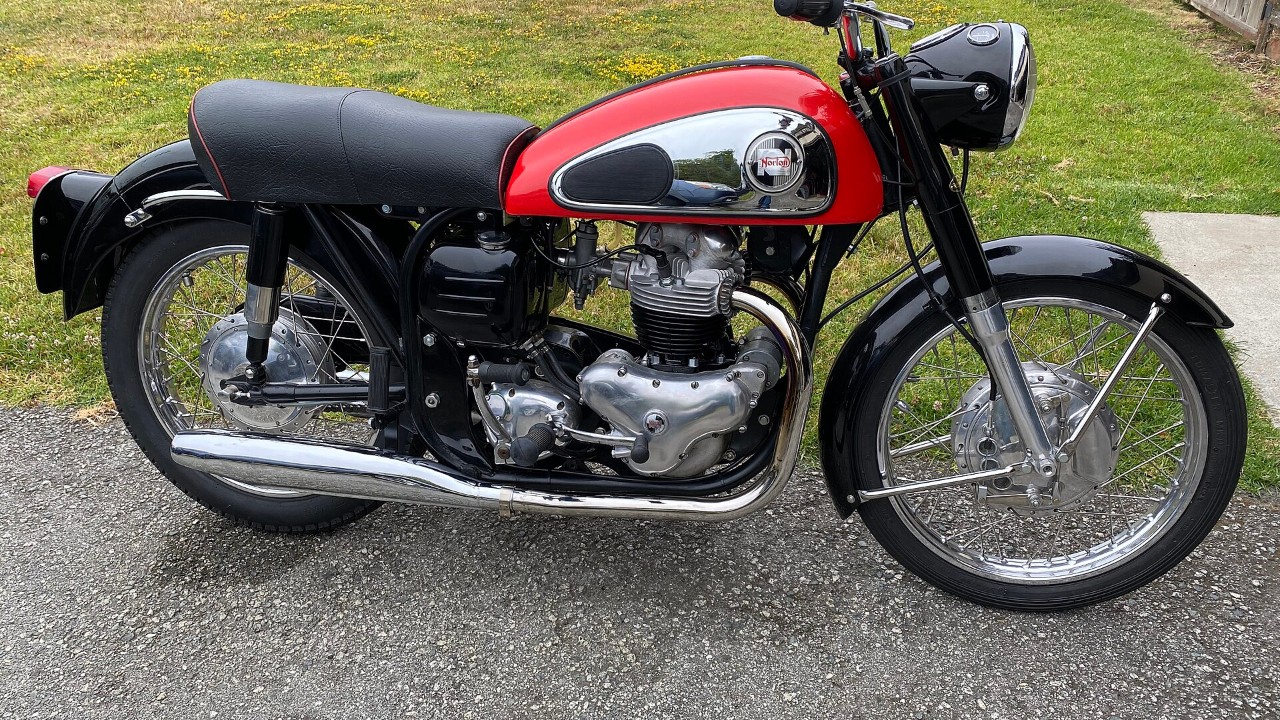
By 1957, the Dominator twin lived in the Featherbed frame, which the McCandless brothers designed in Ireland and Norton bought. The Model 88 was the first Norton road bike to get it, after a launch at the 1951 Earls Court show. In our view, that frame is the reason the Dominator name still carries so much weight.
Norton kept refining the package. For 1957, the Norton Owners Club says the Model 88 switched from the Norton-Burman gearbox to an AMC unit and gained a new camshaft. Tubular silencers replaced the older pear-drop style that same year. At this point, the bike still used the original Wideline version of the Featherbed. A year later, coil ignition and an alternator took over from the magneto and dynamo. Then, in 1960, the slimmer Slimline frame replaced the original Wideline Featherbed.
Our take: a late-1950s Norton Dominator is the classic Norton shape most people carry in their heads. It’s the bike that made the Featherbed famous on the road. If you shop for one, confirm which gearbox it carries, because the 1957 change affects parts and repairs.
9. 1961 Norton Jubilee
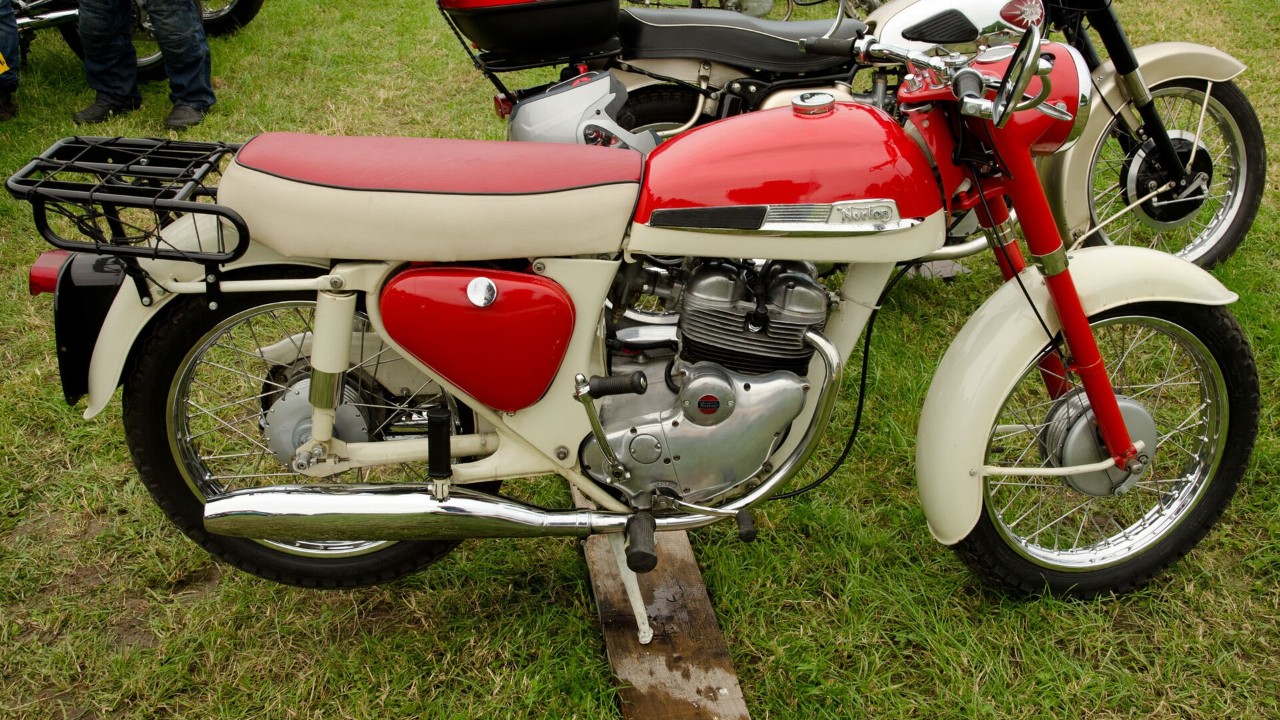
Norton named the Jubilee after its Diamond Jubilee, 60 years of building motorcycles. Launched for 1958, the 249cc twin was the smallest engine Norton ever made. It was also the first Norton with the engine and gearbox in one unit. Bert Hopwood designed the motor, while Francis-Barnett supplied the forks, brakes and wheels. Hopwood, notably, is the same engineer behind the first Dominator twin at the end of this list.
Its numbers were modest: 16 bhp at 7,750 rpm and a top speed of about 75 mph. Early engines picked up a reputation for oil leaks and poor reliability. However, a nodular iron crankshaft and a better layshaft bush improved matters, and sales slowly grew. Norton added a Standard model alongside the De Luxe in 1961, and production ended in 1966. Even so, the gearbox came from the wider AMC range, so some parts are easier to find than the badge suggests.
In our view, the Jubilee wins fans because it’s so unexpected. People walk past expecting a big twin and find a tidy little 250. We looked at it among other surprises in Nortons you forgot existed. If you buy one, budget for engine work unless the crank has been upgraded.
10. 1954 Norton Dominator Model 7
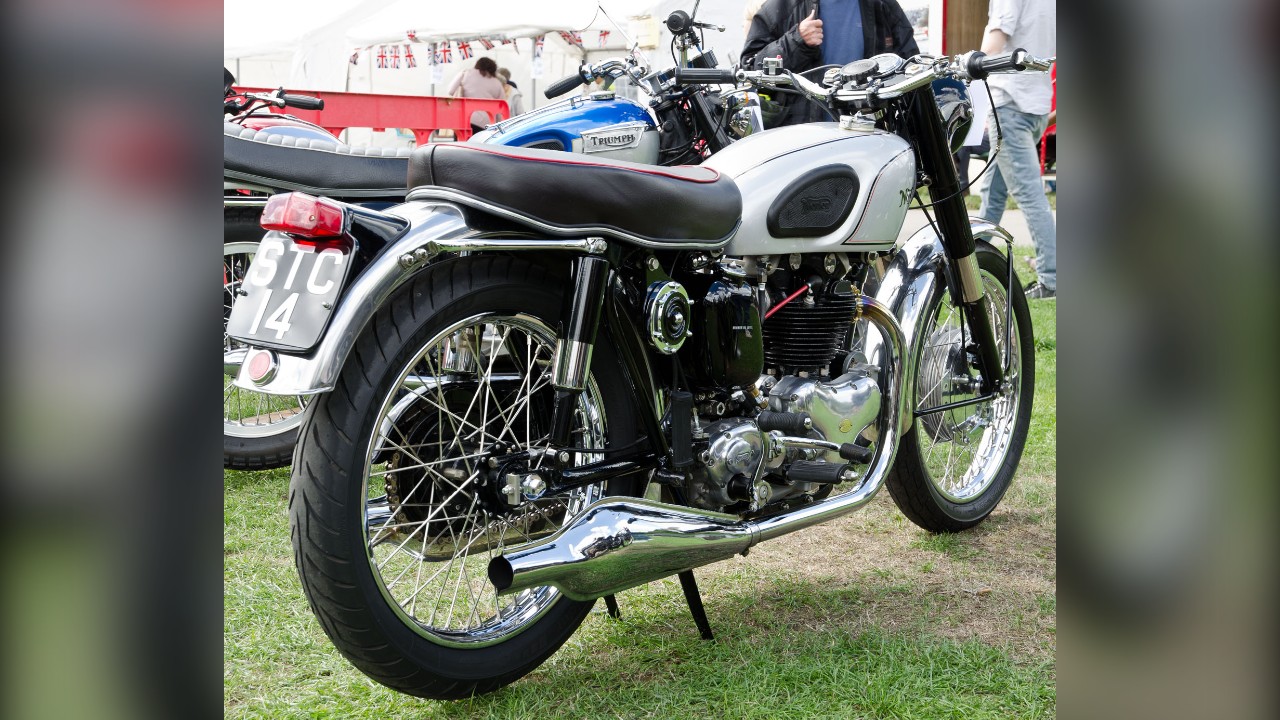
Every Dominator traces back to the Model 7. Bert Hopwood, who had worked on Triumph’s Speed Twin, drew the 497cc twin in 1947 and 1948. The bike went on sale in mid-1949 and stayed in production through 1955. Early Model 7s used a plunger rear end, and then, in 1953, Norton gave it a single-downtube swingarm frame.
It wasn’t a lightweight. Rider Magazine puts the early Dominator 7 at 440 pounds, 75 more than the rival Triumph. Even so, the engine delivered more torque low down, and that made it an easy companion on the road. That same twin later moved into the Featherbed frame as the Model 88, which first went on sale in Britain in 1953. In other words, the Model 7 is where the whole Norton Dominator family began.
Our take: a 1954 Model 7 is the Dominator for riders who want the origin story. It has the later swingarm frame, yet it keeps the original twin’s old-school look. Because the Featherbed bikes get the attention, a good Model 7 can be the smarter way into Dominator ownership.
More from Fast Lane Only