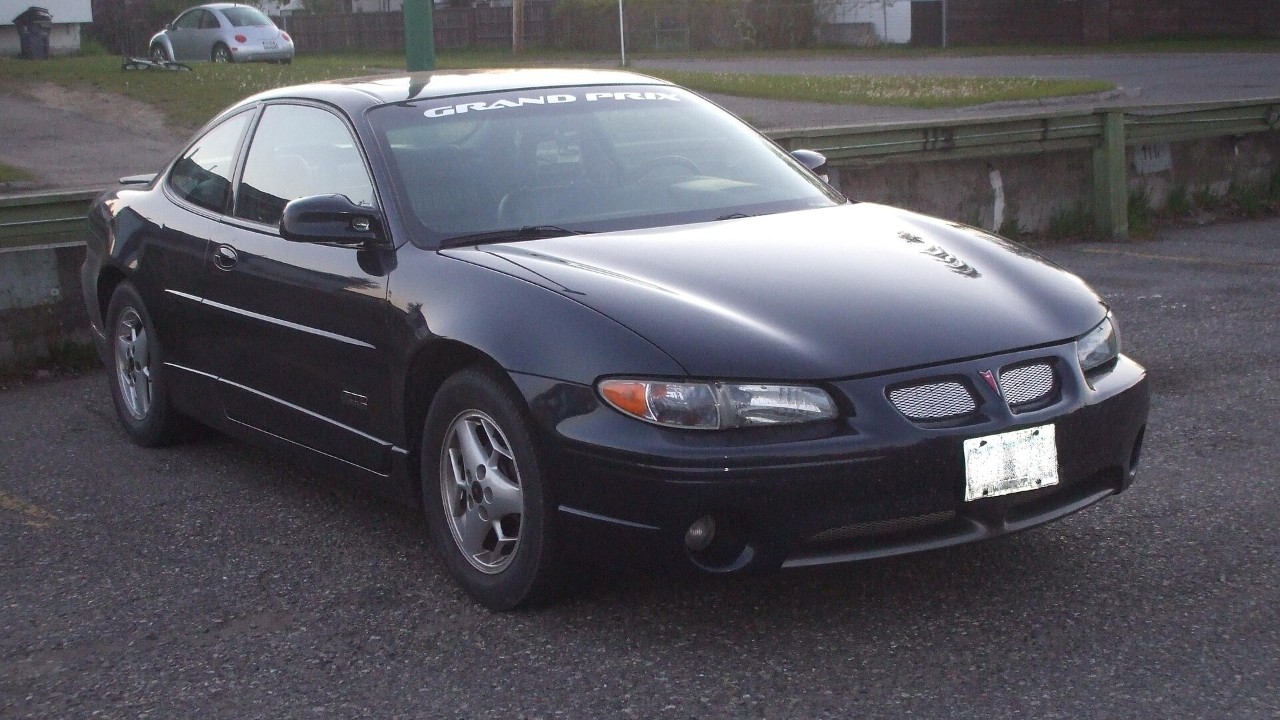
Pontiac sold more than 112,000 Grand Prix coupes in 1969 alone, and the name stayed on sale until 2008. Over those decades, it changed from a big-block personal coupe into a supercharged Grand Prix GTP. Finally, it became a V8 sport sedan. Through every change, Pontiac kept building it on proven GM hardware.
That’s the thread we followed here. Some of these cars used engines that GM kept in production for decades. Others got simple, heavy-duty parts that owners can still find and fix. Not every Grand Prix was a winner, though, and a few carry known faults you should check before you buy.
These are our picks, nine Grand Prix models we think were built to last longer than anyone expected. That verdict is our opinion. The engines, ratings, sales counts and recall details behind each pick, however, come from period reports, GM history and marque references.
1. 1966 Pontiac Grand Prix hardtop coupe
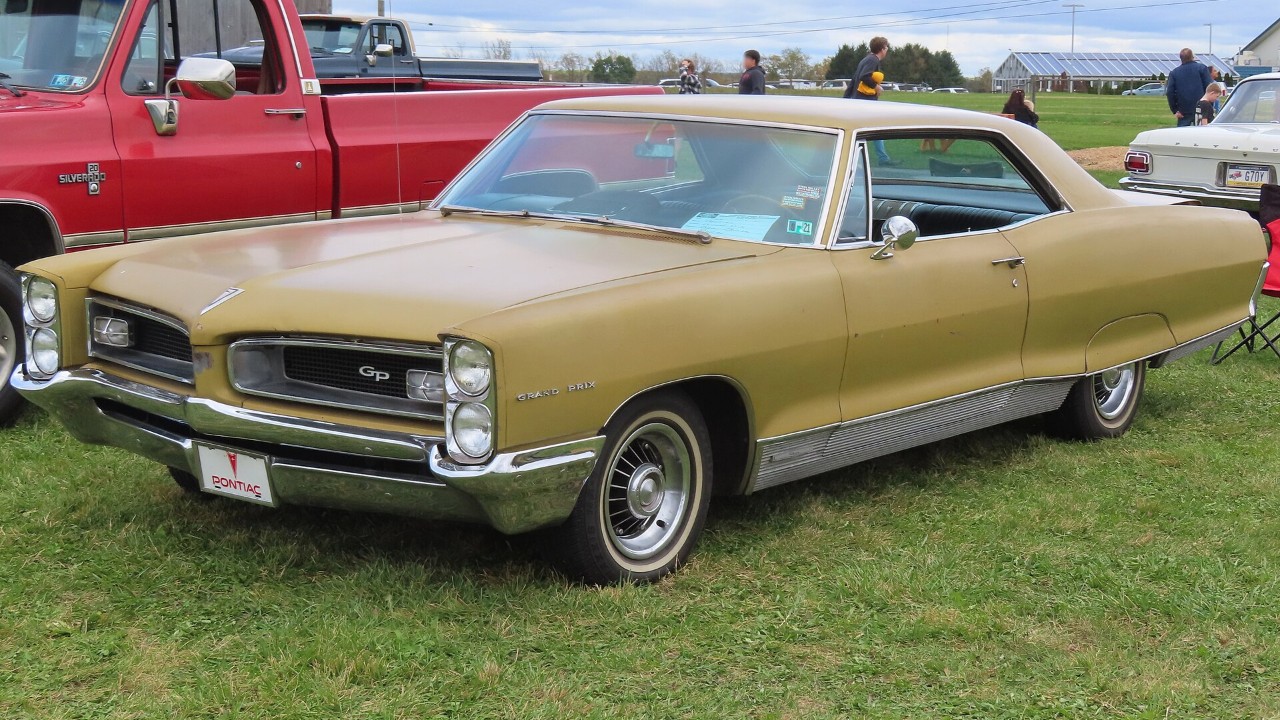
The 1965 restyle gave the Grand Prix coke-bottle sides on a 121-inch wheelbase. It also kept the formal roof with its concave rear window. For 1966, Pontiac made smaller changes: a rounder split grille, new taillight trim and a squared-off gauge panel. It also fitted new Strato bucket seats with taller backs, although a bench seat with an armrest was a no-cost option.
The standard engine was a 389 four-barrel V8, rated at 333 hp with a manual or 325 hp with an automatic. Buyers could also order 421s. However, 1966 was the last year for the 421 with three two-barrel carburetors, because a GM policy banned multi-carb setups from 1967. Pontiac sold 36,757 Grand Prix coupes that year. The nameplate had a rocky start, as we explained in why the 1963 Grand Prix got pulled from the lineup overnight.
Our take: a 1966 car is a big, lightly stressed cruiser, and that’s why we think so many survived. The 389 never had to work hard to move it. If you shop for one, check the floors and trunk pan, and ask whether the engine still matches the car’s original order.
2. 1969 Pontiac Grand Prix Model SJ

The 1969 Grand Prix came together fast. According to Hagerty, Pontiac built the new coupe in about 18 months after a marketing researcher pitched it in the spring of 1967. John DeLorean ran Pontiac at the time. The car moved to a 118-inch A-body chassis and weighed about 800 pounds less than the full-size car before it. It also claimed the longest hood in the industry.
The SJ was the hot version. It came with a 370-hp, 428-cubic-inch V8, and a 390-hp 428 H.O. was optional. Hagerty lists 0-60 mph in 6.9 seconds for the SJ. Inside, a wraparound cockpit-style dash pointed the controls at the driver. Sales topped 112,000 in the first year, and only 676 buyers chose a manual gearbox.
In our view, the 1969 SJ is the Grand Prix that set the template for every personal-luxury coupe that followed. It also proved that a smaller, lighter Grand Prix could sell in big numbers. Before buying, confirm the 428 with documentation, because SJ badges are easy to add.
3. 1979 Pontiac Grand Prix Model LJ
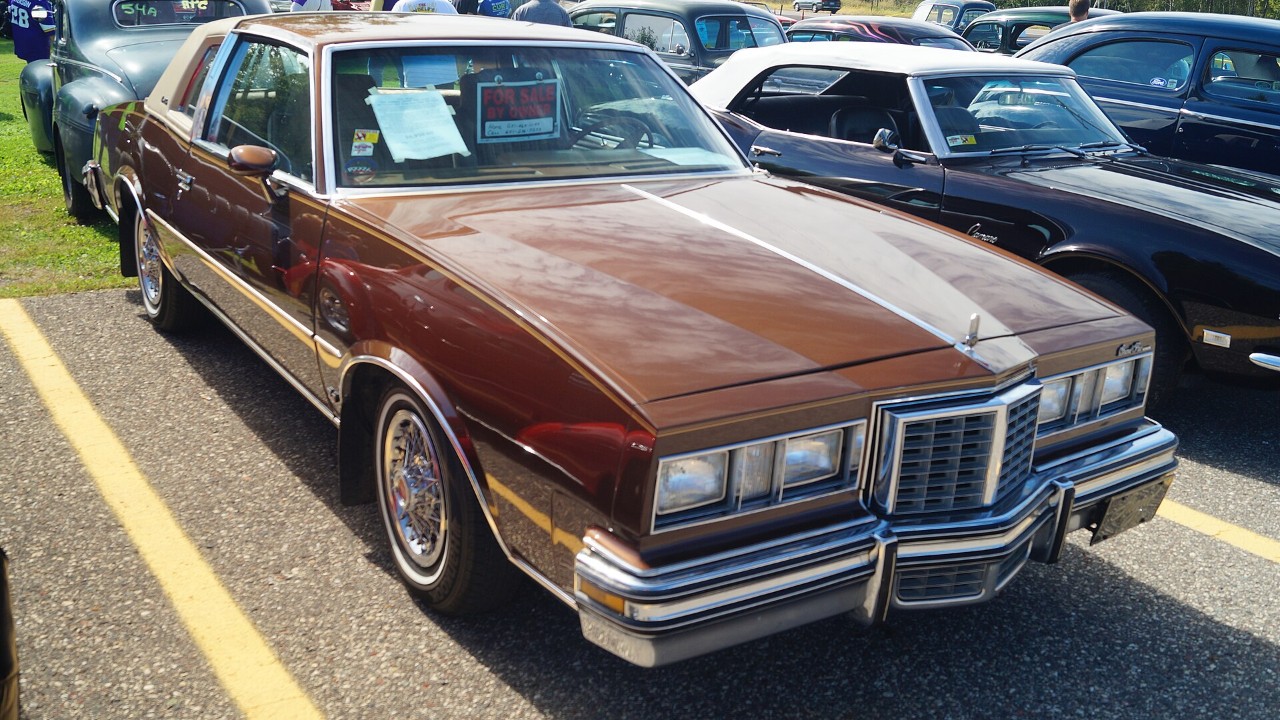
For 1978, Pontiac downsized the Grand Prix hard. The new car was about a foot shorter and around 600 pounds lighter than the 1977 model, and it rode on a 108-inch wheelbase. By 1979, the lineup ran base, LJ and SJ, with the LJ as the luxury model.
The LJ’s standard engine was a 231-cubic-inch Buick V6. Buyers who wanted more could order the 301 V8, rated at 135 hp with a two-barrel carburetor. The 1979 lineup also offered a four-speed manual for one year only, and Pontiac built just 232 of those cars.
Our take: the 1979 LJ is a better buy than its reputation suggests. That Buick V6 belongs to the family Hagerty traces from 1975 to the 3800’s end in 2008. Meanwhile, the lighter body asks less of every part. In our opinion, a well-kept LJ is one of the easiest Grand Prix models to own today.
The plush LJ trim also gives you a quieter, softer ride than the SJ. If you’re shopping, a full service history matters more than the badge. Have the car checked for rust underneath, as you would with any late-1970s GM body.
4. 1997 Pontiac Grand Prix GT coupe
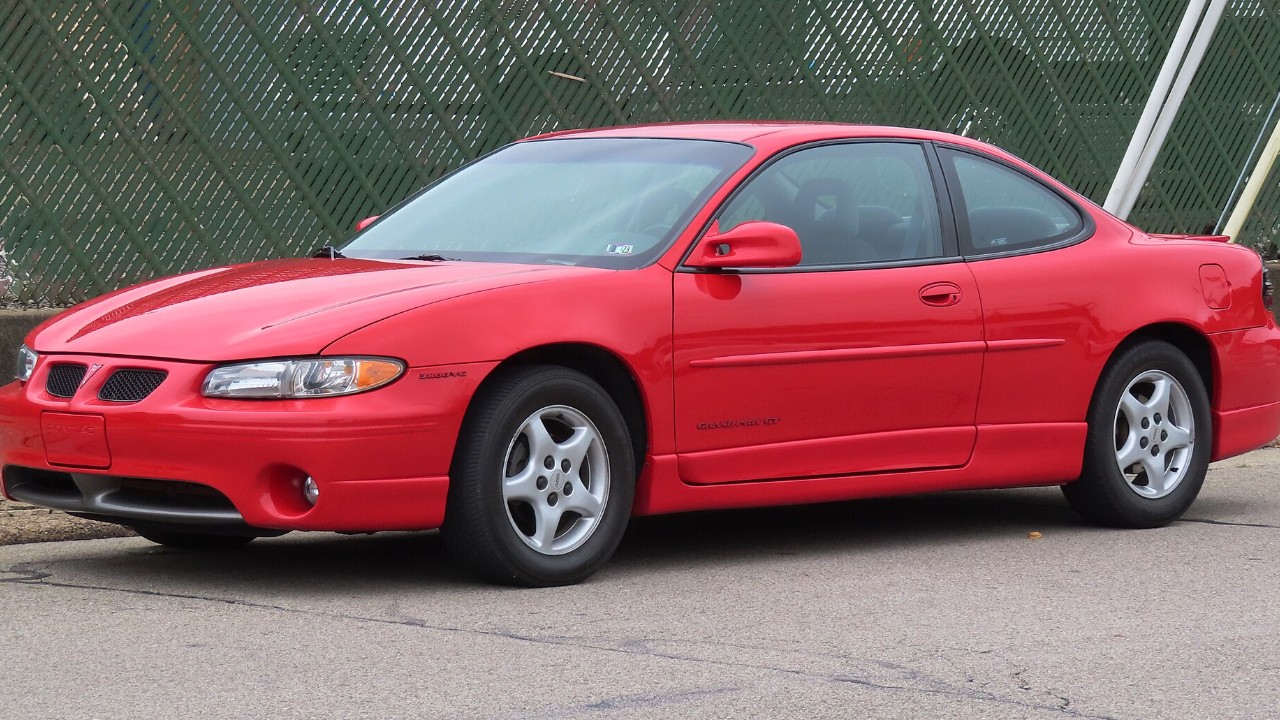
For 1997, the Grand Prix moved to a new version of GM’s W-body, and Pontiac sold it on its “wide track” stance. The lineup included an SE sedan and a GT in coupe or sedan form. Pontiac kept the coupe through the 2002 model year, then dropped it.
The GT’s key part was the 3.8-liter 3800 Series II V6. According to Hagerty, the Series II arrived in 1995 with cross-bolted main bearing caps, bigger valves and new heads. The 3800 family itself ran from 1975 to 2008 and went into more than 25 million vehicles.
That’s the reason the 1997 GT coupe makes our list. In our view, a pushrod V6 with cross-bolted mains is about as sturdy as a front-drive coupe engine got in the 1990s. The two-door body is also getting harder to find, so clean ones stand out.
If you want one, ask whether the original plastic intake manifold has been replaced. GM switched to an aluminum part on the later Series III. Also check the rear strut towers, because GM added liners there for 2001 to prevent rust.
5. 1999 Pontiac Grand Prix GT sedan
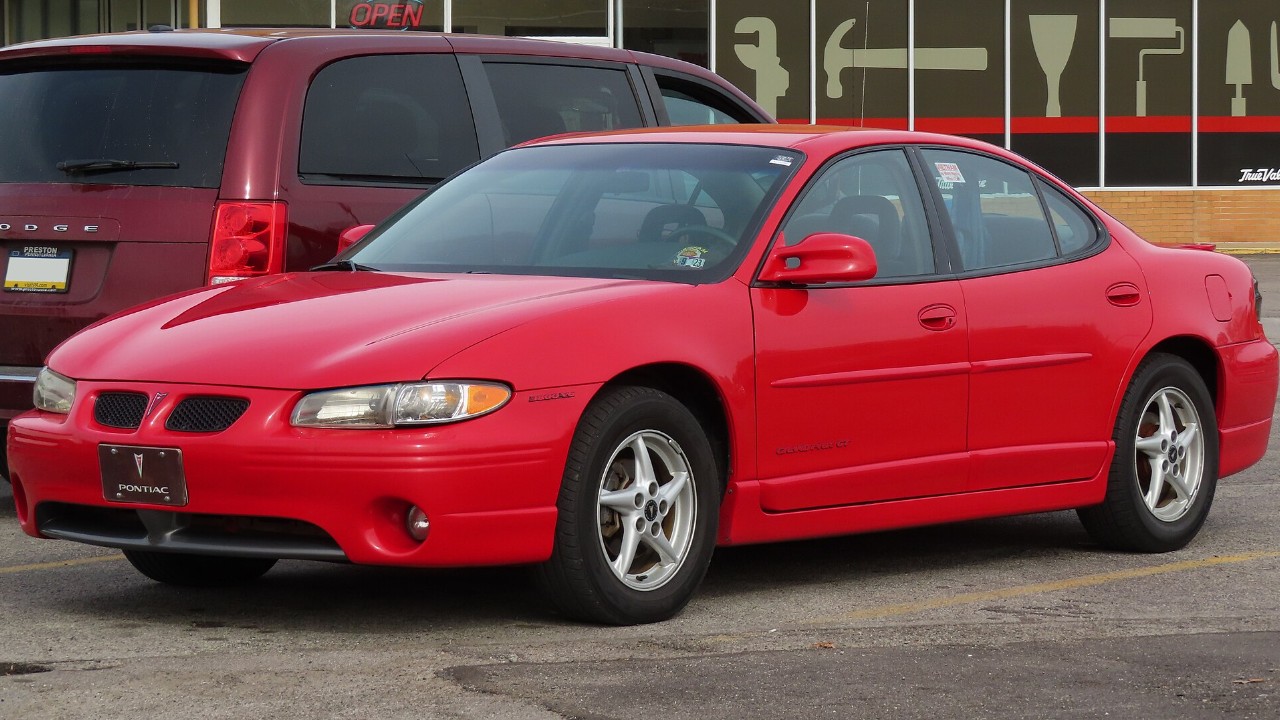
The four-door GT carried the same running gear as the coupe, so it got the same tough V6. For 1999, Pontiac also gave the GT a standard rear spoiler and 16-inch five-spoke alloys, and it added an optional Bose eight-speaker stereo. In addition, the non-supercharged 3800 gained 5 hp that year, rising to 200 hp.
The gearbox had improved too. In 1998, GM replaced the older 4T60E automatic with the 4T65E on non-supercharged 3.8-liter cars. In practice, that means a 1999 GT pairs the uprated engine with the newer transmission.
Our take: the 1999 GT sedan is the sensible Grand Prix of its generation. It has four doors, the 200-hp engine and no supercharger to maintain. In our opinion, that simple combination is why this sedan makes such a good long-term car.
When you look at one, check the transmission fluid for color and smell, and ask for records on the cooling system. As with every 3800 of this era, also run the VIN for open recalls.
6. 2000 Pontiac Grand Prix GTP coupe
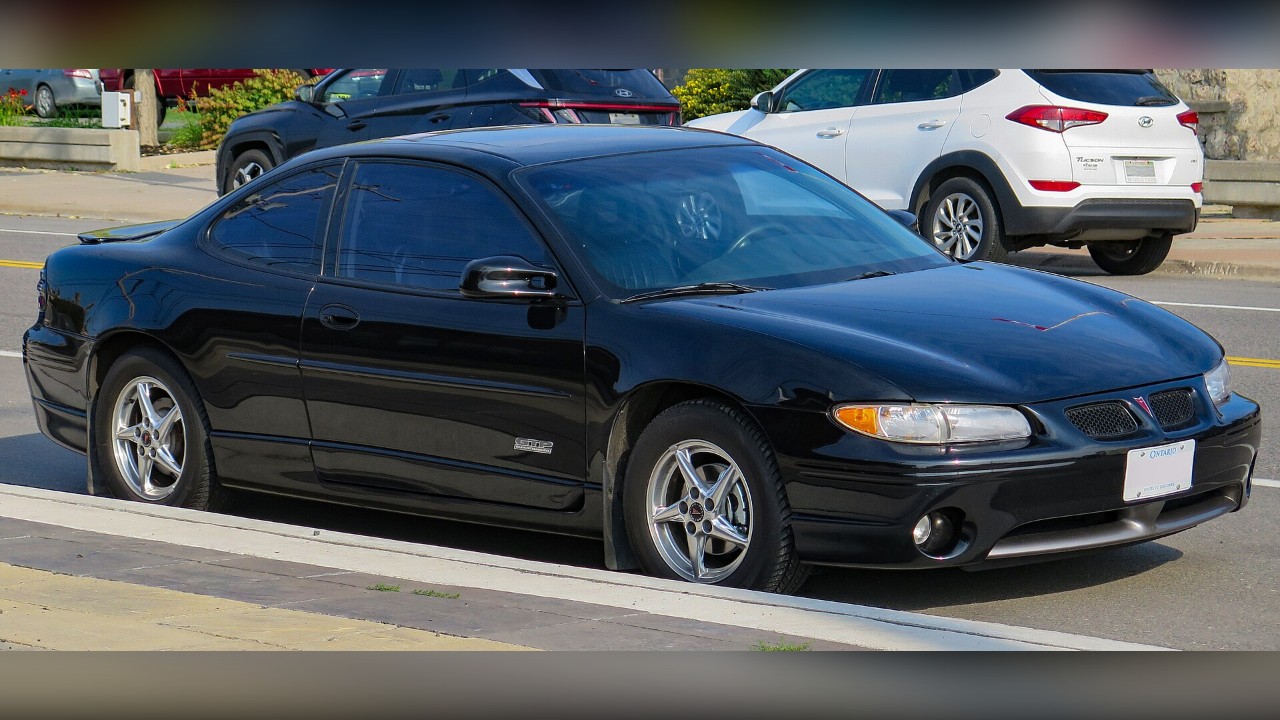
The Grand Prix GTP added an Eaton M90 supercharger to the 3800, and output climbed to 240 hp. To handle the boost, GM dropped the compression ratio from 9.3:1 to 8.5:1. The GTP started as a package on the GT, and then it became its own model in 1999. Traction control joined the supercharged engine for 1998.
There was a fun detail in the cabin as well. The GTP’s shifter carried a “performance shift” button that raised the shift points. Meanwhile, Pontiac sold a 2000 Daytona 500 pace car replica with silver paint, hood vents and a NASCAR-style spoiler. Two years earlier, Pontiac had built 1,500 replicas of the 1998 Daytona 500 pace car, each with a head-up display as standard.
Our take: the 2000 Grand Prix GTP coupe is the most entertaining car of this generation. However, it comes with homework. In March 2008, GM recalled more than 200,000 supercharged GTPs after more than 230 fire reports.
Before you buy, run the VIN for open recalls and get proof the fix was done. For the other side of the story, read why some drivers still refuse to buy a Pontiac Grand Prix. Then listen for supercharger noise and check that the coolant is clean.
7. Pontiac Grand Prix SE sedan 3800 V6
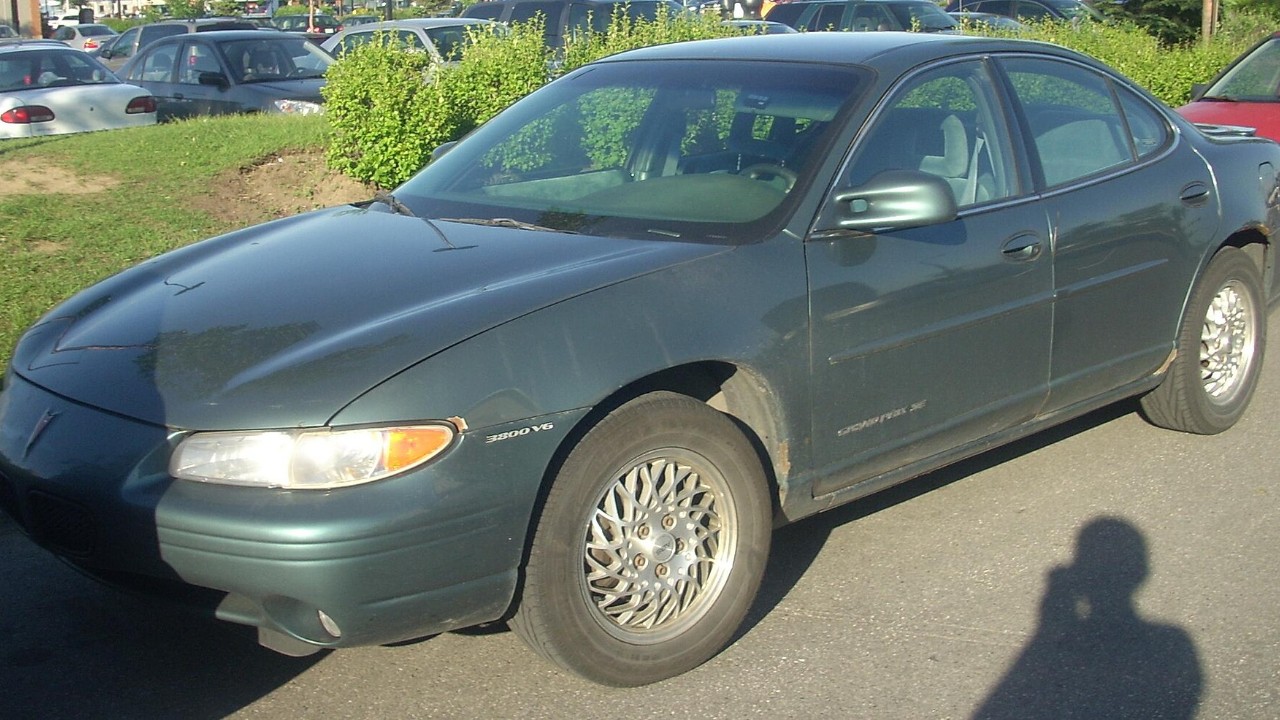
The SE was the everyday Grand Prix, sold only as a sedan. Most came with a 3.1-liter V6, but buyers could order the 3800 as an option, rated at 195 hp. The 1999 model year was the last time Pontiac offered the 3800 in the SE.
That makes an SE with the bigger V6 the one to find. It got the same long-running engine family as the GT, yet it came in a plainer, simpler car. According to Hagerty, the 3800’s plastic intake manifold gave way to an aluminum one with the Series III update in 2004.
In our opinion, the 3800 SE is the hidden bargain among late-1990s Grand Prix models. It drives like the GT without the extra trim to fix. If you’re shopping, check whether the original intake has been replaced, and ask for the paperwork.
Recalls matter here too. In 2009, GM expanded an engine-fire recall to cover 3800 Series II engines, nearly 1.5 million vehicles in all. So run the VIN before you commit.
8. 2007 Pontiac Grand Prix GT
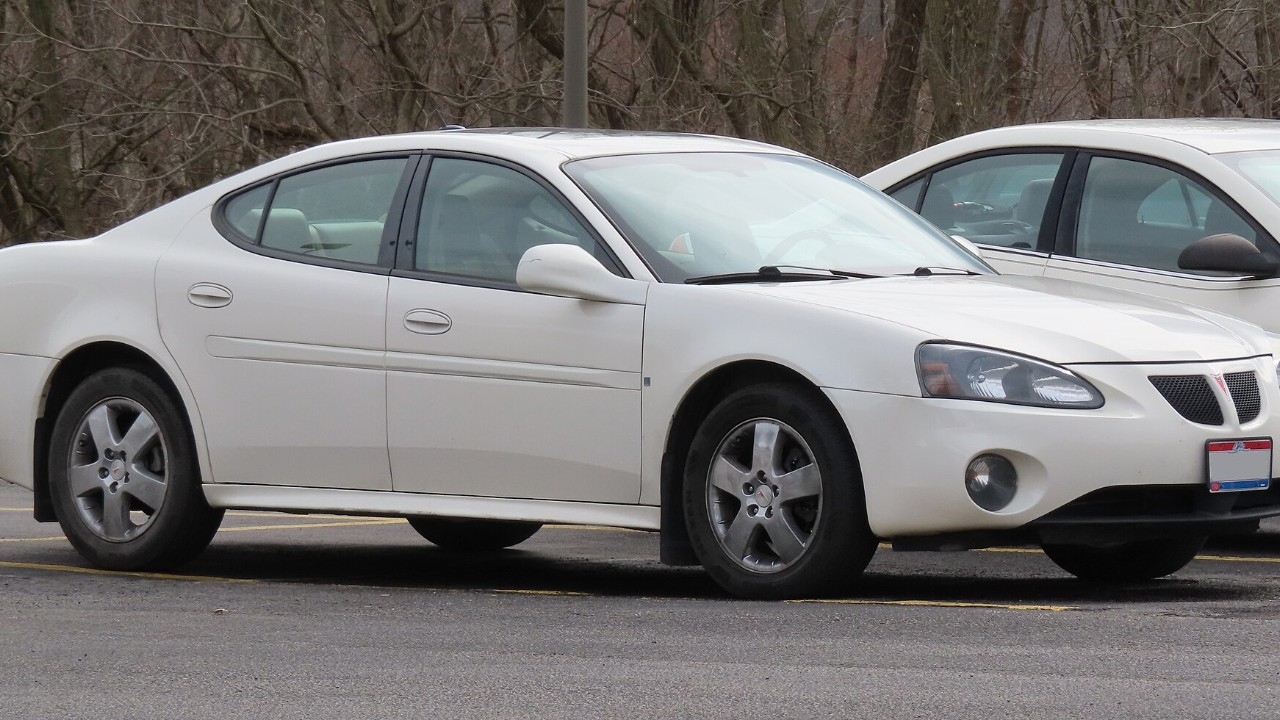
The last Grand Prix generation arrived for 2004 on a revised W-body, as a sedan only. GM had previewed it as the G-Force concept at the 2002 Chicago Auto Show. Early GT1 and GT2 trims used the 3800 Series III V6, rated at 200 hp.
Then the GT got a bigger job. For 2006, Pontiac moved the GTP name to its smaller G6, and the Grand Prix GT picked up the supercharged 3800 Series III. That same year, the Buick-designed 3.8-liter became the first engine in its family to meet SULEV emissions rules. Pontiac dropped the GT trim for 2008, so the 2007 car was its final year.
Our take: the 2007 GT is the most finished version of the supercharged V6 Grand Prix. It has the Series III’s aluminum intake and a decade of fixes behind it. In our view, that’s why these sedans tend to soldier on longer than people expect.
Before buying, check the transmission’s shift quality and the car’s recall history. Also look for side curtain airbags, which show up as a 4, 7 or 8 in the seventh digit of the VIN.
9. 2007 Pontiac Grand Prix GXP
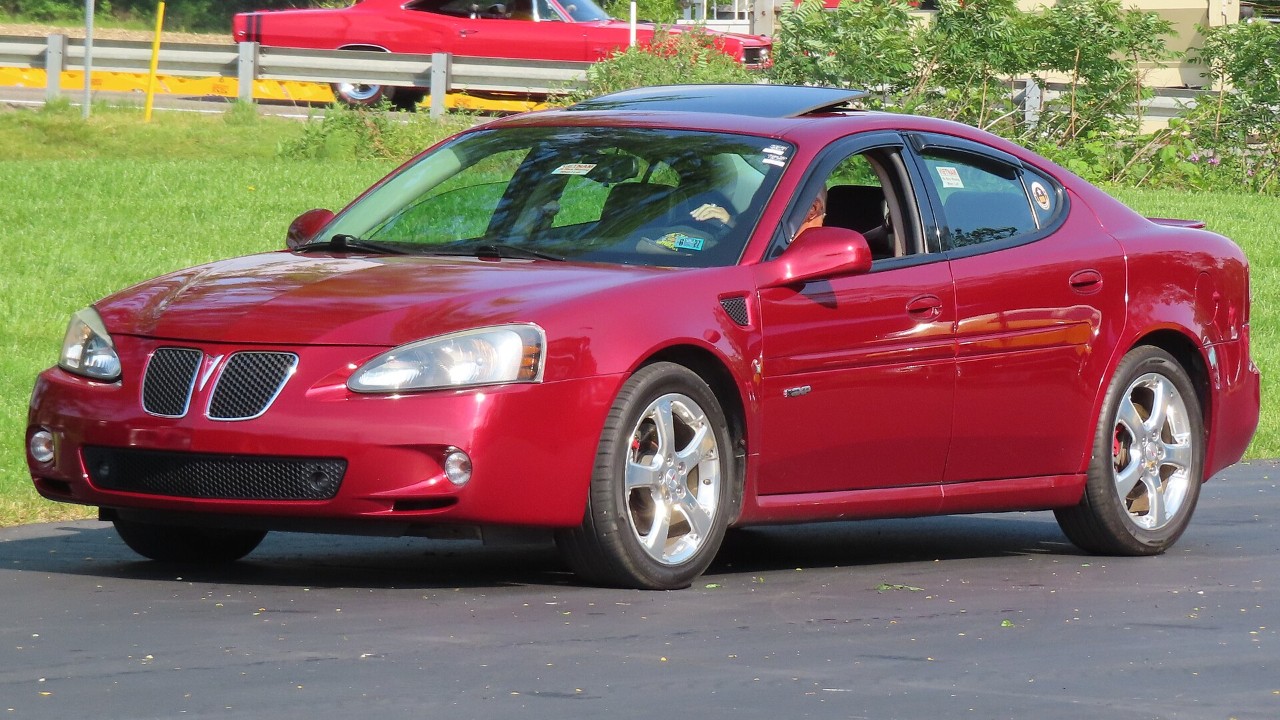
Pontiac put a V8 in a front-drive Grand Prix for the 2005 GXP. The LS4 5.3-liter made 303 hp and 323 lb-ft. It used a block based on the LS1 with a shortened crankshaft. It could also shut down half its cylinders to save fuel. For 2007, GM renamed that system from Displacement on Demand to Active Fuel Management.
The chassis got serious hardware to match. GXPs used cross-drilled vented brakes, Bilstein gas-charged struts about 9 mm lower than other models, and Magnasteer II steering. They rode on forged 18-inch Alcoa wheels, 8 inches wide in front and 7 inches in back. The 2007 car also added firmer suspension, heated leather seats and a head-up display.
In our opinion, the GXP is the Grand Prix we’d keep longest. We think a relaxed small-block V8 is the most durable engine Pontiac ever put in one. Besides, the GXP was the last word on the nameplate before the G8 replaced it.
If you shop for one, ask for oil-change records and listen for a smooth idle. Then check the front tires, since the wider front wheels mean you can’t simply rotate them front to back.
More from Fast Lane Only