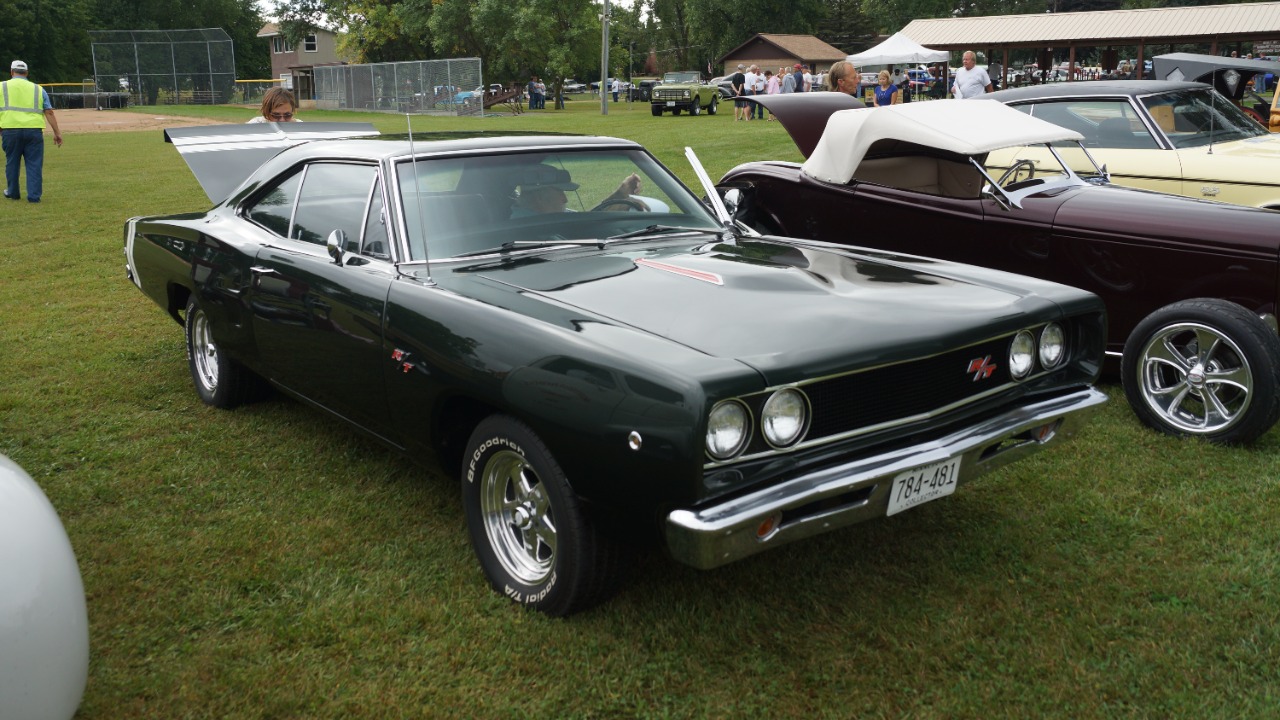
The 1968 Dodge Coronet R/T arrived at a moment when Detroit muscle was measured in cubic inches, quarter-mile times, and how menacing a car looked in a rearview mirror. Dodge gave its midsize Coronet a high-compression big-block, heavy-duty hardware, and a blunt, aggressive face that turned a family sedan into a street brawler. More than five decades later, the R/T still stands out as one of the most focused blends of performance and attitude of the late 1960s.
To understand why this particular Coronet has such staying power with collectors and drivers, it helps to look at what Dodge built into it, how it fit into the brand’s broader performance push, and why its combination of power and presence still resonates in the age of turbocharged compacts and electric torque.
What happened
By 1968, Dodge had already spent several years turning staid full-size models into unexpected performance cars. The company used the Monaco and related 500 series to test how much speed and style buyers would tolerate in a big body, pairing upscale trim with serious V-8 power in cars like the 1965 to 1968. That experience fed directly into the way Dodge approached its midsize Coronet line, where the R/T badge signaled something closer to a street-legal race package than a simple trim level.
The 1968 Coronet R/T sat on Chrysler’s B-body platform and was offered as a two-door hardtop or convertible, with a focus on straight-line performance. Under the hood, the standard engine was a 440 cubic inch Magnum V-8, a high-output version of Chrysler’s big-block that combined generous displacement with a hotter camshaft, higher compression, and a four-barrel carburetor. Factory ratings placed the 440 Magnum at around 375 horsepower, a figure that put the R/T in direct contention with heavy hitters from Pontiac, Chevrolet, and Ford.
For buyers who wanted even more, Dodge offered the 426 cubic inch Hemi as an option. The so-called “elephant engine” carried a factory rating of 425 horsepower and used hemispherical combustion chambers, big valves, and dual four-barrel carburetors. In a midsize chassis, that kind of output turned the Coronet R/T into one of the most fearsome street cars of its era, especially when paired with the available four-speed manual transmission and performance rear axle ratios.
Dodge did not stop at engines. The R/T package bundled heavy-duty suspension components, including stiffer springs and shocks, to help the car cope with the weight and torque of the big-block V-8s. Power front disc brakes were available to replace the standard drums, an important upgrade for a car that could easily run deep into triple-digit speeds. Buyers could choose between the four-speed manual with a Hurst shifter or a three-speed TorqueFlite automatic, both backed by a strong rear differential designed for hard launches and repeated abuse.
Visually, the 1968 Coronet R/T separated itself from more modest Coronets with a number of aggressive cues. The front fascia used a divided grille with inset headlights and a blunt center section that gave the car a scowling, almost squared-off face. Hood scoops, R/T badges, and optional racing stripes signaled intent even when the car was parked. At the rear, wide taillights and a clean decklid carried more subtle branding, but the overall stance sat lower and more purposeful than a standard family sedan.
Inside, the Coronet R/T combined performance-oriented details with the kind of comfort that kept it usable as a daily driver. Bucket seats, a center console, and a full set of round gauges gave the cabin a cockpit feel, while available features such as air conditioning, upgraded audio, and higher-grade upholstery reminded buyers that this was still a Dodge meant to be lived with, not just raced on weekends.
Production numbers for the 1968 Coronet R/T remained relatively modest compared with mass-market models, in part because the car occupied a niche between pure economy and full luxury. That limited volume has helped the R/T age into a desirable collectible, with surviving examples especially prized when equipped with the 426 Hemi, four-speed manual, and original performance options.
Why it matters
The 1968 Coronet R/T matters first as a snapshot of Dodge’s performance strategy in the late 1960s. The company was not content to rely solely on the compact Dart or the soon-to-be-iconic Charger. Instead, it used the Coronet as a platform to reach buyers who wanted big power in a midsize footprint, with enough comfort to handle daily driving and family duty. The R/T badge itself, short for “Road/Track,” signaled a dual mission that set a pattern for later Dodge performance models.
From a design standpoint, the 1968 Coronet R/T captured a shift away from ornate chrome and toward cleaner, more muscular surfaces. The car’s slab sides, squared-off front, and relatively restrained trim created a look that emphasized mass and stance rather than decorative detail. That approach echoed across the Dodge lineup and helped define the visual language that would later shape cars like the Charger and Super Bee. The R/T’s styling also foreshadowed the kind of aggressive, almost brutalist design cues that modern performance sedans still favor.
Mechanically, the car demonstrated how far Detroit engineers were willing to push the concept of a streetable muscle car. Dropping a 440 Magnum or 426 Hemi into a midsize body, then backing it with heavy-duty suspension and brakes, produced a package that could dominate drag strips while still carrying four passengers. That balance of practicality and excess became a defining trait of American muscle and influenced how later performance sedans, from the 1990s Impala SS to contemporary supercharged four-doors, were configured.
The Coronet R/T also shows how Dodge used its full-size experiments to refine performance hardware. Lessons learned from fitting big engines and upgraded components into cars like the Monaco and its 500 variant gave the company confidence to standardize heavy-duty parts in midsize models. The R/T benefited from that development work, inheriting stronger driveline pieces and better cooling and braking systems that had been tested in larger, heavier cars. This cross-pollination helped Dodge deliver a more durable and cohesive performance package rather than a simple engine swap.
In the collector market, the 1968 Coronet R/T occupies an interesting position. It shares mechanical DNA with more famous Mopar legends, including the Charger R/T and the Plymouth Road Runner, yet it often trades at lower prices. That relative affordability has made the Coronet R/T a gateway into serious classic muscle ownership. Enthusiasts can access 440 Magnum performance and period-correct styling without paying the premium associated with more widely recognized nameplates.
The car’s continued appeal also reflects how enthusiasts value authenticity. Many surviving Coronets show evidence of period modifications, from aftermarket intake manifolds and headers to custom paint and wheels. Restorers face choices about whether to return these cars to factory specification or preserve the layered history of street racing and personal customization. That tension mirrors broader debates in the classic car world about originality, usability, and the line between preservation and personalization.
Beyond the collector scene, the 1968 Coronet R/T has cultural significance as part of the broader story of American performance in the late 1960s. It represents a moment when horsepower wars between Detroit’s Big Three produced cars that were both aspirational and accessible. Young buyers could walk into a Dodge showroom and order a car that, in stock form, was capable of quarter-mile times that would still embarrass many modern vehicles. That democratization of speed shaped car culture, from drag strips to drive-ins, and helped cement the idea that a family car could also be a serious performance machine.
The R/T’s legacy is visible in Dodge’s later decisions to revive old names and attitudes. When the modern Charger and Challenger returned with high-output Hemi engines and R/T badges, they tapped into the same blend of straight-line strength and visual aggression that defined the 1968 Coronet R/T. The historical continuity is not just about branding; it reflects a consistent philosophy that performance should feel unapologetic and a little over the top.
In an era increasingly defined by efficiency standards and electrification, the Coronet R/T also serves as a reference point for what unfiltered internal combustion can deliver. Its big-block engines, mechanical throttle linkages, and analog gauges stand in sharp contrast to the software-managed drivetrains of modern cars. That contrast helps explain why enthusiasts still chase the sound, feel, and smell of a carbureted V-8, even as they acknowledge the performance advantages of modern technology.
What to watch next
Looking ahead, the 1968 Coronet R/T is likely to gain further attention as the market for classic American muscle continues to mature. As the most famous models reach price levels that put them out of reach for many buyers, cars that share their mechanical foundations but carry less hype tend to see increased interest. The Coronet R/T fits that pattern, especially in solid driver condition with its original 440 Magnum and period-correct options intact.
One key factor to watch is how the shift toward electrification affects the desirability and use of cars like the Coronet R/T. On one hand, tightening emissions regulations and fuel costs can make regular driving more challenging. On the other, the rarity of big-block, rear-wheel-drive sedans with manual transmissions may strengthen their status as rolling artifacts of a specific automotive era. Enthusiasts may increasingly treat these cars as weekend experiences rather than daily transportation, which could change restoration priorities toward reliability upgrades and reversible modifications.
Another trend involves the parts and knowledge ecosystem that keeps these cars on the road. As original components age and skilled mechanics retire, owners rely more heavily on reproduction parts, specialist shops, and online communities. The Coronet R/T benefits from sharing many components with other B-body Mopars, which supports a healthy aftermarket. However, rare pieces, especially trim and model-specific interior items, may become harder to source. That scarcity can influence which cars are restored and which become donors, subtly reshaping the surviving population.
Values for the most desirable configurations, particularly Hemi-powered cars with documented histories, will likely continue to diverge from more common examples. Collectors increasingly scrutinize build sheets, fender tags, and original drivetrain stampings to verify authenticity. For the Coronet R/T, that focus on documentation can elevate well-preserved or carefully restored cars while leaving modified or incomplete examples in a more affordable, enthusiast-friendly bracket. The result is a tiered market where investment-grade cars and driver-grade cars coexist but serve different audiences.
There is also growing interest in how classic muscle cars can be adapted to modern expectations for safety and usability without losing their character. Owners of 1968 Coronet R/Ts often consider upgrades such as better front disc brakes, radial tires, improved lighting, and discreet electronic ignition systems. These changes can make the car more enjoyable and safer to drive in contemporary traffic, yet purists sometimes resist anything that deviates from factory specification. The balance between period correctness and practical improvement will remain a live discussion around cars like the Coronet R/T.
More From Fast Lane Only: