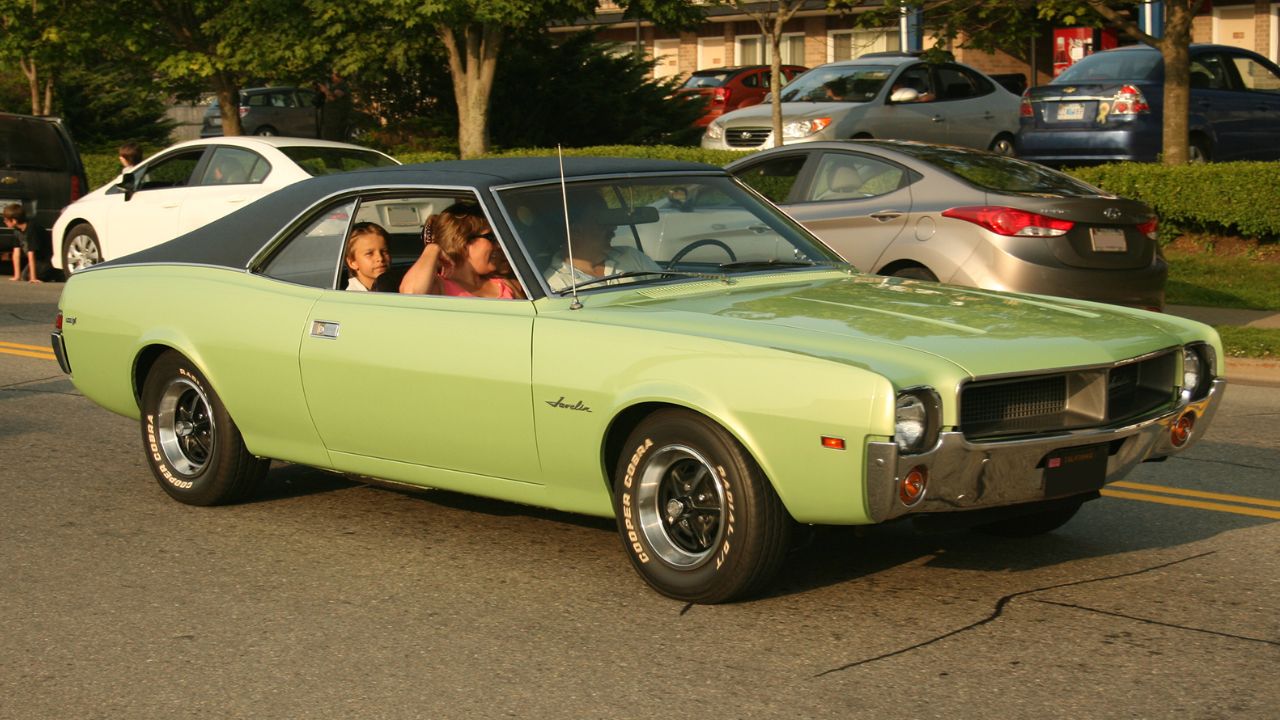
The 1968 AMC Javelin arrived as American Motors Corporation’s bold answer to Detroit’s pony car wars, yet it has long lived in the shadow of Mustangs, Camaros, and Challengers. Beneath the underdog image, however, the first-year Javelin delivered authentic muscle car performance backed by serious hardware, sharp styling, and genuine racing credentials. Today, that combination is pushing the car out of obscurity and into the conversation among collectors who want real speed without the predictable badges.
A closer look at the Javelin’s origins, engineering, and motorsport record shows that AMC did not simply copy the market leaders. The company built a car with its own personality, from the long-hood, short-deck profile to the high-winding V8 options that could embarrass bigger names on street and track. For enthusiasts weighing where the Javelin fits in the muscle hierarchy, the 1968 model year is where the story truly starts.
What happened
When American Motors Corporation launched the Javelin for 1968, the company was stepping into a segment already dominated by Ford’s Mustang and Chevrolet’s Camaro. AMC had been known for compact economy cars, yet management recognized that younger buyers wanted aggressive styling, V8 power, and performance options that could compete head-on with Detroit’s established muscle machines. The Javelin emerged as a two-door fastback with a clean, almost European sense of proportion, but its intent was unmistakably American.
The basic Javelin platform supported a wide spread of engines, from modest six-cylinders to serious V8s. The performance story centered on the 343 cubic inch and 390 cubic inch V8 options that transformed the car from stylish commuter to legitimate muscle contender. In top specification, the 390 delivered strong horsepower and torque, backed by heavy-duty driveline components and available four-speed manual transmissions that appealed to drivers who wanted real control rather than pure comfort.
Powertrains were only part of the equation. AMC also packaged the Javelin with performance-oriented suspension tuning, quicker steering, and optional front disc brakes designed to keep pace with the stronger engines. Buyers could select packages that bundled cosmetic cues with functional upgrades, helping the car stand out visually while also making it more capable on twisty roads and at the drag strip. The result was a model that could be ordered as a mild, stylish coupe or as a focused performance car that matched the spirit of the era.
The Javelin also shared some engineering DNA and performance philosophy with AMC’s shorter wheelbase AMX, a car that blended American muscle with sports car handling in an affordable package. The AMX pushed the company deeper into high-performance territory, and its chassis and drivetrain choices informed how AMC tuned its pony car. Period testers often treated the AMX as a two-seat sibling to the Javelin, reinforcing the idea that AMC was committed to serious performance across multiple models. That connection is clear in descriptions of the AMX’s handling and powertrain options.
On the racing front, AMC took the Javelin straight into the SCCA Trans-Am series, where it faced factory-backed Mustangs, Camaros, and Challengers. The company’s involvement in this highly competitive road racing arena was not a marketing afterthought. It shaped how the car was developed and how it was perceived by enthusiasts who followed the series. The Javelin’s role as a genuine factory-backed entry in Trans-Am gave it credibility that many other nameplates never achieved.
Collectors and historians now point to specific Javelin and AMX variants as some of the rarest and most interesting muscle cars AMC ever produced. Limited-production performance packages and special editions, often built in low numbers, highlight how aggressively the company experimented with the formula. Among these, enthusiasts frequently identify particular AMC models as the rarest AMC muscle offerings, which reinforces how niche some of these high-performance configurations were at the time.
Why it matters
The 1968 Javelin matters because it proves that American Motors could build a muscle car that did not merely chase trends but met them head-on. In an era dominated by the Big Three, AMC’s pony car showed that an independent manufacturer could engineer a platform with the power, handling, and style enthusiasts demanded. The Javelin did not rely on gimmicks. It delivered genuine performance and backed it up with on-track competition, which is why it continues to earn respect among historians and collectors.
Modern rankings of classic performance cars increasingly acknowledge AMC’s contributions. Lists that survey the best muscle cars now often include AMC entries, particularly the AMX and high-performance Javelin variants. Those mentions reflect a shift in how the market views the brand. Where AMC muscle was once treated as an oddity, it is now recognized as an integral part of the story, especially for buyers who want something more distinctive than another mainstream pony car.
Part of the Javelin’s significance lies in how it blurred the lines between muscle car and sports coupe. The car offered strong straight-line acceleration, yet its chassis tuning and relatively compact dimensions gave it poise that some heavier rivals lacked. That balance mirrored what AMC achieved with the AMX, which combined American muscle and sports car handling in a package that remained within reach of younger buyers. The shared engineering approach strengthened AMC’s performance image and proved that the company could think beyond simple quarter-mile numbers.
Another reason the 1968 Javelin stands out is its role in preserving the character of the independent American performance car. As industry consolidation and emissions regulations reshaped the market in the early 1970s, many nameplates either softened or disappeared. The Javelin managed to carry the independent torch longer than most, which is why enthusiasts often describe it as the last independent muscle in the United States. That status gives the 1968 model year a special place as the foundation of a line that would continue to fight for relevance as the golden age of muscle began to fade.
The car also illustrates how marketing and perception can overshadow substance. For decades, the Javelin and its AMC siblings were dismissed as fringe choices, in part because the company lacked the advertising budgets and dealer networks of its larger rivals. Yet the hardware tells a different story. Strong V8s, competitive suspension tuning, and serious racing involvement placed the Javelin on essentially equal footing with more celebrated competitors. As more enthusiasts dig into the specifications and period test results, the car’s reputation has climbed steadily.
That reevaluation has spilled into the broader debate over what counts as a muscle car. Some analysts argue that certain AMC models, including specific Javelin and AMX variants, occupy a gray area between pure muscle and sports car. Others insist that the combination of V8 power, aggressive styling, and straight-line performance firmly qualifies them. Discussions of whether a given model is a muscle car or often use AMC examples to illustrate how flexible the definition has become.
For collectors, the Javelin’s underdog status has practical consequences. Prices for top-tier Mustangs, Camaros, and Mopars have climbed to levels that put them out of reach for many enthusiasts. The 1968 Javelin and its close relatives offer an alternative path into genuine late-1960s performance without the same price inflation. Limited-production variants and well-documented cars are beginning to attract more attention at auctions and in private sales, yet they still sit at a discount compared with the most famous nameplates. That gap has led some buyers to view AMC muscle as one of the few remaining value plays in the classic performance market.
The Javelin’s story also resonates with a younger generation of enthusiasts who are drawn to cars that stand apart from the typical show field lineup. The car’s styling, with its clean lines and distinctive front fascia, looks familiar enough to fit the pony car mold but different enough to stand out in a parking lot full of Fords and Chevrolets. That visual distinction, combined with the car’s genuine performance credentials, helps explain why interest has risen in online communities and at events that celebrate less obvious choices.
From a historical perspective, the 1968 Javelin captures a moment when American performance engineering was at full stride and regulatory pressures had not yet forced major compromises. It represents AMC’s most confident move into the muscle arena and shows what a smaller manufacturer could achieve with limited resources and a clear vision. For anyone trying to understand the full breadth of the late-1960s performance boom, leaving the Javelin out of the narrative would mean ignoring a key piece of the puzzle.
What to watch next
The growing recognition of AMC’s performance heritage suggests that the 1968 Javelin’s profile will continue to rise. As more enthusiasts seek alternatives to the usual Mustang and Camaro builds, demand for well-preserved and correctly restored Javelins is likely to increase. That trend is already visible in how often AMC models appear in discussions of notable muscle and pony cars, as well as in the way specialty shops now advertise their familiarity with AMC drivetrains and chassis.
One area to watch is how the market differentiates between various Javelin configurations. Early base models will probably remain relatively affordable, but cars equipped with the higher output V8s, four-speed manual transmissions, and factory performance packages are positioned to appreciate more quickly. Collectors are paying closer attention to build sheets, original drivetrain components, and period-correct details, which suggests that originality will become a major value driver for the 1968 model year.
Another development involves how the Javelin is represented in media and enthusiast culture. As more writers and historians revisit the muscle era, AMC’s role is receiving more space in books, documentaries, and digital features. That visibility helps correct decades of neglect and introduces the car to readers and viewers who might never have considered AMC when thinking about classic performance. The more often the Javelin appears in lists of influential or underrated muscle cars, the more firmly it becomes part of the mainstream conversation.
Racing history will also continue to shape how the Javelin is remembered. Restored Trans-Am style builds, whether faithful recreations or modern interpretations, give the car a visible presence at track days and vintage racing events. Those appearances reinforce the link between the street car and its competition roots. As owners bring more Javelins back to period-correct racing specifications, the car’s image shifts further from quirky outlier to legitimate competitor that once mixed it up with the biggest factory teams in American road racing.
For restoration shops and parts suppliers, the gradual rise in interest presents both a challenge and an opportunity. AMC never produced components in the same volumes as the Big Three, and the company’s eventual demise limited the supply of factory spares. That scarcity has historically made AMC projects more difficult. However, growing demand is encouraging aftermarket manufacturers to reproduce key components, from trim pieces to suspension parts, which in turn makes full restorations more feasible. The 1968 Javelin stands to benefit directly from any expansion in the parts ecosystem.
More From Fast Lane Only: