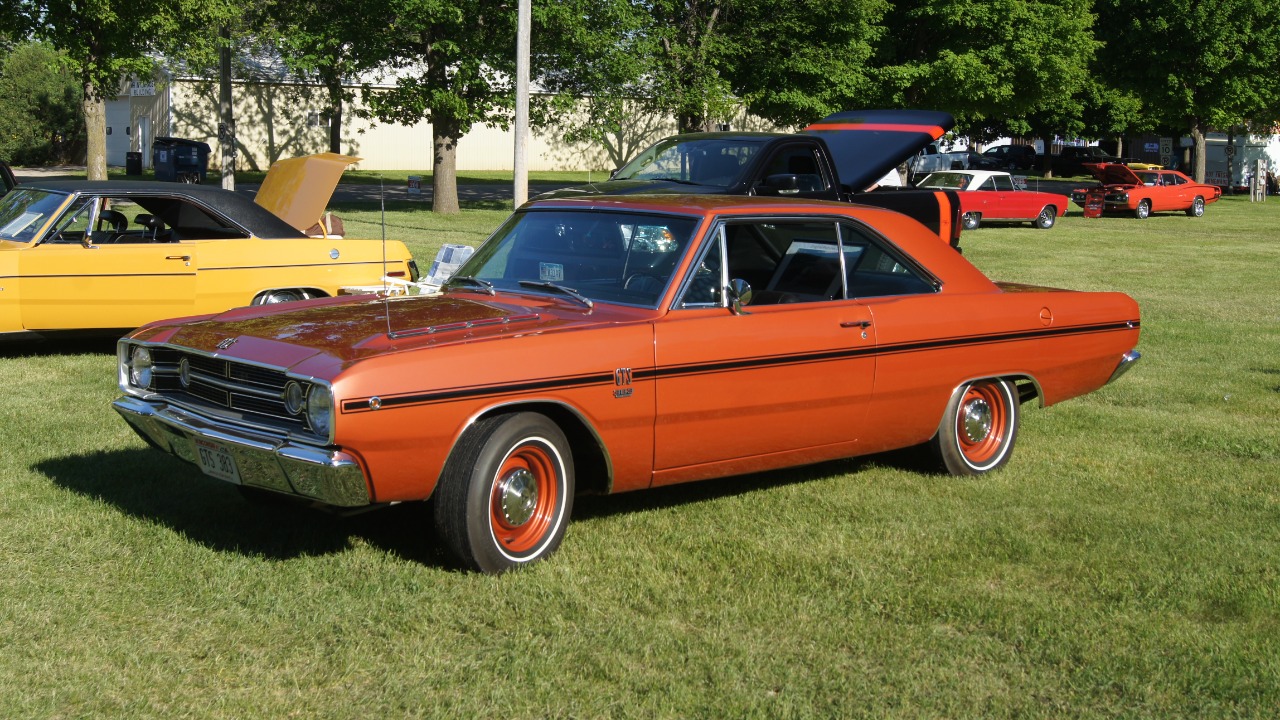
The 1968 Dodge Dart GTS proved that a compact body and a big V8 could be more than a budget compromise. By dropping a 300 horsepower small-block into a lightweight A-body, Dodge built a street machine that could run with larger B-body muscle cars while staying nimble and relatively affordable. The result was a short-wheelbase bruiser that helped define what a small-platform performance car could be.
What happened
When Dodge turned the Dart into a performance model for 1968, the company started with its A-body compact, a car originally aimed at economy buyers. The GTS package transformed that modest foundation into a serious factory hot rod. Its key ingredient was the 340 cubic inch V8, rated at 275 horsepower in regular Dart 340 trim but tuned to an even 300 horsepower in GTS specification. That rating came with a performance camshaft, high-flow heads, a four-barrel carburetor, and dual exhaust, all stuffed into a chassis that weighed significantly less than Dodge’s Coronet or Charger.
The Dart GTS sat at the top of the Dart performance ladder. Buyers could choose between the standard 340 and a limited production 383 cubic inch big-block version, but the 340 car struck the best balance of power and weight. The small-block engine sat farther back and lower than the heavier 383, which helped handling and weight distribution. Paired with either a four-speed manual or a TorqueFlite automatic, the 340 GTS could be ordered with axle ratios that turned the compact Dodge into a quarter-mile threat straight off the showroom floor.
Styling cues separated the GTS from ordinary Darts without turning it into a cartoon. The package typically included bumblebee tail stripes, unique badging, and modest hood ornamentation that hinted at the power underneath. Inside, the car retained much of the standard Dart layout, but with bucket seats, a console on many cars, and performance-oriented details like a tachometer and heavy-duty controls. The basic cabin reminded buyers that this was still a compact, yet the appointments made clear it was not an entry-level taxi spec.
Suspension and braking upgrades completed the transformation. The GTS package added heavy-duty torsion bars, stiffer leaf springs, and larger anti-roll hardware to keep the short-wheelbase Dart under control when the 340 came on the cam. Front disc brakes were available and strongly recommended for drivers who planned to use the car’s performance potential more than once. The result was a compact that could corner harder than many full-size muscle cars while still riding acceptably on rough pavement.
Although the headline car for this story is the 1968 model, the GTS formula carried into 1969 with only minor mechanical changes. Period coverage of a 1969 example shows the same 340 small-block, similar suspension tuning, and the same focus on straight-line speed and compact agility, confirming that Dodge treated the 1968 and 1969 GTS as essentially one continuous performance package. A detailed look at a surviving 1969 Dart GTS illustrates how the 340 engine, heavy-duty suspension, and subtle exterior cues worked together to create a cohesive small-platform muscle car, and that same template defined the 1968 version as well, as seen in the preserved Dart GTS layout.
Production numbers for the 1968 Dart GTS were modest compared with mass-market intermediates. Dodge sold the Dart across a wide range of trims, but the GTS remained a niche choice for buyers who wanted performance without the size and cost of a Charger or Coronet R/T. That relative rarity, combined with the car’s performance reputation, later helped elevate the GTS from an interesting option code to a sought-after collectible.
Why it matters
The 1968 Dart GTS arrived at a moment when Detroit’s muscle car formula seemed locked in place. The standard recipe called for a midsize or full-size body with a big-block V8 and plenty of chrome. Dodge itself followed that pattern with cars like the Coronet R/T and Charger R/T, which relied on 383 and 440 engines to deliver power. The Dart GTS broke from that pattern by proving that a compact chassis and a smaller displacement V8 could deliver similar thrills with less weight and lower cost.
By pairing 300 horsepower with a relatively light A-body, the GTS changed the power-to-weight conversation. Instead of chasing ever larger engines, Dodge engineers focused on packaging and balance. The 340 small-block gave up cubic inches to the 383 and 440, but the Dart’s lighter shell meant the car did not need a huge torque surplus to feel quick. On the street, where traction was always the limiting factor, the compact GTS could embarrass heavier rivals that carried more advertised horsepower.
The car’s size also made it more approachable for everyday use. The Dart’s compact footprint made parking and city driving less stressful than in a long-wheelbase B-body. Insurance companies had begun to notice the correlation between big-engine intermediates and high claims, and a compact with a small-block could sometimes fly under the radar compared with a Charger or Road Runner. Buyers who wanted performance without the full financial penalty of a big-block muscle car found the GTS an appealing compromise.
From a brand perspective, the Dart GTS helped Dodge extend its performance image across the lineup. The company already had halo cars, but those models could be expensive and thirsty. By offering a compact that carried the same performance cues and real speed, Dodge signaled that its performance identity was not limited to a single flagship. That strategy foreshadowed later efforts across the industry to spread performance trims into smaller, more accessible models.
The 1968 GTS also matters because it showcased Chrysler’s 340 engine at its best. The 340 became one of the most respected small-blocks of the muscle era, known for its strong block, high-flow heads, and willingness to rev. In the Dart GTS, the 340 sat in a chassis that could fully use its strengths. The car’s relatively low curb weight let the engine’s midrange torque shine, while the upgraded suspension made spirited driving feel controlled rather than chaotic. Many enthusiasts who later built 340-powered street and strip cars traced their inspiration back to the factory Dart GTS combination.
In the broader muscle car story, the Dart GTS helped legitimize the idea that compact performance could stand beside full-size muscle rather than sit beneath it. The car arrived before the pony car class fully matured and before the insurance and emissions pressures of the early 1970s reshaped the market. That timing allowed the GTS to compete head to head with larger muscle cars on its own terms, and it proved that a smaller platform could deliver serious performance without feeling like a compromise.
Collectors and restorers later recognized that the 1968 Dart GTS represented a turning point. The car combined a relatively understated appearance with genuine performance hardware, which made surviving examples popular among enthusiasts who preferred a sleeper look. The modest production numbers and the tendency of many GTS cars to see hard use on the street and strip meant that clean, original examples became harder to find over time. That scarcity, combined with the car’s performance reputation, helped push values upward as the muscle car hobby matured.
From a technical standpoint, the GTS also highlighted Chrysler’s chassis engineering approach. The A-body platform used torsion bars in front and leaf springs in back, a layout that some rivals dismissed as old-fashioned. In practice, with the right tuning, the Dart GTS showed that this configuration could deliver sharp turn-in and stable high-speed behavior. The car’s success on both the street and in grassroots competition gave weight to the idea that careful suspension tuning could overcome theoretical disadvantages on paper.
The 1968 Dart GTS therefore stands as more than a single-year curiosity. It represents a philosophy that performance does not have to depend on size or excess. By proving that a compact car with a strong small-block could run with the big boys, Dodge opened the door for later performance compacts and muscle machines that prioritized balance as much as brute force.
What to watch next
Interest in compact muscle cars from the late 1960s has been climbing, and the 1968 Dart GTS sits near the center of that trend. Enthusiasts who once focused exclusively on big-block intermediates have started to look at lighter, more agile cars, both for driving enjoyment and for practicality. The GTS, with its 340 small-block and relatively simple mechanicals, fits neatly into that shift. As more collectors seek cars they can actually drive and maintain, the Dart’s compact footprint and durable drivetrain make it an attractive candidate.
Restoration patterns suggest that originality is becoming more important for GTS cars. Many Darts spent time at drag strips or as street racers, where engine swaps, aftermarket intakes, and non-stock paint were common. As the cars age, buyers increasingly look for factory-correct 340 engines, original GTS trim, and documented build sheets. That trend may push values higher for unmodified survivors while leaving heavily altered cars as more affordable entry points into the hobby.
At the same time, the Dart GTS has become a favorite platform for restomod builds. The compact A-body shell accepts modern disc brake kits, improved suspension components, and updated drivetrains without losing its essential character. Builders who want the look and feel of a 1960s muscle car but with contemporary reliability often choose the Dart because of its straightforward construction and abundant parts support. The GTS trim, with its performance heritage, provides a natural starting point for those projects.
On the historical side, more attention is being paid to how cars like the 1968 Dart GTS influenced later performance compacts. The idea of a relatively small car with a strong engine and upgraded suspension foreshadowed later hot hatchbacks and sport compacts, even if the mechanical details differed. Analysts who trace the lineage of performance-oriented small cars often point to the Dart GTS and its contemporaries as early proof that customers would embrace a compact that could genuinely perform.
For Dodge and its modern successors, the Dart GTS story continues to offer branding lessons. The car showed that a performance badge on a compact could carry real weight if the hardware backed it up. That lesson remains relevant for any manufacturer that wants to extend a performance image beyond a single halo model. When a compact performance car feels like a genuine member of a brand’s muscle family rather than a marketing exercise, buyers respond.
Future coverage of the 1968 Dart GTS is likely to focus on several key threads. One is the ongoing hunt for surviving factory 340 and 383 GTS cars, especially those with original drivetrains and documentation. Another is the technical analysis of how the A-body platform responds to modern upgrades, from improved suspension geometry to more efficient exhaust systems. Enthusiasts continue to experiment with ways to sharpen the Dart’s already capable chassis while preserving the driving feel that made the GTS special.