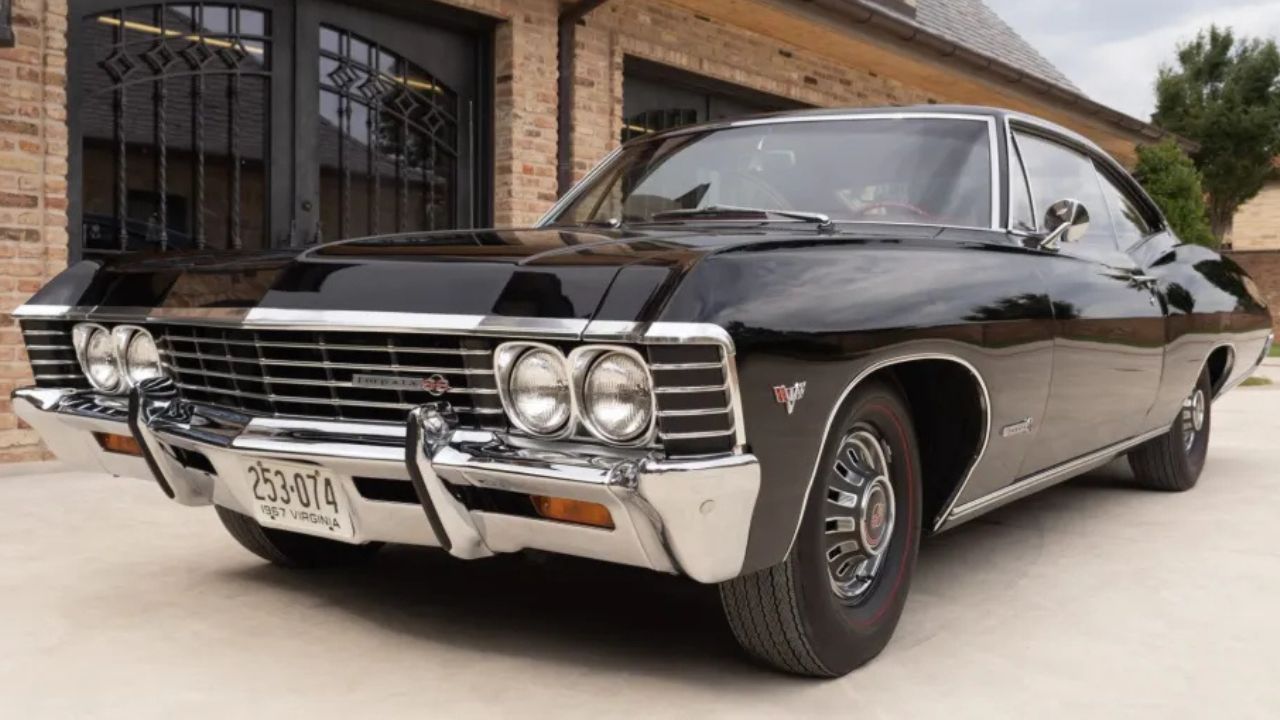
The 1967 Chevrolet Impala SS occupies a rare space in American car culture, where full-size comfort meets genuine V8 muscle. Long before it became a pop‑culture prop, the Super Sport version earned respect as a car that could carry five adults in quiet ease, then light up its rear tires with a big-block roar. That dual personality still defines its appeal for collectors and drivers who want power without sacrificing space or civility.
Set against sharper-edged pony cars and midsize bruisers of the same era, the 1967 Impala SS looks almost understated. Yet under its long hood and behind its broad grille, Chevrolet built a car that could be ordered with serious performance hardware, wrapped in a body that still rode like a traditional American sedan.
What happened
By 1967, the Impala nameplate was already a volume success for Chevrolet, but the Super Sport package turned the big coupe into something more focused. The SS trim took the full-size Impala shell and layered on performance cues, from bucket seats and a center console to special badging and unique exterior details. Buyers could choose from a range of V8 engines, starting with small-block options and climbing to the 396 cubic inch big-block that made the SS a legitimate muscle contender.
The 1967 model year marked a subtle but meaningful evolution of the fourth-generation Impala. Styling changes cleaned up the lines, with a more refined front fascia and a smoother rear treatment that kept the car aligned with Chevrolet’s full-size design language. Building on that foundation, the SS version added specific trim, sportier interior appointments, and a more driver-focused cockpit than the standard Impala, which leaned heavily into family duty.
Under the hood, the SS could be specified with Chevrolet’s 327 cubic inch small-block, which offered a blend of everyday drivability and respectable acceleration. For buyers who wanted more, the 396 cubic inch big-block V8 transformed the car’s character. Paired with a four-speed manual or a heavy-duty automatic, the 396 gave the Impala SS the straight-line performance expected from a muscle-era Chevrolet without stripping away its full-size comfort.
That balance helped the 1967 Impala SS earn a place among the classic American performance cars of the late 1960s. Enthusiast rankings of classic muscle cars often acknowledge that Chevrolet did not limit serious power to the Camaro or Chevelle. The big Impala, especially in SS trim, offered a different flavor of speed, one that paired long-distance composure with quarter-mile capability.
Within Chevrolet’s own performance hierarchy, the Impala SS complemented smaller, lighter models rather than competing with them directly. Where a Chevelle SS 396 or Camaro SS felt tightly wound and focused, the Impala SS carried its size proudly. It was a car that could cruise the interstate at relaxed engine speeds, then deliver strong thrust when the driver dipped into the throttle. That dual mission shaped how the car was marketed and how buyers used it in period.
The interior told the same story. Bucket seats with higher bolstering, a console-mounted shifter, and available auxiliary gauges gave the driver a sportier environment than the bench-seat Impala. Yet the cabin still offered generous legroom, a wide rear bench, and a trunk large enough for family luggage. The SS badge did not strip the car down; it simply refocused it toward the driver while leaving the comfort features intact.
Today, collectors and restorers often seek out 1967 Impala SS models with original big-block engines and four-speed transmissions, since those combinations capture the car’s muscle side most clearly. At the same time, surviving small-block cars appeal to enthusiasts who value the model’s highway manners and reliability as much as outright speed. That split mirrors the original buyer base, which ranged from younger drivers chasing performance to older owners who wanted a more refined full-size coupe with extra punch.
Why it matters
The significance of the 1967 Impala SS starts with its role in Chevrolet’s broader performance story. The brand’s muscle reputation is often tied to lighter platforms, yet lists of the best Chevy muscle regularly highlight how Chevrolet spread big power across its lineup. The Impala SS showed that a full-size car could still carry serious V8 performance, and that buyers did not have to choose between comfort and speed.
In the context of the late 1960s, that message mattered. The American market was shifting toward more youth-oriented models, with the Camaro, Firebird, and Mustang capturing headlines. Full-size cars risked being seen as conservative or purely family-focused. By giving the Impala a genuine Super Sport identity, Chevrolet kept the big car relevant for drivers who wanted prestige and presence along with performance.
The 1967 Impala SS also reflects how manufacturers were learning to package performance in a way that fit daily life. Earlier performance cars often felt compromised, with harsh suspensions, spartan cabins, or limited practicality. The Impala SS took the opposite approach. It started from a comfortable platform, then added power and sportier details without abandoning its core strengths. That formula anticipated later trends, where performance sedans and grand touring coupes would promise both speed and long-distance comfort.
From a design standpoint, the 1967 Impala SS captures a transitional moment between the rounded forms of early 1960s full-size cars and the sharper, more aggressive shapes that followed. The car’s long, straight character lines and relatively clean surfaces give it a restrained elegance. The SS trim adds just enough visual drama through badging, wheel choices, and interior upgrades to signal its intent without sliding into excess. That restraint has aged well, which helps explain the model’s enduring appeal among collectors who favor subtle performance cues.
The cultural footprint of the 1967 Impala SS extends beyond design and engineering. Over time, the car has become a familiar presence in enthusiast circles, local car shows, and restoration shops. Its full-size proportions and classic V8 soundtrack make it a natural fit for weekend cruising, while its mechanical simplicity encourages hands-on ownership. Parts availability and shared components with other Chevrolet models further support its viability as a long-term collectible.
Values for well-preserved or correctly restored examples reflect this sustained interest. Big-block SS cars with original drivetrains, factory documentation, and desirable color combinations tend to command the strongest prices, especially when paired with four-speed manual transmissions. Small-block SS cars, while often more affordable, still benefit from the model’s reputation and offer a more relaxed driving experience that some owners prefer.
Beyond the auction scene, the 1967 Impala SS resonates with enthusiasts who grew up around full-size American cars and want to recapture that experience with a bit more excitement. The car’s size, visibility, and straightforward controls make it approachable for drivers who might find smaller, more cramped muscle cars less comfortable. That accessibility broadens its audience and helps keep the model circulating on public roads rather than confined to static collections.
The car’s balance of comfort and power also shapes how owners modify or preserve it. Some choose to keep their Impala SS as close to factory specification as possible, emphasizing originality and period-correct details. Others lean into the performance potential, upgrading suspension components, brakes, and engine internals while retaining the car’s visual character. In both cases, the underlying appeal remains the same: a full-size Chevrolet that can cover long distances in comfort and still feel alive when the road opens up.
For Chevrolet’s heritage, the 1967 Impala SS acts as a reminder that performance does not have to be confined to one body style or segment. The company’s willingness to install strong V8 engines and sport-oriented trim in a full-size chassis broadened the definition of what a muscle car could be. That philosophy would later influence performance sedans and coupes that aimed to deliver similar blends of practicality and power.
What to watch next
Interest in the 1967 Impala SS is unlikely to fade, but the way enthusiasts approach the car is evolving. As younger collectors enter the hobby, many bring different expectations around drivability, safety, and technology. That shift is already visible in the growing number of restomods based on full-size Chevrolets, where original bodies and interior themes are paired with modern engines, overdrive transmissions, disc brakes, and updated suspensions.
For the Impala SS, that trend creates parallel paths. On one side, purists continue to seek factory-correct restorations, with matching-numbers drivetrains and accurate trim details. On the other, builders see the 1967 shell as an ideal canvas for contemporary performance upgrades that preserve the car’s character while improving its capabilities. The large engine bay, generous underbody space, and strong aftermarket support make it relatively straightforward to install modern V8s, fuel injection, and improved cooling systems.
Market behavior will likely track these two directions. Original big-block SS cars, especially those with documented histories, are positioned to remain desirable among collectors who prioritize authenticity. At the same time, clean non-SS or small-block cars may increasingly serve as starting points for modified builds, since they offer the same visual presence at lower entry costs. That divide could sharpen over time, with the most correct examples moving further into the high-end collector space while driver-quality cars stay accessible to enthusiasts who value time behind the wheel over concours scores.
Another factor to watch is how regulatory and environmental pressures influence classic car use. While older vehicles typically see limited annual mileage, owners of large-displacement V8 cars are paying closer attention to fuel costs, emissions rules, and access to certain urban areas. For the 1967 Impala SS, that reality may encourage more owners to adopt subtle upgrades such as electronic ignition, improved carburetion or fuel injection, and taller rear-end gearing, all aimed at making the car more efficient and easier to live with on modern roads.
The collector community’s growing focus on documentation and provenance will also shape the future of the 1967 Impala SS. As prices for top examples increase, buyers are placing more weight on build sheets, original sales paperwork, and factory-correct details. That scrutiny benefits well-preserved cars and careful restorations, while making it more challenging for poorly documented or heavily altered examples to command premium values. Owners considering restoration projects are responding by planning work that respects the car’s original configuration or, if they choose to modify, by doing so in a reversible way.
Events and gatherings centered on classic American performance will continue to provide a stage for the Impala SS. Full-size Chevrolets often draw attention at cruise nights and regional shows, where their size and presence stand out among smaller coupes. As more enthusiasts share restoration stories, parts sources, and technical knowledge, the support network for keeping these cars on the road grows stronger. That community aspect is likely to remain a key part of the ownership experience.
Finally, the 1967 Impala SS offers a template for how automakers might think about modern performance flagships. While contemporary vehicles rely on very different technology, the underlying idea of pairing comfort with strong power still resonates. Performance sedans, grand touring coupes, and even some crossovers echo the same promise that drew buyers to the Impala SS: a vehicle that can handle daily life gracefully, then deliver a satisfying surge of acceleration when asked.