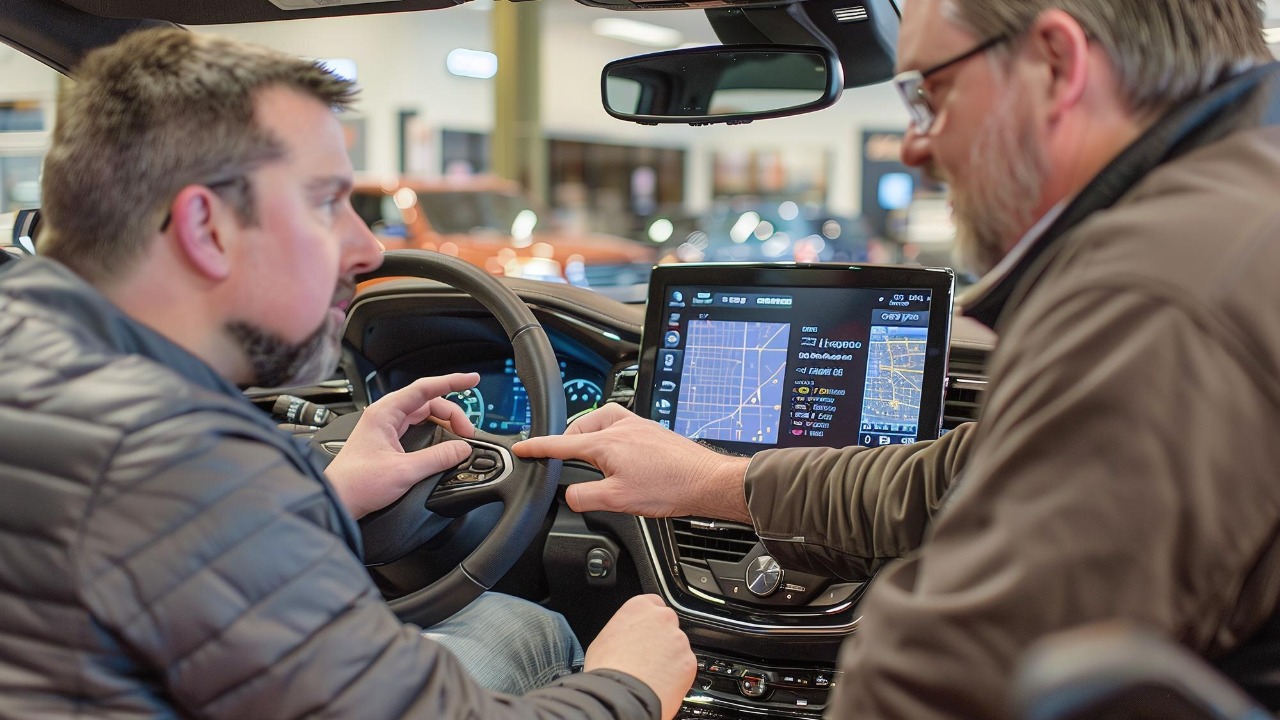
When Marcus Reynolds dropped his 2022 crossover off at a dealership in Columbus for a routine service appointment, he expected the usual: oil change, tire rotation, maybe a complimentary car wash that smells faintly like bubblegum. What he didn’t expect was to get his car back and feel like it had quietly been swapped with a slightly different model. “They said they updated the software,” Reynolds told friends later. “Now half the features seem different, and I’m not even sure which ones are ‘new’ and which ones are just… moved.”
It’s the kind of modern car story that sounds like a tech support ticket, but it’s increasingly common as vehicles become more like rolling computers. A software update can fix bugs, add options, tweak driver-assist behavior, and sometimes rearrange menus in ways that make longtime owners feel like a stranger is living in their dashboard. Reynolds’ experience has sparked a familiar question among drivers: who’s really in charge of your car’s features once software updates become part of basic maintenance?
A routine visit that turned into a “wait, where’d that go?” moment
Reynolds says he didn’t ask for anything special, just standard service and a quick look at a warning light that had popped on and off. The service advisor mentioned there was an available software update and described it as “recommended,” which Reynolds interpreted the same way most people interpret that word at the dentist: probably fine, hopefully painless.
After pickup, the changes didn’t hit all at once. “At first I thought I was imagining it,” he said. “The lane-keeping felt a little different, the screen layout looked cleaner, and my shortcut buttons didn’t do what they used to do.” Then he noticed the heated seat controls were now tucked behind a different menu, and the voice assistant responded with a new tone and slightly different phrasing, like it had come back from a weekend retreat.
What drivers are noticing after updates
Reynolds isn’t alone in describing that “same car, different personality” feeling. In online owner forums and local social media groups, drivers often mention the same categories of changes after dealership updates: infotainment menus rearranged, settings reset, driver-assist systems behaving more assertively or more cautiously, and phone connections needing to be re-paired.
Sometimes it’s small stuff, like the home screen icons moving around or the navigation voice changing. Other times it feels bigger, like a new warning prompt before cruise control activates, or different thresholds for automatic braking alerts. And because these shifts aren’t always explained in plain language at pickup, drivers are left doing detective work in their own driveway.
Why a software update can change so much
Cars today run dozens of electronic control units and layers of software that talk to each other constantly. Even if the dealership says “it’s just an update,” that can mean a new version of the infotainment system, a patch for a safety module, a compatibility fix for phones, or calibration tweaks for sensors. Any one of those can create ripple effects in how features feel day to day.
Manufacturers also use updates to address customer complaints and regulatory requirements. If enough owners report a confusing screen layout, the company might redesign it. If a safety agency flags a behavior that’s technically within spec but still risky, engineers might dial it back with software. In other words, sometimes your car changes because your car is part of a giant ongoing group project.
The good news: updates can fix real problems
Plenty of drivers have had the opposite reaction: relief. Updates can improve Bluetooth stability, reduce glitchy screen freezes, fix backup camera delays, and refine transmission behavior in certain conditions. In vehicles with advanced driver assistance, updates can also improve how smoothly the systems track lanes or respond to stop-and-go traffic.
Reynolds even admits some changes seem positive. “The screen is faster,” he said. “It connects to my phone quicker now, which is honestly nice.” The frustration, he explained, is more about surprise. He wanted the benefits without feeling like he needed a tutorial to find the buttons he used every day.
The awkward part: not all “changes” are actually changes
One reason these situations get confusing is that updates often reset settings to factory defaults. That can make the car behave differently even if the underlying software isn’t dramatically new. Things like steering assist intensity, following distance, collision warning sensitivity, auto high-beams, and audio equalizer presets can all flip back to standard.
So a driver might swear the car is “acting different,” and they’re not wrong, but the fix could be as simple as restoring their custom preferences. It’s a little like someone rearranging your kitchen drawers back to the way the manufacturer intended. Everything is still there, but your muscle memory is suddenly useless.
What dealerships typically tell customers (and what they don’t)
At many service counters, software updates are presented as routine, especially if they’re bundled with other work. Advisors may describe them as required for warranty compliance, recommended for performance, or necessary to address a known issue. But detailed change logs rarely make it into casual conversation at pickup, partly because they can be long and technical.
Drivers also don’t always think to ask the right questions in the moment. You’re juggling payment, keys, and the mental math of “how did an oil change turn into that number,” so it’s easy to miss the chance to ask what exactly changed. By the time you notice the heated seats moved into a submenu, you’re already home.
How to protect your settings and sanity next time
If you like your car exactly the way it is, the simplest move is to ask, before service starts, whether an update is planned and whether it’s optional. You can also ask what system is being updated (infotainment, safety, powertrain), and whether the update will reset personal settings. Some dealerships can note your preferences or at least warn you about likely resets.
It also helps to take quick photos of key settings screens before dropping the car off, especially driver-assist preferences and audio settings. If your car has user profiles, confirm your profile is active after service and that it didn’t revert to “Guest.” And if something feels off, ask the service department whether a calibration or relearn procedure is needed, since certain repairs and updates require sensors to be recalibrated.
What Reynolds is doing now
Reynolds says he’s spending a few evenings reacquainting himself with his own dashboard, one menu at a time. He’s also planning to call the dealership and ask for a printout or summary of what was installed. “I’m not trying to be dramatic,” he said. “I just want to know if the changes were intentional or if my settings got wiped.”
For now, his biggest gripe is the stuff he uses daily being harder to reach. “If the car is going to evolve, fine,” he joked. “But I’d like a patch notes pop-up like my phone has. Even a ‘we moved your seat warmers, sorry’ would go a long way.”
A very 2026 kind of car problem
As more vehicles rely on software to deliver features, the line between “maintenance” and “upgrade” keeps getting blurrier. That can be great when it means fewer bugs and better performance. It can also be maddening when it means you need to hunt for the defroster setting like it’s an Easter egg.
Reynolds’ story is a reminder that the modern dealership visit isn’t just wrenches and fluids anymore. Sometimes it’s also a new version of your car’s brain. And whether that feels exciting or annoying usually depends on one thing: did anyone warn you before your car came back acting like it updated its personality overnight?
More from Fast Lane Only