
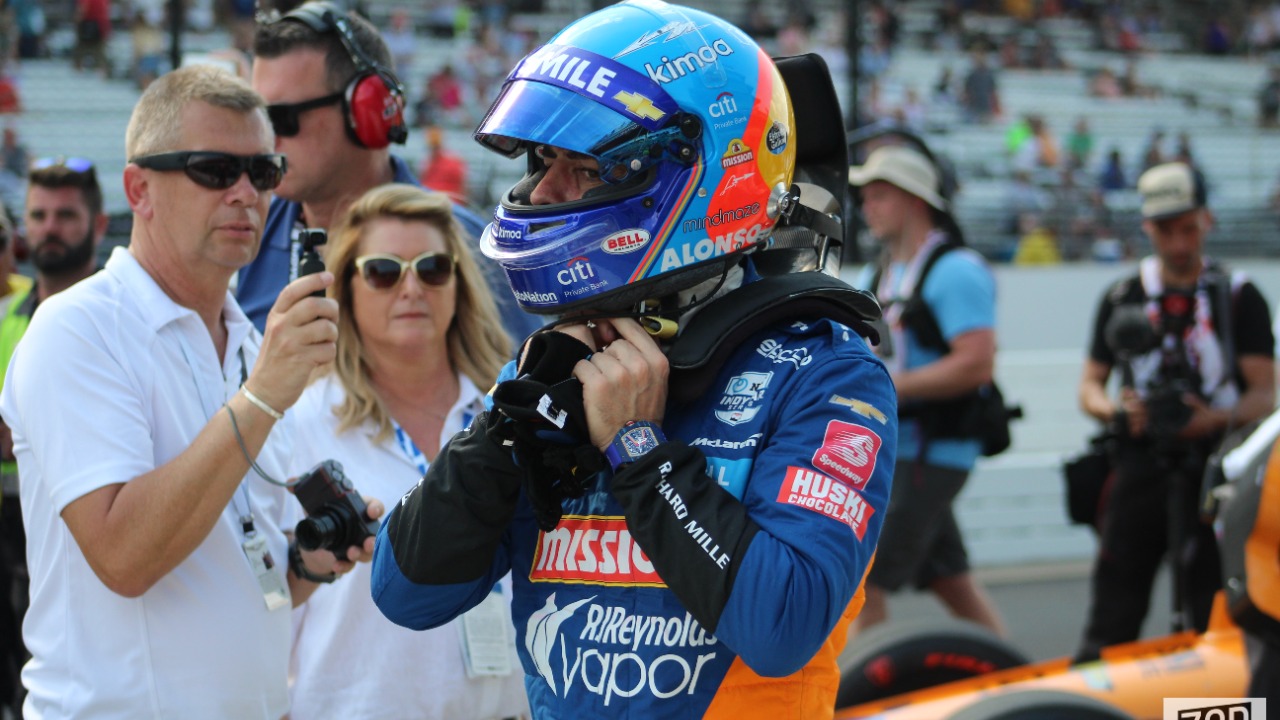
Fernando Alonso is supposed to be a cautionary tale about staying too long at the party, yet he keeps turning up on the podium like the guest who not only outlasts everyone, but also rearranges the furniture better than the host. At an age when most drivers are comparing golf handicaps, he is still muscling a Formula 1 car through high-speed corners and making younger rivals look like they left the handbrake on. His longevity is not a sentimental story about refusing to retire, it is a competitive problem for anyone who still wants to win a world championship while he is on the grid.
What makes Alonso dangerous is not just that he is still here, but that he keeps finding new ways to be sharp, relevant and deeply annoying to anyone who thought the sport had passed him by. He has turned experience into a weapon, fitness into a lifestyle, and sheer racing obsession into a performance tool, which is why his presence on a Sunday afternoon still changes how teams write their strategy notes.
From prodigy to perennial threat
I see Alonso’s current menace as the logical end point of a career that started at warp speed. He was a serial record breaker in his early days, at one time the youngest polesitter, race winner, world champion and double world champion in Formula 1, which meant the sport met him first as a prodigy rather than a survivor, and that mindset never really left him even as the years piled up on the timing screens. Those early titles with Renault, now immortalised every time someone buys a piece of merch describing him as a two-time Formula 1 World Champion, set a standard he has been quietly trying to beat ever since.
That early peak could have been a curse, the kind of success that traps a driver in nostalgia, but Alonso treated it like a baseline. His official profile still frames him as a relentless competitor, listing the long arc of his F1 statistics as proof that he never really left the sharp end of the sport, even when the machinery dipped. The important part is not that he once held all those “youngest ever” labels, it is that he kept driving as if he still had something to prove, which is a slightly terrifying mindset when bolted to that much experience.
Adaptability as a superpower
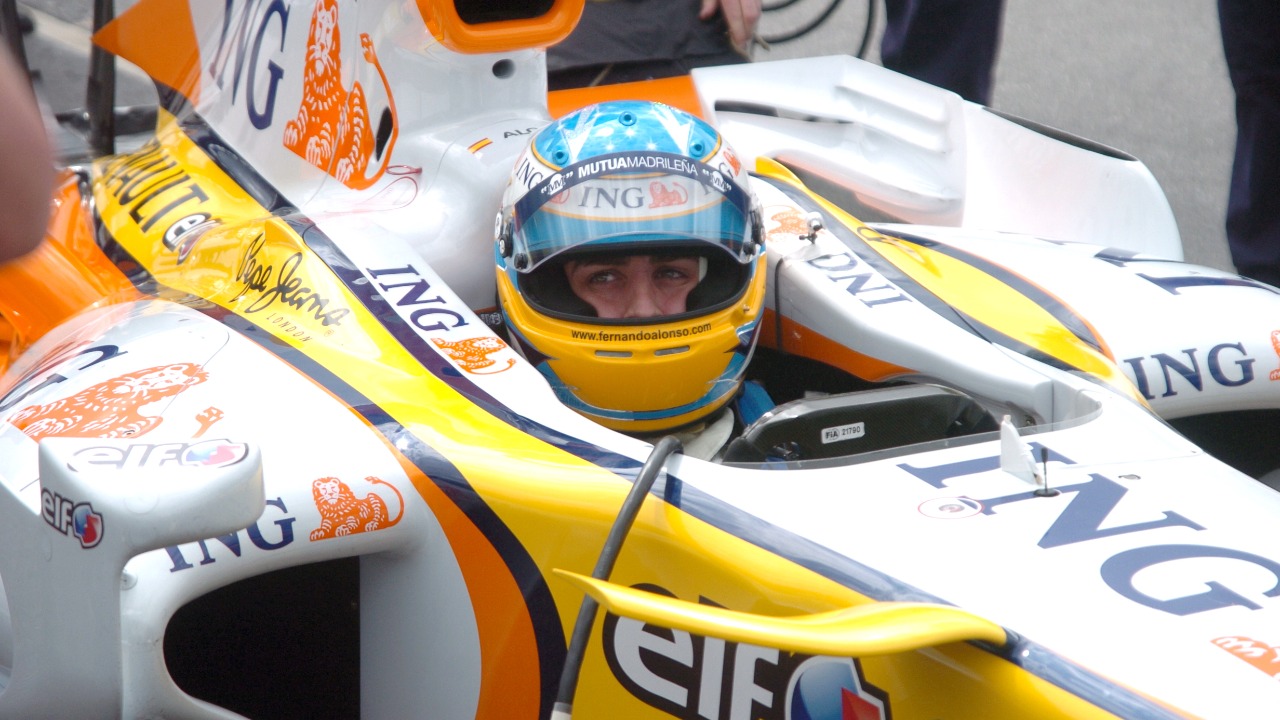
For me, the real secret sauce in Alonso’s longevity is his ability to adapt faster than teams can redesign their hospitality units. Across Minardi, Renault, McLaren, Ferrari, Alpine and Aston Martin, he has repeatedly walked into new factories, new simulators and new political minefields, then somehow emerged as the reference point for performance. That chameleon act is captured neatly in a breakdown of his career that tracks how he has shifted style and approach across Minardi, Renault, Ferrari, Alpine and Aston Martin, turning each move into a case study in reinvention rather than decline.
Even his sabbatical years were less about rest and more about adding new tools to the toolbox. Alonso then moved into sportscar racing with Toyota, winning the FIA World Endurance Championship and the 24 Hours of Le Mans twice, a detour that would have been a retirement tour for most drivers but instead became a training block in multi-class traffic and strategic patience. That stint with Toyota in the World Endurance Championship sharpened his racecraft in ways that still show up when he is threading an Aston Martin through chaos on lap one, and it proved that his adaptability is not a slogan, it is a habit.
Age, fitness and the myth of decline
On paper, Alonso should be slowing down, yet the numbers keep arguing with the calendar. Fernando Alonso, 43, will continue to race in Formula 1, a fact that would sound like a trivia question if it were not backed up by the way he still hustles a car into Q3 and bullies it into points on Sundays. The portrait of Fernando Alonso, 43 still competing at the top is less about defying time and more about outworking it, with training, preparation and a slightly obsessive relationship with performance data doing the heavy lifting.
Alonso is not pretending age does not exist, which is part of what makes his current form so compelling. Fernando Alonso has joked that 24 years of experience and being 44 years old have their disadvantages, especially when jet lag hits harder than a lockup into Turn 1, but he frames that fatigue as a cost he is still willing to pay for the rush of competition.
The mindset that keeps him dangerous
What really keeps Alonso in the threat category, rather than the nostalgia file, is his refusal to treat the present as a farewell tour. He has been clear that some of his best races have come recently, pointing to a performance in Japan as one of his finest drives and using that as evidence that his peak has not yet been archived. When he backs his ability to drive in F1 until the age of 45, he is not making a sentimental promise to the fans, he is making a competitive statement that his best races in Japan are not outliers but previews.
That mindset filters through to how he approaches every stint, every tyre compound and every radio message. An analysis of his 2024 form framed his season as a mix of high expectations and disappointment, yet still concluded that he delivered the kind of performances only a driver of his quality can produce, which is a polite way of saying he dragged the car to places it had no business visiting. Being ranked in that context, with high expectations and disappointment coexisting, shows that the bar for Alonso is still set at “occasional miracle,” not “respectable veteran.”
Why rivals still fear him on Sundays
From the outside, it is easy to romanticise Alonso’s late career as a feel-good story, but inside the paddock he is still treated like a strategic headache. An in-depth look at his 400th grand prix framed his career as powered by an unwavering love for driving, describing how What underpins his success is a passion that has him lapping a private track at home in Oviedo just to stay sharp. That kind of obsession, captured in the description of What underpins his success, means that when the lights go out on Sunday, he is not just relying on muscle memory, he is deploying thousands of extra, self-inflicted practice laps.
That is why, when fans and analysts debate the greatest drivers to ever race in Formula 1, Alonso’s name still lands in the conversation with current contenders rather than retired legends. A video essay that opens by asking viewers to think of the greatest drivers to ever race in Formula 1 ends up describing how Alonso is still a beast in wheel-to-wheel combat, a phrase that sounds dramatic until you watch him defend against a car with a clear pace advantage. That ongoing relevance is why a breakdown of Formula 1 greats can talk about him in the present tense, and why no strategist relaxes when they see his name behind them on the grid.
The internet’s favourite case study in adaptation
Alonso’s longevity has also turned him into a kind of rolling seminar topic for fans who like their racing analysis with a side of comment-thread chaos. In one detailed Comments Section discussion, fans dissected why Alonso was able to adapt so quickly in 2023 compared to others, pointing out that he even missed 2 years in F1 in that time Lewis was in Mercedes, yet still jumped into a new car and immediately looked at home. That comparison, laid out in a thread about Alonso and Lewis at Mercedes, underlines how his time away from the grid did not blunt his edge, it sharpened his ability to decode a car quickly.
Those same online debates often circle back to the idea that Alonso is not just surviving, he is still evolving, which is why his name keeps popping up in conversations about the most complete drivers on the grid. Even the way fans talk about his merchandise, like a cap that reminds everyone he is a two-time Formula 1 World Champion celebrated for his technical expertise and racing intelligence, turns into a shorthand for his reputation as the driver who reads a race like a chess grandmaster. That description of Fernando Alonso’s technical expertise is not marketing fluff, it is the distilled version of what keeps him relevant: he is still the driver you do not want behind you with five laps to go and a slightly fresher set of tyres.
Why his story is still unfinished
For all the talk about age and legacy, Alonso’s most unsettling trait for his rivals is that he does not behave like a man winding down. He still “breathes racing,” as one profile put it, and structures his life around the next lap, the next setup tweak, the next chance to ambush someone into Turn 1. When I look at the arc of his career, from the early records to the sportscar detour with Toyota, from the grind of 24 years of experience to the self-aware jokes about being 44 years old, what stands out is not nostalgia but momentum.
That is why his longevity matters: it is not a museum piece, it is an active ingredient in the current competitive landscape. As long as Fernando Alonso keeps strapping into a car, the grid has to account for a driver who has seen every trick, tried most of them, and is still inventing new ones on the fly. The rest of the field may age out of his era, but he has shown a stubborn talent for stretching that era just a little longer, one late-braking move at a time.

Leave a Reply