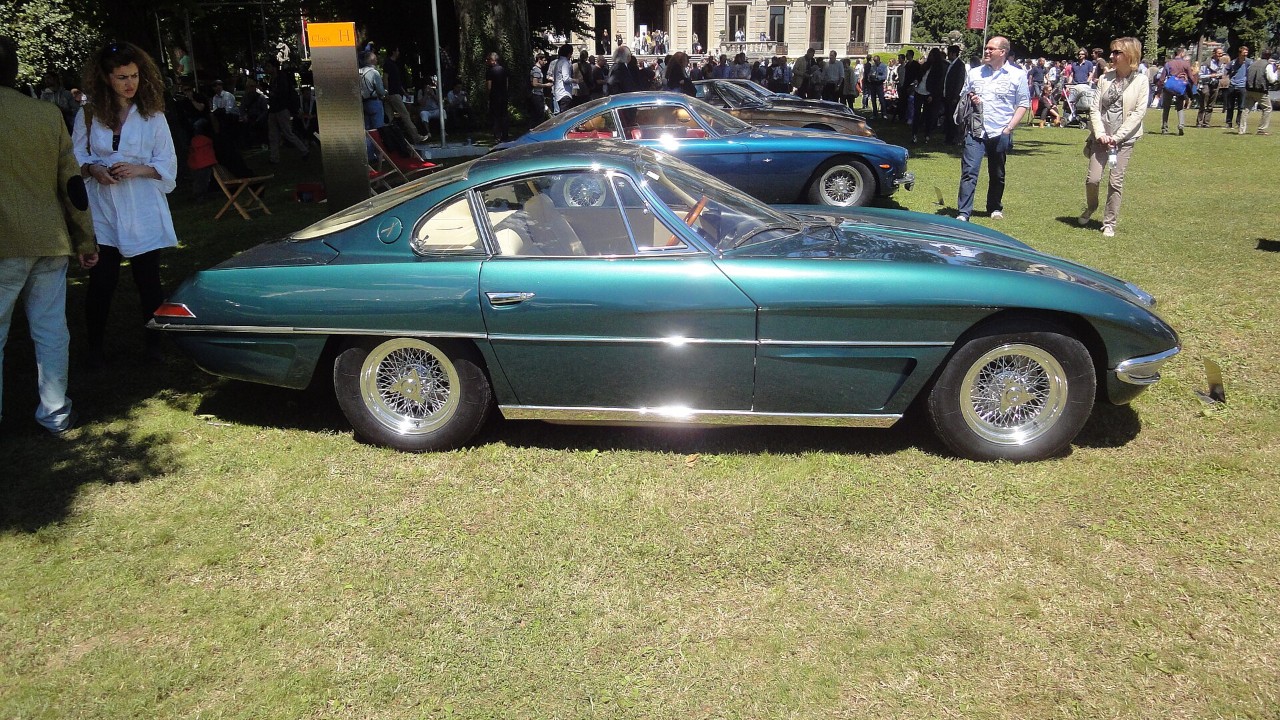
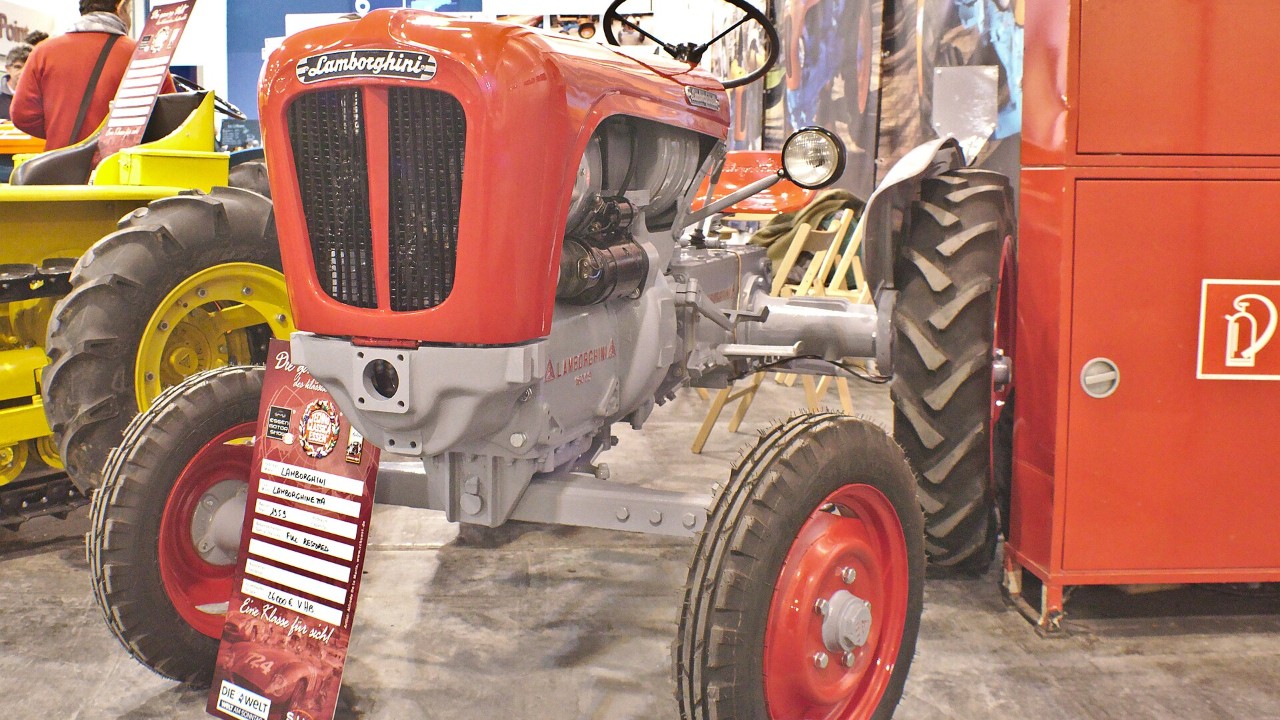
Before the bull badge, there were Ferruccio Lamborghini tractors. He built the first ones from war-surplus engines and parts in 1947 and 1948. Fifteen years later, the tractor maker unveiled a V12 prototype called the 350 GTV.
The order matters. Lamborghini did not come to cars as a racer or a rich hobbyist. Instead, he came as a mechanic who had kept army trucks running on a Mediterranean island during the war. He then sold farmers a cheap tractor when Italy had little else to offer them.
Here is how the farm boy from Renazzo got from scrap-yard engines to the Turin Motor Show. The dates and figures come from Lamborghini’s own museum and heritage pages, plus farm-press and enthusiast sources that cite the company archives.
A mechanic first, from the family farm to Rhodes
According to the Museo Ferruccio Lamborghini, he was born in Renazzo, in the province of Ferrara, on April 28, 1916. He was the eldest of five sons and grew up on the family farm. His father wanted him to run it. However, the boy cared more about machines than crops.
So he trained at a technical school and then learned ironwork and welding from a local blacksmith. Later, he joined a Bologna workshop that maintained army vehicles. At 18, the museum says, he opened his own workshop in Renazzo with a friend, Marino Filippini.
The war then sent him to Rhodes, the Aegean island Italy held at the time. There he served in a vehicle maintenance unit, the 50th Autoreparto Misto di Manovra. He held the rank of corporal driver and later ran the unit’s workshop department.
When the staff fled on September 8, 1943, he went back into the city in civilian clothes. After that, he took odd jobs and opened a small workshop with the permission of the German occupiers. He returned to Italy in 1946, a year after the war ended, the museum says.
How the first Ferruccio Lamborghini tractors came together
Back home, he turned to the small farmers of the low-lying Bassa country. At the end of 1947, the museum says, he set out to build them a tractor that was cheap but powerful. To keep the cost down, he bought all kinds of cheap surplus war equipment. He then improved the engines and fuel systems and built a very simple frame around them.
The farm magazine Grainews adds detail from the SAME museum archives. The company used truck and military-vehicle engines and differentials from ARAR centres, a government agency that redistributed surplus material. Those archives also credit a fuel atomiser, used with a Morris engine, that let the tractors start on petrol and then switch to diesel.
The first tractor, the Carioca, went before the public on February 3, 1948. That was the feast of Saint Biagio, patron saint of Cento. Many farmers looked it over, and many bought one. As a result, he decided to expand production.
From one tractor to a factory
To pay for the next step, he borrowed from the Cassa di Risparmio di Cento, with the family farm as security. That loan funded a larger run of a model called the L33. By 1950, the museum says, he was turning out 200 tractors a year with 30 workers.
Then, in 1951, he bought a 10,000-square-meter field that had once been a racetrack. That same year he formed Trattori Lamborghini, his first real production company. The Land reports that the L33 arrived in 1951 with a six-cylinder Morris engine and a patented fuel atomiser.
The tractor line kept growing after that. He gained a licence to build MWM diesel engines in Italy. Meanwhile, the first Lamborghini crawler, the DL 25 C, arrived in 1955, according to The Land. By the 1960s, the museum says, the company had nearly 400 employees and built 25 to 30 tractors a day.
He did not stop at tractors, either. On a trip to the United States in 1959, he saw companies making home heating burners. Within about a year he had started Lamborghini Bruciatori, a burner and air-conditioning business in Pieve di Cento.
The 1963 350 GTV, a tractor maker’s first car
At the end of 1962, he announced that he would build cars. According to Lamborghini’s official milestones, Automobili Lamborghini was founded on May 7, 1963, in Sant’Agata Bolognese. Engineer Giotto Bizzarrini designed the chassis and a 3.5-liter V12 with double overhead camshafts. Franco Scaglione drew the body, and the Sargiotto body shop built it.
The result was the 350 GTV, and it debuted at the Turin Motor Show in October 1963. However, it was a prototype, not a finished car. Supercar Nostalgia says Lamborghini showed it to the press at Sant’Agata on October 29 and to the public in Turin the next day. At the show, the engine sat on display beside the car rather than under its hood.
In fact, Lamborghini was unhappy with both the body and the highly tuned engine. He and Bizzarrini parted ways soon after. Paolo Stanzani then reworked the V12 to 270 CV, the company says, and Carrozzeria Touring in Milan refined the shape. That car became the 350 GT, Lamborghini’s first production model, shown at the 1964 Geneva Motor Show.
What happened to the tractors and the GTV
In the end, the tractor business ran into trouble of its own. The museum says a large order for Bolivia fell through after a coup there, leaving about 5,000 tractors unsold in 1970. He gave up management of the tractor company in 1972 and sold it to SAME in 1973.
The GTV prototype survived. Supercar Nostalgia says it stayed at the factory until 1985, when Romano Bernardoni of Emilianauto bought it. He spent five years restoring it and changed the paint from light blue metallic to green. The tractor name lives on, too: Grainews notes that Lamborghini tractors have been part of the SAME Deutz-Fahr group since 1973.
More from Fast Lane Only
- Unboxing the WWII Jeep in a Crate
- 15 rare Chevys collectors are quietly buying
- 10 underrated V8s still worth hunting down
- Police notice this before you even roll window down
This article was created with the help of AI and was reviewed and edited by Fast Lane Only editors before publication.