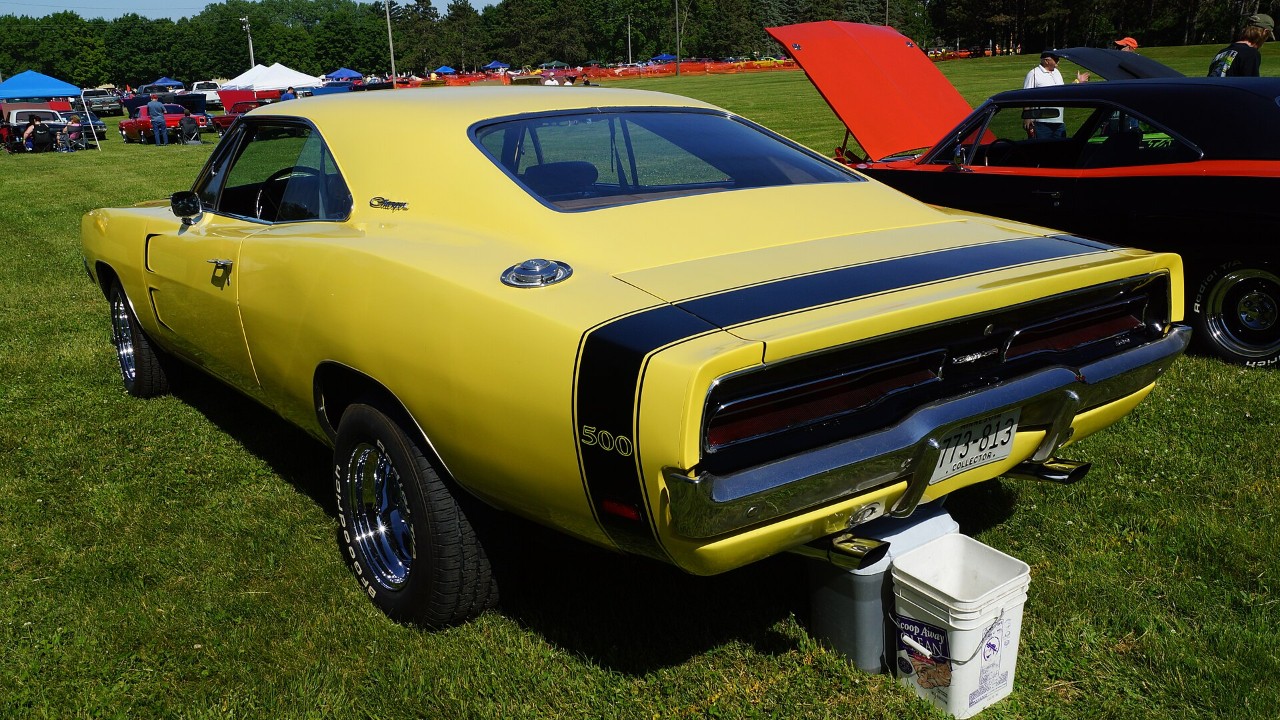
The 1969 Dodge Charger 500 looked almost like a regular Charger, but two changes set it apart. Its grille sat flush with the nose, and its rear glass sat level with the roofline instead of deep in a recess. Dodge made both changes for one reason: to go faster on NASCAR’s biggest tracks.
The stock Charger was handsome, but it fought the air at racing speed. Meanwhile, Ford’s race cars had a more aerodynamic shape. So Dodge reshaped the car, and then it had to sell enough of them to make the new shape legal.
Here is what was wrong with the regular car, how Dodge fixed it, and why the fix didn’t last long.
The problem with the stock Charger
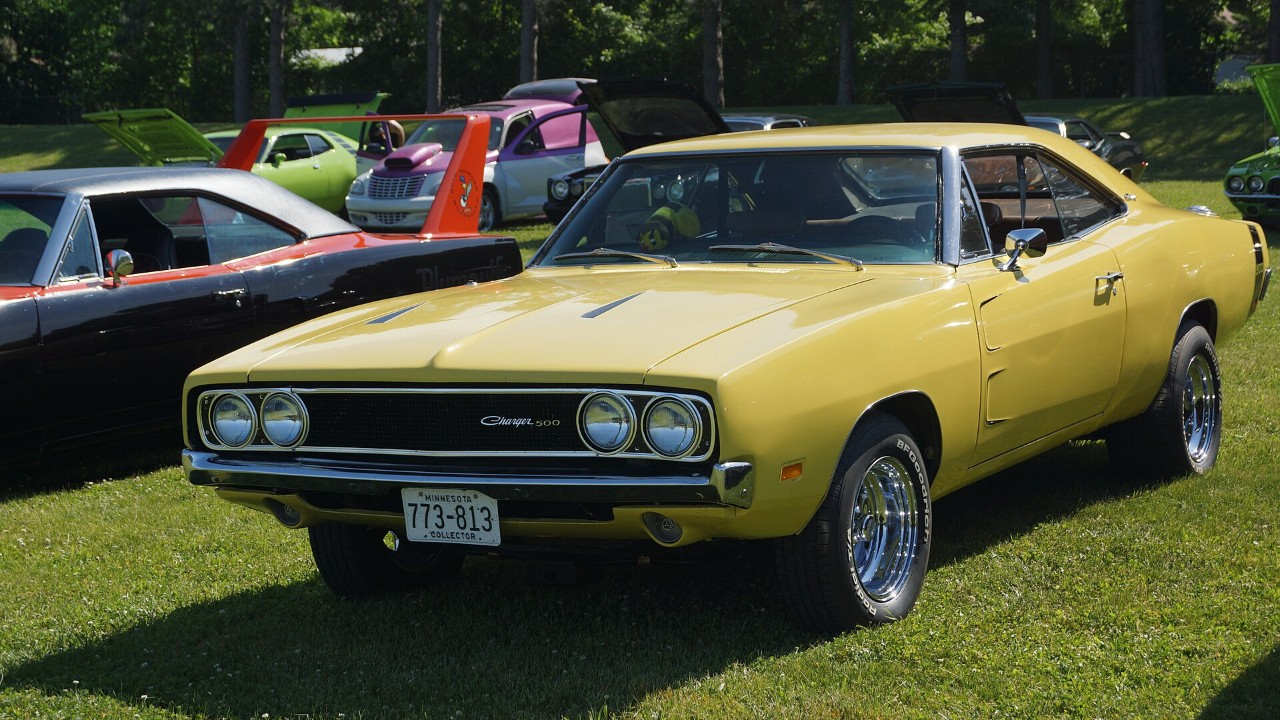
The regular Charger’s styling worked against it on a superspeedway. According to Old Cars Weekly, the concave grille opening and the shape of the rear window and roof caused aerodynamic problems at high speed. In short, the car’s best-looking details were also its slowest.
Motor1 describes the same two trouble spots. It points to the Charger’s stubby, indented nose and its recessed rear window, which disrupted the airflow. As a result, the race cars needed a cleaner front end and a cleaner roofline.
Rival makers made the gap obvious. The Cotton Owens archive says Dodge created the Charger 500 to compete with the more aerodynamic Fords, chasing more speed and better finishes. Owens, one of NASCAR’s 50 greatest drivers by the archive’s account, ran a team with factory support from Dodge and Chrysler.
How Dodge fixed the nose and the roof
The cure came in two parts. First, Chrysler replaced the Charger’s grille with a Coronet grille mounted flush with the nose, Old Cars Weekly says. Second, it reshaped the backlight and the sheet metal around it into a fastback-like form.
The Cotton Owens archive explains how the rear window change worked. Workers welded a plug into the opening to create flush glass. Because the new fastback shortened the rear deck, they also cut down the trunk opening. At the front, a new grille went in flush with the face of the car.
Did it help? Chrysler thought so. In a letter to the first private owner of one car, the company claimed an “increase of 3 to 7 mph…on the super speedways,” according to Old Cars Weekly.
The NASCAR rule that set the number 500
A race car alone wasn’t enough. To count as “stock” for NASCAR at the time, a maker had to build at least 500 cars for private sale, Old Cars Weekly explains. That rule set the 500-car target for the Dodge Charger 500.
However, 500 cars was an awkward number for a factory. The Cotton Owens archive says the run was too small for efficient assembly-line production. Instead, Dodge hired Creative Industries, its contracted racing research and development firm, to convert Charger R/Ts by hand.
Old Cars Weekly fills in the route. Creative Industries in Detroit took R/Ts from the Hamtramck plant and changed the grille and backlight. Then the cars went to a second location for paint and prep. The Owens archive adds that Charger 500s and Daytonas carried serial numbers starting with “XX,” while regular R/Ts used “XS.”
Engines and how many were built
Buyers could pick from two V8 engines. According to Motor1, the Charger 500 came with either a 426 or a 440, backed by a TorqueFlite automatic or a four-speed manual. The 440 was rated at 375 horsepower, Motor1 says, and Old Cars Weekly lists the 426 Hemi at 425 horsepower.
The production count is still disputed. Some sources say 559 or 548 were built, while other hobby experts put the total at 392, Old Cars Weekly reports. Motor1 also uses the 392 figure. So Dodge may have built as few as 392 cars, short of the 500 its own name promised.
Why the shortfall? Old Cars Weekly says the Charger 500 and the winged Charger Daytona overlapped in production. As a result, attention moved to the newer car.
Why the Dodge Charger 500 led to the Daytona
The flush grille and flush window helped, but they didn’t solve everything. In fact, the Charger 500 never became as competitive in NASCAR as Dodge wanted, Old Cars Weekly says, and that led straight to the Daytona.
The Cotton Owens car played a part in that next step. Creative Industries used it as a test mule in at least two wind tunnel sessions, according to the Owens archive. Engineers fitted a pointed prototype nose, but the car had no rear wing yet. The new nose added so much front downforce that the rear end went light. That’s why the tall rear wing came later, to balance the car.
That wind tunnel work fed directly into the Dodge Daytona and the Plymouth Superbird, the archive says. Engineers shaped both cars to be more aerodynamic than the Charger on NASCAR’s larger tracks, Daytona and Talladega.
Today, the Cotton Owens Charger 500 survives in restored form. Its “XX” serial number marks it as one of the first Charger 500s, likely built around mid-1968, according to the Owens archive.
More from Fast Lane Only
- Unboxing the WWII Jeep in a Crate
- 15 rare Chevys collectors are quietly buying
- 10 underrated V8s still worth hunting down
- Police notice this before you even roll window down
This article was created with the help of AI and was reviewed and edited by Fast Lane Only editors before publication.