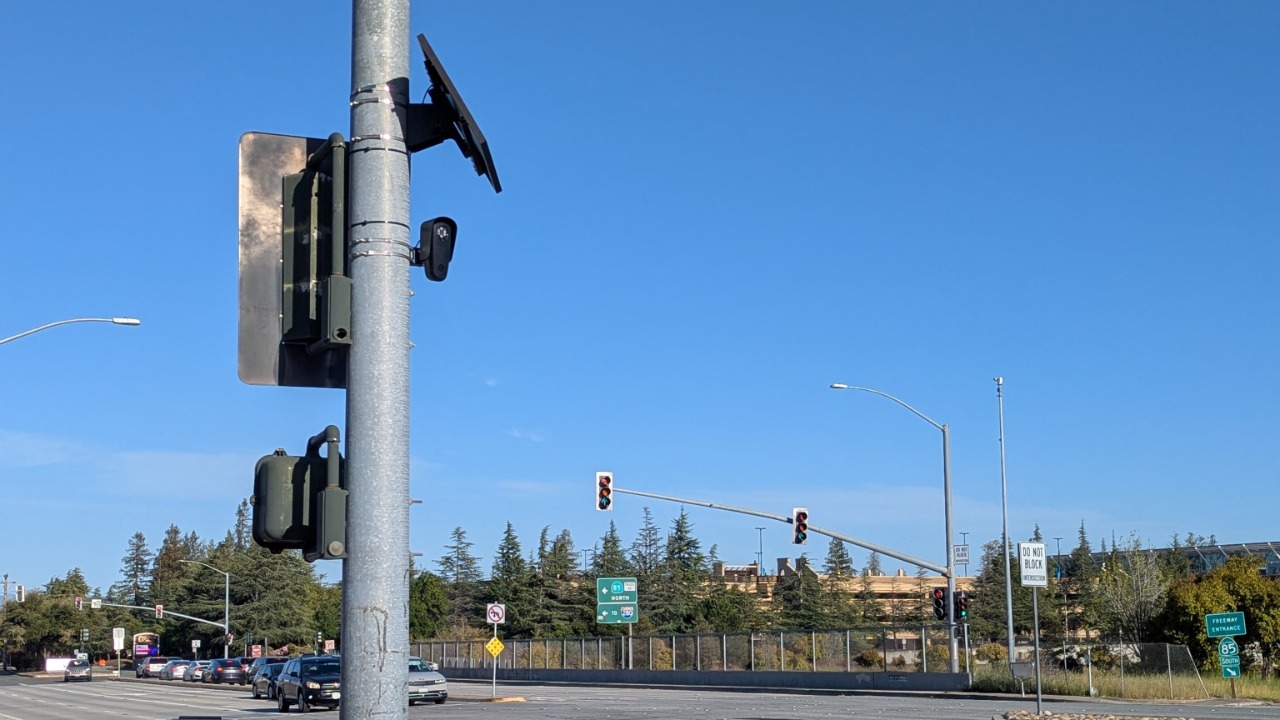
Automatic license plate readers have quietly turned neighborhood intersections into networked checkpoints, logging who drives where and when with a precision that old-school traffic cops could only dream of. Companies like Flock Safety pitch this as a way to catch car thieves and violent offenders, but the same tools that see everything on the street seem curiously blind when the suspect is a badge. I want to look at how these systems really work, who gets to use them, and why the safeguards around police abuse lag so far behind the technology itself.
How Flock turned every road into a data trail
To understand the power imbalance baked into these cameras, I start with the basics: what they collect and how far that information travels. The systems do not just grab a plate number, they also record vehicle color, make and model, time, and location, and in some cases some units capture a wider slice of the scene. That means a single drive across town can leave a breadcrumb trail of pings that, when stitched together, reveals where you sleep, where you worship, which clinic you visit, and which protests you attend. When those records are stored in centralized databases, they stop being fleeting snapshots and become a living map of ordinary life.
Flock Safety has built its business on making that map cheap and easy to deploy. The company, which started in 2017, has spread across the country by selling low cost, solar powered cameras that connect over a wireless network, a model that helped convince cities in the Tri Cities region of Washington to start installing the system, according to local reporting on Flock Safety. In Jefferson County, Colorado, officials describe how their Flock Safety Cameras feed images into Flock Safety’s secure cloud environment so The Jefferson County Sheriff and the Office can search for plates tied to stolen vehicles or other alerts. Once that infrastructure is in place, the temptation to use it for far more than traffic enforcement is built in.
The sales pitch: safety, solved with software
On paper, the appeal is obvious, and I do not dismiss it lightly. Police agencies point to cases where a single hit on a suspect vehicle helped solve a brutal homicide in Thurston County, a story that local officials highlighted when they described how one Flock camera contributed to cracking one of the worst killings in the county’s history. There is a reason law enforcement agencies want the technology: it can locate stolen vehicles in minutes, flag cars linked to Amber Alerts, and give detectives a time stamped trail when witnesses remember only a partial plate or a distinctive bumper sticker.
Flock Safety leans hard into that narrative, framing skepticism as a set of misunderstandings. In its own marketing, the company walks through “six common myths” about these systems, insisting that concerns about scope and misuse are overblown and that communities should look Below the surface of each MYTH before judging. One of those talking points centers on the idea that cameras only capture License Pl data, a claim that sits awkwardly next to independent descriptions of systems that log far more than a plate number. The gap between the sales pitch and the technical reality is where civil liberties advocates see the greatest risk.
From neighborhood watch to national dragnet
Once the cameras are up, the real story is not what happens on a single block but how far the data flows. Civil liberties researchers who dug into Flock Safety’s own servers found that, Through an Through analysis of 10 months of nationwide searches, more than 50 federal, state, and local agencies were tapping into the network to track vehicles, including those tied to protests and activist events. That kind of cross jurisdictional access turns what looks like a local tool into a national surveillance grid, one that can follow a targeted vehicle long after it leaves the region where the camera is mounted.
Other investigations have pulled back the curtain on how that grid intersects with immigration enforcement and other federal priorities. One civil rights group reported that Flock sells its cloud connected data to agencies whose work includes immigration, and that the company’s surveillance data is being used by ICE to help identify and track vehicles. At the same time, a statewide review in Illinois found that hundreds of police departments were using a camera company accused of breaking state law, after Secretary of State Alexi Giannoulias alleged that Flock Safety illegally shared data with out of state agencies, prompting the state’s office to audit the company. When a private vendor can quietly plug local traffic cameras into federal databases, the question of who is watching the watchers becomes more than a slogan.
Blind spots around dirty cops and abusive searches
For all the talk about catching criminals, the safeguards around how officers use these tools are thin, and that is where the system feels most lopsided. Digital rights advocates who reviewed Flock’s product updates argue that the company has blamed users, downplayed harms, and doubled down on the very systems that enabled violations in the first place, warning that the same infrastructure can be used to terrorize abortion seekers or immigrants, as one critique of Flock Safety put it. A separate year end review of the company’s impact described how Flock Enables Surveillance of Protesters and fuels Biased Policing and Discriminatory Searches, with Our November analysis revealing deeply troubling patterns that are easier to execute at scale when every car can be queried in seconds.
When those patterns surface, accountability is patchy at best. In Washington state, lawmakers are scrambling to regulate license plate cameras that could aid stalkers, as sheriffs, civil rights groups, and transparency advocates clash over how much access the public should have to usage logs and audit trails, according to one report on Jan debates. Another story from the same state describes how Washington lags behind nearly half of the states, including Idaho, that have passed laws around automatic license plate readers, quoting a police chief who warned that trying to fully anonymize such data is “impossible,” a point highlighted in coverage of Washington and Idaho. Yet while legislators haggle over retention limits and public records, there is far less movement on rules that would make it easier to spot when an officer runs a plate to stalk an ex, target a critic, or retaliate against a whistleblower inside the department.
Courtrooms, closed records, and the fight over who gets to see
As the technology races ahead, the legal system is struggling to decide what these images and logs really are. In Washington, a judge’s ruling that Flock camera photos could be used in certain prosecutions drew attention from legal commentators like Leato, whose show Leato’s Law, hosted by Steve Leato, has been dissecting how these surveillance tools intersect with constitutional protections, as discussed in one online thread about Leato. At the same time, privacy advocates warn that treating plate scans as routine business records rather than sensitive location data makes it easier for police to sidestep warrant requirements and for prosecutors to lean on mass surveillance without meaningful judicial scrutiny.
Legislatures are not offering much comfort. In Arizona, a police backed GOP proposal from lawmaker Payne would shield license plate reader data from public review, spelling out specific instances in which an ALPR system may be used, including in any criminal investigation or search for a missing person, while limiting disclosure to law enforcement or a subpoena, according to summaries of Payne and ALPR rules. In practice, that kind of shield would make it harder for journalists, defense attorneys, or community groups to audit how often officers run plates tied to internal affairs investigators, local activists, or even other cops. When you combine closed records with a vendor that, according to critics, has already downplayed harms and resisted deeper reforms, the result is a system that can expose every driver on the road while leaving misconduct in the dark.
More from Fast Lane Only