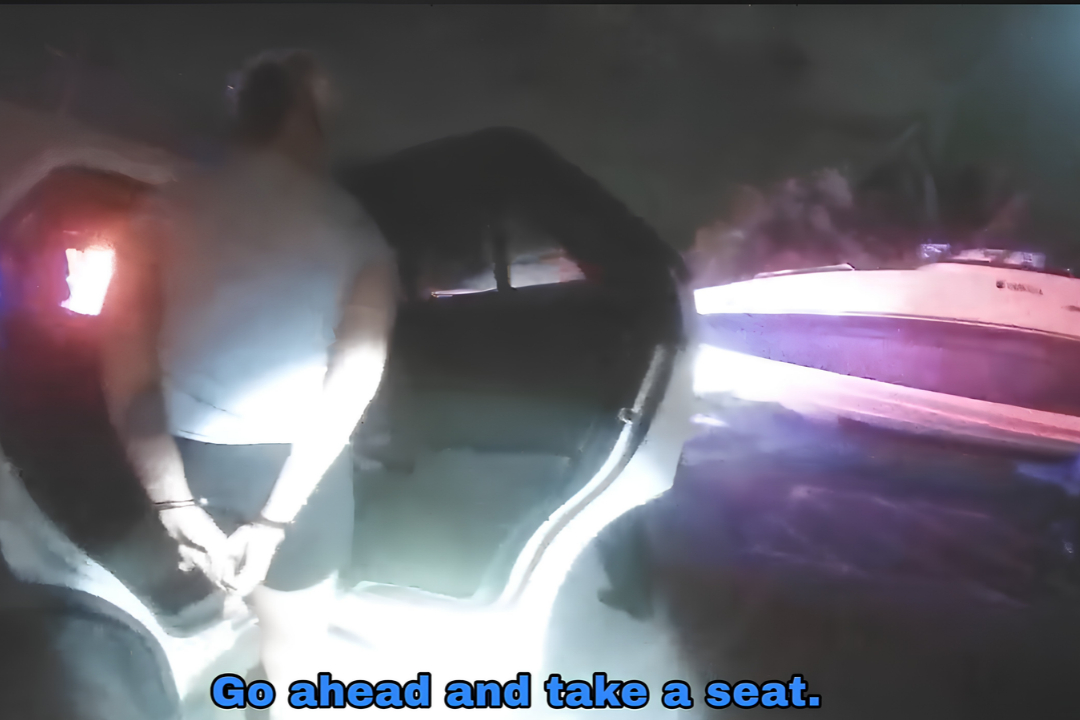
A Florida traffic stop that began with an argument over who had been inside a car eventually became a DUI arrest backed by two breath-test readings over the legal limit.
The driver, identified as Laura, repeatedly challenged a deputy’s account of the stop and later suggested he had brought in another officer because he did not want to admit he was wrong. By the time the investigation reached the station, however, the disagreement over the mysterious passenger had become far less important than what the breathalyzer showed.
The stop started with speeding and a missing passenger
The deputy said he had clocked Laura driving 61 mph in a 45 mph zone before following her into a parking area. He also claimed he saw a male passenger get out of the vehicle and run toward the house, something Laura immediately denied.
The paperwork raised more questions. Laura produced a New York driver’s license while the vehicle carried Kentucky registration belonging to her boyfriend. She told the deputy she had been living in Florida for about three months and working at the Marriott in Marathon.
When her boyfriend came outside, he denied having been in the car and said he had been home since getting off work at 5 p.m. The deputy remained convinced he had seen someone leave the vehicle, although he later acknowledged that proving it would be another matter.
Laura kept insisting the deputy had it wrong
After a second deputy arrived, Laura returned to the original accusation. She asked whether anyone had reviewed the footage and complained that she was being questioned about her residency when, from her perspective, she had simply been stopped for speeding.
She explained that she had moved to Florida to stay with her boyfriend but had not fully decided whether she wanted to remain there. During that conversation, she also said she was coming home from work and admitted having consumed two drinks while closing up.
The second deputy then asked her to perform field sobriety exercises. Laura declined, saying she did not believe she should have to do them because the original reason for the stop was speeding.
The disagreement did not stop the DUI arrest
The deputies said they noticed signs they believed were consistent with alcohol consumption, including the smell of alcohol, red eyes and concerns about her speech. Laura was subsequently arrested for DUI as well as an alleged violation involving her out-of-state driver’s license.
She questioned why the second deputy was making the arrest instead of the officer who had initially stopped her. Laura suggested that the first deputy had realized he was wrong and called someone else over rather than acknowledge it.
The original deputy responded that the dispute over whether someone had exited the car did not change the DUI investigation. He said Laura had been driving, appeared potentially impaired and had declined the requested field sobriety exercises.
The breath test made the passenger argument almost irrelevant
At the station, Laura initially hesitated when asked to provide a breath sample before agreeing to the test. Her first reading was recorded at 0.115, followed by a second reading of 0.113. Both were above the 0.08 BAC threshold identified in the video.
According to the case summary presented by Crime Scrutiny, Laura later pleaded no contest to DUI while prosecutors dropped the driver’s-license-related charge. She was adjudicated guilty and received 12 months of probation, 50 hours of community service, DUI school, a victim impact panel, a six-month license revocation and other penalties.
She also faced a 10-day vehicle impoundment and approximately $1,188 in court costs and fines. Whatever disagreement remained over whether the deputy had correctly identified the passenger situation, the DUI case ultimately ended with a guilty adjudication following the breath-test results.
More from Fast Lane Only
- Unboxing the WWII Jeep in a Crate
- 15 rare Chevys collectors are quietly buying
- 10 underrated V8s still worth hunting down
- Police notice this before you even roll window down
*Research for this article included AI assistance, with all final content reviewed by human editors.