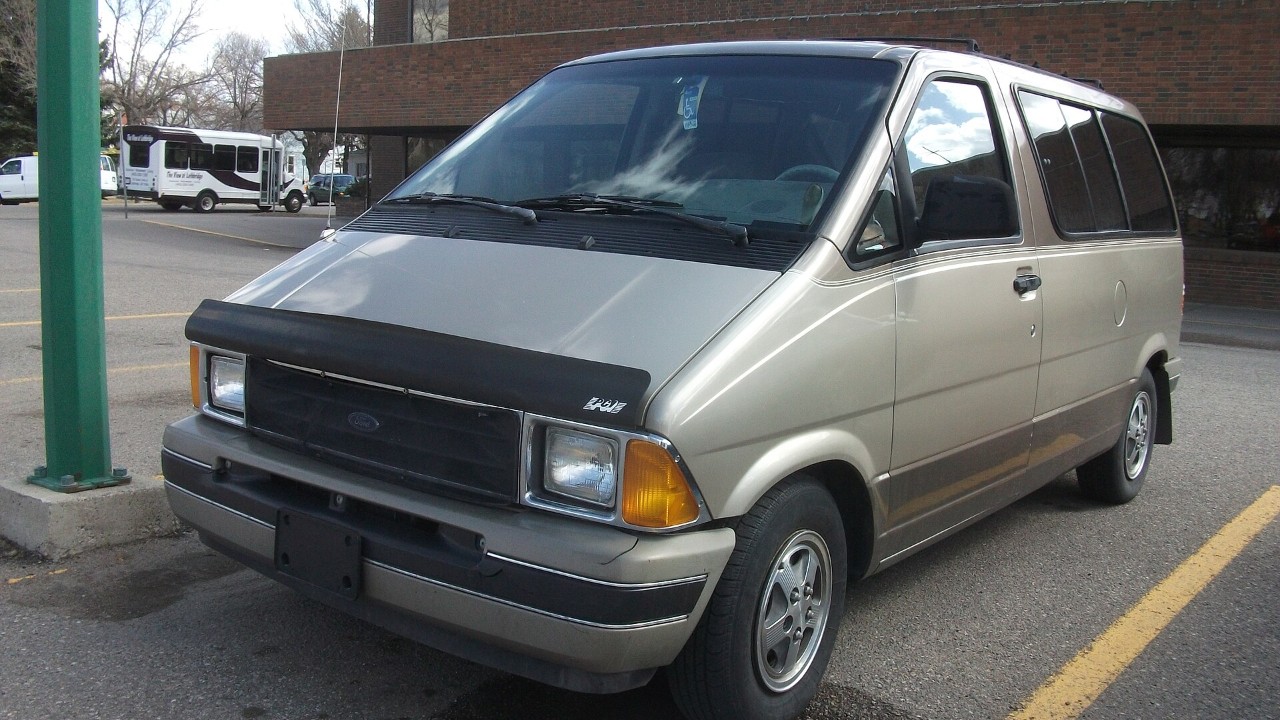
Ford built 2,029,577 examples of the Ford Aerostar in a single generation. Numbers like that help explain why old minivans are so easy to find on used-car lots. A low price tag makes a tired family van tempting. That is exactly when buyers stop asking hard questions.
Some of these vans earned their place in family history. Others carry open recalls, weak crash-test results or drivetrain problems that can turn a bargain into a tow-truck bill. In fact, the paperwork tells you more than the shine on the paint.
These are our picks for nine vans to avoid before buying one, and why. The verdicts are our opinion. However, every recall, crash rating and spec below comes from federal recall records, crash-test results and model histories. Each entry also ends with one line of advice if you want to shop anyway.
1. Ford Aerostar
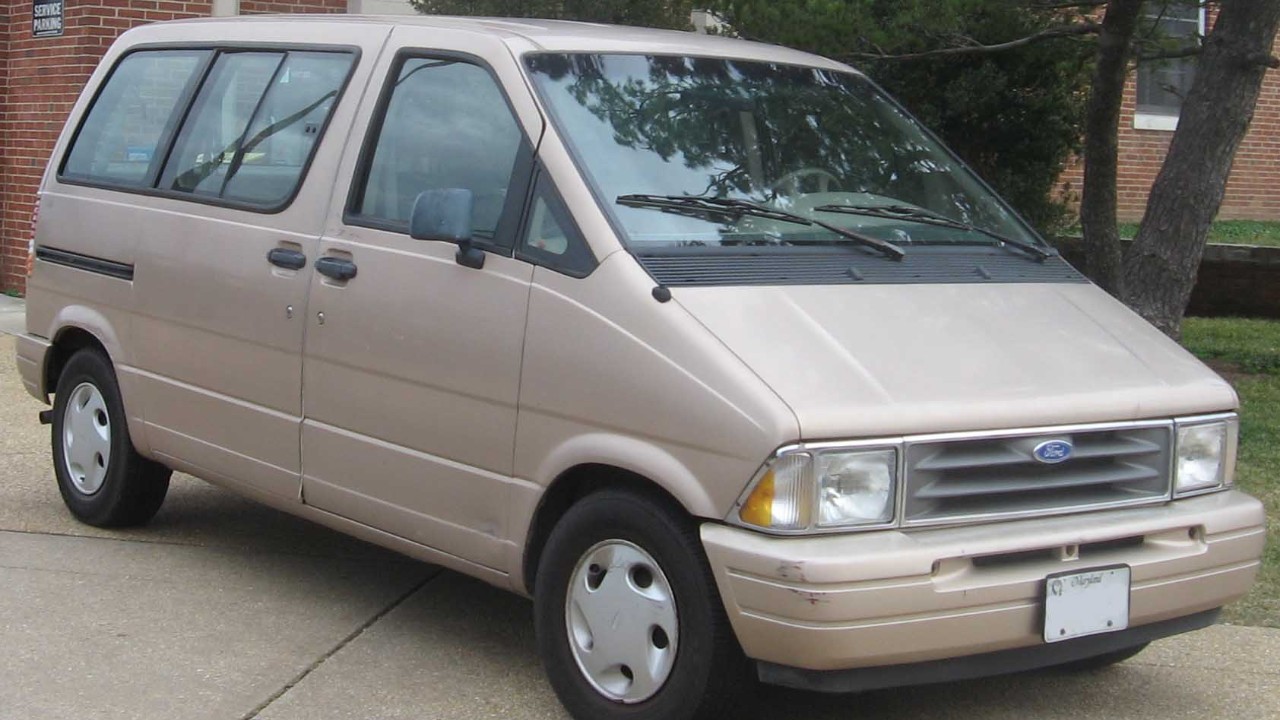
The Aerostar was Ford’s first minivan, sold for the 1986 to 1997 model years. It rode on a rear-wheel-drive chassis, and from 1990 it offered an all-wheel-drive system called E-4WD. Ford built every one at its St. Louis Assembly Plant in Hazelwood, Missouri. Even after the Windstar arrived for 1995, Ford kept selling the Aerostar alongside it through 1997.
The trouble with an old Ford Aerostar is age and wiring. For the 1995 model year alone, NHTSA’s recall database lists a fix for heat buildup in the fuel pump and sender wiring harness. That fault could cause a short, a loss of power and a fire risk. Another recall covered an overloaded accessory power circuit that could also short and start a fire. A third warned that the spare tire in its underbody carrier could rub through a rear brake line.
Our take: the Ford Aerostar has real charm, and the truck-like layout appeals to tinkerers. However, these are old vans with old electrical systems. We would pass on any Ford Aerostar without paperwork. Buyer advice: run the VIN through NHTSA’s recall lookup and walk away from any Aerostar with open wiring recalls.
2. 1991 Pontiac Trans Sport SE
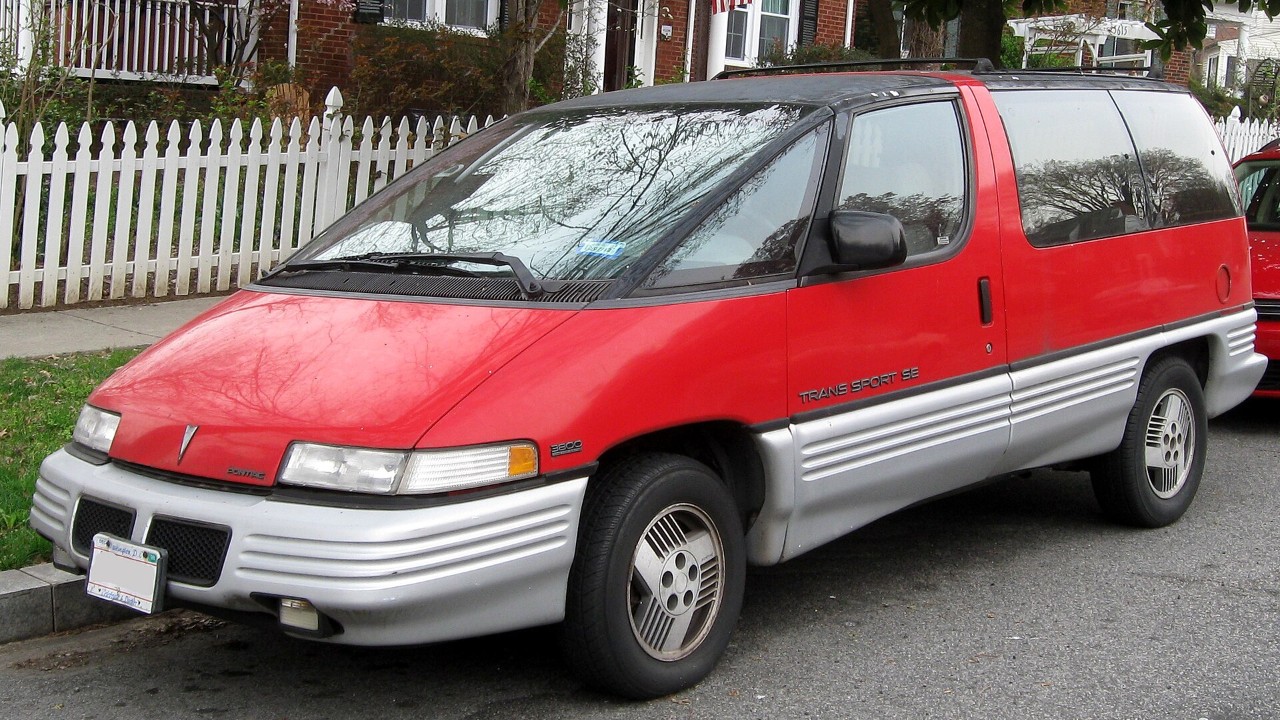
Pontiac’s first minivan arrived for 1990, wrapped in polymer plastic body panels over a galvanized steel space frame. Its long, sloping nose earned the “Dustbuster” nickname. For 1990 and 1991, the only engine was a 3.1-liter V6 rated at 120 horsepower. It came with a three-speed automatic, which was the only transmission offered. The Chevrolet Lumina APV and Oldsmobile Silhouette shared the same plastic-paneled body.
Plastic panels cannot rust, but the steel underneath can. NHTSA lists a recall for the 1991 model because corrosion on the rear cradle bolt retainers could let the bolts pull through. In the worst case, the steering intermediate shaft could separate from the steering gear. A separate campaign replaced a glove box door that might not stay closed in a crash.
Our take: the 1991 Pontiac Trans Sport SE is a fun piece of 1990s design, but the early drivetrain feels weak for a heavy van. We would skip it. Buyer advice: if you love the Dustbuster look, find a 1992 or later model with the 3.8-liter V6 and four-speed automatic, and confirm the cradle bolt recall was done.
3. 2002 Mercury Villager
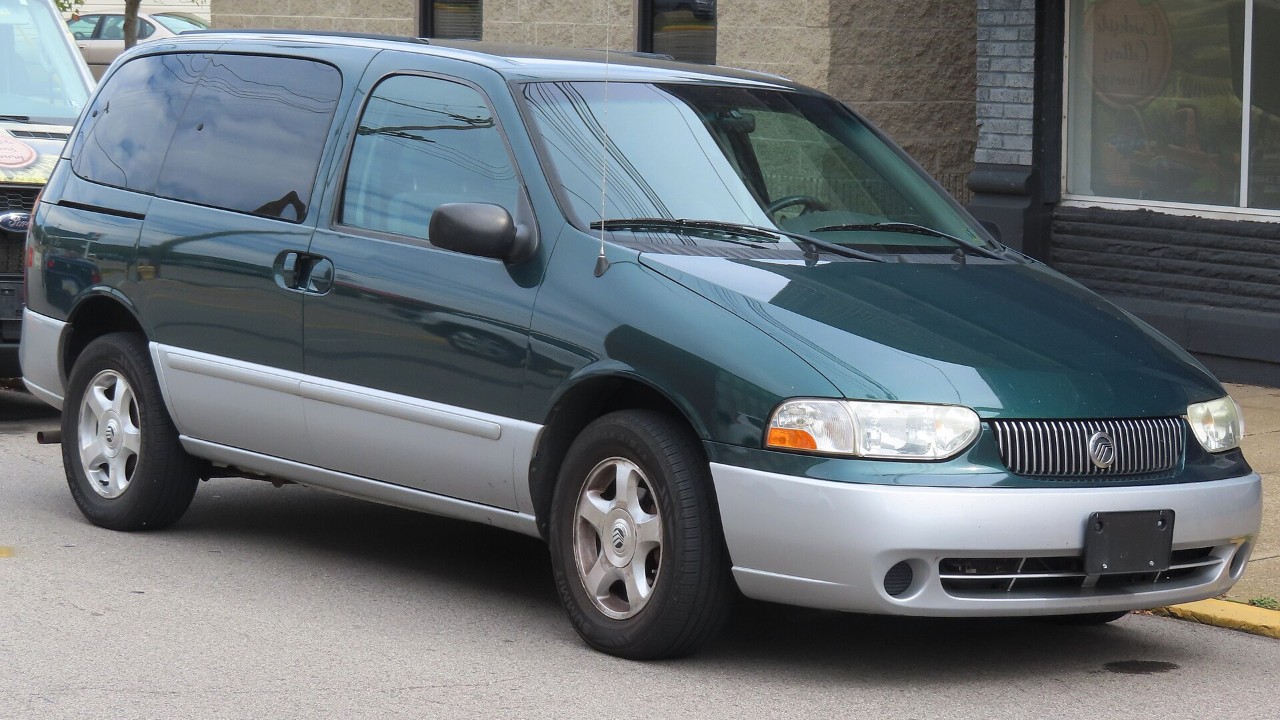
The Villager came out of a Ford and Nissan joint venture, and Nissan sold its twin as the Quest. Its second generation ran from 1999 to 2002 with a 3.3-liter Nissan V6 rated at 170 horsepower. The last Villager rolled off the line on June 27, 2002, after sales fell from 45,315 in 1999 to 16,442 in 2002. Mercury then skipped a year and replaced it with the Freestar-based Monterey for 2004.
Crash protection is the bigger issue. In the IIHS moderate overlap front test, the 1999 to 2002 Villager earned a Poor rating overall. Its structure and safety cage also rated Poor, as did the left leg and foot injury measure. The institute ran the test on a 1999 Nissan Quest GXE, the Villager’s sister van, so the Quest of those years shares the result.
Our take: a 2002 Mercury Villager can be a smooth, comfortable cruiser. Even so, a Poor structure rating is hard to ignore when the van carries kids. Buyer advice: for family duty, spend the extra money on a newer van that earned a Good rating in the same test.
4. 2009 Volkswagen Routan
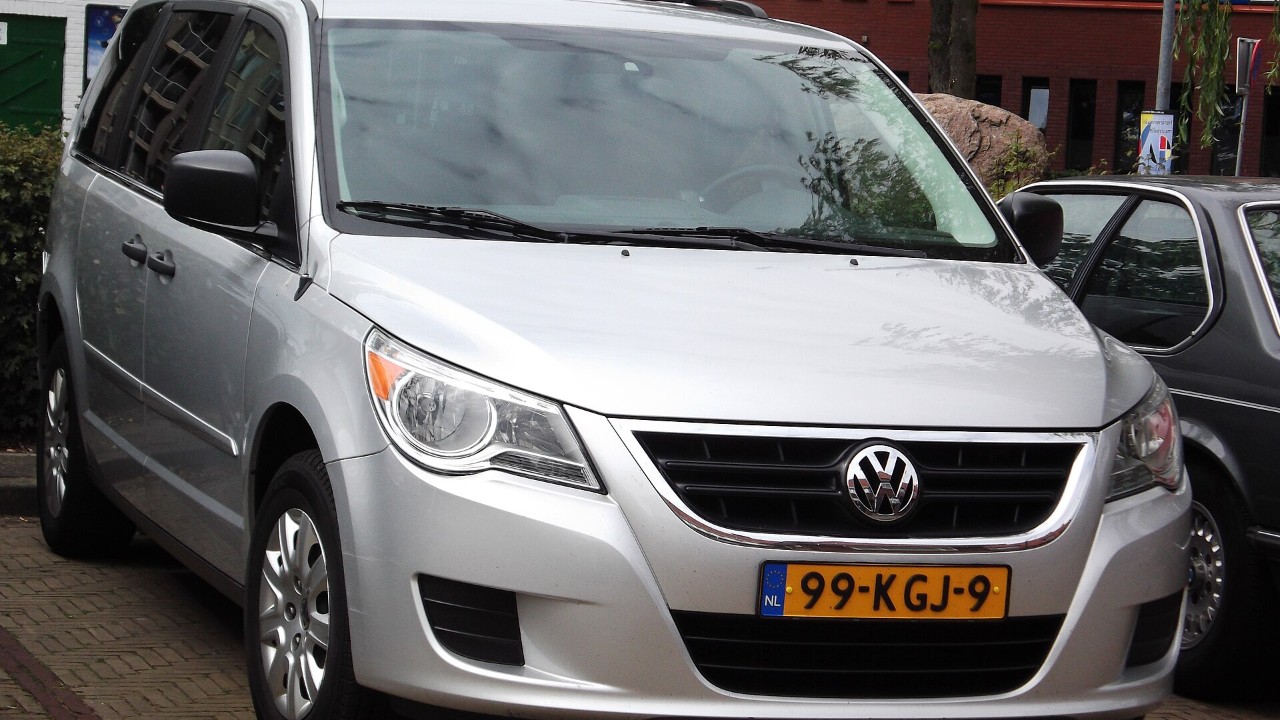
The Routan was a Volkswagen built by Chrysler. It rode on the Chrysler RT platform, came from the Windsor Assembly plant in Ontario, and wore revised styling and suspension tuning. For 2009, buyers chose a 3.8-liter V6 with 197 horsepower or a 4.0-liter V6 with 251 horsepower. However, it skipped Chrysler’s Stow ‘n Go seats. Volkswagen had hoped for at least 5% of the U.S. minivan market, yet by July 2009 it had sold 11,677 Routans.
The recall list is the problem. NHTSA records show that a jolt or rough road could move the ignition key out of the Run position on certain 2009 and 2010 Routans. That would shut off the engine and disable the airbags, power steering and power brakes. Another campaign covered airbag control units that could corrode, so the airbags might not deploy. A third warned that a misrouted harness near the sliding door hinge could short and start a fire.
Our take: we would pass on a 2009 Volkswagen Routan unless every recall is done. Buyer advice: ask for dealer records showing the ignition, airbag and wiring recalls were completed before you hand over any money.
5. 2003 Volkswagen EuroVan GLS
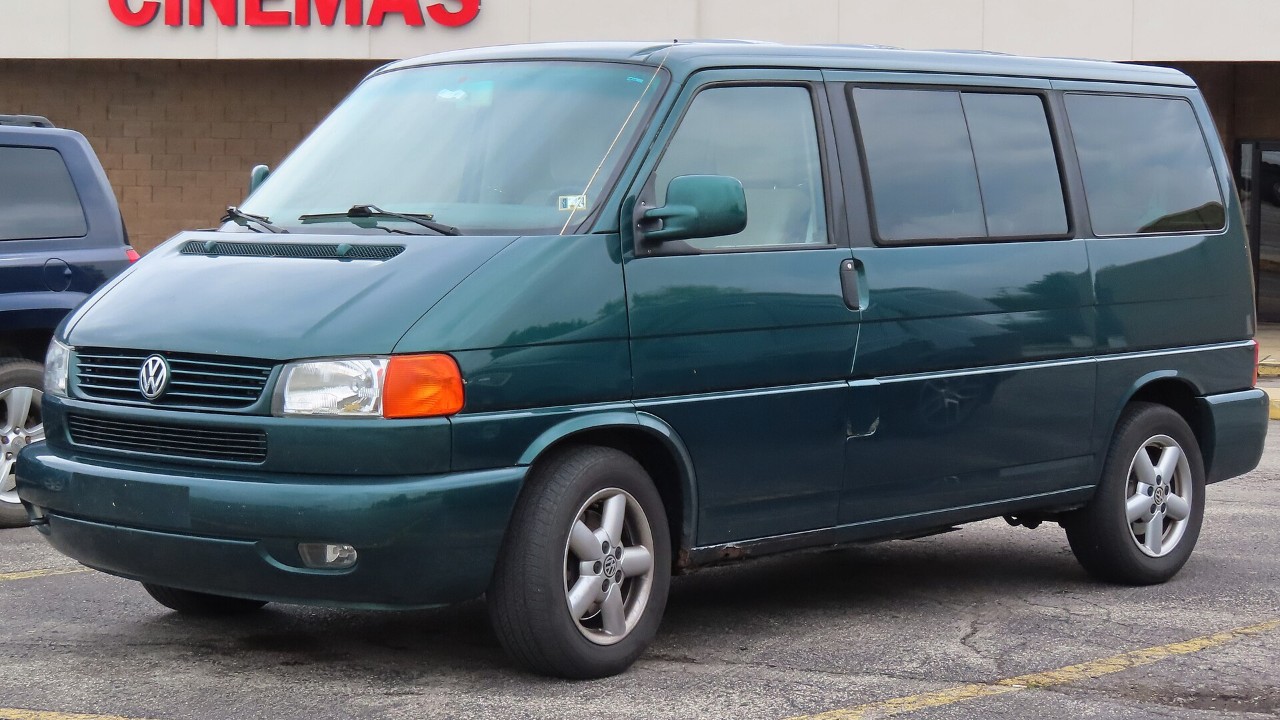
Volkswagen brought the EuroVan passenger models back to the U.S. for 1999 with a VR6 engine as standard. Buyers could pick the seven-seat CL, GL or GLS, along with the MV and the Westfalia-equipped Weekender. The 2003 model year marked the end of the line, because the T4 generation was discontinued worldwide after 2003. The MV version even had a rear-facing second row and a third row that turned into a bed.
One recall stands above all. NHTSA lists campaign 18V406000 for certain 2003 Volkswagens, including the EuroVan. The driver’s frontal airbag inflator could overpressurize and rupture when the airbag deployed. In that case, metal fragments could strike the driver or other occupants. Volkswagen will replace the inflator free of charge.
Our take: the 2003 Volkswagen EuroVan GLS has a loyal following, and we understand why. It is roomy, tall and unlike any American minivan. That said, we would never drive one with that airbag recall open. Buyer advice: confirm the inflator replacement by VIN, and if it is not done, have a dealer do it before the van carries anyone.
6. 2004 Nissan Quest
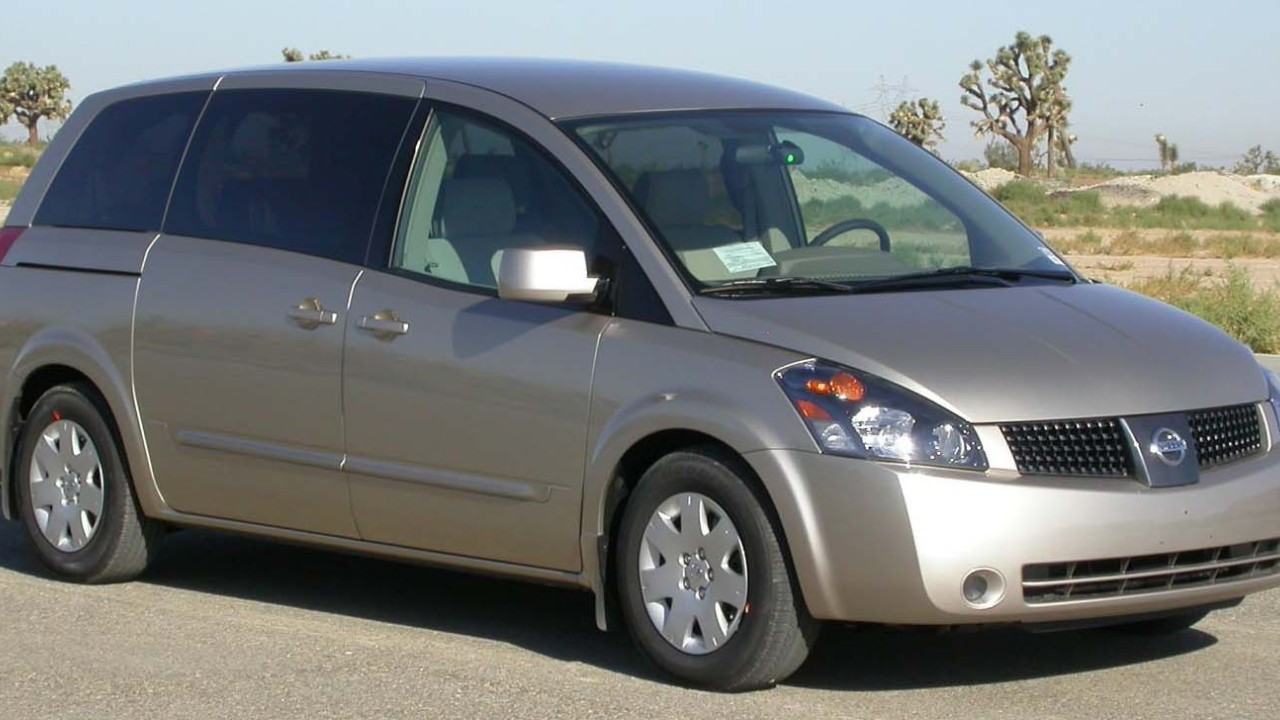
Nissan’s third-generation Quest launched for 2004 with bold styling and a 3.5-liter VQ35DE V6 rated at 240 horsepower. Production began in Canton, Mississippi, on May 27, 2003. The van also offered separate glass roof panels above each passenger. It ran 0 to 60 mph in 8.8 seconds in testing, and Nissan sold 46,430 Quests in the U.S. in 2004.
The first year brought several recalls. NHTSA records show that in cold weather the power sliding door actuator could bind. If the driver shifted out of Park while the door was closing, the latches might not engage and the door could open during acceleration. Another campaign covered a front passenger airbag shutoff system that did not meet federal advanced airbag rules. A third replaced third-row seat striker brackets with welds that could break.
Our take: a 2004 Nissan Quest is quick for a minivan and looks unlike anything else from its era. But first-year problems like these make us cautious. Buyer advice: check that every 2004 recall is closed, and cycle both power sliding doors several times on a cold morning before you buy.
7. 2005 Chevrolet Uplander LS
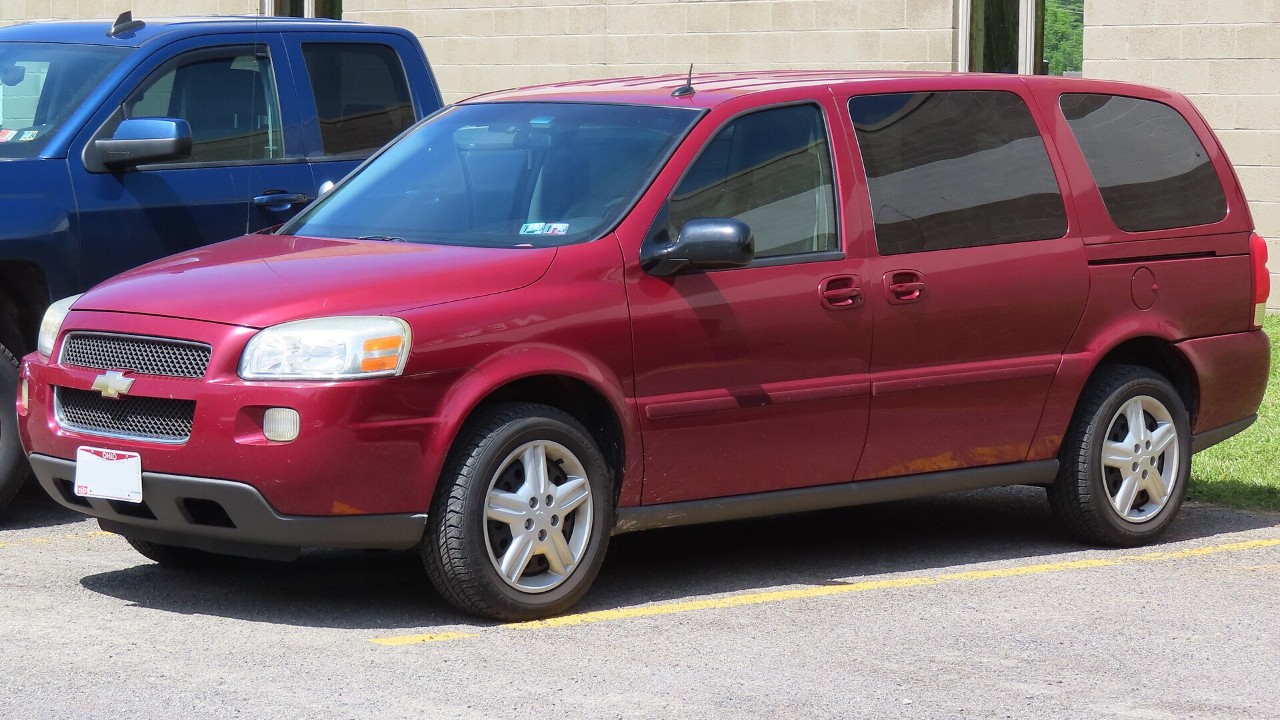
The Uplander replaced both the Chevrolet Venture and the Astro passenger van. It came from Doraville Assembly in Georgia with a 3.5-liter V6 rated at 200 horsepower and a four-speed automatic. To its credit, the 2005 to 2008 Uplander earned a Good rating in the IIHS moderate overlap front test.
The weak spots are elsewhere. The same IIHS page rates its head restraints and seats Poor. In the side test, the Uplander rated Poor without the optional side airbags and Acceptable with them. Meanwhile, NHTSA lists a 2005 recall because the outboard release handle on the second-row seat could be triggered in a side impact. That could let the rear seat latches release early.
Our take: the 2005 Chevrolet Uplander LS is not a bad van in a frontal crash, but any example without the optional side airbags falls into that Poor side rating. We would avoid those. For newer family haulers we like better, see our list of 7 spacious minivans from the last decade families still love. Buyer advice: shop only for an Uplander with the optional side airbags, and confirm the second-row seat recall was completed.
8. 2005 Ford Freestar
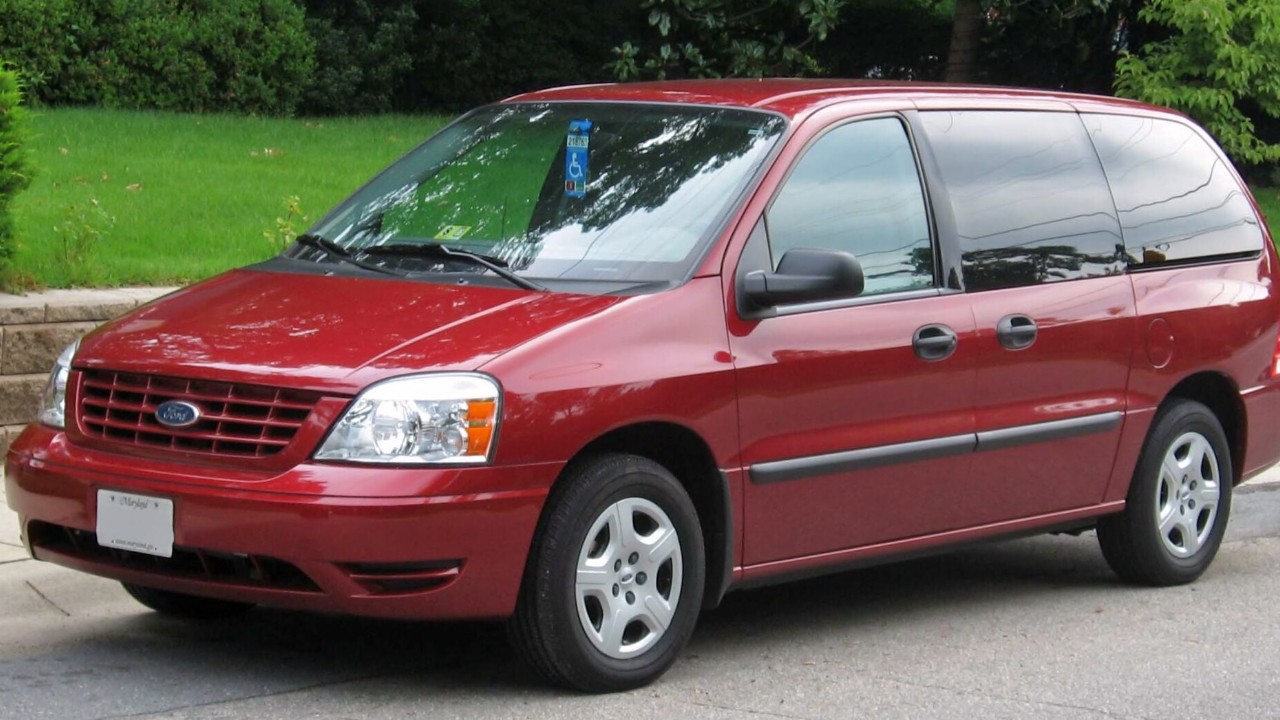
Ford introduced the Freestar for 2004 as a heavy update of the Windstar. Buyers got a 3.9-liter V6 with 193 horsepower, or an optional 4.2-liter V6 with 201 horsepower. Ford built them in Oakville, Ontario. The redesign focused on driveline reliability, which makes its later trouble painful.
NHTSA investigated 2004 and 2005 Freestars for torque converter spline shaft failures. Ford then recalled certain 2004 and 2005 vans because the torque converter output shaft could fail. When it did, the van could lose power suddenly and without warning. A later recall covered third-row seat anchors that could corrode and stop the seat from latching. The 2006 and 2007 vans also had torque converter problems, but Ford did not recall them. For context on how families came to depend on these vans, see why minivans became the family road trip vehicle.
Our take: the Freestar is a roomy, sensible van, but we would steer clear of a 2005 Ford Freestar without proof of the torque converter fix. Buyer advice: ask for the recall invoice, and budget for a transmission rebuild if the history is unknown.
9. 2002 Kia Sedona LX
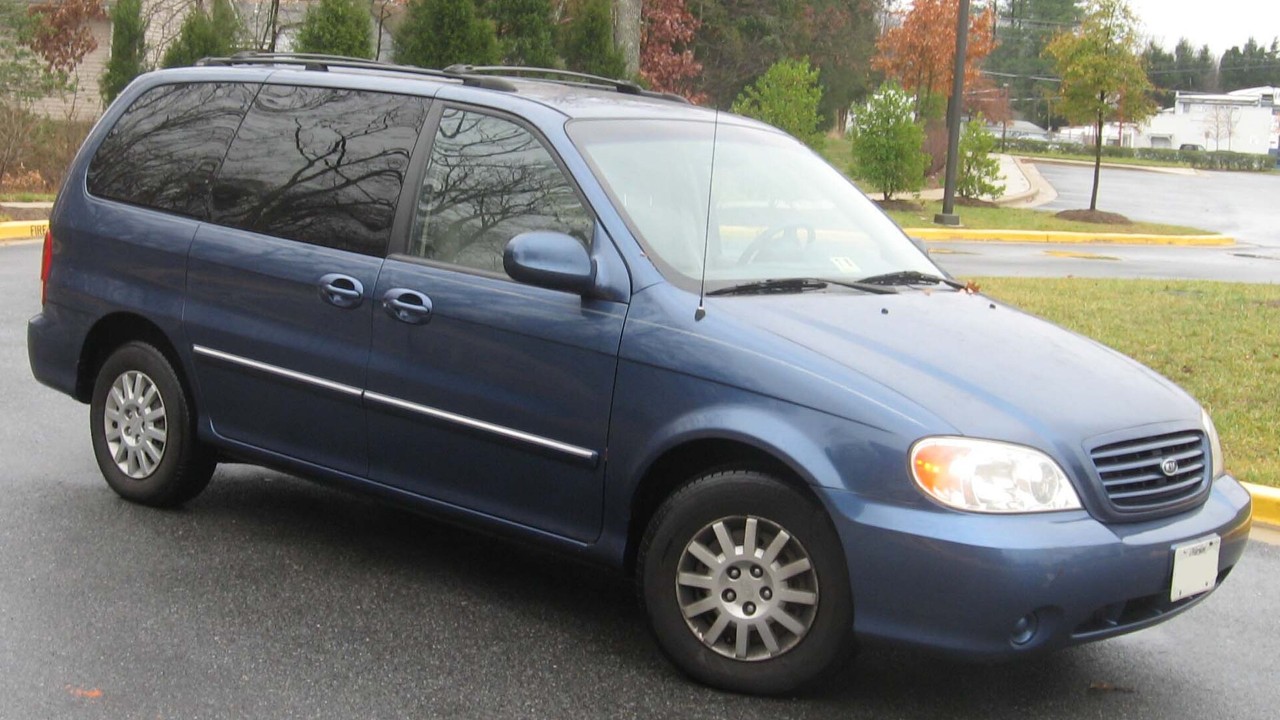
Kia brought the Sedona to the U.S. in 2001 with a 3.5-liter V6 rated at 195 horsepower. Even so, it lacked power sliding doors, a power liftgate and a fold-flat third row that rivals offered. It also came only in a short-wheelbase version, and Kia imported every one from South Korea.
The IIHS frontal offset test rated the Sedona Acceptable overall. However, the restraints and dummy movement rating was Poor for 2002 models built before April 2002. It improved to Marginal after Kia changed the airbag system. Meanwhile, NHTSA lists three 2002 recalls, including one for a throttle cable that could twist out of position and hang up. The others covered second- and third-row seat belt anchor bolts and seat strikers that could break in a crash.
Our take: the 2002 Kia Sedona LX has honest, simple appeal, but we would not choose an early one today, given its recall list and that Poor restraints score. Buyer advice: if you like the Sedona, look at the 2006 and later second generation instead. That 2006 Sedona earned five stars from NHTSA and a Good rating from IIHS.
More from Fast Lane Only