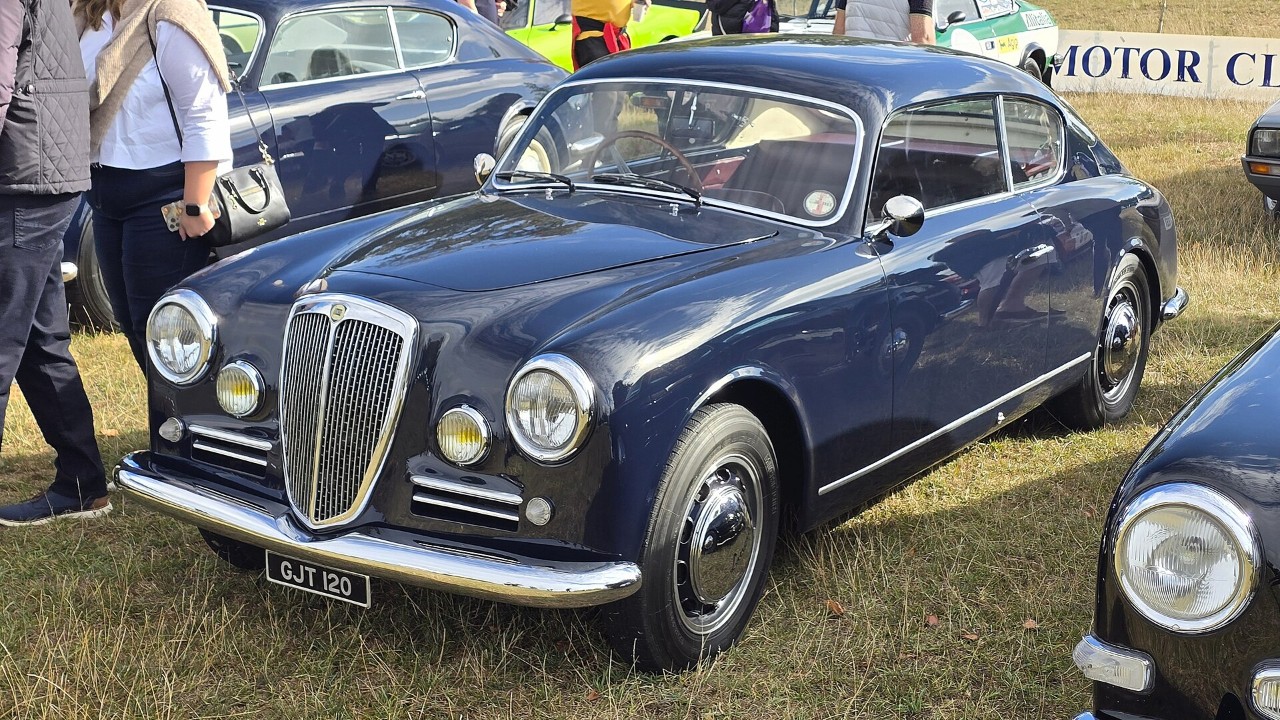
Lancia showed a new sedan in 1950, and under its hood sat an engine no carmaker had sold before. The Lancia Aurelia V6 was the first V6 built in series production. Lancia also set its two cylinder banks 60 degrees apart, a detail that matters more than it sounds.
The engine alone would make the Aurelia worth remembering. Yet Lancia wrapped it in a car full of other ideas, from a rear-mounted gearbox to independent suspension at both ends. Then it built a coupe around the same hardware and helped invent the modern grand tourer.
Here is where the engine came from, what made it different and why the 1953 B20 GT coupe in our photo still draws serious money.
Where the Lancia Aurelia V6 came from
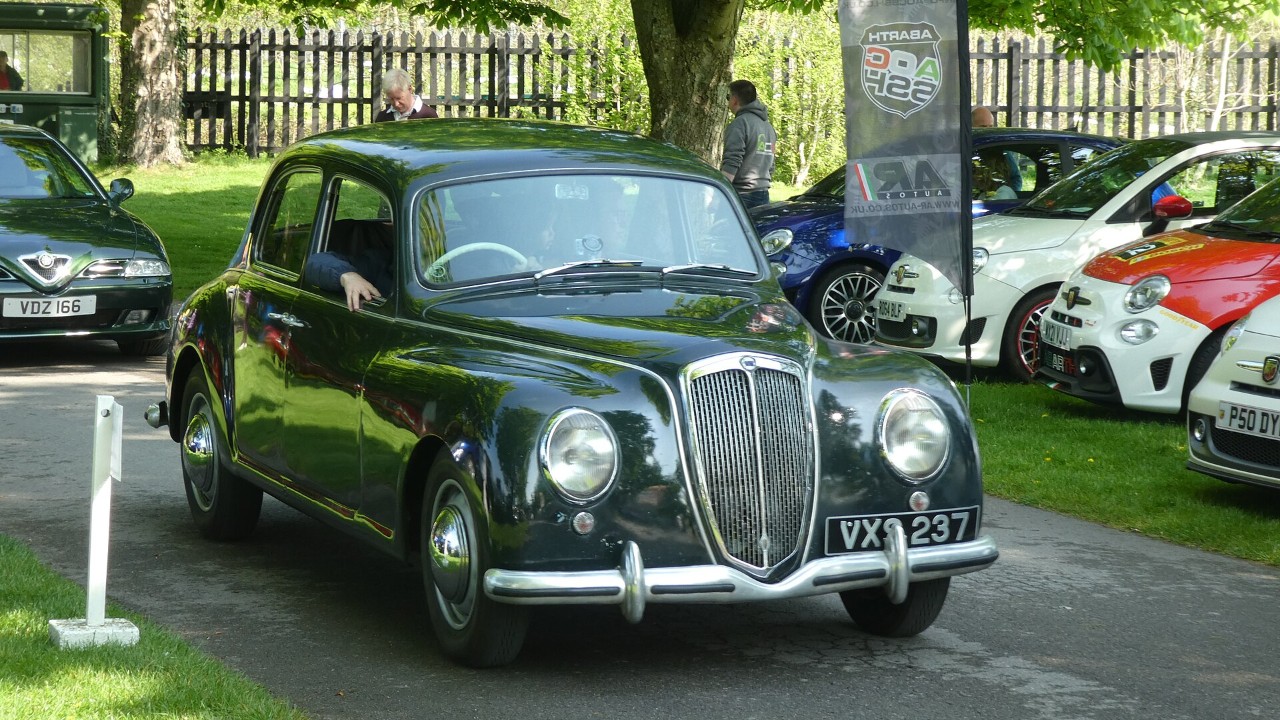
The Aurelia started as a replacement. According to a Supercars.net model guide, Gianni Lancia had taken over the company his father Vincenzo founded in 1906. In 1948, he decided it was time to replace the Aprilia, which had been in production since 1937.
The engine work had begun even earlier. Goodwood says development ran from 1943 to 1948 under engineer Vittorio Jano and his colleague Francesco de Virgilio. Broad Arrow Auctions calls Jano one of the most brilliant engineering minds in that field.
The first try used a different angle. Supercars.net says an experimental 1,569 cc V6 with a 45-degree angle, code-named 538, ran successfully. However, Lancia widened the angle to 60 degrees for better balance on the version it built.
Why 60 degrees mattered
Lancia chose the wider angle for better balance, and the result made history. In fact, Goodwood calls Lancia’s engine “the world’s very first series production engine in a V6 configuration.” It dates the introduction to May 10, 1950, and describes a 60-degree, all-alloy pushrod design with hemispherical combustion chambers and inline valves.
Broad Arrow likewise calls it “the world’s first production V6 engine.” Its catalogue says the all-aluminum pushrod unit first appeared at the 1950 Turin Motor Show.
The first car to get it was the B10 saloon. Supercars.net lists the B10 engine at 1,754 cc, with a 70 mm bore and 76 mm stroke. It used an aluminum block with cast-iron liners. Over the years the Lancia Aurelia V6 grew. Goodwood says output rose from 76 PS in the 1.8-liter version to 113 PS in the final 2.5-liter engine of 1957.
A chassis as clever as the engine
Lancia did not stop at the engine. Gooding & Company’s catalogue for a 1951 coupe lists sliding-pillar front suspension, a fully independent rear, inboard rear brakes and a rear-mounted four-speed transaxle.
Gooding also calls the Aurelia “perhaps the most technically advanced automobile of its generation.” Supercars.net adds that Lancia switched the rear suspension to a de Dion tube in 1954.
Meanwhile, the body styles multiplied. Goodwood says the car debuted as a four-door Berlina, and the GT coupe and Spider followed. For the American market, Lancia later added the spider and convertible models, according to Supercars.net.
The B20 GT and the grand tourer
The coupe arrived in 1951. A Club Alfa history dates the B20 to April 1951, shortly after the saloon. Gooding says it “introduced the world to the gran turismo concept.” The catalogue credits Felice Mario Boano with the styling, while Pinin Farina built the coachwork.
Early cars used a 1,991 cc V6 with twin Weber carburetors and 75 bhp at 4,500 rpm, Gooding says. Then the coupe proved itself fast. At the 1951 Mille Miglia, Giovanni Bracco and Umberto Maglioli finished second overall in a B20 GT, beaten only by a Ferrari 340 America, according to Gooding. The model also took a class win at Le Mans that year.
The car in our photo is a 1953 B20 GT, a third-series car. Club Alfa says the third series moved up to a 2,451 cc engine. Club Alfa also says the B20 stayed in production until 1958.
What the Lancia Aurelia sells for now
The Lancia family did not keep the company for long. Supercars.net says the family sold the company in 1956, and the Flaminia later replaced the car. Still, the B20 GT built a following. Gooding counts 3,871 B20 GTs in total, and Broad Arrow says 312 sixth-series cars were built for 1958.
Prices reflect that history. In 2023, Gooding sold a 1951 Series I B20 GT at Amelia Island for $150,000, without reserve.
A car like the one pictured here has a recent record too. Hagerty’s sales data shows a 1953 Lancia Aurelia B20 GT Series 3 that Bonhams sold in Chichester, England, on March 19, 2017, for $161,052.
More from Fast Lane Only