Ford is signaling that its high-performance Raptor sub-brand is about to grow, even as the broader auto industry wrestles with slowing electric vehicle demand and rising costs. The company’s chief financial officer has started talking publicly about “doing a bit more” with Raptor, a hint that suggests new off-road performance models are moving from internal discussion to near-term product plans. For a company under pressure to balance investment in EVs with profitable combustion trucks and SUVs, expanding a proven halo lineup looks like a calculated way to keep enthusiasts engaged and margins healthy.
Raptor as Ford’s profit-friendly halo
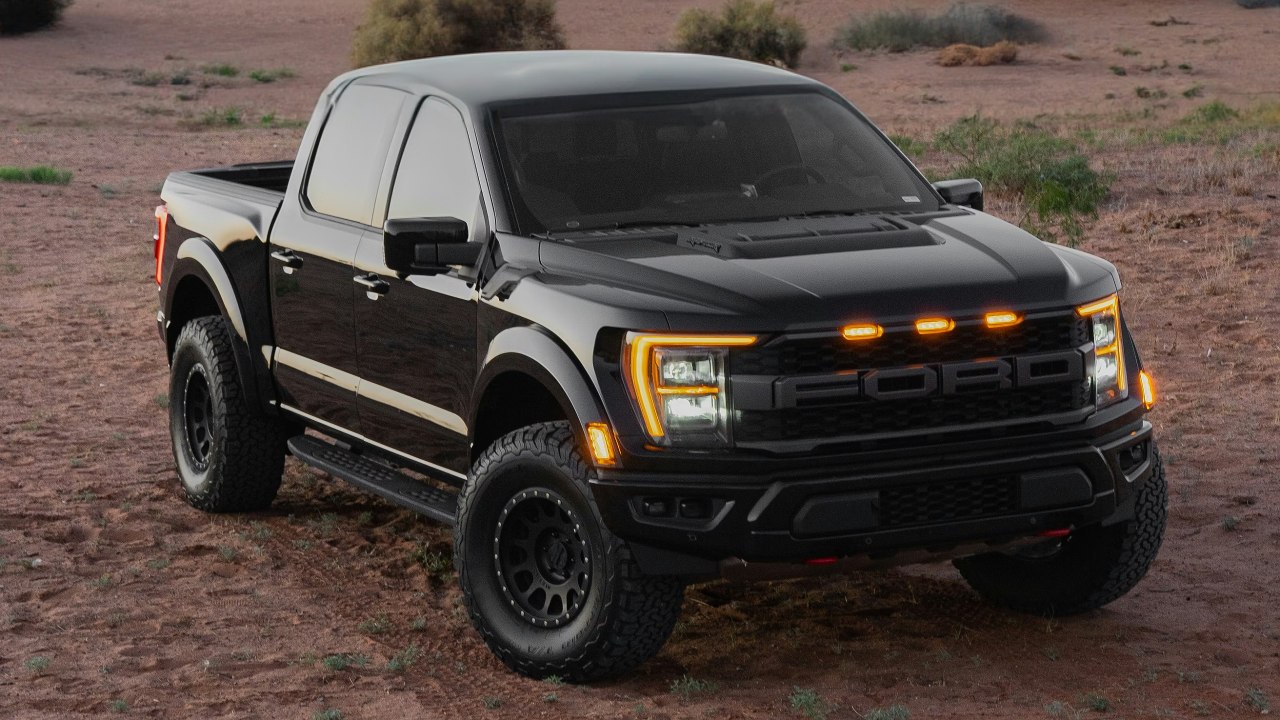
From a financial perspective, I see the Raptor badge as one of Ford’s most effective tools for turning hardware it already builds into higher-margin “passion products.” The current F-150 Raptor R, with its 5.2 L supercharged V8 and 10-speed automatic, sits at the top of the company’s truck range as a low-volume but high-impact flagship that commands a substantial premium over a standard F-150. Ford’s own fleet materials highlight the 5.2L Supercharged V8 Engine as the centerpiece of the 2025 Ford F-150 Raptor, underscoring how much of the truck’s identity and pricing power is tied to that powertrain and the extreme off-road hardware wrapped around it.
That formula, a familiar platform upgraded with serious performance parts and sold at a premium, is especially attractive in what some analysts are calling an “EV winter,” a period when demand for battery models is cooling and capital is tight. Industry reporting notes that, facing pressure on multiple fronts, automakers are doubling down on vehicles “people love,” a category that clearly includes high-output off-road trucks and SUVs that deliver emotional appeal as much as utility. In that context, the CFO’s public enthusiasm for doing more with Raptor reads less like a throwaway comment and more like a signal that Ford intends to lean harder on enthusiast-oriented products to support its balance sheet while it navigates the slower payoff of large-scale EV investment.
What the CFO’s tease really signals
When a finance chief starts previewing product moves, I take it as a sign that the business case is already well developed. In a recent interview, Ford’s CFO hinted that new Raptor models are on the way and said the company is “going to be doing a bit more,” language that suggests internal green lights rather than early-stage brainstorming. The remark did not spell out specific nameplates, but it framed Raptor expansion as part of a broader strategy to invest in vehicles that generate strong customer passion and pricing power, rather than chasing volume at any cost.
That message lines up with separate reporting that describes how Ford is grouping Raptor alongside other “passion products” that can carry richer margins and help fund the transition to electrification. The same coverage notes that the company is looking at ways to make Even EVs Could Become More Exciting at Ford, a phrase that captures the idea of using performance and design to make future electric models feel more like aspirational toys than compliance appliances. By tying Raptor growth to this wider push, the CFO is effectively telling investors that Ford sees emotional, enthusiast-grade vehicles as a core pillar of its product and profit strategy, not a side project.
Expedition Raptor and the SUV opportunity
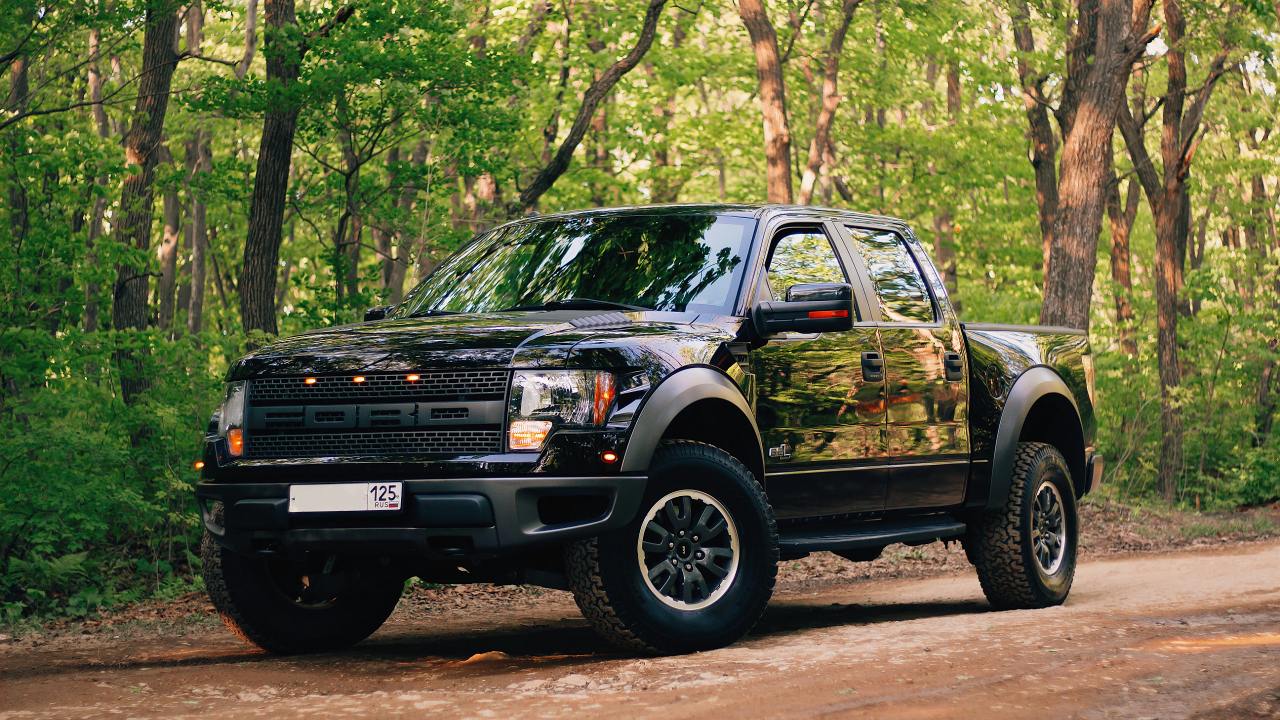
If Ford is going to extend the Raptor formula, a full-size SUV is the most obvious next step, and reporting has already floated An Expedition Raptor as a leading candidate. The logic is straightforward: the Expedition shares its basic architecture with the F-150, which already underpins the Raptor and Raptor R, so much of the suspension, drivetrain, and electronics work has effectively been paid for. Analysts have suggested that an Expedition Raptor would likely be the most capable SUV of that size when the road ends, a claim that fits with Ford’s pattern of using the Raptor badge to set segment benchmarks in off-road performance.
From a business standpoint, I see a Raptor-grade Expedition as a way to tap into the same customer who wants three-row practicality but refuses to give up the image and capability of a desert racer. The SUV segment remains one of the most profitable corners of the market, and pairing that with Raptor’s performance halo could create a powerful combination for both brand and margins. Reporting on Ford’s product roadmap already highlights Near Term Catalysts such as the Explorer Tremor and other off-road oriented trims, which shows the company is comfortable layering rugged sub-brands across its utility lineup. A dedicated Expedition Raptor would be a logical escalation of that strategy, moving from appearance and mild hardware packages to a full-bore performance SUV that can sit alongside the trucks in Ford’s off-road hierarchy.
Raptor’s role in a cooling EV market
The timing of this Raptor expansion talk is not accidental. Industry analysis of the US auto sector describes an environment where the EV market is slowing, costs remain high, and companies are “facing heat from all directions.” In that setting, some automakers are choosing to “give it some gas” by emphasizing profitable combustion products that customers already understand and desire, rather than betting everything on rapid EV adoption. Ford’s decision to spotlight Raptor and other enthusiast vehicles fits squarely into that pattern, using proven internal combustion platforms to generate cash while the company refines its electric strategy.
At the same time, Ford is trying to ensure that its EV future is not dull. Reporting on its product plans notes that Even EVs Could Become More Exciting at Ford, with chief executive Jim Farley using At Monterey Car Week to talk about performance-oriented electric models that can appeal to the same kind of buyer who loves a Raptor. By positioning Raptor as part of a broader “passion product” ecosystem that will eventually include EVs, Ford is attempting to bridge the gap between today’s profitable gas-powered heroes and tomorrow’s electric flagships. In my view, that approach acknowledges the reality of an EV winter without abandoning the long-term shift, using high-impact combustion vehicles like the Raptor R, with its 5.2 L supercharged V8, as financial and emotional anchors during the transition.
How far can Ford stretch the Raptor brand?
The open question is how many vehicles can credibly wear the Raptor badge before it starts to dilute. So far, Ford has been selective, reserving the name for serious off-road hardware rather than cosmetic packages, and that discipline has helped Raptor maintain its cachet. The 2025 Ford F-150 Raptor Fleet Truck, for example, is marketed around its 5.2L Supercharged V8 Engine and heavy-duty suspension, not just stickers and wheels, and independent testing of the Raptor R highlights that the 5.2 L supercharged V8 and 10-speed transmission deliver performance that justifies the hype, even if fuel Economy is 10 around town. If Ford extends Raptor to the Expedition or other models, it will need to preserve that substance-first approach so the badge continues to signal genuine capability.
There are also portfolio dynamics to consider. Ford already has off-road oriented trims like the Explorer Tremor and other rugged variants that sit below Raptor in price and performance, and its broader product roadmap, described under Near Term Catalysts and Late 2025 launches, shows a careful layering of offerings to cover different budgets and use cases. In my assessment, the safest path is to keep Raptor at the top of that pyramid, focused on the most extreme trucks and SUVs, while using lesser badges for lighter-duty adventure models. If the CFO’s hints are any guide, Ford appears to understand that Raptor’s value lies in its scarcity and authenticity, and any expansion ahead will have to walk the line between growth and overexposure.
More from Fast Lane Only: