The latest Mercedes-Benz EQS refresh is not a minor nip and tuck but a deep rework that targets range, efficiency and driving feel all at once. On paper, the flagship electric sedan now claims up to 926 kilometers of range on the WLTP cycle, backed by a new 800-volt electrical architecture and a steer-by-wire system that even supports an optional yoke-style wheel. Together, these changes signal how aggressively Mercedes-Benz intends to keep its luxury EV at the front of the pack.
Instead of chasing headlines with wild performance numbers, the updated EQS concentrates on how far it can travel, how quickly it can recharge and how smoothly it can isolate occupants from the work of driving. The aim is to bridge the gap between old-school S-Class comfort and the software-heavy, high-efficiency mindset that now defines premium electric cars.
What happened
Mercedes-Benz has unveiled a heavily updated EQS that pairs a larger battery pack with a new 800-volt platform, lifting the official WLTP range figure to 926 kilometers, which converts to roughly 575 miles. That long-range claim applies to the EQS 450+ variant, which uses a single rear motor and a battery that now offers 118 kilowatt-hours of usable capacity, up from the earlier 108 kilowatt-hour unit described in earlier versions of the car. According to detailed technical breakdowns, the battery’s gross capacity rises to around 131 kilowatt-hours, with the extra headroom used to protect longevity and fast-charging performance.
The powertrain update is anchored by the move to an 800-volt electrical system. Earlier EQS models operated at 400 volts, which limited peak charging speeds and increased current loads in the wiring. The facelifted car shifts to a higher voltage architecture that allows thinner cables, lower weight and more efficient power delivery. Reports describe the new system as supporting significantly faster DC charging, with peak rates that are expected to cut typical fast-charge sessions well below the previous car’s benchmarks, although Mercedes-Benz has not yet published a definitive charging curve.
Alongside the battery and voltage overhaul, the EQS receives a new steer-by-wire setup. Instead of a purely mechanical steering column linking the steering wheel to the front axle, the updated system uses electric actuators and sensors to transmit driver inputs and wheel feedback. The design still includes mechanical backup for safety, but in normal driving the steering ratio and feel are software-controlled. This steer-by-wire hardware enables a dramatic increase in rear-axle steering capability, up to 10 degrees of angle, which tightens the turning circle to levels comparable with a compact car.
The steer-by-wire system also opens the door to a new optional yoke steering interface. As described in early test previews, buyers will be able to choose a rectangular yoke in place of the traditional circular wheel on some trims. The steering ratio can vary so that large steering angles at the front wheels require only modest rotation at the yoke, which helps make the unconventional shape more manageable in tight maneuvers. Coverage of the second EQS facelift highlights this optional yoke along with the more aggressive rear steering as key differentiators for the latest model, with sources noting that Mercedes-Benz is following a path pioneered by some rivals but with a more comfort-focused calibration.
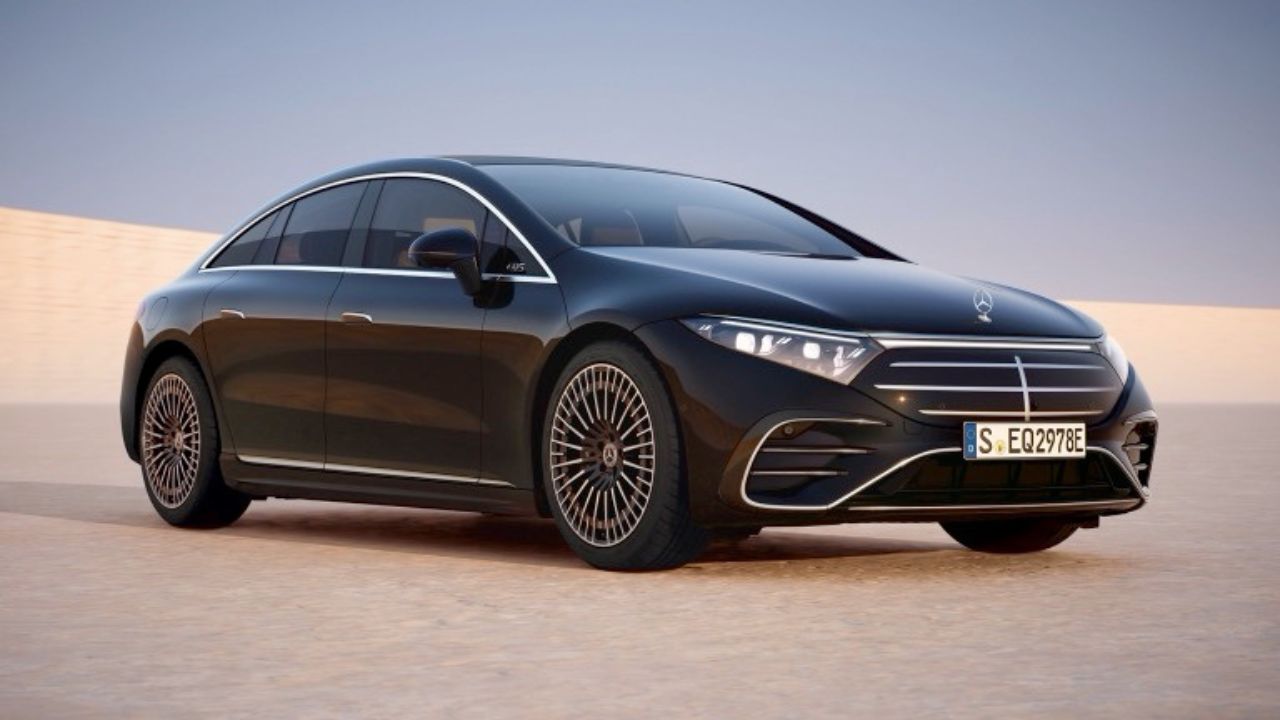
Externally, the changes are more subtle. The EQS retains its smooth, cab-forward silhouette and low drag coefficient, but the facelift introduces a revised front fascia with a more traditional Mercedes-Benz grille motif integrated into the black panel nose. Some reports describe a larger three-pointed star pattern, redesigned daytime running lights and new wheel designs that improve airflow around the arches. A closer look at spy shots and official imagery indicates that the overall aerodynamic focus remains intact, since the range figure depends heavily on keeping drag as low as possible.
Inside, the EQS continues with the familiar Hyperscreen layout on higher trims, spanning nearly the full width of the dashboard with multiple OLED displays under a single glass surface. The facelift brings updated software, expanded driver-assistance functions and new trim options. According to one detailed preview of the 2026 EQS, Mercedes-Benz has refined seat comfort, added fresh upholstery choices and adjusted the sound insulation package to keep the cabin quieter at motorway speeds. The car also continues to offer advanced driver-assistance features, including adaptive cruise control, lane centering and automated lane changes where regulations allow.
Several outlets that examined the official technical release emphasize how thoroughly the EQS powertrain has been reworked. One report on the 2026 EQS facelift notes that the 926 kilometer WLTP figure, the 118 kilowatt-hour usable battery and the 800-volt architecture are all confirmed by Mercedes-Benz, and that rear-axle steering up to 10 degrees is now standard on some versions. Another breakdown from an EV-focused outlet explains that the new platform supports higher charging power and improved thermal management, which together help sustain performance over long journeys.
The technical upgrade has been framed as a significant mid-cycle refresh rather than a full generational change. However, coverage of the EQS facelift stresses that the move to 800 volts required substantial reengineering of the battery pack, inverters and power electronics. That level of investment suggests that Mercedes-Benz views the EQS as a long-term flagship that will remain on sale into the second half of the decade, rather than a stopgap before an all-new platform.
Why it matters
The headline range figure of 926 kilometers puts the updated EQS near the top of the long-distance EV charts, at least on the WLTP cycle. Even allowing for the typical gap between WLTP and real-world results, a usable 118 kilowatt-hour battery paired with a slippery body and efficient motors should give the EQS genuine cross-continent capability. That matters for the car’s core audience, which expects an S-Class level of effortless travel without frequent charging stops.
From a competitive standpoint, the range and charging upgrades are a direct response to pressure from both established premium brands and newer EV specialists. Tesla’s Model S, BMW’s i7 and Porsche’s Taycan all target affluent buyers who want long range and high-speed charging. By moving the EQS to 800 volts, Mercedes-Benz aligns its flagship with the Taycan and other high-end EVs that already use higher voltage for faster charging and better efficiency at sustained high loads. Analysis of the new 800-volt charging highlights that this shift is becoming a de facto standard in the upper tier of the market.
The steer-by-wire system is equally significant, though its impact will be felt in more subtle ways. By decoupling the steering wheel from a fixed mechanical ratio, Mercedes-Benz can tailor steering weight and response across different drive modes, speeds and even software updates. Low-speed parking can feel light and highly assisted, while high-speed cruising can have a calmer, more stable steering character. The increased rear-axle steering angle, enabled by the new system, also shrinks the turning circle, which helps an almost 5.2 meter sedan feel more manageable in city centers and tight parking garages.
Optional yoke steering may attract the most attention, but the deeper story is Mercedes-Benz using steer-by-wire as a bridge between traditional luxury expectations and the software-defined car. Coverage of the second EQS facelift notes that the yoke itself will likely be a niche choice, while the majority of buyers stick with a conventional wheel. The real benefit lies in flexibility. As regulations and customer preferences evolve, Mercedes-Benz can adjust steering behavior through software rather than hardware redesigns.
Inside the car, the continued emphasis on the Hyperscreen and high-end materials shows that Mercedes-Benz is not abandoning its traditional strengths. The EQS must satisfy buyers who might otherwise choose an S-Class with a combustion engine or plug-in hybrid. That means ride comfort, noise suppression and interior craftsmanship remain as important as battery size. Reports that examine the EQS interior tweaks describe incremental but targeted improvements, such as updated seat padding and new trim combinations that make the cabin feel more contemporary.
From a broader industry perspective, the EQS update illustrates how quickly EV technology is moving. When the EQS first arrived, its range and efficiency figures were headline-grabbing. Within a few years, rivals had caught up, and Mercedes-Benz now finds itself pushing battery capacity higher and adopting 800-volt systems to stay ahead. This rapid iteration cycle contrasts with the longer lifespans of combustion platforms, where major powertrain changes often came only with full model changes.
The facelift also reflects the economic realities of high-end EV development. A ground-up new platform would have been costly and time-consuming. Instead, Mercedes-Benz chose to heavily revise the existing EVA platform, incorporating lessons from newer architectures while avoiding a complete reset. Industry analysis of the EQS 800-volt transition points out that this approach allows the brand to spread development costs over a longer period while still delivering meaningful gains in range and charging.
For customers, the benefits are more straightforward. Longer range reduces the need to plan around charging stops, especially in regions where high-speed chargers are still sparse. Faster DC charging cuts downtime on long trips and makes it easier to use the EQS as a primary family vehicle rather than a second car. Steer-by-wire and enhanced rear steering make the car easier to live with in dense urban areas, which is where many EQS buyers live and work.
There is also a signaling effect. By giving its flagship EV such a substantial technical upgrade, Mercedes-Benz reinforces the message that its electric program is not an experiment but a core part of its future lineup. Coverage from business-oriented outlets, such as a detailed overview on steer-by-wire and 575-mile, interprets the facelift as a statement of intent that Mercedes-Benz will keep investing in its EV flagships even as it balances combustion and hybrid offerings.
There are, however, open questions. WLTP figures tend to be optimistic compared with real-world highway driving, particularly at higher speeds. Independent testing will be needed to see how close the EQS can get to its 926 kilometer claim in mixed use. The complexity of steer-by-wire and 800-volt systems also raises long-term reliability and repair cost considerations, especially once cars leave warranty. None of the current reporting provides long-term data on these aspects, so their impact remains unverified based on available sources.
What to watch next
The first key test for the updated EQS will be how its real-world range compares with the WLTP figure. Once independent range tests and owner data start to appear, it will become clear whether the 118 kilowatt-hour battery and aerodynamic tweaks deliver a meaningful step beyond the current car. Observers will be looking for highway range at typical European and North American speeds, where wind resistance and energy consumption are highest.
Charging performance will be another focal point. The shift to 800 volts should allow higher peak charging speeds and more stable power delivery across a wider state-of-charge window. Analysts will be watching for detailed charging curves that show how quickly the EQS can go from 10 to 80 percent on high-power DC chargers. Comparisons with rivals like the Porsche Taycan and Hyundai Ioniq 6, which already use 800-volt systems, will be inevitable.
More from Fast Lane Only