Among classic Ford pickups, few terms spark more debate than “Highboy.” The nickname is not an official factory designation, yet it has become shorthand for a very specific run of tall, heavy duty 4x4s that helped define the modern off road truck. To understand what counts as a true Highboy, you have to pin down the years Ford built them and learn the visual and mechanical cues that separate these rigs from lookalikes.
At its core, the Highboy story is about how Ford engineered its early four wheel drive F series, especially the F 250, and why those choices left the trucks riding higher than later “lowboy” designs. Once you know the production window and a few key frame, axle, and transfer case details, spotting a genuine example in a field of lifted pickups becomes much easier.
What enthusiasts mean by “Highboy”
When people talk about a Ford Highboy, they are usually referring to a specific group of F 250 4×4 trucks built from the late 1960s through the mid 1970s, not every old Ford that happens to sit high. Enthusiast guides describe The Ford Highboy as an unofficial term for F 250 4×4 trucks produced from 1967 to 1977.5, a span that covers the “bumpside” body style and the early “dentside” years. Within that window, the trucks shared a tall stance, a particular frame layout, and a divorced transfer case that set them apart from later F series four wheel drives.
The nickname itself grew out of that factory ride height rather than any badge on the fender. Period 4×4 history notes that Highboy History is a kind of trick question, because Ford never used the label in brochures and some owners stretch it to cover F 150s or other models. The most consistent definition, however, focuses on three elements working together: a 3/4 ton F 250 chassis, four wheel drive, and the high riding suspension and driveline arrangement that Ford used until roughly the middle of the 1977 model year.
The exact years Ford built Highboy style F 250 4x4s
To narrow the production years, I start with the body generations and then layer in the running gear changes that enthusiasts use as cutoffs. Ford’s “bumpside” trucks, officially spanning 1967 through 1972, supplied the earliest Highboy candidates, since these were the first F series years to combine the tall 4×4 stance with the heavy duty F 250 platform. From there, the early “dentside” trucks carried the same basic four wheel drive architecture forward until Ford reworked the frame and transfer case layout later in the 1970s.
Specialist restorers describe The Ford Highboy as covering F 250 4×4 trucks from 1967 to 1977.5, with that “.5” marking a mid cycle change when Ford switched away from the older divorced transfer case setup. A separate buyer’s guide on What Years Did Ford Make The Highboy, And How To Identify One reinforces that the Highboy era ends once Ford adopts the lower riding integrated transfer case design, even though the F 250 nameplate and body style continue. That is why a 1976 F 250 4×4 is usually accepted as a Highboy candidate, while a late 1978 truck with similar sheetmetal is not.
Key mechanical traits that define a Highboy
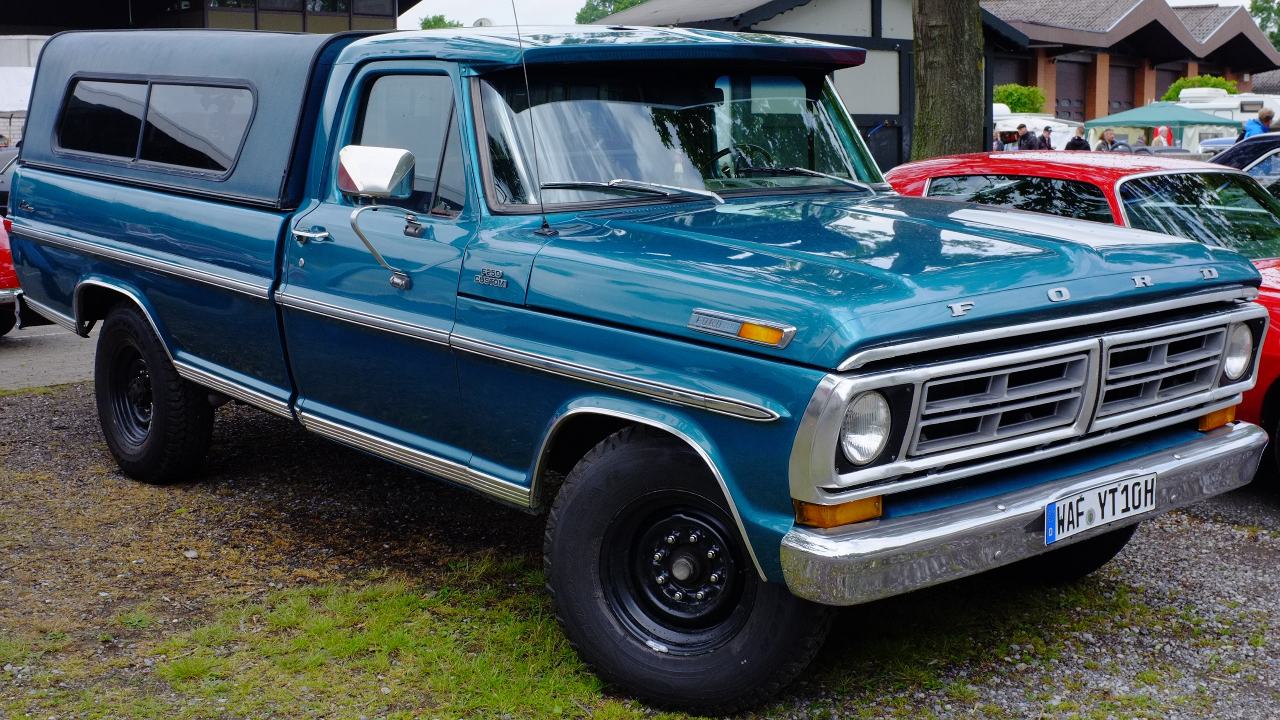
Beyond the calendar, the Highboy identity rests on specific mechanical choices that Ford made to package four wheel drive under a frame originally designed for two wheel drive. The most important is the use of a divorced transfer case, mounted separately from the transmission and connected by a short driveshaft. Restoration shops that specialize in these trucks point out that Ford raised the front of the frame and crossmember to accommodate the divorced transfer case, which in turn required taller front spring hangers and left the whole truck sitting higher than later integrated designs. That driveline layout is a core reason these F 250 4x4s earned their “high” reputation.
Axle hardware is another telltale. Technical breakdowns of Other Highboy Factoids highlight the highboy specific front crossmember and the closed knuckle Dana 44 front axle used on many of these trucks, a combination that differs from the open knuckle setups on trucks made after 1977 ½. The presence of that closed knuckle Dana 44, together with the tall front crossmember and divorced transfer case, gives you a mechanical fingerprint that is hard to fake with a simple suspension lift. When all three show up under an F 250 4×4 from the right era, you are almost certainly looking at a Highboy.
How to spot a Highboy at a glance
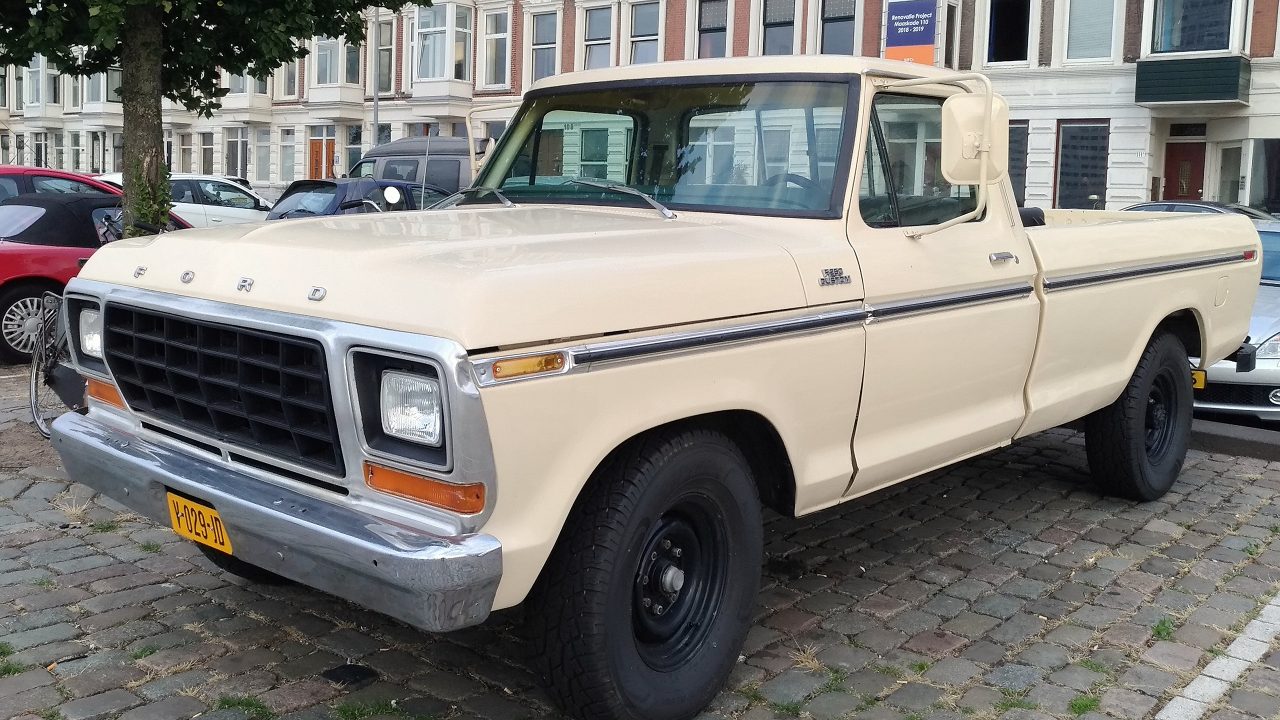
On the street or at a show, I look for stance and proportions first, then confirm the details underneath. Compared with later “lowboy” F series, Highboy trucks sit noticeably higher in the front, with more visible gap between the top of the tire and the bottom of the fender. Enthusiast explainers on the differences between a Ford highboy truck and a lowboy note that the early trucks have a more nose up posture from the factory, while later F 250 4x4s ride lower and flatter because their frames were redesigned around an integrated transfer case. If a truck from the late 1970s looks low and level on stock size tires, it is more likely a lowboy, even if it shares similar body lines.
Frame width is another quick check. Owners who have measured these trucks report that First of all, a true Highboy has a narrower frame than other Ford 4×4’s, at 34 inches at the outside of the rails, which helps distinguish it from the wider frames used on later F series four wheel drives. If you can get under the truck, you can also look for the separate transfer case hanging behind the transmission with its own crossmember and short intermediate driveshaft, a hallmark of the Highboy layout described in Classic Ford truck highboy build guides that mention the need to accommodate the divorced transfer case. Combine that with the closed knuckle front axle and the tall front spring hangers, and you have a strong visual checklist for identifying the real thing.
Why Highboys became so sought after
Part of the Highboy appeal today comes from how overbuilt these trucks feel compared with modern half tons, especially for off road use. Collectors and restorers describe The Ford Highboy as one of the most sought after vehicles among truck enthusiasts because of its robust design and elevated ground clearance, traits that made it a natural platform for early monster trucks and serious trail rigs. One well known example is the first advertised monster truck, Bigfoot, which was built on a Highboy era F 250 chassis and showcased just how much abuse the frame and axles could handle once you added bigger tires and more power.
That reputation has only grown as surviving trucks become harder to find in solid condition. Recent buyer guides on What Years Did Ford Make The Highboy, And How To Identify One note that Today it is one of the most sought after vehicles among collectors and truck enthusiasts, in part because many original work trucks were used hard and rusted away. For people who want a classic 4×4 that still feels purposeful on modern roads, the combination of a 3/4 ton F 250 frame, the stout Dana 44 front axle, and the distinctive high riding stance gives the Highboy a mix of nostalgia and capability that is difficult to duplicate with later lowboy designs or newer trucks.
More from Fast Lane Only: