Ford has quietly reworked its best-selling Ranger pick-up for the United Kingdom, stripping out the rear bench to create a new two-seat double cab that still looks like a lifestyle truck but is engineered to satisfy HMRC’s commercial rules. The move is a direct response to looming tax changes that threaten to push many double-cab pick-ups into passenger-car territory, with higher benefit-in-kind bills for company drivers and potentially weaker appeal for fleets.
By redesigning the cabin and reallocating space to cargo rather than passengers, Ford aims to keep the Ranger firmly on the right side of the tax line while preserving the image and practicality that have made it a fixture on farms, construction sites and rural driveways across the country.
What happened
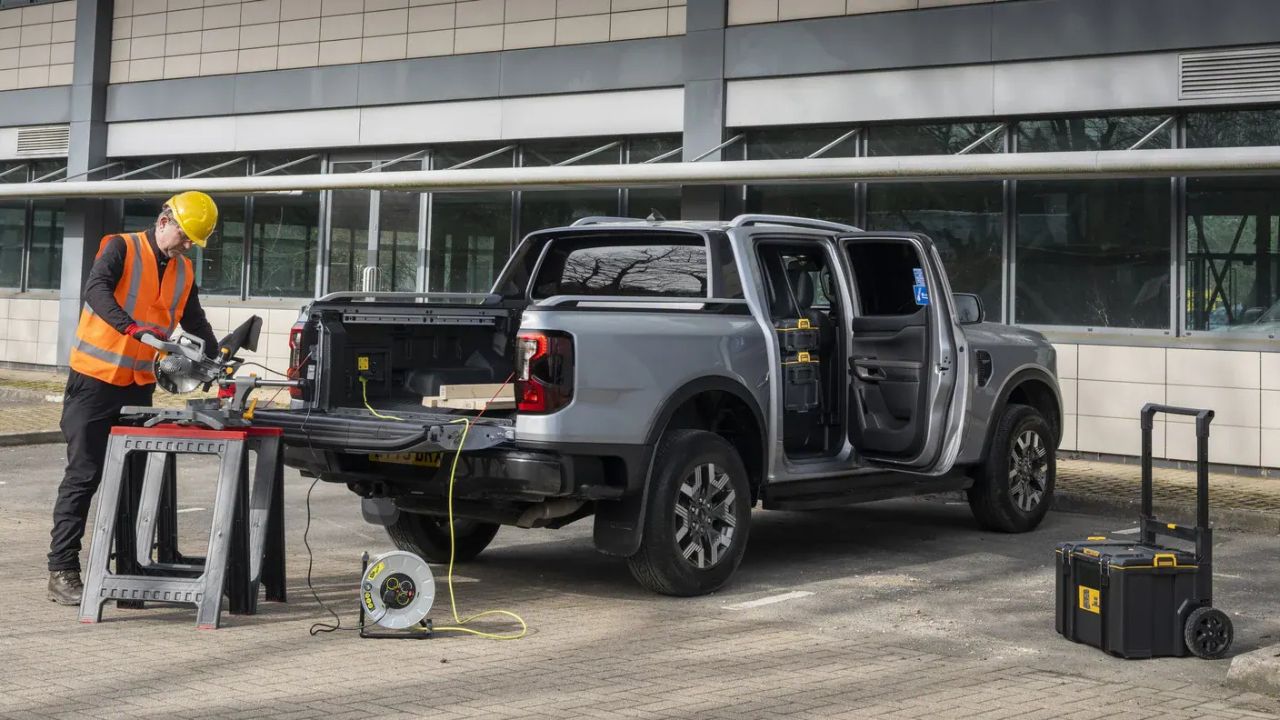
Ford has added a new two-seat version of the Ranger Double Cab to the UK line-up, built specifically so the model continues to qualify as a commercial vehicle for tax purposes. Instead of the usual three-seat rear bench, this Ranger variant has only the two front seats, with the rear section converted into a secure, load-bearing area that counts toward the vehicle’s payload rather than passenger capacity. The company is effectively reshaping the cabin to meet HMRC’s criteria for a commercial pick-up, which focus on payload figures and the balance between passenger and load space.
According to reporting on the new model, Ford is using the same basic Ranger Double Cab shell, but the deleted rear bench and reclassified interior volume allow the truck to be counted as a two-seater with a higher proportion of its space dedicated to cargo. That helps the vehicle maintain a payload rating at or above the 1,000 kg threshold that HMRC uses when deciding whether a double-cab pick-up is a commercial vehicle or a passenger car. The change comes as UK tax rules on double-cabs are tightened, with HMRC clarifying that models which do not meet the payload and space tests will be treated as cars for benefit-in-kind and other tax calculations.
Industry coverage notes that Ford’s new Ranger derivative is being positioned as a work-focused option for fleets and small businesses that still want the security and styling of a double cab, but no longer need five seats. One report on the two-seat Ranger explains that the rear area is adapted for cargo, with a flat floor and tie-down options that let operators carry tools or high-value kit inside the cab rather than exposed in the load bed.
The new configuration is also intended to sidestep the impact of HMRC’s guidance on vehicles that blur the line between commercial and lifestyle use. While traditional single-cab pick-ups have usually qualified as vans, double-cab models with five seats and car-like interiors have drawn closer scrutiny. HMRC’s updated approach has raised the risk that many popular double-cab pick-ups would be reclassified, which would significantly increase tax bills for drivers who use them as company vehicles.
Farm-focused reporting on the launch highlights that Ford is pitching this Ranger specifically at rural and agricultural buyers who rely on pick-ups as working tools. A piece aimed at farmers describes how the two-seat Double Cab is designed to bypass the pick-up tax changes by ensuring the vehicle remains a commercial variant. It notes that the loss of the rear bench is a trade-off many farm businesses are willing to make if it keeps their tax treatment aligned with other work vehicles.
Coverage from Ireland adds another perspective, pointing out that the Ranger’s new layout is part of a broader effort to widen the model’s appeal in markets where tax rules shape buying decisions. One report on the broadened Ranger line-up notes that the two-seat model joins an already extensive range of body styles and trims, but stands out because it has been tailored specifically to meet commercial definitions rather than simply adding more lifestyle features.
Specialist van coverage underlines that Ford is not alone in reacting to HMRC’s stance, but is moving quickly to keep its flagship pick-up in the commercial category. A detailed report on the tax-friendly Ranger describes the new variant as a strategic product that helps Ford shield its customers from a sharp rise in running costs that would follow any reclassification as a car.
Why it matters
The stakes around this seemingly simple seating change are high because HMRC’s view of double-cab pick-ups shapes how thousands of UK drivers are taxed. Under long-standing rules, a double-cab pick-up that can carry a payload of at least 1,000 kg and is primarily designed for goods is treated as a van for benefit-in-kind purposes. That means company drivers pay tax based on a fixed van benefit charge rather than a percentage of the vehicle’s list price, which is usually much cheaper.
HMRC’s updated guidance has signalled that some double-cab pick-ups, particularly those with heavily passenger-focused cabins, could be treated as cars if they do not clearly meet the commercial criteria. For high-spec models with leather interiors, advanced infotainment and five seats, that shift would push benefit-in-kind bills sharply higher. A driver in a well equipped double-cab could suddenly face a tax bill closer to that of an SUV than a van, changing the economics for both employers and employees.
Ford’s decision to engineer a two-seat Ranger Double Cab is therefore not a niche product tweak, but a direct response to a tax environment that is becoming less forgiving of vehicles that straddle the line between workhorse and family car. By deleting the rear bench and dedicating more space to load carrying, Ford can argue that this Ranger is clearly a commercial vehicle, with the cabin configured for work rather than family transport. That helps keep it under the van rules, preserving lower benefit-in-kind charges and more predictable costs for fleet operators.
For businesses, the difference between van and car classification can run into thousands of pounds over a typical replacement cycle. Company car tax on a passenger vehicle is based on list price and CO₂ emissions, which can be punishing for heavy, diesel-powered pick-ups. By contrast, van benefit is a flat rate, which has long made double-cab pick-ups an attractive option for employees who want a practical vehicle that also doubles as personal transport. If HMRC removes that advantage for five-seat models, the case for pick-ups weakens, particularly in urban and suburban fleets.
That is why the new Ranger variant matters beyond Ford’s own sales charts. It signals how manufacturers may adapt to keep pick-ups viable in a tighter regulatory climate. Instead of abandoning double-cabs or accepting higher tax bills, Ford is offering a version that ticks the commercial boxes in a more explicit way. The move could encourage rivals to follow suit with their own two-seat double-cab derivatives, turning what began as a tax clarification into a new sub-segment of the pick-up market.
The agricultural sector illustrates the stakes clearly. Farmers and rural contractors often run pick-ups as multi-role vehicles that carry tools and feed during the week, then tow horseboxes or trailers at the weekend. Many of those vehicles are bought or leased through businesses, with tax treatment that assumes they are work vans. If HMRC were to classify them as cars, the cost of providing those vehicles to employees or directors would rise, and some operators might be forced to downsize or switch to more basic single-cab models.
By offering a two-seat Double Cab, Ford is trying to preserve the balance between capability and cost for those users. The new layout still provides the familiar four-door body and generous load bed, but the interior is clearly oriented toward equipment rather than passengers. For a farm manager or site supervisor, that means secure storage for tools and documents behind the front seats, while still keeping the open bed free for bulk materials. The tax advantage is not a side benefit, it is integral to the product’s design.
There is also a broader policy signal here. HMRC’s tougher stance on double-cabs reflects a desire to align tax treatment more closely with how vehicles are actually used. Some double-cab pick-ups are essentially lifestyle trucks that rarely carry heavy loads, yet have benefited from van-style tax rules. By tightening definitions, HMRC is trying to ensure that only genuinely work-focused vehicles enjoy the lower rates. Ford’s response shows that manufacturers can adapt without abandoning the segment, but it also highlights how sensitive the market is to relatively small changes in the rulebook.
For employees who choose a Ranger as a company vehicle, the two-seat variant may become the only way to keep tax bills at historic levels. Those who need occasional rear seats will have to weigh the cost of a five-seat model that could be treated as a car against the savings of a strictly two-seat truck. In some cases, employers may decide that the tax-efficient option comes first, reshaping how pick-ups are specified in fleet policies.
The move also intersects with environmental and urban policy. As cities push to reduce emissions and discourage large vehicles in congested areas, the tax treatment of pick-ups is under growing scrutiny. If HMRC and other authorities regard some double-cabs as lifestyle choices rather than work necessities, pressure could build for further changes. Ford’s new Ranger suggests that the company expects the commercial category to remain viable, but only for vehicles that clearly prioritise payload and work use over passenger comfort.
What to watch next
The launch of the two-seat Ranger Double Cab raises several questions that will shape the pick-up market over the next few years. The first is how HMRC responds in practice. If the new Ranger configuration is accepted as a commercial vehicle under the updated guidance, it will give manufacturers a template for how to design tax-compliant double-cabs. That could trigger a wave of similar models from rivals, each with different interpretations of how to balance cabin space and payload while staying on the right side of the rules.
Observers will also be watching how fleets and small businesses react. Some operators may embrace the two-seat concept, especially in sectors where vehicles rarely carry more than one passenger. Construction firms, utilities and delivery services that already run vans with only front seating may see little downside in losing the rear bench, particularly if the converted rear area offers secure, weatherproof storage for equipment. Others, especially in rural areas, may find the lack of rear seats a harder sell, since family and crew transport is part of the appeal of a double-cab.
Another factor is how Ford chooses to price and specify the new variant. If the two-seat Ranger is positioned as a value-focused workhorse, with durable materials and limited luxury options, it will underline its role as a tax-efficient tool for business. If, on the other hand, it offers high-end trims and lifestyle accessories, HMRC may scrutinise whether such models truly qualify as commercial vehicles, regardless of the seating layout. The balance between equipment levels and tax positioning will be a delicate one.
More from Fast Lane Only