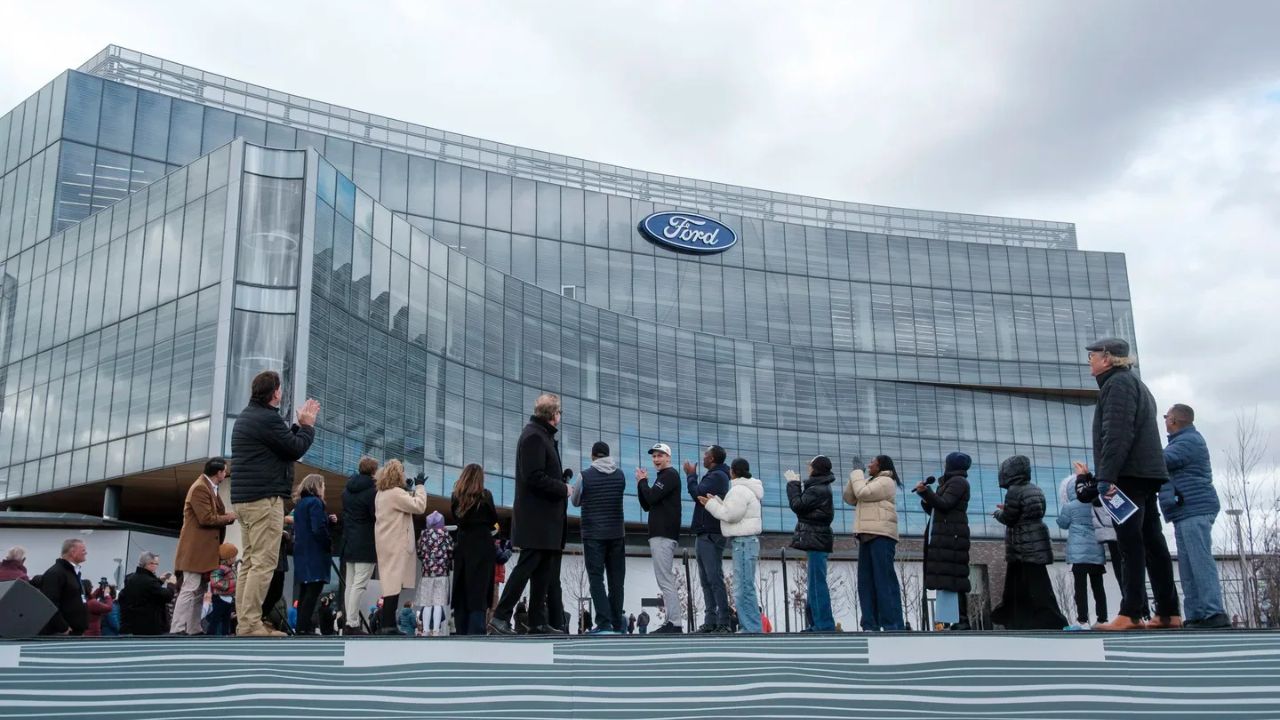
Ford Motor Company is edging toward the return of a format many drivers thought had disappeared with the 2011 Ford Explorer Sport Trac and the earlier Ranchero: a car-based pickup that blurs the line between sedan and truck. The company is weighing how a new car-truck mashup could fit into its fast-shifting mix of internal combustion, hybrid, and electric vehicles as customers pull back from all-in EV commitments.
What might look like a quirky niche product is emerging as a test case for how Ford balances nostalgia, practicality, and profit in a market where powertrain preferences are fragmenting. The stakes extend well beyond a single model badge, because the same logic that could justify a revived car-truck hybrid may also shape Ford’s broader hybrid strategy.
What happened
Ford has a long history of experimenting with vehicles that blend car comfort and truck utility, a lineage that runs from the Ford Ranchero of the late 1950s to the Explorer Sport Trac and, more recently, the compact Maverick pickup. The company’s own corporate history describes how its product strategy has repeatedly swung between pure work trucks and more lifestyle-oriented vehicles as consumer tastes change, with the F-Series anchoring the lineup while smaller experiments come and go in cycles, according to Ford Motor Company.
That pattern is resurfacing as Ford reassesses its mix of powertrains and body styles. After an aggressive push into battery electric models such as the F-150 Lightning and Mustang Mach-E, the company is now leaning harder into hybrids and plug-in hybrids, seeking a middle ground between traditional gasoline trucks and full EVs. Industry reporting describes automakers pivoting toward hybrids as a hedge against slower-than-expected EV adoption, with Ford grouped among manufacturers redirecting investment toward vehicles that pair gasoline engines with electric motors, as seen in coverage of automakers’ hybrid strategy.
Within that shift, Ford product planners have been studying how customers actually use compact pickups and crossovers. Dealers report strong interest in vehicles that can tow small loads, carry home-improvement supplies, and still fit in urban parking spaces. Leasing data and showroom feedback indicate that many shoppers who once would have driven a midsize sedan are now considering small trucks and crossovers instead, a trend highlighted in analysis of consumer powertrain preferences.
Those insights have revived internal discussion of a modern car-truck hybrid that would sit below the traditional F-150 and alongside or slightly under the Maverick in size and price. The concept borrows from both unibody crossovers and compact pickups: a lower ride height and more car-like handling than a body-on-frame truck, paired with an open bed and a hybrid powertrain that promises better fuel economy than a conventional half-ton pickup.
Ford has not publicly confirmed production for a specific model nameplate that fits this description, but executives have signaled that the company intends to expand its hybrid truck offerings and explore new segments where a lighter-duty, more efficient pickup could draw in customers who are not ready for a full-size truck or a full EV. In that context, a revived car-truck crossover looks less like an oddball and more like a strategic experiment.
Why it matters
The timing of Ford’s move toward a revived car-truck hybrid concept lines up with a broader shift in the auto industry. After years of intense focus on battery electric vehicles, hybrid cars and trucks are regaining momentum as a practical compromise for buyers who want better fuel economy without range anxiety. Reporting on hybrid cars describes how these models have become a safety valve for automakers facing consumer hesitation about charging infrastructure and price premiums for EVs.
For Ford, a compact hybrid pickup or car-truck crossover does more than fill a nostalgic niche. It offers a way to capture budget-conscious drivers who are being priced out of larger trucks but still want open-bed utility. The Maverick has already shown that formula can resonate, particularly with younger buyers and urban households that do not need the towing capacity of an F-150 but appreciate the flexibility of a small bed for bikes, furniture, or weekend projects.
A new car-based hybrid pickup could extend that playbook. By using a unibody platform shared with crossovers, Ford can keep development and production costs lower than a clean-sheet truck frame. Layering a hybrid powertrain onto that architecture would help the company meet tightening emissions and fuel-economy targets while still selling a vehicle that feels familiar to gasoline drivers. That matters for Ford’s bottom line, because trucks and SUVs remain its most profitable products, and regulators are pushing those same segments toward lower emissions.
The model would also test how far Ford can stretch its brand into lifestyle territory without eroding the work-truck credibility of the F-Series. Past experiments like the Explorer Sport Trac attracted loyal followings but never reached the volume of core pickups. The difference now is that the market context has changed. Compact crossovers dominate sales charts, and buyers are more open to unconventional body styles if they deliver the right mix of price, efficiency, and practicality.
On the retail side, dealers are watching hybrid and plug-in hybrid trucks closely because they can appeal to customers who lease vehicles and want predictable fuel costs. Analysis of leasing trends points to a surge in demand for powertrains that balance monthly payments with savings at the pump, especially as interest rates and fuel prices fluctuate. A small hybrid pickup that qualifies for attractive lease terms could become a showroom anchor for Ford, bringing in shoppers who might otherwise drift to crossovers from rival brands.
Strategically, the move also signals that Ford is not treating EVs as a one-way path. By investing in hybrids and unconventional body styles at the same time, the company is effectively running a portfolio experiment across multiple technologies. If EV adoption accelerates again, Ford can lean on its electric platforms. If hybrids remain the sweet spot for mainstream buyers, a car-truck hybrid gives the company another lever to pull in a highly competitive truck market.
What to watch next
The next phase will hinge on how Ford translates internal discussions into concrete product plans. Clues will emerge in the company’s future product roadmap and plant investment announcements, especially around facilities that currently build compact crossovers and the Maverick. A unibody car-truck hybrid would likely share assembly lines and components with those vehicles to keep costs in check, consistent with how Ford has historically managed platform sharing across its portfolio, as described in its corporate evolution.
Regulatory developments will also shape the business case. If fuel-economy rules tighten further or if incentives for hybrids expand, a compact hybrid pickup becomes more attractive to both Ford and buyers. Industry reporting on automakers’ hybrid strategy suggests that companies are already adjusting their product mixes in response to policy signals and consumer feedback, and Ford is unlikely to be an exception.
On the consumer side, early reaction to any concept teasers or patent filings will matter. When images or specifications surface for a potential car-truck hybrid, truck enthusiasts and crossover shoppers will scrutinize towing capacity, bed length, and fuel economy. The sweet spot will be a vehicle that can tow a small trailer or a pair of jet skis, carry home-improvement supplies, and still return hybrid-level efficiency that compares favorably with compact SUVs.
Pricing strategy will be another key signal. If Ford positions the vehicle significantly below the F-150 and roughly in line with or slightly above the Maverick, it will be clear that the company sees it as an entry point into the brand for first-time truck buyers and urban households. If the price creeps higher, closer to mid-size trucks, the model could struggle to justify itself against more traditional pickups with higher capability.
More From Fast Lane Only: