Ford is recalling hundreds of thousands of pickups and SUVs after discovering that some vehicles can fail to stay in Park, creating a rollaway risk even when drivers think they have secured their trucks. The campaign covers high profile electrified models such as the F‑150 Lightning and Mustang Mach‑E, along with hybrid and mainstream vehicles that share the same vulnerable park system. At its core, the recall is about a small electronic module with outsized consequences for safety, property damage and Ford’s credibility in the electric era.
What is behind Ford’s latest rollaway recall
The defect at the center of this action sits inside the integrated park module, a component that tells the transmission and electronic controls that the vehicle is in Park. According to safety filings, the module can fail to lock into Park, so the truck or SUV may still be able to move even after the driver shifts the selector and walks away. That failure raises the risk that a vehicle could roll, especially on an incline, if the parking brake is not fully engaged or if the driver relies solely on the gear selector to hold the vehicle.
Regulators describe the problem as a noncompliance with federal safety standards that require a vehicle in Park to remain stationary, and Ford’s own language links the defect directly to a “rollaway” condition. One report notes that Ford recalled more than 272,000 vehicles because the system could fail to lock into Park, while another describes a recall of more than 272,600 vehicles tied to the same integrated park module issue. Safety officials at NHTSA have also highlighted the broader pattern, pointing to a “Ford Rollaway Risk Results” recall of nearly 300,000 “Recent Model Year Vehicles” where the Manufacturer acknowledged that the park system might not lock properly.
Which Ford models are affected
The recall hits some of Ford’s most visible electrified products, underscoring how a shared electronic architecture can ripple across multiple nameplates. Reporting on the campaign states that Ford is recalling 272,645 vehicles in the United States, including 104,113 F‑150 Lightning trucks. Separate coverage describes “F‑150 Lightning and Mustang Mach‑E” as Among Ford Models Recalled Due to Rollaway Risk, with the total again pegged at 272,645 vehicles. Those reports emphasize that the issue is not limited to a single trim or battery configuration, but instead spans multiple model years of Ford’s flagship electric pickup and crossover.
The defect also reaches beyond pure EVs into hybrids and conventional models that share the same park module logic. Coverage of “Ford Recalls F‑150 Lightning, Mach‑E, Maverick Over Park Failure Risk” highlights that Lightning, Mach and Maverick Over Park Failure Risk are all part of the same Dec campaign, while another report notes that Ford is recalling more than 270,000 electric and hybrid vehicles in the U.S., including certain F‑150 Ligh trucks. A separate breakdown lists the recall as targeting a mix of electric, hybrid and mainstream models from recent production years, including 2022–2026 Ford F‑150 Lightning and related SUVs. Across these accounts, the common thread is that the same integrated park module design appears in a wide swath of Ford’s electrified lineup.
How the rollaway risk shows up in real life
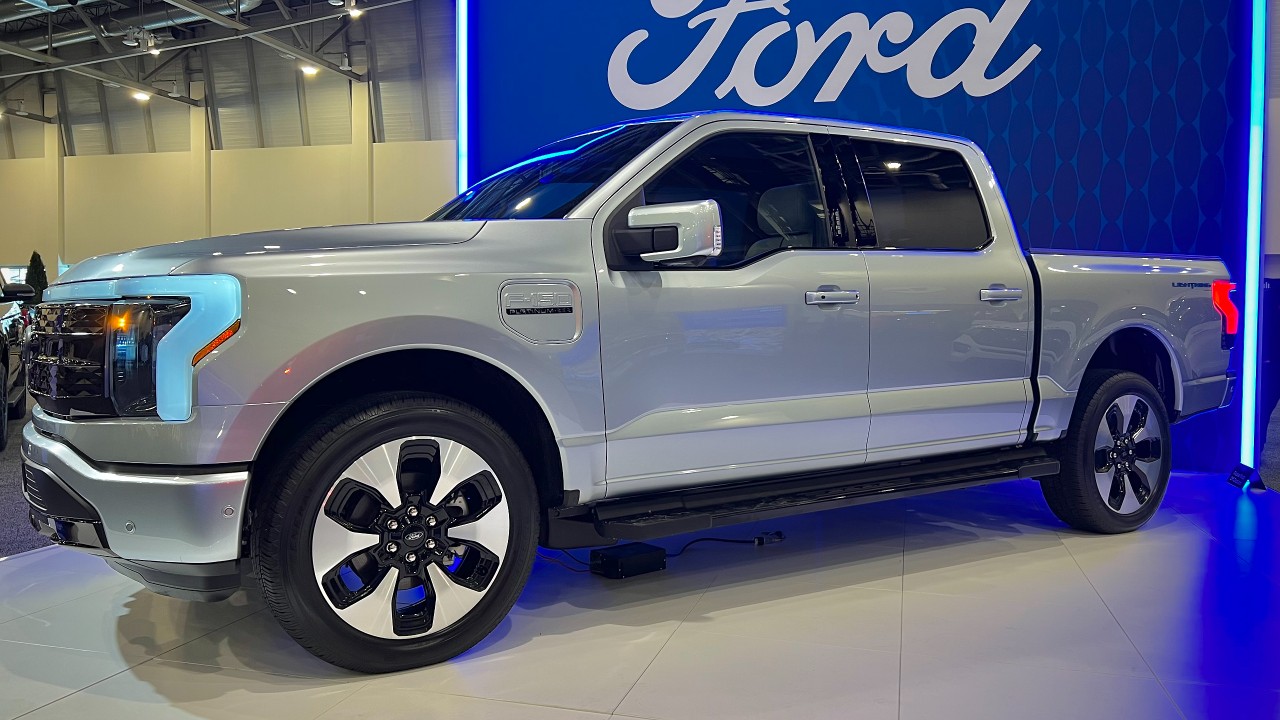
On paper, a software or module failure sounds abstract, but the practical consequences are straightforward and unsettling. If the integrated park module does not correctly lock the drivetrain, a driver can shift into Park, remove their foot from the brake and exit the vehicle, only to have it start rolling. One analysis notes that the defect can leave the vehicle free to move even when the selector indicates Park and the gauge cluster does not show an illuminated park indicator, turning a routine parking maneuver into a potential hazard. Another report frames it bluntly, saying that “Your truck rolling away in a parking lot” should not be a valid fear in 2025, yet Ford Recalls Electric Vehicles Over Rollaway Risk precisely because that scenario is possible.
Regulators warn that the danger is not limited to steep hills or extreme conditions. A vehicle that is not truly in Park can creep on a mild slope, back out of a driveway or nudge forward in a crowded lot, with enough force to strike pedestrians, other vehicles or nearby structures. One summary of the recall explains that the vehicles may move even when the driver shifts into Park and the parking brake is not fully engaged, which is why the defect is treated as a serious safety issue rather than a minor annoyance. The scale of the campaign, with figures ranging from more than 272,645 to nearly 300,000 vehicles, reflects how seriously both Ford and NHTSA view the risk of an “expensive runaway shopping cart” on public roads.
What Ford and NHTSA are doing about it
Ford’s remedy centers on updated software for the integrated park module, which is designed to ensure that the system reliably locks into Park and communicates that status to the driver. Several reports describe the fix as an over the air software update for many affected vehicles, allowing owners of connected models like the F‑150 Lightning and Mustang Mach‑E to receive the repair without visiting a dealership. In other cases, particularly for vehicles without full connectivity, the update can be installed at a dealer service center at no cost to the owner. One account notes that the recall will be delivered in two ways, reflecting this split between remote and in person updates.
NHTSA’s recall database confirms that the campaign is active and that owners can check whether their specific vehicle is covered. The agency’s guidance reminds drivers that Every vehicle has a unique Vehicle Identification Number, and instructs them to Look for the 17 character VIN on the lower left of the windshield or on registration documents. By entering that VIN into the NHTSA recalls tool, owners can see if their truck or SUV is part of the integrated park module recall and whether the remedy is available. The broader NHTSA recall page also encourages drivers to check for open campaigns regularly, not just when a headline about Ford or another automaker surfaces.
What owners should do now
For drivers of F‑150 Lightning, Mustang Mach‑E, Maverick and other affected models, the first step is to confirm whether their vehicle is included and whether the fix has been applied. I would start by locating the Vehicle Identification Number, then using the federal recall lookup to see if the integrated park module campaign appears under that VIN. If it does, owners should schedule a dealer visit if an over the air update is not available, or ensure that their vehicle is connected and set to receive software updates automatically. Until the remedy is installed, safety officials advise using the parking brake every time the vehicle is parked, especially on slopes, and turning the wheels toward the curb when possible to reduce the chance of a rollaway.
Owners should also pay close attention to how their vehicle behaves when shifting into Park. If the truck or SUV does not display a clear Park indicator in the gauge cluster, or if it feels like it lurches or moves after the driver exits, that is a sign to contact a dealer immediately, even if the recall has not yet appeared in the VIN lookup. Reporting on the recall notes that Ford Recalls 272K Electric Vehicles Over Rollaway Risk and that Ford Recalls F‑150 Lightning and other EVs over a park module issue, underscoring that the company expects to handle these repairs at no cost. In the meantime, the combination of careful parking habits, regular recall checks through NHTSA and prompt follow up with dealers gives owners the best chance to avoid the kind of rollaway incident that this recall is intended to prevent.
More from Fast Lane Only: