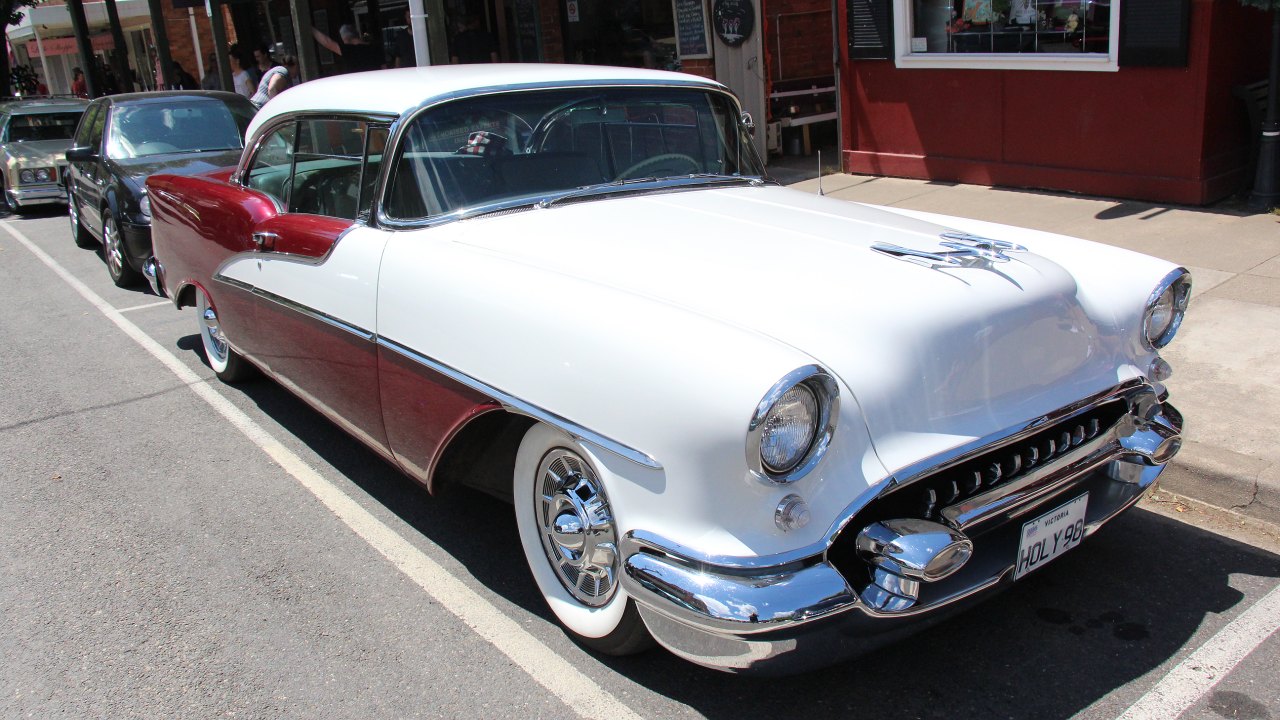
The 1954 Oldsmobile Starfire arrived at a turning point for American cars, when chrome, horsepower, and jet-age styling were starting to merge with a new idea of comfort and status. Rather than a simple trim package, it hinted at how Detroit would sell luxury as a personal experience, not just a bigger body or a longer options list. By looking closely at that early Starfire and the concept cars around it, I can trace how Oldsmobile quietly mapped out the template for the personal-luxury boom that followed.
From prestige convertible to personal-luxury signal
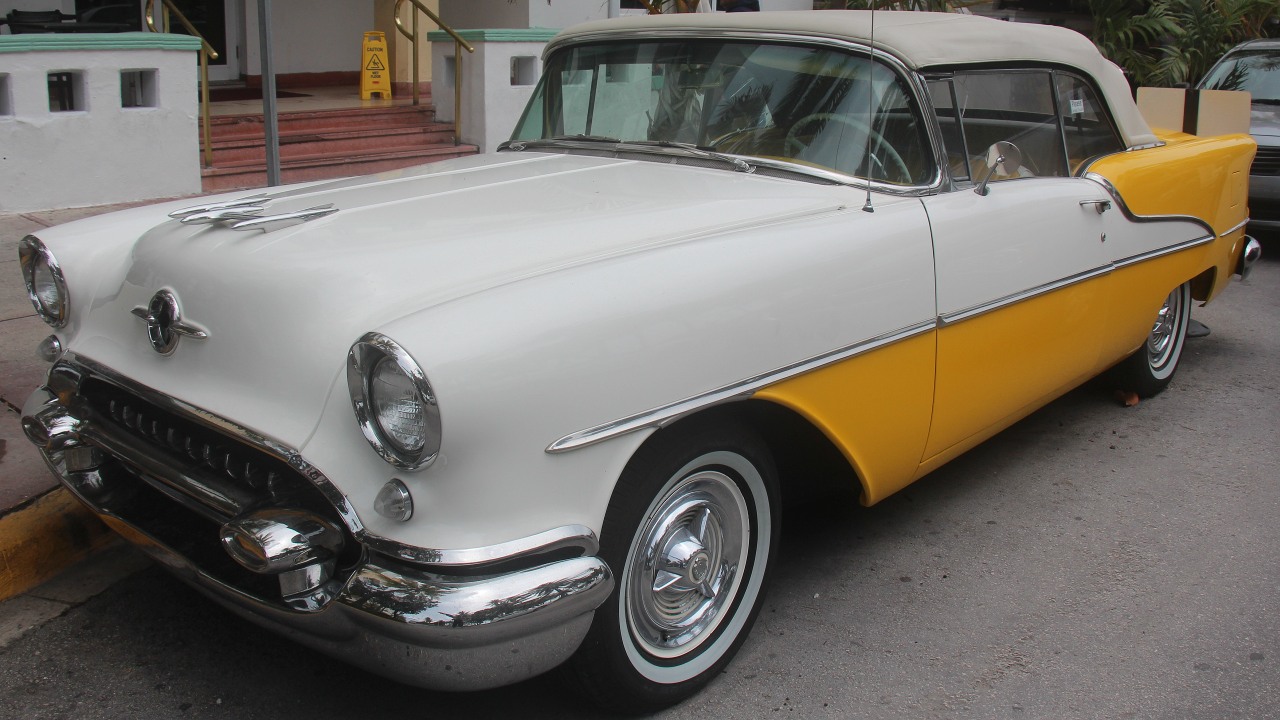
Oldsmobile used the Starfire name in 1954 on a top-tier version of its 98 convertible, and that decision alone shows how the brand was thinking about luxury. The 1954 Oldsmobile 98 Deluxe Starfire convertible sat at the top of the Oldsmobile range, described as the most expensive Oldmobile of its year, and it wrapped the division’s flagship mechanicals in a body that was as much about presence as practicality. By tying the Starfire badge to the 98, Oldsmobile treated luxury as a halo, a way to draw attention to the entire lineup through a single, highly specified showpiece.
That strategy foreshadowed the way personal-luxury cars would be marketed in the 1960s, as aspirational objects that made the rest of the showroom look more desirable. When Oldsmobile later revived Starfire as a separate model, it leaned on the reputation created by that 98 Deluxe Starfire convertible, which had already framed the name as shorthand for top-of-the-line comfort and style. The early use of the badge on a glamorous four-passenger convertible previewed the idea that luxury could be concentrated in a single, image-heavy model rather than spread evenly across a range.
A four-passenger luxury formula ahead of its time
When Starfire returned as its own series, it was explicitly positioned as a sporty four-passenger luxury car, fitting into what would become the personal-luxury niche. That configuration, a powerful two-door with full-size comfort for four, anticipated several trends of the future, including the rise of cars that sold image and indulgence more than raw practicality. Instead of chasing maximum seating or cargo space, Oldsmobile focused on giving the driver and three passengers a sense of exclusivity, with upscale trim and performance that felt a step above the family sedan.
That balance of sport and comfort became a defining pattern for later personal-luxury icons, and the Starfire was already working that territory in the mid 1950s and early 1960s. By emphasizing a four-passenger layout rather than a strict two-seat sports car, Oldsmobile showed that luxury buyers wanted to share the experience without sacrificing the intimate feel of a personal car. The Starfire’s positioning as a sporty four-passenger luxury car, noted as fitting squarely into that emerging niche, reads today like a blueprint for the segment that would later include everything from upscale intermediates to high-spec coupes.
Concept-car laboratories: F-88 and Oldsmobile Cutlass Concept
Oldsmobile did not arrive at the Starfire formula in isolation, and its 1954 concept cars reveal how the division was testing ideas that would filter into future luxury models. The 1954 Oldsmobile F-88 concept, captured in detailed photos credited to Ryan Merrill and Broad Arrow Auctions, showcased a low, dramatic two-seat body with sweeping fenders and a prominent grille that pushed Oldsmobile styling into pure fantasy. Although the F-88 itself remained a showpiece, its proportions, sculpted sides, and emphasis on visual drama previewed the kind of expressive design language that would make production Starfires stand out in traffic.
Alongside the F-88, the 1954 Oldsmobile Cutlass Concept explored a different side of future luxury by leaning into aviation themes. The Oldsmobile Cutlass Concept took its name from the military Chance Vought Cutlass, a Navy fighter plane, and its design was shaped under the direction of Art Ross with clear Aviation cues. That connection to aircraft, from the name to the styling flourishes, signaled how Oldsmobile saw modern luxury as something tied to technology, speed, and the glamour of flight. Those themes, tested on the show circuit, helped normalize jet-age motifs that would later appear in production cars, including high-end Oldsmobiles that carried the Starfire name.
Styling cues that made luxury feel modern
The visual language around the Starfire and its related concepts helped redefine what a luxurious American car should look like in the mid century. The F-88 concept’s long hood, short rear deck, and low roofline, documented in the Broad Arrow Auctions photography, distilled the era’s fascination with speed into a shape that still read as upscale rather than purely sporting. When Oldsmobile translated some of that attitude into its production cars, including the 98 Deluxe Starfire convertible, it created a look that felt modern and aspirational, with chrome and brightwork used to emphasize motion instead of just ornament.
The aviation-inspired Oldsmobile Cutlass Concept added another layer, showing how luxury styling could borrow from military and aerospace design without losing its sense of comfort. By referencing the Chance Vought Cutlass and the Navy in both name and theme, the concept wrapped its cabin in forms that suggested cockpits and fuselages, a visual shorthand for advanced engineering. That approach filtered into production Oldsmobiles through details like instrument panel layouts and exterior trim that hinted at aircraft influences, reinforcing the idea that a high-end car should look like a piece of cutting-edge technology as much as a traditional status symbol.
Legacy in the personal-luxury boom
Looking back from today, the 1954 Starfire and its surrounding concept ecosystem read like an early draft of the personal-luxury playbook that would dominate American showrooms in the following decades. By anchoring the Starfire name to the most expensive Oldmobile in 1954, then later applying it to a sporty four-passenger luxury car that fit squarely into a new niche, Oldsmobile treated luxury as a focused experience rather than a generic upgrade. The experimentation visible in the F-88 and Oldsmobile Cutlass Concept, from dramatic proportions to Aviation and Navy references tied to the Chance Vought Cutlass, shows how the division used show cars to test how far it could push style and technology in the name of comfort and prestige.
Those moves helped set expectations for what a personal-luxury car should deliver: distinctive styling rooted in advanced themes, a cabin tailored for four rather than a crowd, and a badge that signaled top-tier status within a brand. The Starfire nameplate, first attached to the 98 Deluxe Starfire convertible and later to a dedicated sporty four-passenger luxury model, previewed that formula with surprising clarity. Even as the market evolved, the core idea that Oldsmobile explored in 1954, using dramatic design and focused packaging to sell a more intimate form of luxury, remained a guiding thread for the segment that followed.
More from Fast Lane Only: