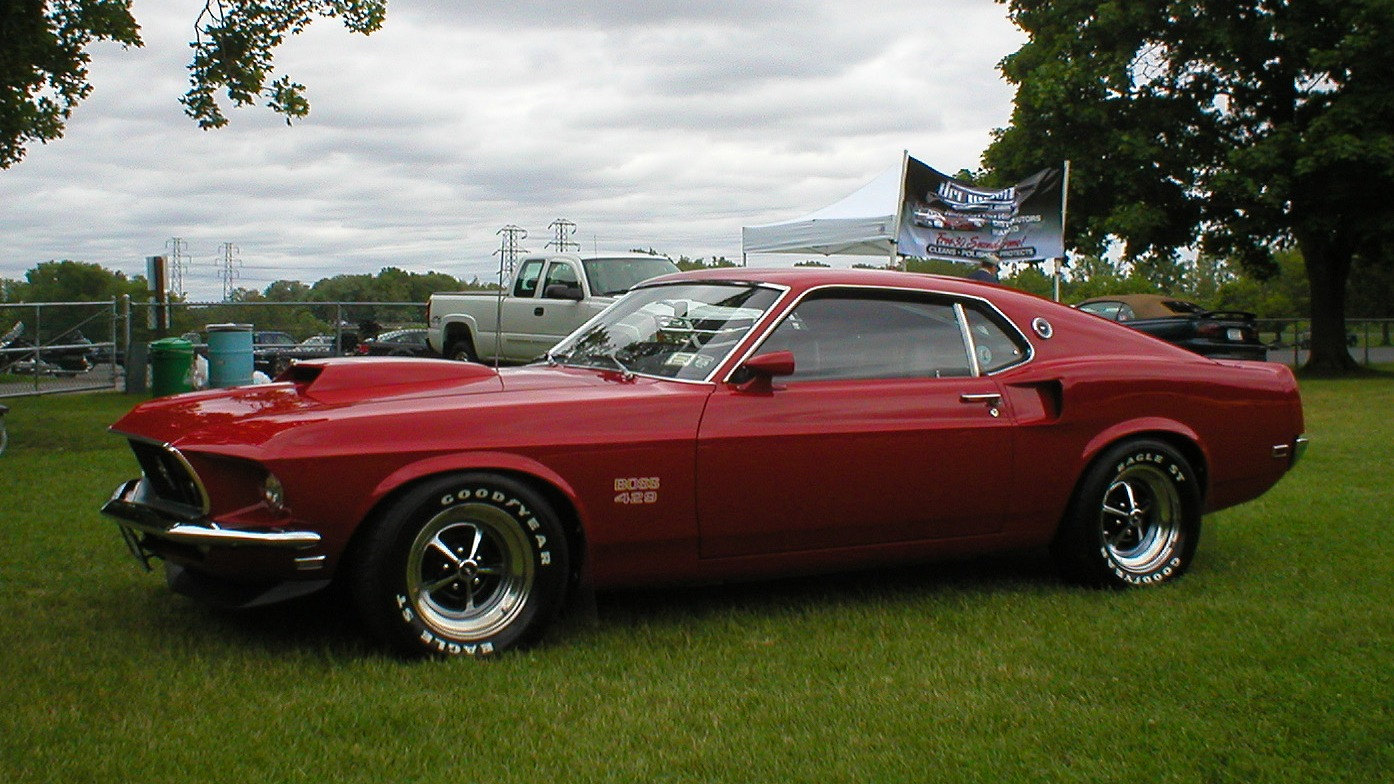
Ford built the 1969 Boss 429 Mustang as a street-legal weapon for one battlefield: NASCAR’s high-speed ovals. The car’s massive semi-hemi V8, radical packaging, and limited production run all served that single objective, even if the Mustang itself never turned a competitive lap in stock-car trim. More than half a century later, that narrow purpose has made the Boss 429 one of the most coveted and expensive American muscle cars.
What happened
In the late 1960s, Ford faced a new kind of arms race on the NASCAR circuit. Chrysler’s 426 Hemi-powered Plymouths and Dodges were dominating the superspeedways, and Ford needed an engine that could match them in power and durability. NASCAR rules required that any race engine be based on a production unit, which meant Ford had to sell a minimum run of road-going cars fitted with the new powerplant to qualify it for competition.
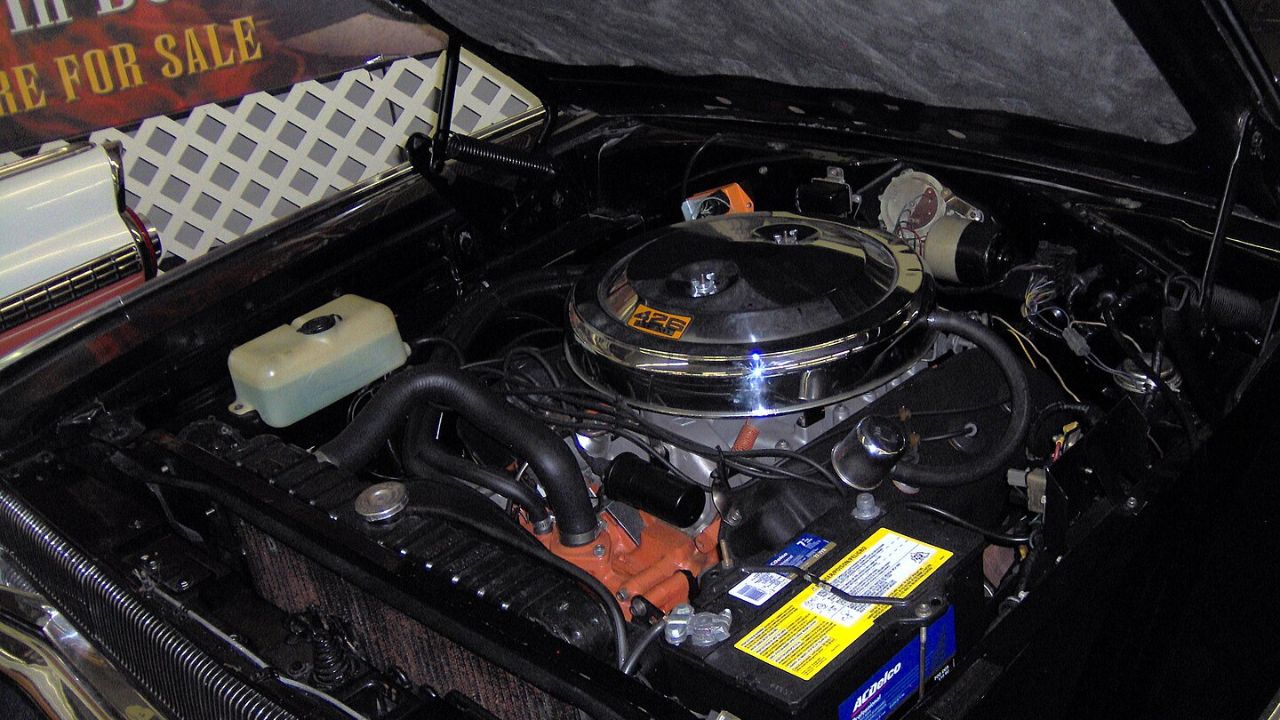
The answer was the Boss 429 engine, a 429 cubic inch V8 with semi-hemispherical combustion chambers, canted valves, and a massive single four-barrel carburetor. To get this engine into production quickly, Ford chose the Mustang as the host, even though the car’s engine bay was never designed for such a wide, tall block. The decision was less about building a drag-strip hero and more about satisfying NASCAR’s homologation checklist so that the 429 could power full-size Torino stock cars on the track.
Installing the Boss 429 into a Mustang required major surgery. Ford farmed the conversions to Kar Kraft in Brighton, Michigan, where standard 428 Cobra Jet Mustangs arrived from the factory and were stripped and rebuilt. The shock towers were cut and reshaped, the front suspension was relocated, and a unique front crossmember and engine mounts were installed to clear the enormous cylinder heads. The battery moved to the trunk to free up space and improve weight distribution, and the front fenders were modified to accept wider wheels and tires.
Because the car existed primarily to legalize the engine, Ford kept the production run intentionally small. The 1969 model year saw a limited batch of Boss 429 Mustangs, each carrying a hand-built engine and a unique “KK” (Kar Kraft) number. A second run followed for 1970, with minor cosmetic and mechanical changes but the same core mission of keeping the 429 race program alive. The total output across both years remained low, which set the stage for the car’s future rarity.
On the street, the Boss 429 was deceptively understated. It wore minimal exterior graphics compared with some of its louder muscle contemporaries, relying on a functional hood scoop, subtle badging, and a slightly lower stance to hint at what lay beneath. Inside, it looked much like a typical Mustang of the period, with few luxury options and a focus on basic instrumentation. The engine’s advertised 375 horsepower rating was conservative, in part to satisfy insurance and emissions pressures, and enthusiasts have long regarded the factory figure as significantly understated.
Despite its NASCAR-focused origins, the Boss 429 never became a dominant drag-strip star in factory form. Its big-port cylinder heads and relatively mild cam timing left it somewhat soft at lower rpm, and the car’s weight and gearing were not optimized for quarter-mile sprints right off the showroom floor. Tuners and racers quickly discovered that the engine responded well to modifications, but Ford’s own marketing never pushed the Boss 429 as hard as some other performance models.
Over time, that odd mix of understated looks, extreme engineering, and limited numbers turned the Boss 429 into a collector favorite. The car’s values have climbed steadily as surviving examples have been restored and documented. Modern pricing guides and auction reports consistently place well-preserved or fully restored 1969 Boss 429s in the upper tier of classic Mustang values, with some examples trading well into six-figure territory according to recent market analysis.
The 1970 Boss 429s, produced in even smaller numbers and offered in rarer color and trim combinations, have pushed prices even higher. A highly original 1970 example finished in an uncommon paint and interior pairing set a record sale price at auction, a benchmark that highlighted just how far the model’s desirability has climbed. That particular car, documented as an authentic factory Boss 429 with matching numbers, drew intense bidding and ultimately sold for a figure that reaffirmed the car’s status as a blue-chip collectible, as reflected in the report on an ultra-rare 1970 example.
Why it matters
The Boss 429 story captures a moment when racing rules shaped what appeared in dealer showrooms. NASCAR’s homologation requirements forced manufacturers to put serious race technology into the hands of ordinary buyers, at least in limited numbers. Ford’s decision to create a street Mustang solely to validate a big-block V8 for stock-car racing shows how far automakers were willing to go to win on Sunday and sell on Monday.
From an engineering standpoint, the Boss 429 program pushed the Mustang platform to its limits. The car’s heavily reworked front structure, relocated suspension, and trunk-mounted battery were not marketing flourishes; they were functional responses to the challenge of packaging a race-bred engine in a compact pony car. That level of modification blurred the line between production car and factory special and set a template for later homologation models across the industry.
The engine itself also matters. The 429 semi-hemi was Ford’s answer to the Chrysler 426 Hemi, and it represented a significant investment in cylinder head design, airflow, and durability. While the street-tuned version in the Mustang was deliberately restrained, the same basic architecture powered Ford’s NASCAR entries and contributed to competitive performances on the superspeedways. The Boss 429 Mustang therefore serves as a physical link between showroom and speedway, even if the car’s own racing career was limited.
Historically, the Boss 429 occupies a special place in the broader muscle car narrative. It arrived late in the performance era, just as insurance costs, safety regulations, and emissions rules were beginning to squeeze high-horsepower models. That timing meant the car’s production window was short, which reinforced its rarity. It also meant that the Boss 429 became one of the last and most extreme expressions of factory-backed American muscle before the market shifted toward smaller engines and lower output.
The car’s current values reflect not only its scarcity but also its role as a symbol of that era. Collectors prize originality, documented history, and correct components, and the Boss 429’s complex build process makes those factors even more significant. Each car passed through Kar Kraft for conversion, and details such as the KK number, engine stampings, and unique chassis modifications are critical for authentication. That scrutiny has created a robust ecosystem of restorers, historians, and registries focused on preserving accurate information about the surviving cars.
For Ford enthusiasts, the Boss 429 also carries emotional weight. It represents a time when the company was deeply committed to motorsport across multiple disciplines, from NASCAR ovals to drag strips and road racing. The Boss branding connected the NASCAR engine program to other performance Mustangs of the period, such as the Boss 302, which targeted Trans-Am competition. Together, these models showcased a strategy that tied racing success directly to showroom identity.
Beyond nostalgia, the Boss 429’s trajectory helps explain modern performance branding. Contemporary homologation specials and limited-run performance models often borrow tactics pioneered in the late 1960s: small production numbers, race-derived components, and a clear link between competition and road use. The idea that a street car can exist primarily to support a racing program, rather than the other way around, traces directly back to projects like the Boss 429.
There is also a cultural dimension. The Boss 429 has become a fixture in media, car shows, and enthusiast circles as a shorthand for ultimate factory muscle. Its combination of understated styling and extreme hardware appeals to collectors who value both performance and subtlety. That visibility reinforces its status and influences how newer generations understand the muscle car era, often elevating the Boss 429 as a benchmark against which other models are measured.
Economically, record auction results for rare Boss 429s send signals across the collector market. When a well-documented example in an uncommon color combination achieves a new high sale price, it tends to lift expectations for other cars in similar condition. That ripple effect can drive investment in restorations, increase demand for original parts, and encourage owners to bring long-hidden cars out of storage. It also raises questions about accessibility, since rising values put the car further out of reach for average enthusiasts.
At the same time, the Boss 429’s market performance highlights the importance of documentation and originality in high-end collector cars. Buyers are willing to pay significant premiums for cars with clear histories, matching-number drivetrains, and factory-correct details. That emphasis rewards careful preservation and penalizes poorly documented or heavily modified examples, shaping how owners approach maintenance and restoration decisions.
What to watch next
The future of the Boss 429 market will likely depend on a mix of generational interest, broader economic conditions, and the ongoing availability of top-tier examples. As more early baby boomer collectors age out of active buying, younger enthusiasts with different tastes and budgets will influence demand. Some may gravitate toward newer performance cars or different segments entirely, while others will see the Boss 429 as a once-in-a-lifetime acquisition that justifies its premium.
One factor to watch is how often the very best cars come to market. Many of the most original or meticulously restored Boss 429s reside in long-term collections, and when one of these cars appears at a major auction, the result can reset price expectations for the entire model. If such offerings become less frequent, scarcity could support or even increase values for the limited number of cars that do change hands.
Another trend involves the growing interest in documented race history and period modifications. While the Boss 429 Mustang itself was not a frontline NASCAR chassis, some cars saw use in drag racing or other competition. Well-documented examples with period-correct upgrades and clear provenance may attract a different subset of buyers who value authentic motorsport connections as much as factory originality.
Restomod and continuation builds also sit in the background of the Boss 429 story. As original cars become too valuable to modify, some enthusiasts turn to replicas or heavily updated builds that capture the look and feel of the original while using modern components. These projects can broaden the car’s cultural footprint by putting Boss 429-style machines on the road and at events, even if they do not affect the values of genuine Kar Kraft cars directly.
Regulatory and environmental shifts could influence how often high-horsepower classics are driven, but they are less likely to diminish the Boss 429’s appeal as a collectible artifact. Owners may rely more on private tracks, special events, or limited-use registrations while preserving the cars as historical objects. That pattern has already emerged with other high-value muscle cars and will likely continue as cities and regions tighten emissions and noise rules.
More from Fast Lane Only