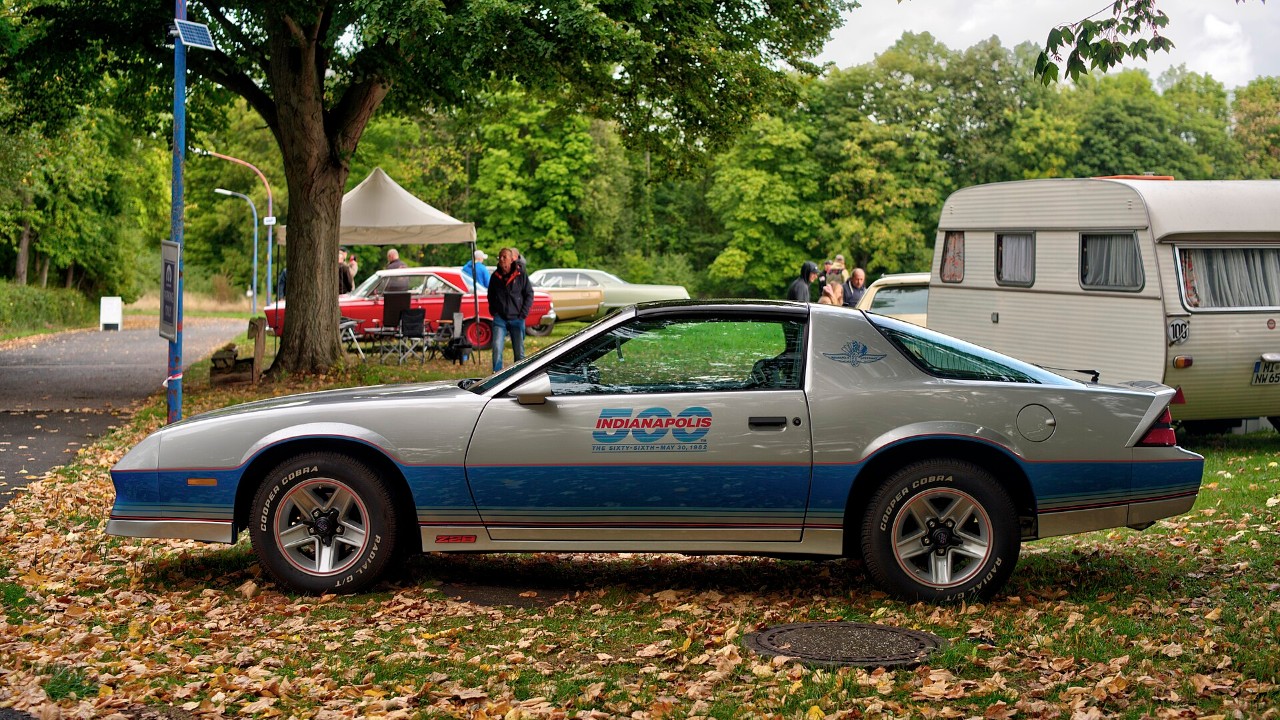
Chevrolet built 6,360 Chevrolet Camaro Z28 Indianapolis Pace Car models for 1982. That was a special edition with a clear number attached. As a result, it’s the kind of Camaro that gets a second look decades later.
Of course, everyone knows the 1969 Z/28 and the big-block COPO cars. However, those are blue-chip classics with blue-chip prices. The Camaros we find more fun to talk about are the trim levels, packages and anniversary cars that most people walked past at the dealer.
These are our picks, nine forgotten Camaros that we think turned into surprise collectibles. That verdict is our opinion, and we’re not claiming values for most of them. The years, features and production figures come from reference sources, an auction house and enthusiast press we checked.
1. 1974 Chevrolet Camaro Type LT
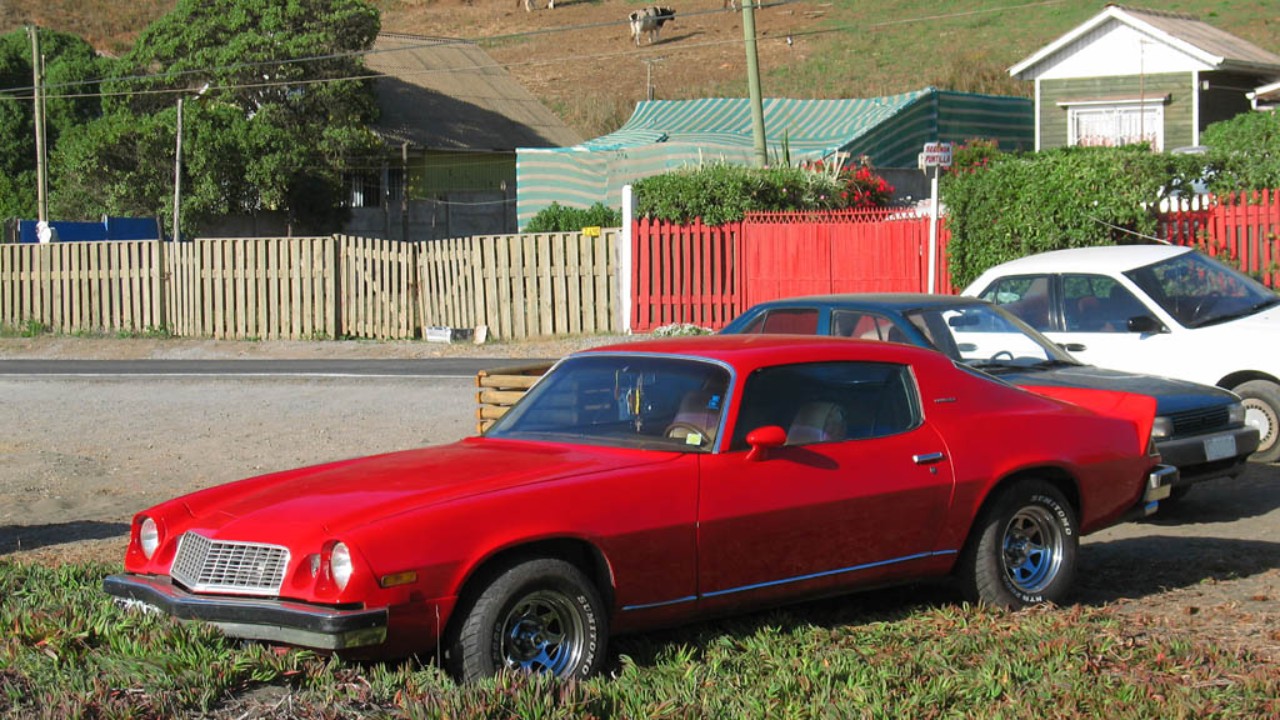
First, Chevy added the Type LT in 1973 as the gentleman’s Camaro. It promised a quieter, better-appointed cabin than the regular car. Buyers also got full instrumentation, Rally-style wheels, variable-ratio steering, sport mirrors and hidden windshield wipers.
Then 1974 changed the car’s face. To meet federal bumper rules, the Camaro grew seven inches longer, partly thanks to a forward-sloping grille. Sales actually rose that year to more than 150,000 cars. Later, for 1979, the Berlinetta replaced the Type LT, which makes the LT a short chapter in the Camaro story.
Our take: the Type LT is the Camaro for people who want comfort with their 1970s style. It isn’t the fastest second-gen car, yet the plush interior and full gauges make it feel special inside. We’d look for one with its original LT trim intact, because those details are what separate it from a base car. Body and floor condition should come first, though.
2. 1980 Chevrolet Camaro Rally Sport
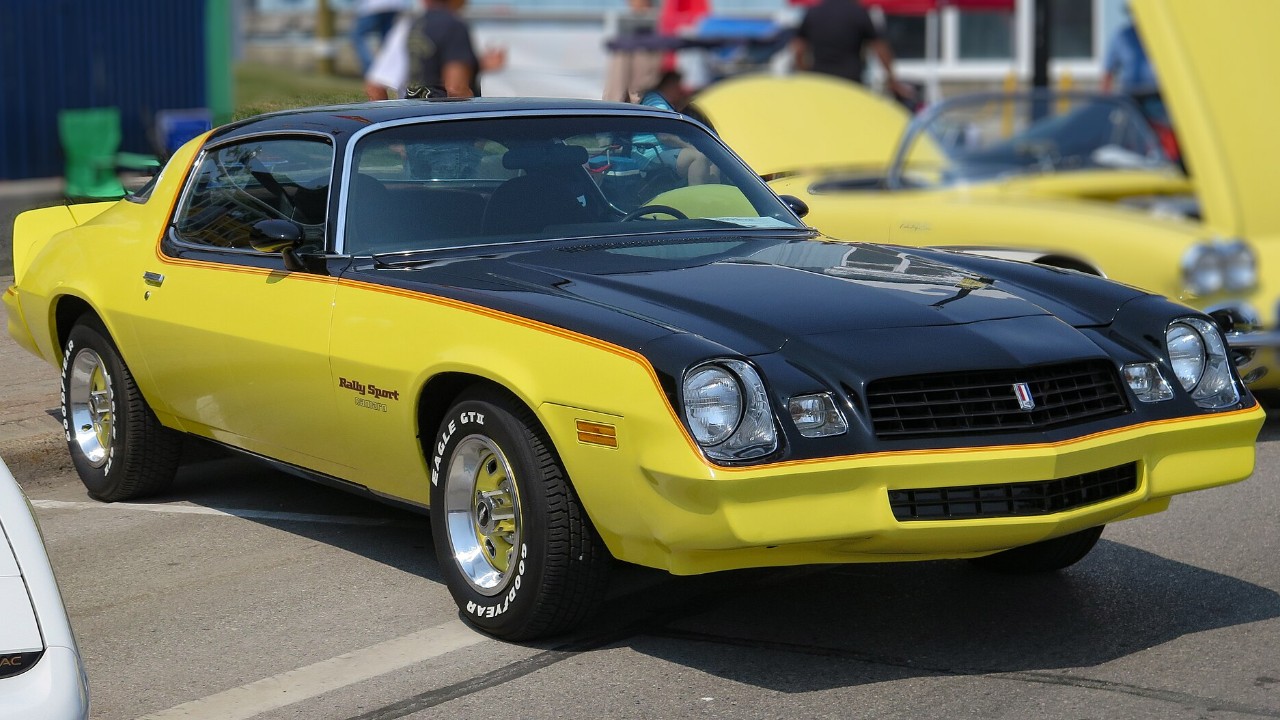
The Rally Sport began life as an appearance package with its own nose, bumper and interior touches. Over time, the name came and went. It returned for 1978 with standard two-tone paint, which gave late second-gen RS cars a bold look on the street.
By 1980, the engine lineup had shifted. A 229-cubic-inch V6 replaced the old inline-six, and a 267-cubic-inch V8 rated at 120 horsepower became an option on the base, RS and Berlinetta. After that model year, Chevy dropped the RS name for 1981. Therefore, the 1980 car is the last Rally Sport of the second generation.
In our view, the 1980 RS is a great example of how style carried the Camaro through a lean era. The two-tone paint and the RS details pop at a car show. Power was modest, so this is a cruiser, not a stoplight brawler. If you buy one, we’d pay more for original paint and trim than for a big engine swap, since the look is the point.
3. 1982 Chevrolet Camaro Z28 Indy 500 Pace Car
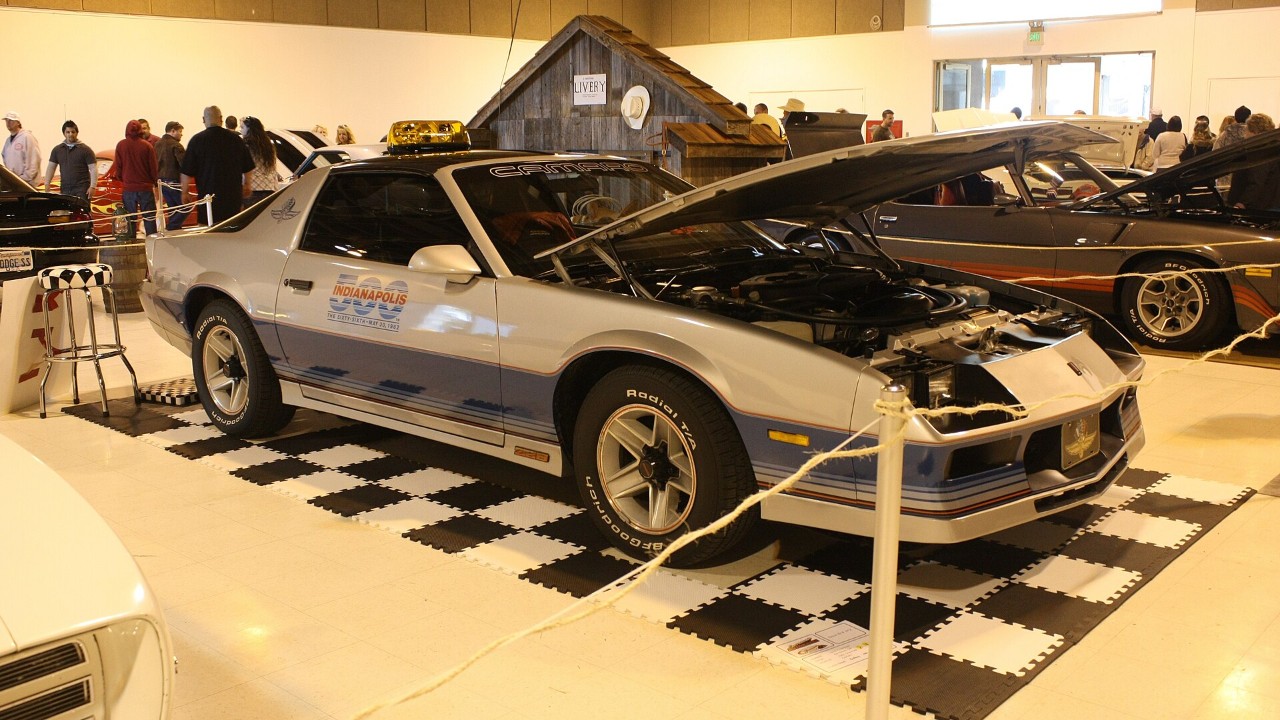
The brand-new third-generation Z28 paced the 1982 Indianapolis 500. Chevrolet then sold replicas through its dealers with two-tone silver and blue paint, red pinstriping and 15-inch Z28 wheels. Inside, they had a silver and blue interior with six-way Lear-Siegler seats. We looked at how the 1982 Z/28 fought to stay relevant in a separate story.
However, the replicas used the regular Z28 drivetrain. By contrast, the car that actually paced the race had a highly modified all-aluminum 5.7-liter V8. Collector interest in the replicas is real, though prices stay friendly. RM Sotheby’s sold one at its Auburn Fall 2020 sale for $11,275. That car had a 305 V8 rated at 165 bhp, a three-speed automatic and under 35,600 miles on the odometer.
Our take: the 1982 pace car is the most approachable collectible Camaro of the 1980s. It has an Indy story, factory graphics and a clear production number. Because 6,360 were built, you can afford to be picky. Still, we’d hold out for an unrestored car with its original paint and seats.
4. 1984 Chevrolet Camaro Berlinetta

The third-gen Berlinetta was Chevy’s luxury Camaro, and it leaned into the look. Finned 14×7-inch aluminum wheels with gold accents, gold Berlinetta badges and accent-colored pinstripes set it apart outside. Inside, buyers also got custom cloth, extra insulation and full instrumentation. From 1983, the Berlinetta also swapped its gauges for electronic readouts, including a bar-graph tachometer and a digital speedometer.
Chevrolet sold 33,400 Berlinettas for 1984. Sales then fell to 13,649 in 1985 and just 4,479 in 1986, after which Chevy dropped the trim. In total, it built 119,197 third-generation Berlinettas. A 2.8-liter V6 came standard, while a 5.0-liter V8 was optional.
In our view, the Berlinetta is pure 1980s optimism, and that’s why we like it. The digital dash looks like a sci-fi movie prop, which is half the fun. However, working electronics are the big question on any survivor. We’d test every readout and switch before buying, because a dead dash is the thing that makes a cheap Berlinetta expensive.
5. 1987 Chevrolet Camaro ASC convertible
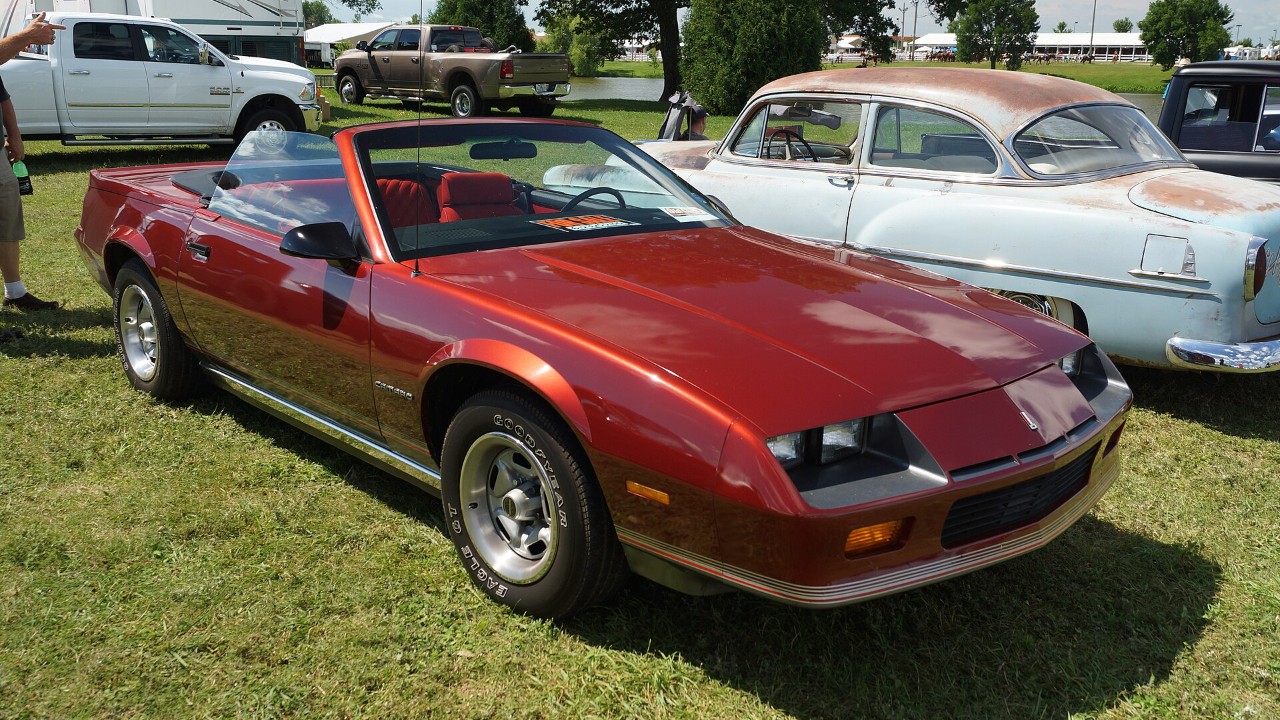
The Camaro convertible came back for 1987, much to fans’ delight. Chevy didn’t build it on the main line, though. Instead, the American Sunroof Company converted T-top Camaros into convertibles. Even so, buyers could get the open car as a Sport Coupe, LT or IROC-Z.
Production was small at first. A total of 1,007 convertibles were built in that first year. There’s a wrinkle for collectors, too. Some 1987 T-top coupes were converted to convertibles after delivery, so a few real ASC cars carry a coupe body code in the VIN.
Our take: the 1987 convertible is a sneaky-good find. It brought back a body style fans had missed, and the small first-year run gives it a story. We’d pick an IROC-Z convertible if the budget allows. Either way, we’d ask for paperwork tying the car to ASC, since that VIN quirk means the body code alone won’t settle the question.
6. 1989 Chevrolet Camaro 1LE

The 1LE wasn’t really a package you could order by name. Rather, it switched on automatically when a buyer ordered an IROC-Z coupe with the G92 performance axle and no air conditioning. Chevy built the combination to make the IROC-Z more competitive in SCCA Showroom Stock road racing.
The parts list reads like a racer’s wish list. It included 11.65-inch rotors with two-piston aluminum PBR calipers, an aluminum driveshaft and a baffled fuel tank. Specific shocks and stiffer bushings came along, and the fog lamps went away. Only 111 cars got the 1LE gear in 1989, and most dealers didn’t even know it existed.
In our view, the 1989 1LE is the definitive “if you know, you know” Camaro. It looks like an ordinary IROC-Z, yet it was built for the racetrack. That’s exactly why documentation matters so much. We’d walk away from any car sold as a 1LE without the build paperwork to back it up.
7. 1993 Chevrolet Camaro Z28 Indy Pace Car
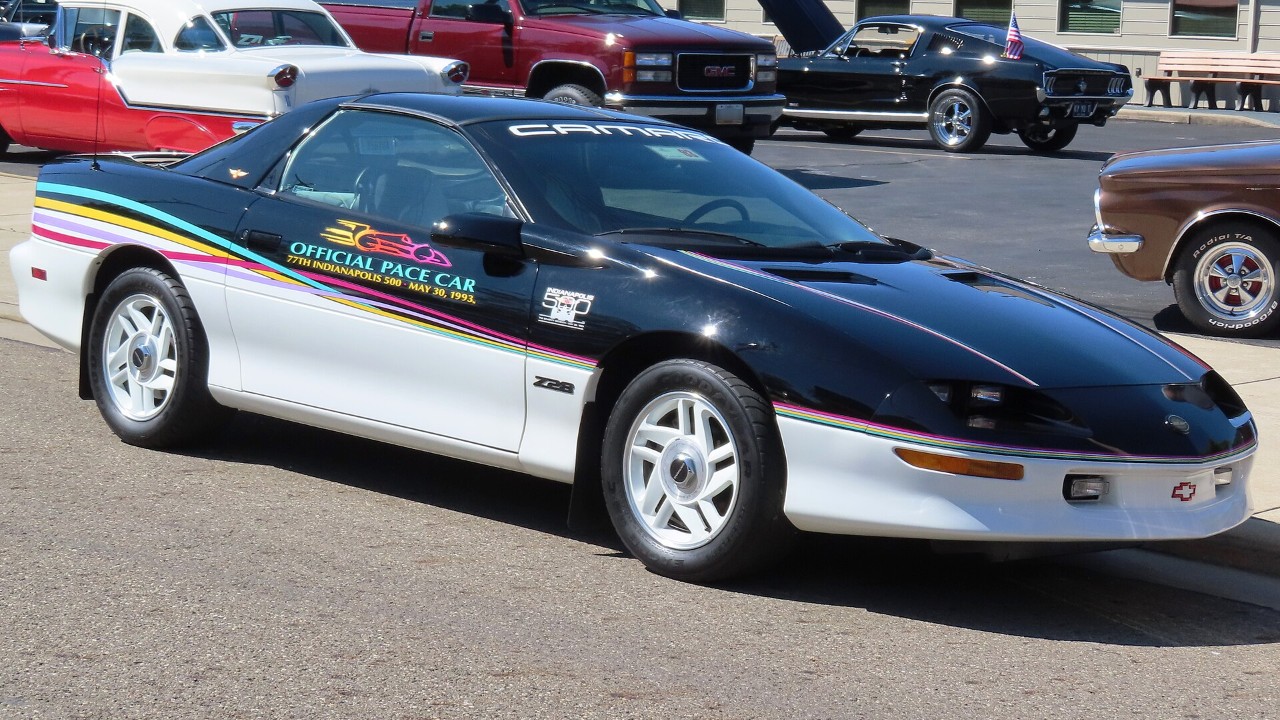
The fourth-generation Camaro arrived for 1993, and the Z28 immediately landed the job of pacing the Indianapolis 500. Chevy marked it with a pace car edition. The cars wore a black-and-white body, multicolored pinstriping, white wheels and Indy 500 lettering.
Chevrolet made just 645 of them. Under the hood, the Z28’s LT1 V8 was rated at 275 horsepower and 325 lb-ft. That engine had appeared in the Corvette a year earlier, so the new Camaro started life with real muscle.
Our take: the 1993 pace car is far rarer than the 1982 car, yet it gets less attention. Pace cars have a long Camaro history, as our ranking of 1967 Camaro pace car editions by rarity shows. The graphics are loud, and we love that about it. With only 645 made, it’s a small club. Because the decals and white wheels carry so much of the value, we’d favor a well-kept original over a car with reproduction graphics.
8. 1996 Chevrolet Camaro SS SLP
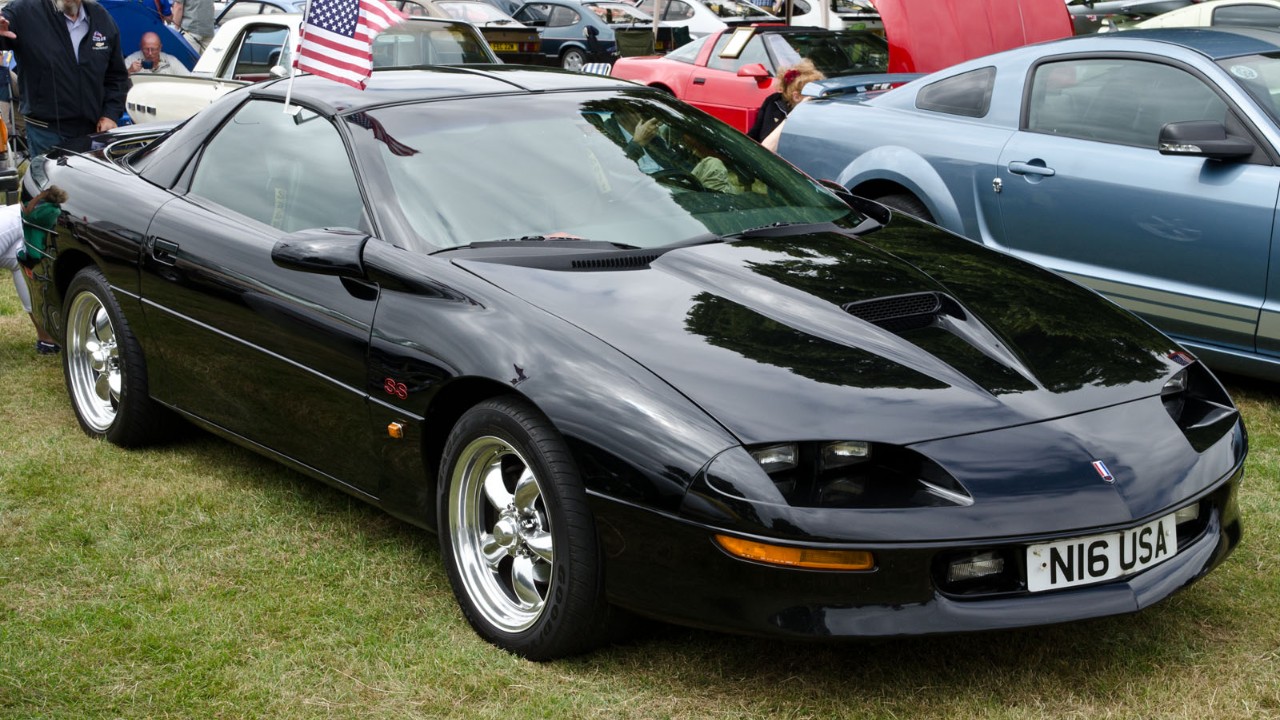
Chevy brought back the SS name in a partnership with SLP Engineering. The 1996 Z28 SS made 305 horsepower, a healthy step up from the regular LT1. Buyers could also get 17-inch wheels, and the SS rode on its own wheel and tire package.
Those changes turned a good car into a sharper one. More importantly, they revived a badge that meant a lot to Camaro fans. Meanwhile, the car kept the fourth-gen’s long, low shape, which looks fast at a standstill.
In our view, the SLP-built SS is one of the best-value modern-classic Camaros. It has a factory-backed story and real hardware to match. We’d look for an unmodified example with its SLP parts and paperwork, because a stock survivor stands out.
9. 1997 Chevrolet Camaro 30th Anniversary LT4 SS
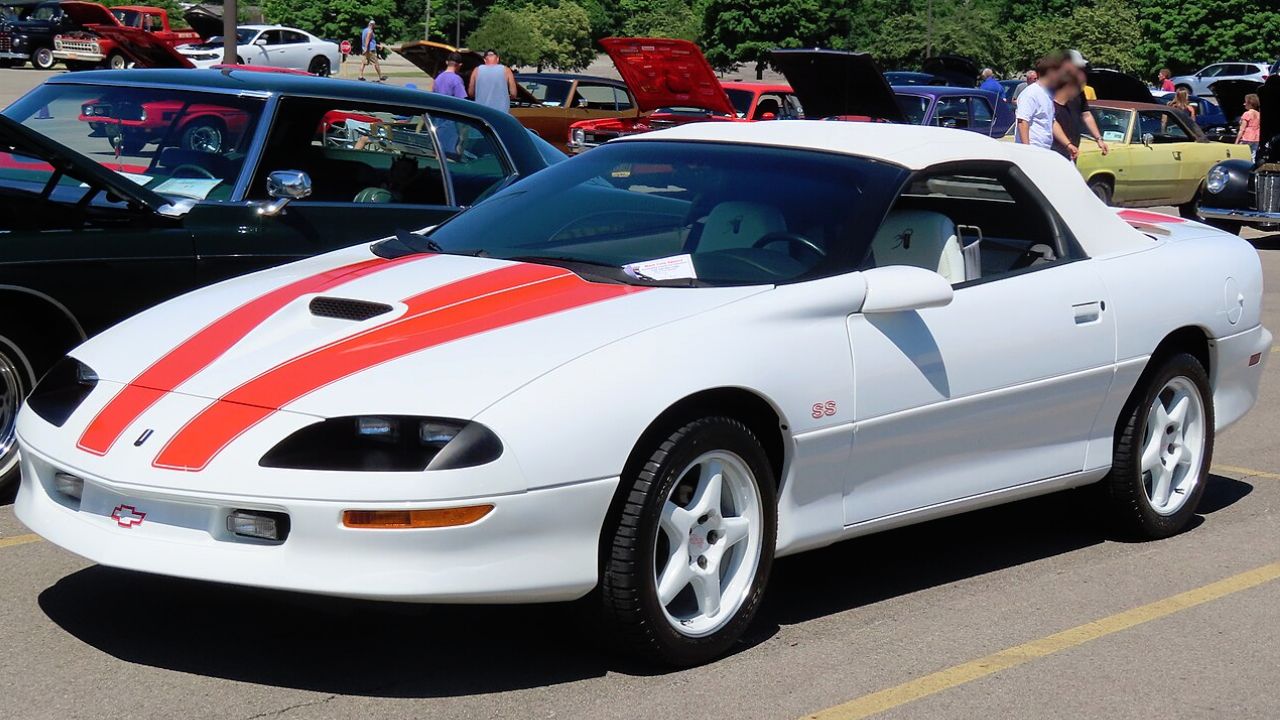
For the Camaro’s 30th birthday in 1997, Chevy offered a 30th Anniversary package on the Z28, SS and RS. It featured white paint with orange stripes. The white wheels were exclusive to these cars that year.
SLP then took a small batch further. It fitted 108 30th Anniversary cars with the LT4 V8, rated at 330 horsepower and 340 lb-ft. Of those, 100 went to the United States, six went to Canada and two were prototypes. According to Jalopnik’s look at one of the LT4 cars, the interior came with white leather seats to match the paint.
Our take: this is the most collectible car on our list, and it doesn’t feel forgotten to those who know. The LT4 swap gave it 25 more horsepower than the 1996 SS. With only 108 made, though, fakes are a risk. We’d insist on SLP documentation before buying, because just 100 US cars got the LT4 and the 330-horsepower rating.
More from Fast Lane Only