The 1982 Chevrolet Camaro Z/28 arrived at a moment when American performance cars were under pressure from every direction, yet it refused to fade quietly into nostalgia. Instead of chasing the quarter-mile glory of its predecessors, it tried to redefine what a Camaro could be in an era of fuel economy rules, insurance crackdowns, and rising import competition. That pivot, from brute-force muscle to a more balanced sports coupe, is what made the 1982 Z/28 a fight for relevance rather than a simple generational update.
From late second-gen hero to existential crisis
By the early 1980s, the Camaro name still carried weight, but the formula that had sustained it through the 1970s was running out of road. The 1981 Camaro Z28 sold 43,272 units, a figure that showed the outgoing car could still find buyers and remain profitable even as performance numbers softened. That success created a paradox for Chevrolet engineers and planners: the old recipe still worked on paper, yet tightening regulations and changing buyer expectations meant the next Camaro could not simply be a reskinned repeat of the same car.
Inside General Motors, the pressure to modernize went beyond styling or marketing slogans and reached into the platform itself. Reporting on internal debates has described how the 1982 Camaro was nearly pushed onto a front-wheel-drive architecture, a move that would have aligned it with GM’s broader shift toward lighter, more efficient X-car derivatives. The fact that the final 1982 Camaro still shared only a stand-up instrument panel concept with that family, rather than the entire drivetrain layout, shows how close the company came to abandoning the traditional rear-drive, V8-capable structure that had defined the Camaro since its launch. In that context, the third-generation Z/28 was not just a new model year, it was a last stand for the classic pony car blueprint inside a corporation tempted by a very different future.
A radical new shape with a clear mission
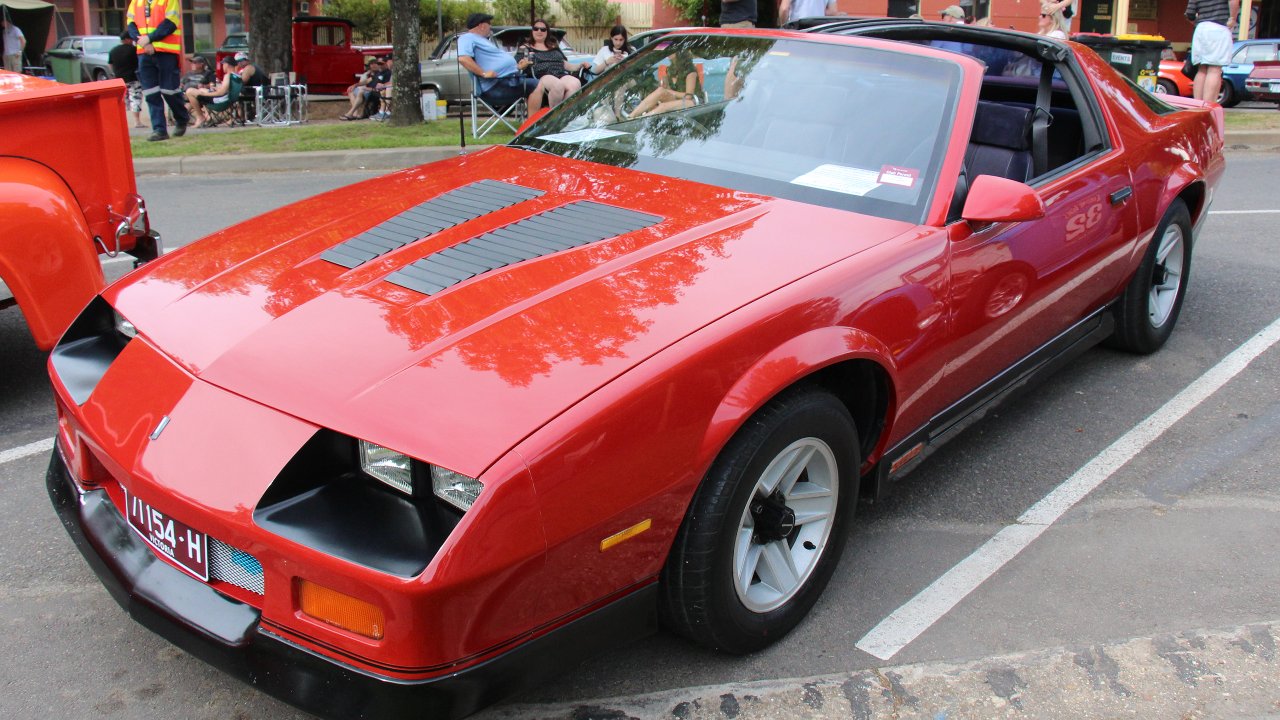
When Chevrolet introduced the third-generation Camaro in 1982, the change was immediately visible. The new body was lower, sleeker, and more angular, trading the soft curves of the late second generation for a wedge profile that looked more at home among contemporary European coupes. That redesign was not only about fashion. The sharper nose, integrated rear hatch, and cleaner surfaces were engineered to cut through the air with minimal resistance, a crucial advantage in an era when fuel economy standards and top-speed bragging rights both depended on aerodynamics rather than raw displacement alone.
The Z/28 version took that mission further with functional add-ons that signaled its performance intent. Deep front air dams, rocker extensions, and a distinctive rear spoiler were not just cosmetic flourishes, they were tuned to reduce lift and stabilize the car at higher speeds. Contemporary testing emphasized that the first and primary consideration for the new platform had been handling, and that engineers essentially began by designing a Z/28 and then worked backward to create the rest of the Camaro range. That approach flipped the old hierarchy, where the base car came first and the performance model was layered on top, and it underscored how central the Z/28 remained to the Camaro’s identity even as the broader market shifted.
Handling first, horsepower second
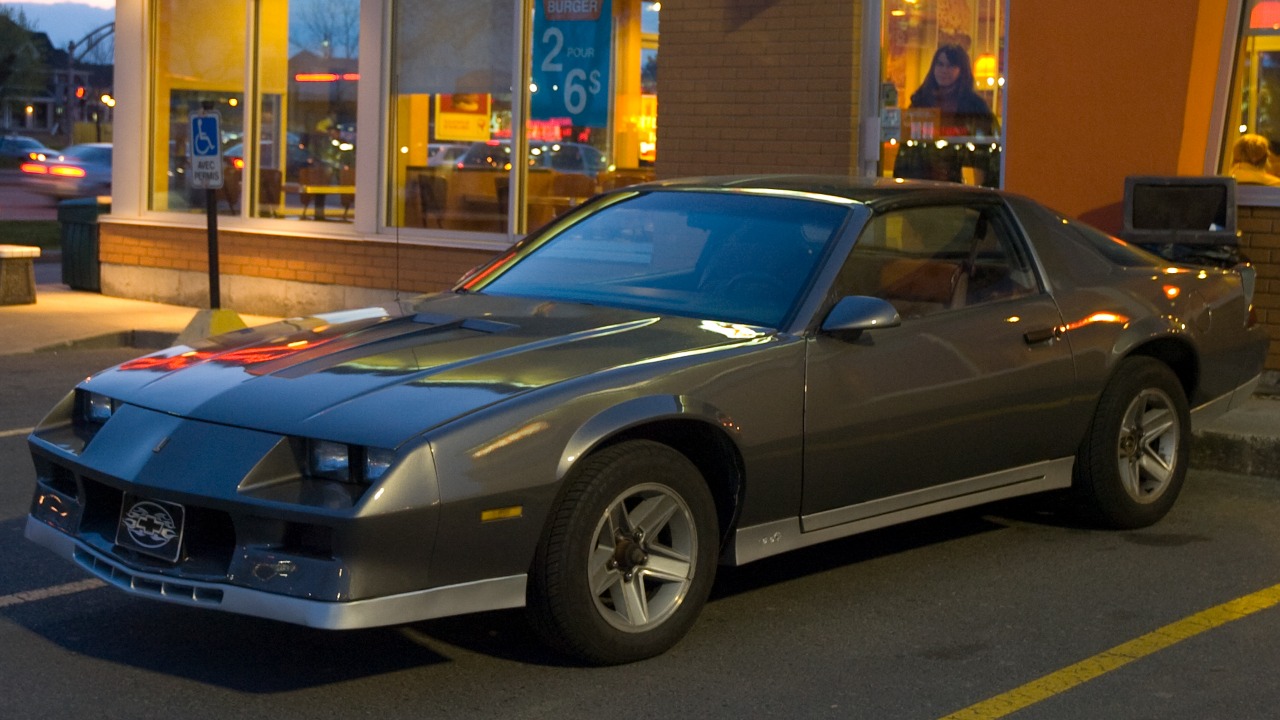
Under the skin, the 1982 Camaro Z/28 made its case not with headline-grabbing horsepower figures but with a more sophisticated chassis. The suspension geometry, weight distribution, and steering were all tuned to deliver sharper responses than the outgoing car, and road tests at the time highlighted how much more composed the new Z/28 felt in corners. Engineers prioritized lateral grip and balance, reasoning that a modern performance car had to be judged as much by its behavior on a winding road as by its straight-line acceleration. That philosophy marked a clear break from the muscle car era, when big engines often masked crude handling.
This shift did not mean the Z/28 abandoned power entirely, but it did reflect the constraints of the early 1980s. Emissions regulations and fuel economy targets limited what Chevrolet could do with displacement and compression, so the company leaned on gearing, weight reduction, and aerodynamics to keep the car competitive. The result was a Camaro that might not have matched the brutal thrust of earlier high-compression V8s, yet felt quicker and more agile in real-world driving. Later retrospectives on the F-body platform have noted that the Camaro always had available V8 power and was offered in well-rounded trim, bringing straight-line performance together with handling and braking in a way that anticipated how enthusiasts would judge cars in the 1990s. The 1982 Z/28 was the first clear expression of that rebalanced formula.
Dodging GM’s front-drive bullet
The story of the 1982 Camaro’s relevance fight cannot be told without acknowledging how close it came to losing its rear-drive soul. Inside GM, the success of compact front-wheel-drive platforms created strong momentum to rationalize architectures and move more nameplates onto shared underpinnings. Reporting on the development process has described the 1982 Camaro as almost becoming an X-car derivative, which would have meant a transverse engine, front-wheel drive, and a very different driving experience. For a nameplate built on burnouts and tail-out corner exits, that would have been a fundamental break with its past.
In the end, the production Camaro avoided that fate, but it did inherit one element from the X-car family: a stand-up instrument panel concept that reflected GM’s push toward more modern, space-efficient interiors. That detail is a reminder of how corporate pressures still shaped the car, even as engineers fought to preserve its core layout. By keeping the Camaro on a dedicated rear-drive platform while selectively adopting interior ideas from other programs, Chevrolet managed to thread a narrow needle. The 1982 Z/28 emerged as a car that looked and felt contemporary inside, yet still delivered the driving dynamics that enthusiasts expected from a traditional pony car.
Legacy of a transitional Z/28
Looking back, the 1982 Camaro Z/28 occupies a complicated place in performance history. It did not deliver the raw numbers that collectors often chase, and it arrived at a time when American V8s were still climbing out of the performance trough created by the previous decade’s regulations. Yet the car’s importance lies in how it redefined what a Camaro could be, proving that the badge could survive by embracing handling, aerodynamics, and a more holistic performance package rather than clinging to past glory. When Chevrolet launched the third generation, it was widely recognized as a serious upgrade over the car it replaced, with a lighter structure, sharper styling, and a more modern look that helped keep the Camaro relevant to younger buyers who had grown up with imports and fuel crises rather than drag strips.
Later evaluations of the F-body platform have framed the Camaro as a car that always offered V8 power in a well-rounded package, blending straight-line speed with cornering and braking in a way that anticipated the performance expectations of the 1990s. The 1982 Z/28 was the pivot point where that philosophy first took clear shape, even as it carried the weight of a profitable predecessor that had sold 43,272 units and the shadow of a near-miss with front-wheel drive. In that sense, its fight to stay relevant was not just about surviving a difficult model year, it was about proving that an American rear-drive coupe could adapt to a new era without losing the character that made the Camaro name worth saving.