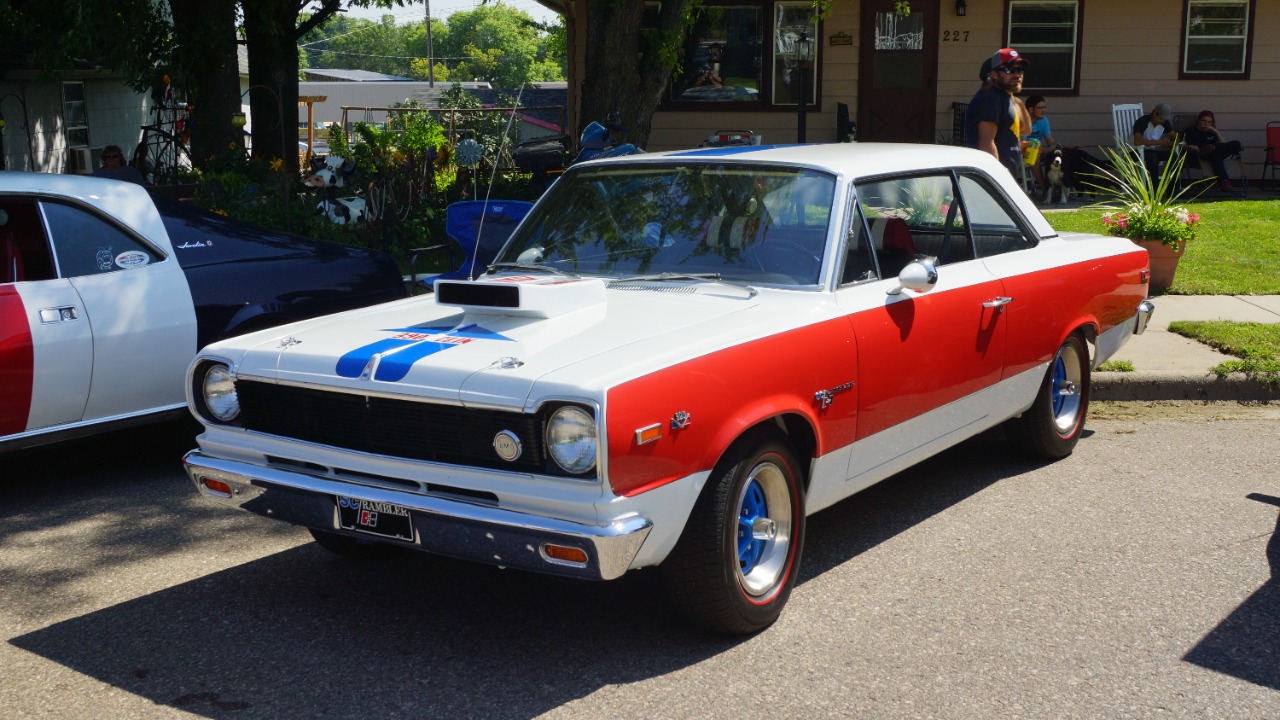
In 1969, AMC dropped a 390 V8 into its humble compact and sold the result as the AMC SC/Rambler. Hurst helped create it, and just 1,512 were built. That formula, a modest body with far too much engine, is how plenty of forgotten muscle cars embarrassed bigger names.
Most people still remember the GTO, the Chevelle SS and the Hemi Charger. However, Detroit also built smaller-volume brawlers that ran with them or beat their own class outright. Some came from AMC, a company few people link with muscle. Others came from Ford, Mercury, Oldsmobile, Buick and Plymouth, then faded behind more famous badges.
These are our picks: eight cars we think outran everything in their class. That verdict is our opinion. The engines, ratings, test times and build counts below, though, come from period road tests, auction records and marque histories.
1. 1969 AMC SC/Rambler Hurst
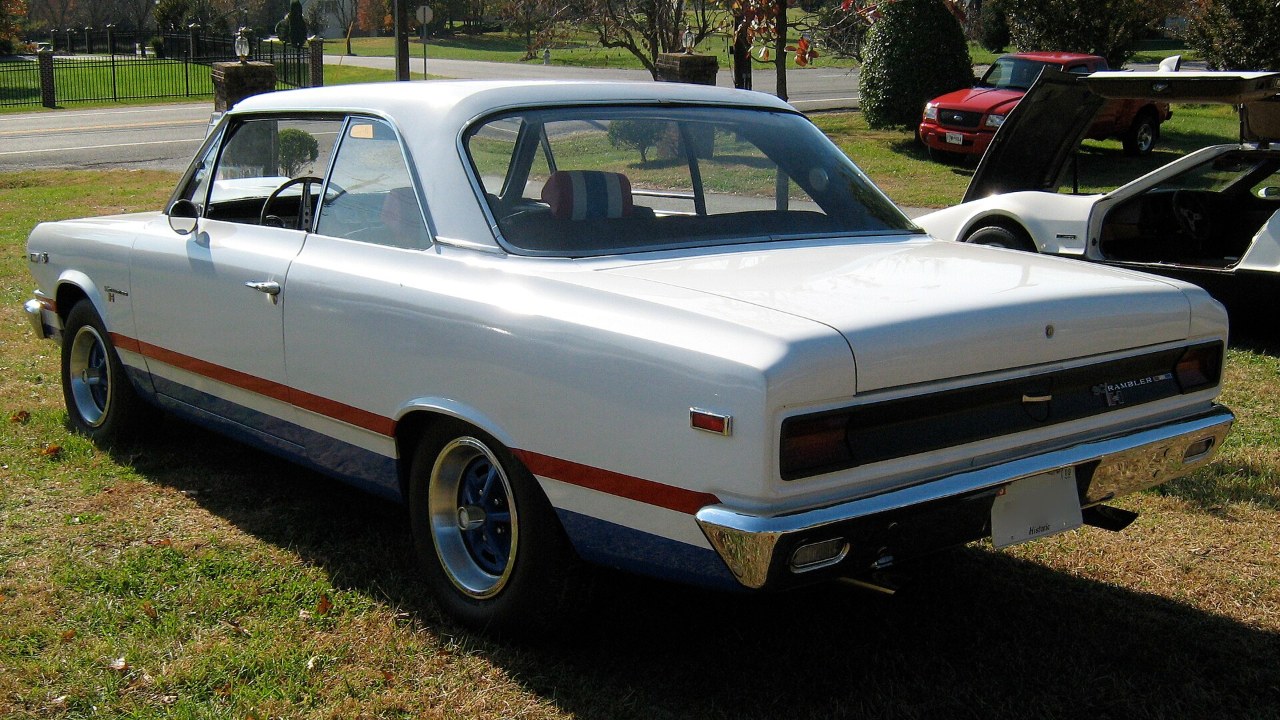
AMC took its smallest two-door, the Rambler American, and fitted the 390 cubic-inch V8 from the AMX. According to Old Cars Weekly, the engine was rated at 315 horsepower and 425 lb-ft of torque. A Borg-Warner four-speed, a Hurst shifter and a 3.54:1 rear axle completed the drivetrain. Because the car weighed about 3,000 pounds, it carried only 10.03 pounds per horsepower. AMC also kept it simple and offered no factory options on the package.
That ratio mattered at the drag strip, since it placed the car in NHRA F/Stock. Road Test magazine then ran one through the quarter mile in 14.4 seconds at 100.44 mph, and it kept pulling to 109 mph. Meanwhile, the paint did the shouting. Most cars wore red sides, blue stripes and a blue arrow pointing at the working hood scoop. Another batch came out mostly white with thin red and blue stripes.
In our view, no compact of 1969 delivered more speed for less attention than the AMC SC/Rambler. Hurst came up with the idea, AMC bought it, and only 1,512 cars left the line. That’s why it heads our list of forgotten muscle cars.
2. 1969 Ford Cobra SportsRoof
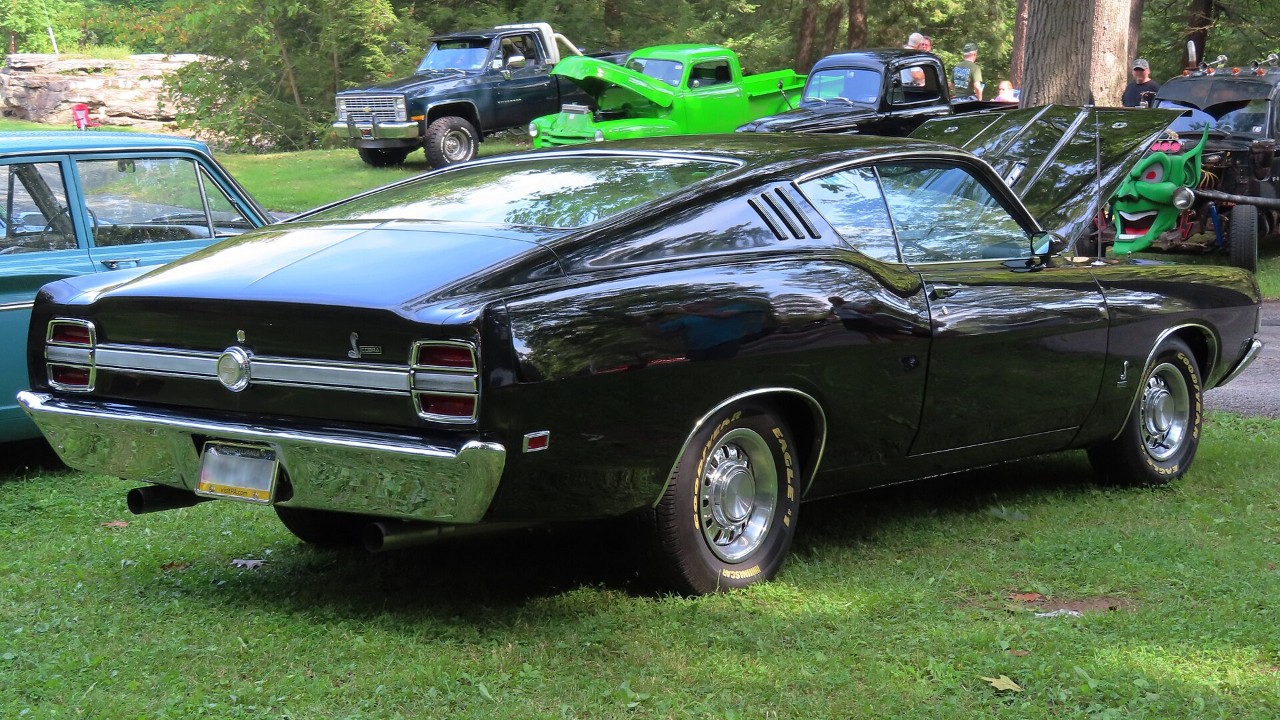
For 1969, Ford sold a lean intermediate simply called the Cobra. It wore neither Fairlane nor Torino script, even though it shared their body. Better still, the 428 Cobra Jet V8 came standard, along with a four-speed, competition suspension and F70-14 tires. Ford advertised the engine at 335 horsepower, and the Ram Air version carried the same rating.
The pictured SportsRoof is the fastback body, which arrived on Ford’s intermediates for 1968. Ford also used that shape for the separate Torino Talladega, a NASCAR special with only 743 built. By comparison, the plain Cobra was the version an ordinary buyer could actually walk in and order.
Period numbers were strong rather than outrageous. Road Test magazine clocked a Ram Air four-speed car at 15.07 seconds and 95.74 mph in the quarter mile, and that test car had no tachometer to shift by. Whether the engine made more than its rating is a question we explored in our story on the 428 Cobra Jet. Our take: the Cobra was Ford’s no-frills street fighter, and the fastback version deserves far more recognition today.
3. 1968 Oldsmobile Hurst/Olds
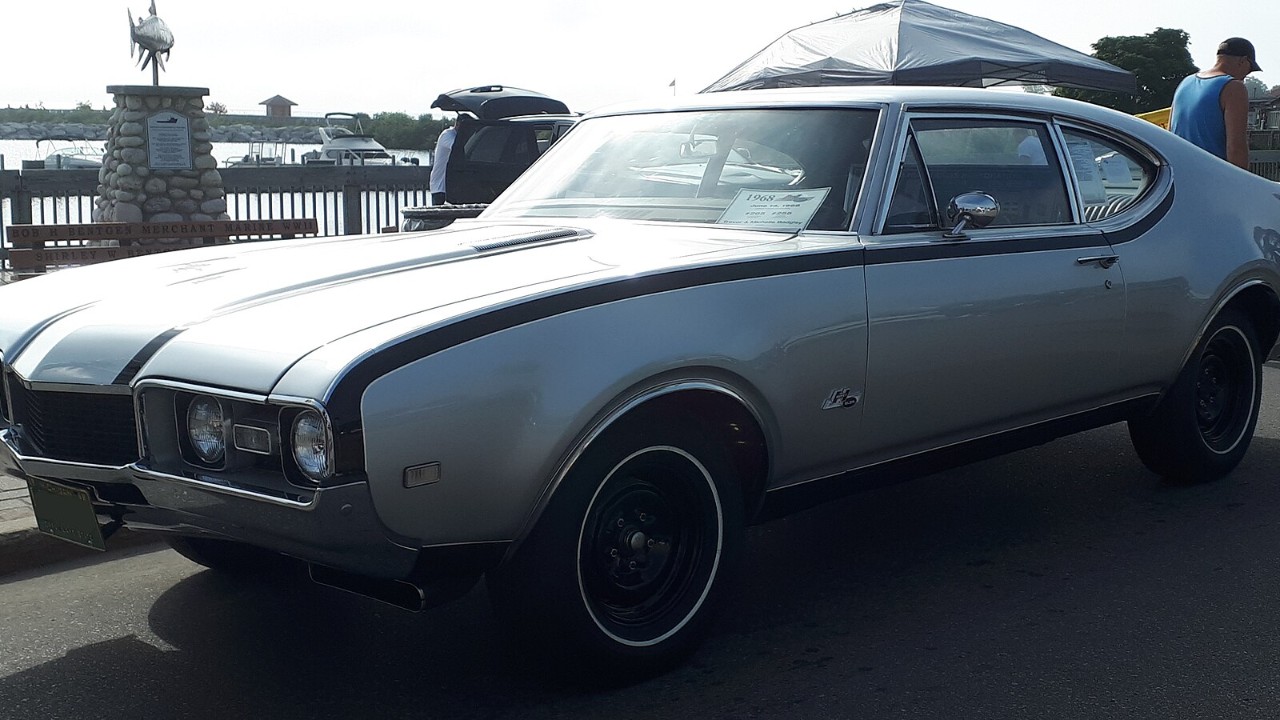
In the late 1960s, GM kept a firm rule. According to Street Muscle, none of its mid-size cars could carry an engine bigger than 330 cubic inches. The 1968 Hurst/Olds found a way around it. Oldsmobile installed a 455 from the big Toronado on the assembly line, and Lansing-area Demmer Engineering then finished the conversions.
The 455 was rated at 390 horsepower in both versions. Cars with air conditioning got 3.08:1 gears, while cars without it got a 3.91:1 rear. Every car used a modified Turbo 400 automatic with a Hurst Dual/Gate shifter. Peruvian Silver paint, black stripes and a walnut dash insert finished the package. Street Muscle says the run was planned at 500 cars and later amended to 515.
Published figures backed up the hardware, with 0 to 60 mph in 5.4 seconds and a 13.9-second quarter mile at 103 mph. In other words, a well-trimmed Oldsmobile intermediate ran with Detroit’s lighter street racers. We think the first Hurst/Olds outran everything else in its class, and it set the pattern for every Hurst/Olds that followed.
4. 1971 Buick GS Stage 1
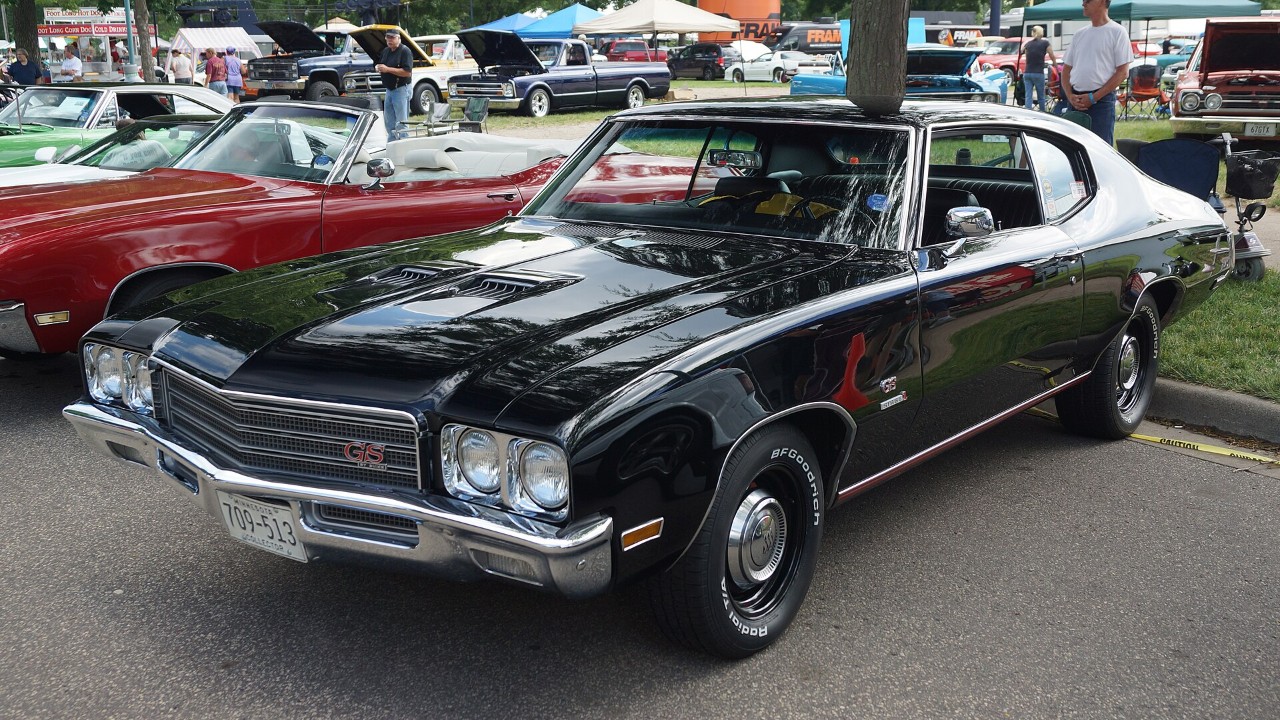
By 1971, compression ratios across GM were dropping and the muscle market was cooling. Even so, Buick kept the Stage 1 455 on the order form. RM Sotheby’s lists the 1971 engine at 345 horsepower and 460 lb-ft of torque. Its catalogue also describes one car as one of only 801 Stage 1 GS coupes built for 1971.
Those numbers came down from a higher peak. The 1970 Stage 1 carried a 360 horsepower gross rating and 510 lb-ft. That year, Motor Trend ran a GS Stage 1 coupe through the quarter mile in 13.38 seconds at 105.5 mph. Later, a Buick engine engineer recalled that the weakest of 15 tested 1970 Stage 1 engines made around 425 horsepower on the dyno.
The 1971 car kept the same recipe with a little less compression. That’s why we rate it as one of the most overlooked big-block cars of its year. Buick buyers wanted comfort, and the GS gave them a soft ride with a huge torque figure underneath. For the record, RM Sotheby’s sold the restored 1971 coupe at Auburn in 2014 for $35,200.
5. 1963 Plymouth Savoy Max Wedge
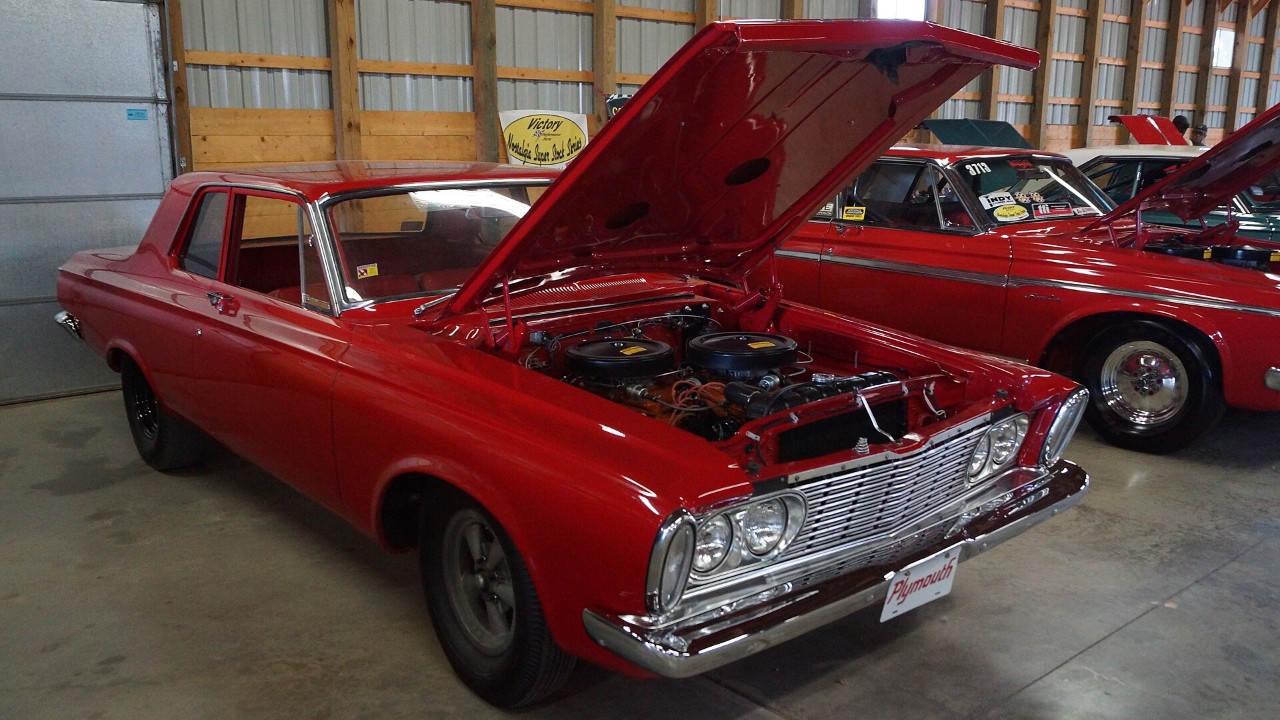
Chrysler built the Max Wedge for Super Stock drag racing and sold it as a competition engine. For 1963, the 426 Max Wedge replaced the earlier 413, and Plymouth offered it in the full-size Savoy. Chrysler rated it at 415 or 425 horsepower, depending on compression. Two Carter four-barrel carburetors sat on a cross-ram intake, and torque came in at 480 lb-ft.
Chrysler kept improving it, too. A Stage II version arrived before the end of the 1963 model year with a better combustion chamber and camshaft. Next, Stage III followed for 1964, the engine’s final performance year. Still, the factory never changed the advertised power rating, even as the engine grew stronger.
The Savoy two-door sedan made an ideal host. It looked like an everyday family Plymouth, yet it carried a race engine meant for the strip. As a result, a Max Wedge Savoy could line up against far flashier cars and leave them behind. In our view, few cars of 1963 owned their class so openly, and fewer people remember them today. That plain body is exactly what makes a surviving car such a surprise at a show.
6. 1968 AMC Javelin SST
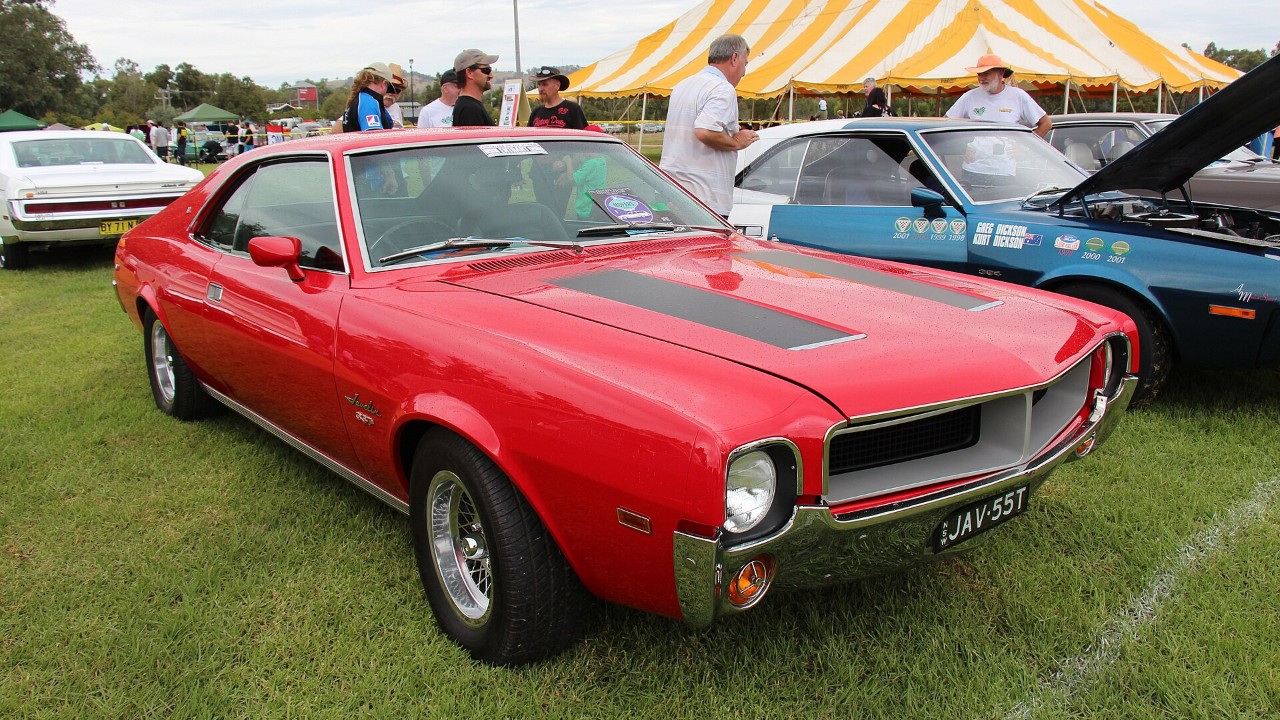
AMC launched the Javelin on August 22, 1967, as a 1968 model, with a starting price of $2,743. The SST was the dressier version, with reclining front seatbacks, wood-grain door trim and a sports-style steering wheel. Under the hood, buyers could choose a six, a 290 V8 or a 343 V8. Then, in mid-1968, AMC added the 390 with the Go-package, rated at 315 horsepower.
Car and Driver liked it straight away. In a test of six 1968 pony cars, the magazine praised its clean, understated look that was “not marred by phony vents.” Buyers agreed, and AMC built 55,125 Javelins that first year.
Its real class was the Trans-Am series, and that’s where the Javelin earned its spot here. In 1968, AMC was the only factory team to finish every Trans-Am race it entered, and it placed third in the over-2-liter class. Later, Javelins won the series title for AMC in both 1971 and 1972. In our opinion, that record makes the first SST far more important than its quiet styling suggests. If you want the rest of the family, we’ve also ranked the quickest AMC Javelins.
7. 1964 Mercury Comet Cyclone
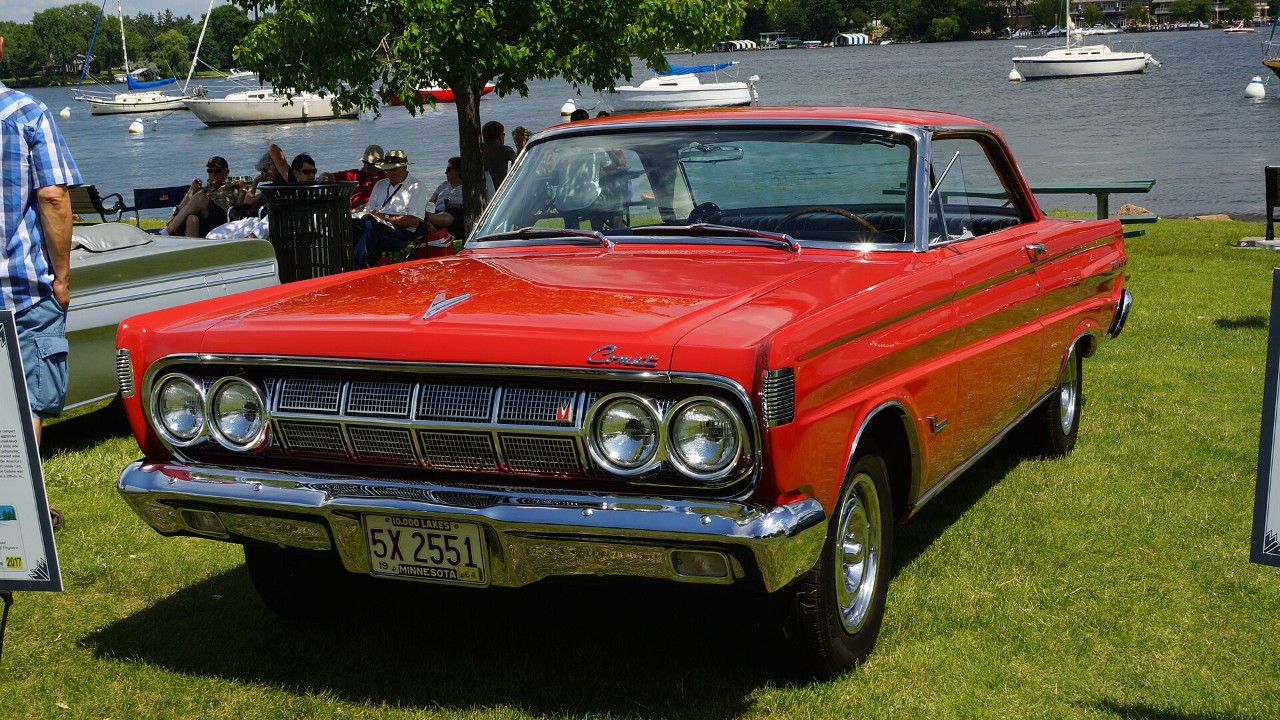
For 1964, Mercury redesigned the Comet and gave it a performance model called the Cyclone. The 260 V8 was available from the start, and the 289 joined it during the year. However, the wildest Cyclones never saw a showroom. Ford built about 50 lightweight Comet Cyclones with a racing 427 and two carburetors for the A/FX drag class.
These cars ran on 10-inch tires in A/FX, while Ford’s own Thunderbolts raced in Super Stock. Drivers such as Ronnie Sox, Don Nicholson and Wild Bill Shrewsberry campaigned them, working with Jack Chrisman. That’s a serious lineup for a car most people remember as a sensible compact.
Mercury also proved the Comet could run long. According to Mac’s Motor City Garage, four 1964 Comet Caliente hardtops with 289 V8s covered 100,000 miles at Daytona in 40 straight days. They stopped only for pit stops and driver changes. Those endurance cars wore Caliente trim rather than Cyclone badges. Even so, they showed what the 1964 Comet could take. Our take: the Cyclone was Mercury’s sharpest compact of the decade, and almost nobody talks about it.
8. 1970 Plymouth GTX 440+6 hardtop
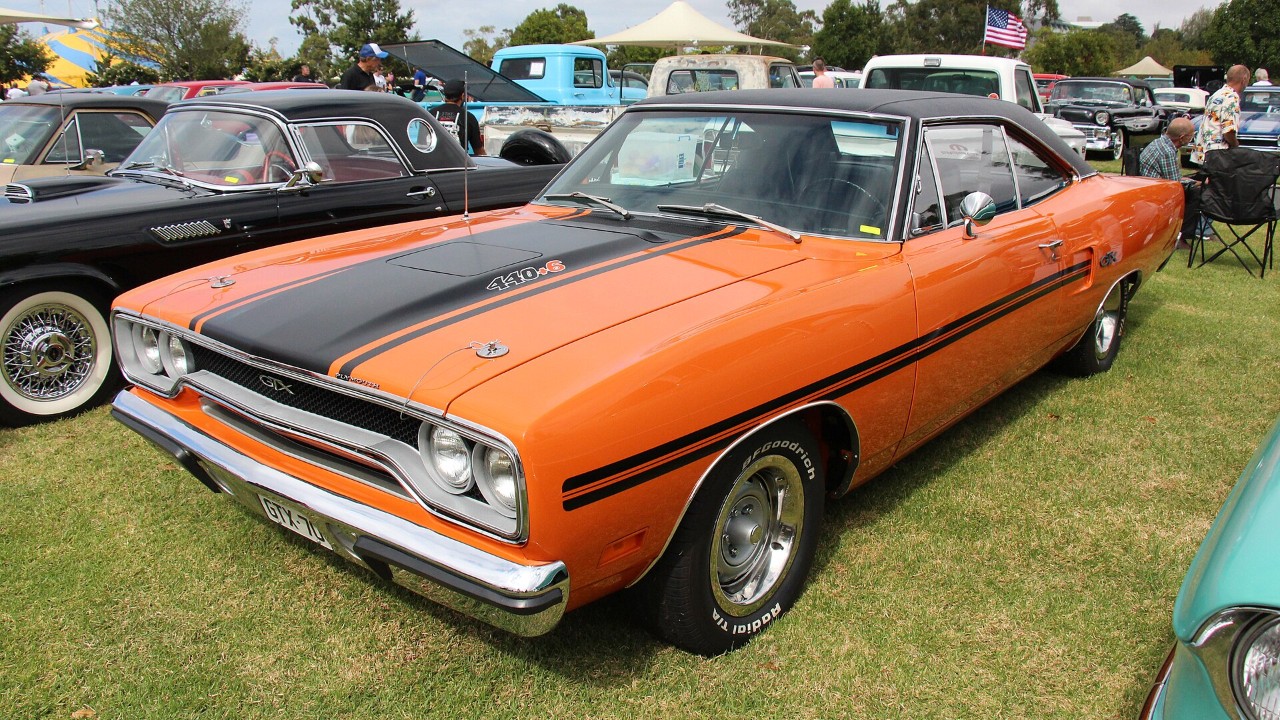
Plymouth pitched the GTX as a gentleman’s muscle car, an upscale Road Runner with more comfort. For 1970, the standard engine was the 440 four-barrel at 375 horsepower. Above it sat the 440 with three two-barrel carburetors, rated at 390 horsepower and 490 lb-ft. Dodge called that setup the Six Pack, while Plymouth badged it 440 6-BBL. Only the 426 Hemi, at 425 horsepower, ranked higher.
The 1970 car changed in other ways, too. Plymouth dropped the GTX convertible, so the hardtop became the body to have. The Air Grabber hood also returned, now with a single scoop on the power bulge. By comparison, the 1969 version had two narrow openings along the hood.
Here’s why the six-barrel car makes our list. On paper, it matched the Hemi’s 490 lb-ft torque rating with a simpler wedge engine. In our view, that made it the smartest pick in Plymouth’s big-intermediate lineup that year. Sales were low for 1970, and Plymouth built 44,178 GTXs across all five years from 1967 to 1971. For more on this model year, read the strange story behind the 1970 Plymouth GTX.
More from Fast Lane Only